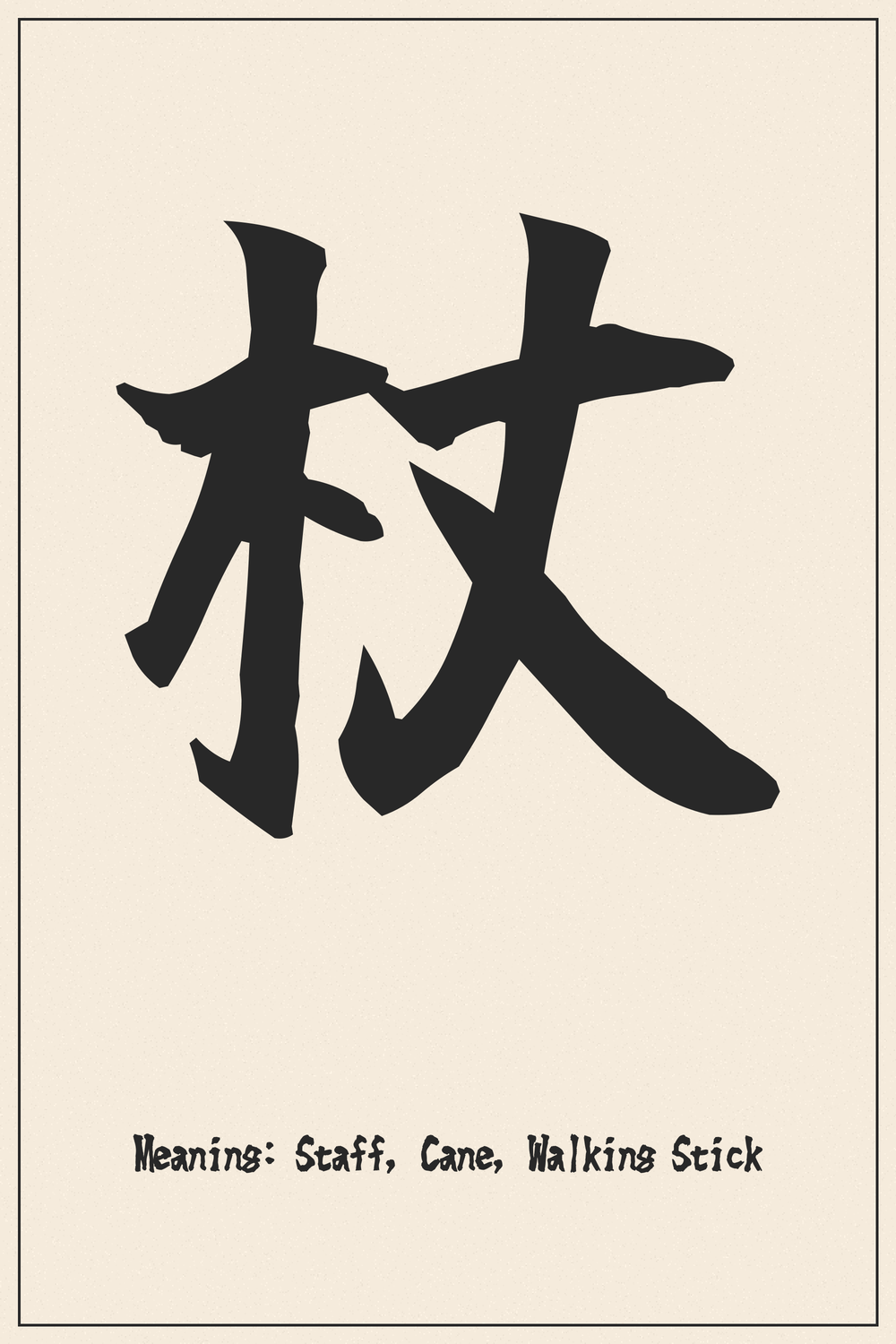
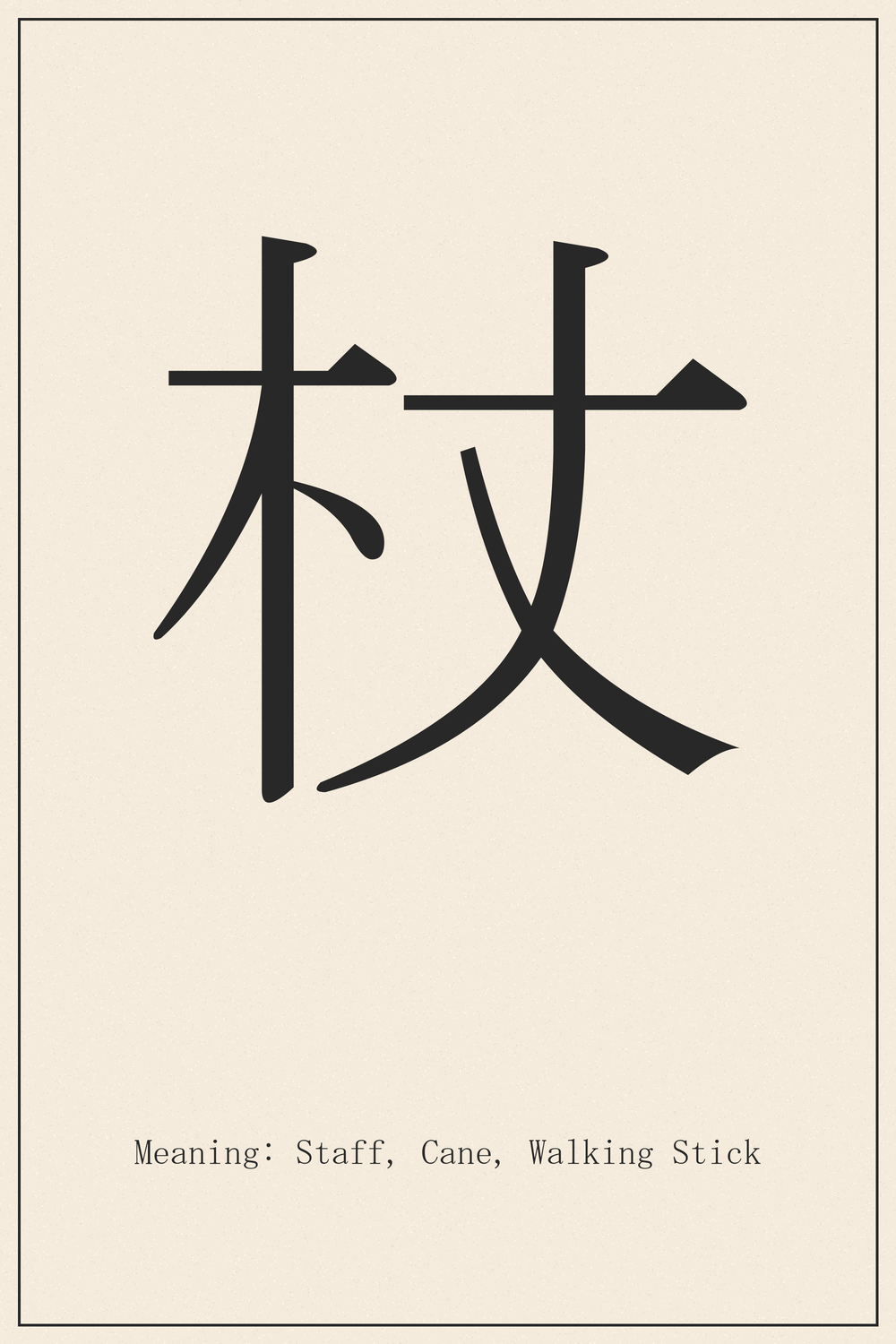
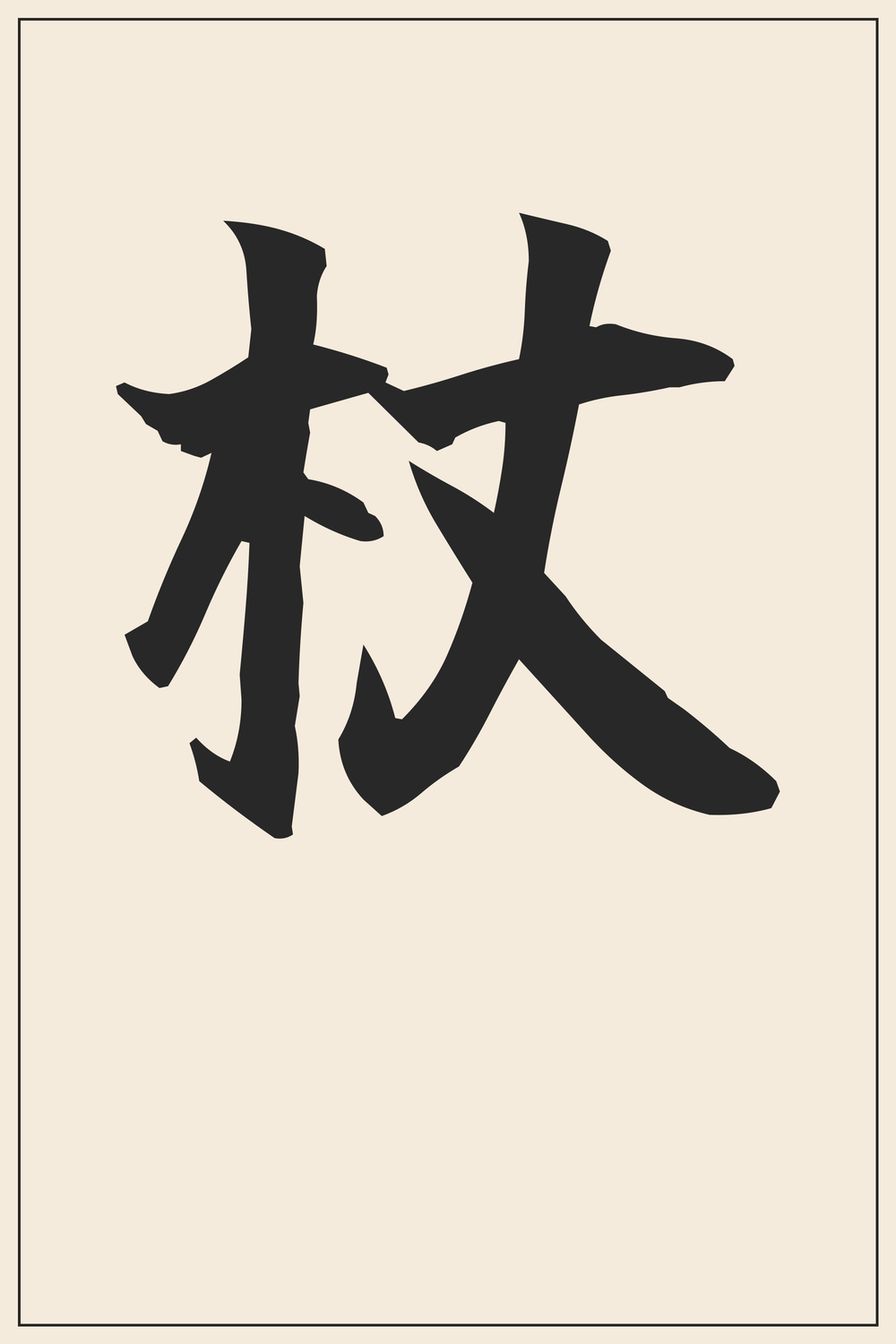
The Kanji 杖 (Tsue) goes beyond its literal meaning of a staff or cane; it embodies the essence of support, guidance, and perseverance through life’s journey.
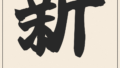
The atmosphere of a Kanji character changes dramatically depending on the font style. A character that looks elegant in a brush style might look bold and modern in a different font.
Recommendation:
Since a tattoo is permanent, we strongly recommend comparing various font styles beyond what is shown here. Use our designs as a trusted reference for the correct structure, but feel free to explore different artistic variations to find the perfect match for your vision.
The Deep Meaning Behind 杖
The Kanji 杖 (Tsue) intrinsically represents a staff or cane, an everyday object used for physical support. Its composition offers insight into this direct meaning, combining elements that denote both material and function.
Culturally, the staff holds significance beyond mere utility. It is often associated with travelers, hermits, and the elderly, symbolizing guidance, wisdom gained through experience, and the perseverance required to navigate life’s long journey. It signifies a reliable aid, a steadfast companion through various paths.
Kanji Breakdown
The character 杖 is a fascinating example of how components combine to convey a complete meaning.
Tree / Wood: This radical clearly indicates the material from which a staff is typically made, anchoring the Kanji in the physical world.
Length / Staff: This component signifies a specific length or measure, and by extension, a person of certain stature (implying a stick of appropriate height). It inherently carries the meaning of a staff or long stick itself.
Conclusion
The Kanji 杖, though seemingly simple, encapsulates the profound idea of enduring support and unwavering guidance. It speaks to the journey of life, where every step benefits from a steadfast aid, whether literal or metaphorical.
For a tattoo, while perhaps not as visually impactful as more iconic symbols, 杖 holds deep personal resonance for those who value resilience, support, and the wisdom gained from life’s path. It is a subtle yet powerful testament to the aids that help us endure and thrive.
Comments