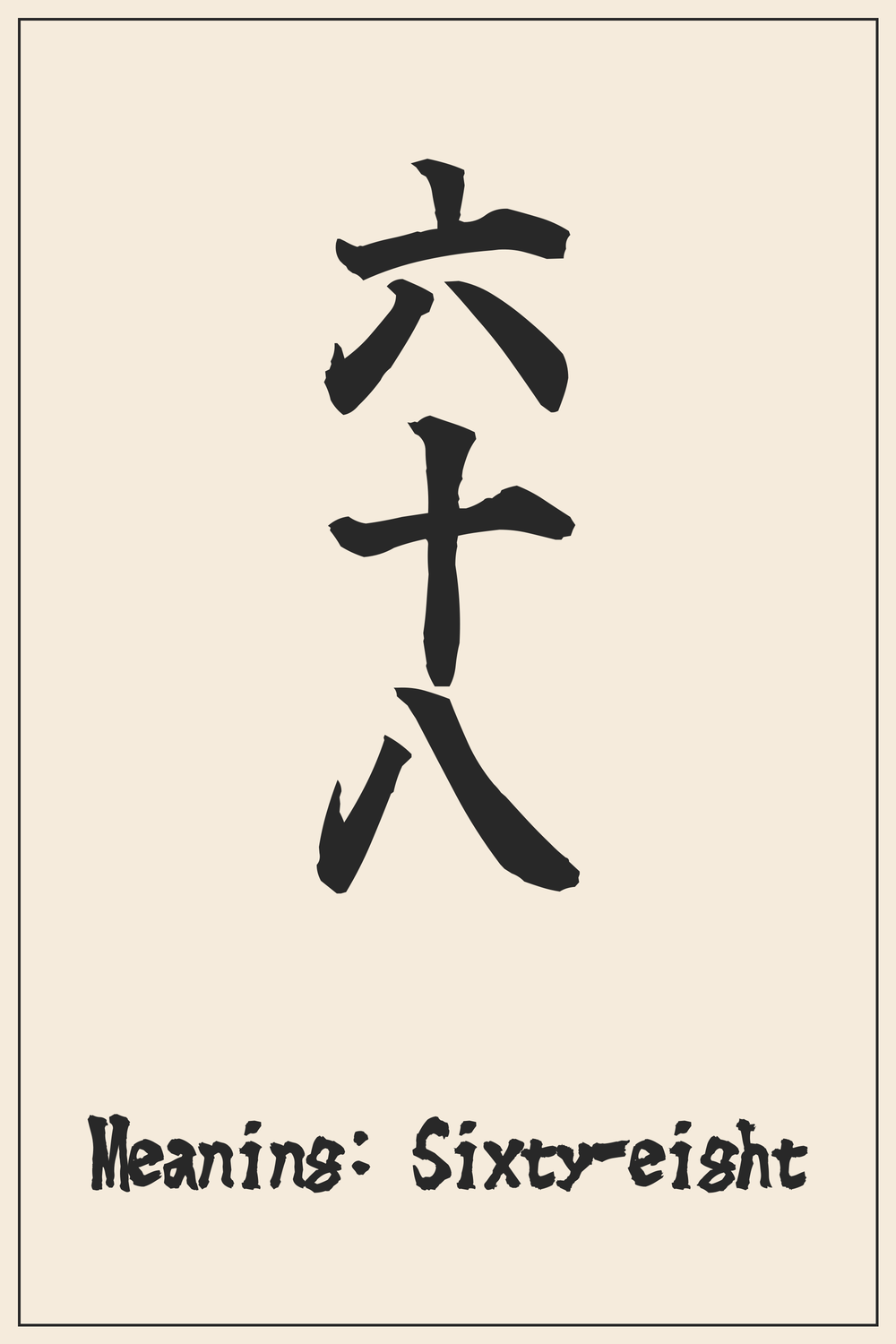

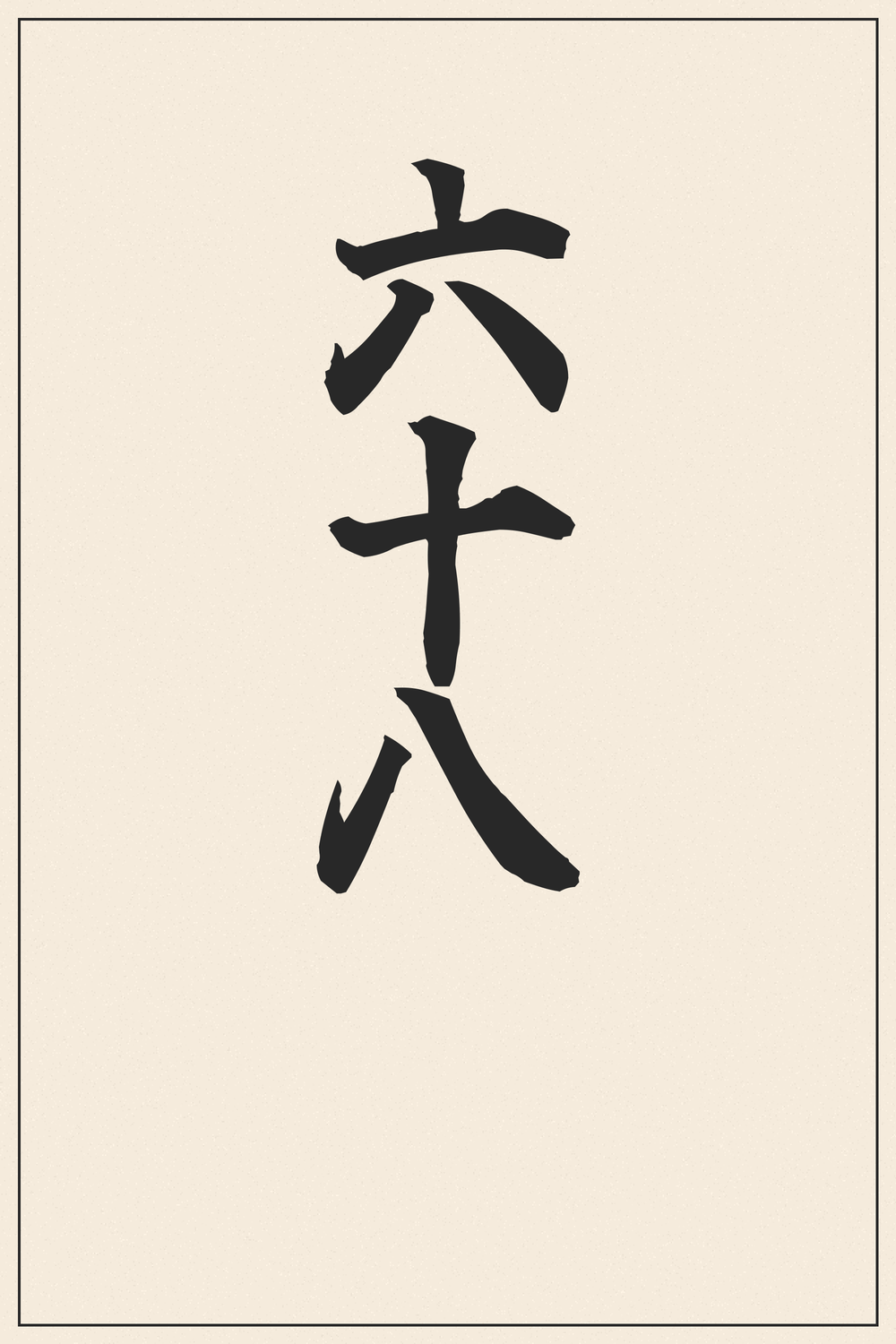
Numbers are the bedrock of our understanding, marking time, age, and significant events. The Kanji ‘六十八’ (Rokujūhachi) represents the precise value of sixty-eight.
The atmosphere of a Kanji character changes dramatically depending on the font style. A character that looks elegant in a brush style might look bold and modern in a different font.
Recommendation:
Since a tattoo is permanent, we strongly recommend comparing various font styles beyond what is shown here. Use our designs as a trusted reference for the correct structure, but feel free to explore different artistic variations to find the perfect match for your vision.
The Deep Meaning Behind 六十八
The numerical system in Japanese, borrowing heavily from Chinese, uses specific Kanji to represent numbers. ‘六’ (roku) means six, ‘十’ (jū) means ten, and ‘八’ (hachi) means eight. When combined, ‘六十八’ literally translates to “six ten eight,” forming sixty-eight.
While a single number like sixty-eight doesn’t carry profound symbolic meaning in Japanese culture compared to numbers like seven or eight, it serves as a fundamental building block for expressing quantities, ages, or dates crucial to everyday life and historical records. It represents a precise point within a continuum.
Kanji Breakdown
The number sixty-eight is formed by the combination of three individual Kanji, each with its own simple yet essential meaning.
Six: A pictograph representing the cardinal number six, forming a fundamental element in counting.
Ten: Originally a pictograph of a needle or a cross, it came to represent the cardinal number ten, forming the basis for larger numbers.
Eight: Originally depicted as two diverging lines, symbolizing division or distribution, and evolved to represent the cardinal number eight.
Conclusion
The Kanji ‘六十八’ (Rokujūhachi) precisely denotes the number sixty-eight, a straightforward quantitative value. It stands as a testament to the clarity and efficiency of the Japanese numerical system in conveying specific amounts.
For those seeking to commemorate a specific age, date, or count, a tattoo of ‘六十八’ offers a clean, direct, and universally understood representation. Its simple characters ensure legibility and a classic aesthetic appeal.
Comments