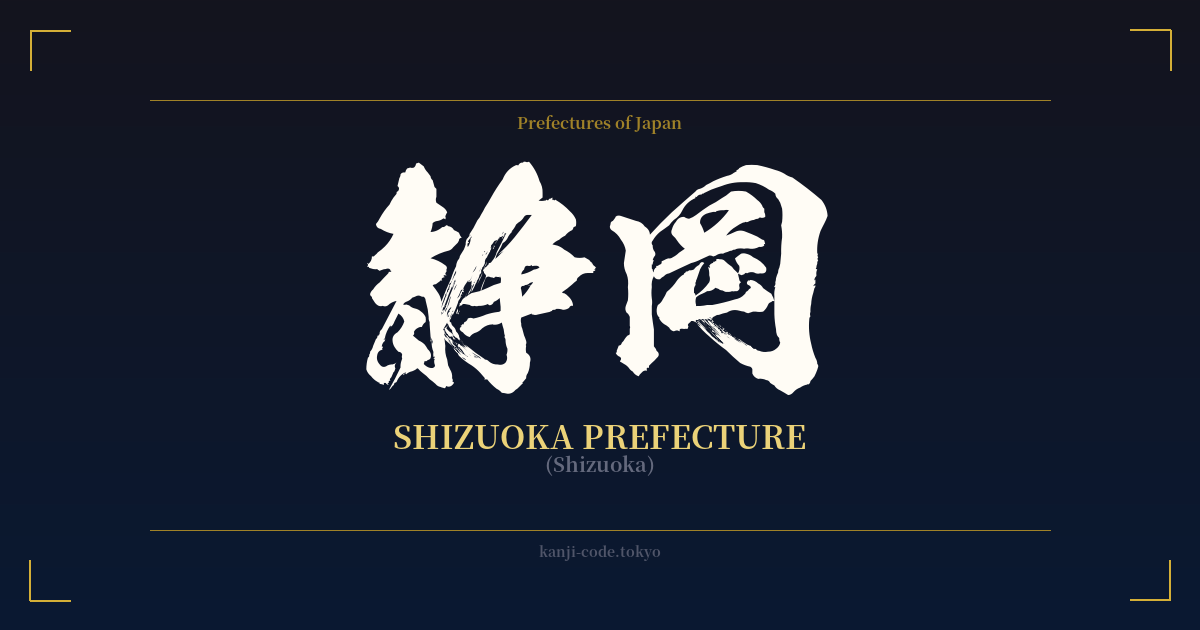
✍️ 静岡 (Shizuoka) — Cultural Context
The name 静岡 (Shizuoka) beautifully translates to 'Quiet Hill.' This poetic name was given to the region during the Meiji Restoration in 1869, replacing its former name, Sunpu. The name was chosen to reflect the area's tranquil landscape of rolling hills and its peaceful atmosphere, a stark contrast to the bustling political centers of the time.
Shizuoka Prefecture is geographically and culturally dominated by the presence of Japan's most sacred and iconic peak, Mount Fuji, which straddles its border with Yamanashi Prefecture. For centuries, artists, poets, and pilgrims have been drawn to Shizuoka for its unparalleled views of Fuji-san, often depicted rising majestically over tea fields or the waters of Suruga Bay. The kanji themselves—'quiet' (静) and 'hill' (岡)—perfectly capture this idyllic scenery.
Historically, Shizuoka was a region of immense strategic importance. During the Edo period (1603-1868), it was the heart of the domain controlled by the powerful Tokugawa clan. The first Tokugawa shogun, Ieyasu, chose to spend his retirement at Sunpu Castle in modern-day Shizuoka City. This legacy cemented the area's status and influence. The famous Tōkaidō, the main road connecting Edo (Tokyo) and Kyoto, ran directly through the province, making it a vibrant hub of travel, trade, and culture, as immortalized in the ukiyo-e prints of Hiroshige.
Today, Shizuoka is synonymous with green tea. Its climate and terrain are perfectly suited for cultivating tea, and the prefecture produces about 40% of Japan's entire green tea crop. The sight of meticulously terraced tea plantations covering the hillsides is a defining feature of the Shizuoka landscape. Beyond tea, the region is also a major producer of wasabi, grown in the pristine mountain streams of the Izu Peninsula.
Shizuoka also has a modern identity as an industrial powerhouse, being the birthplace of global giants like Yamaha, Suzuki, and Honda. This blend of serene natural beauty, deep historical roots, and innovative industry makes Shizuoka a unique and multifaceted region of Japan, truly living up to the quiet strength implied by its name.
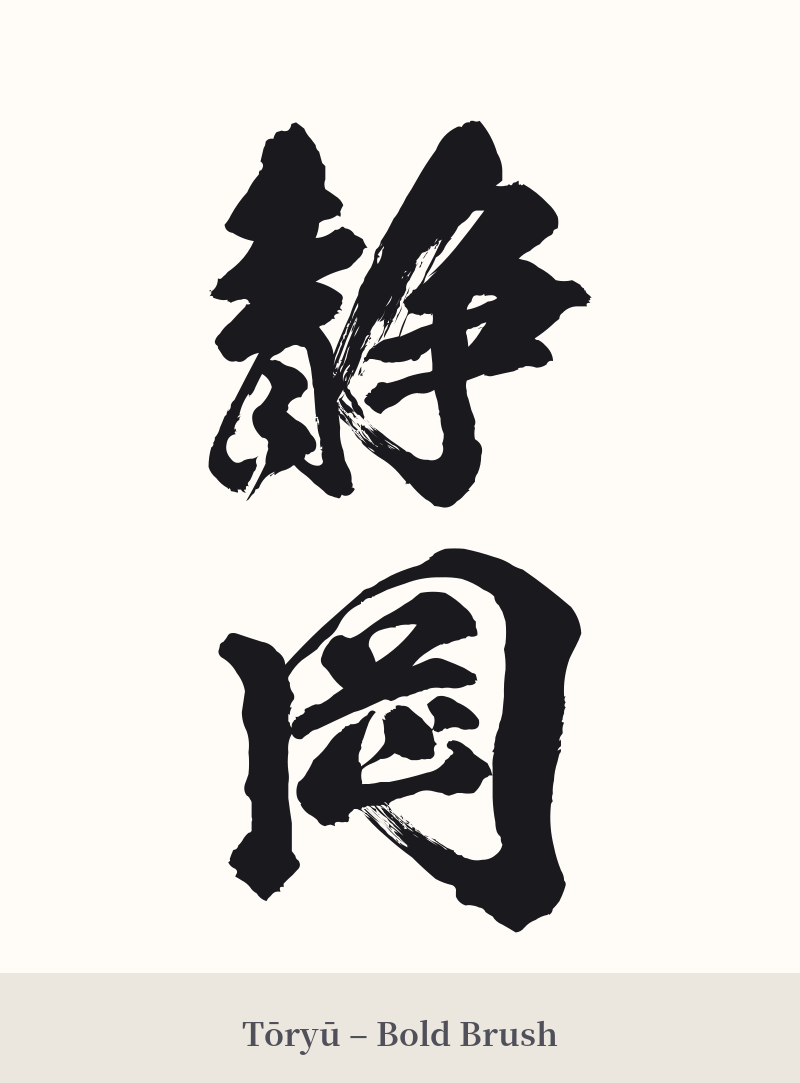
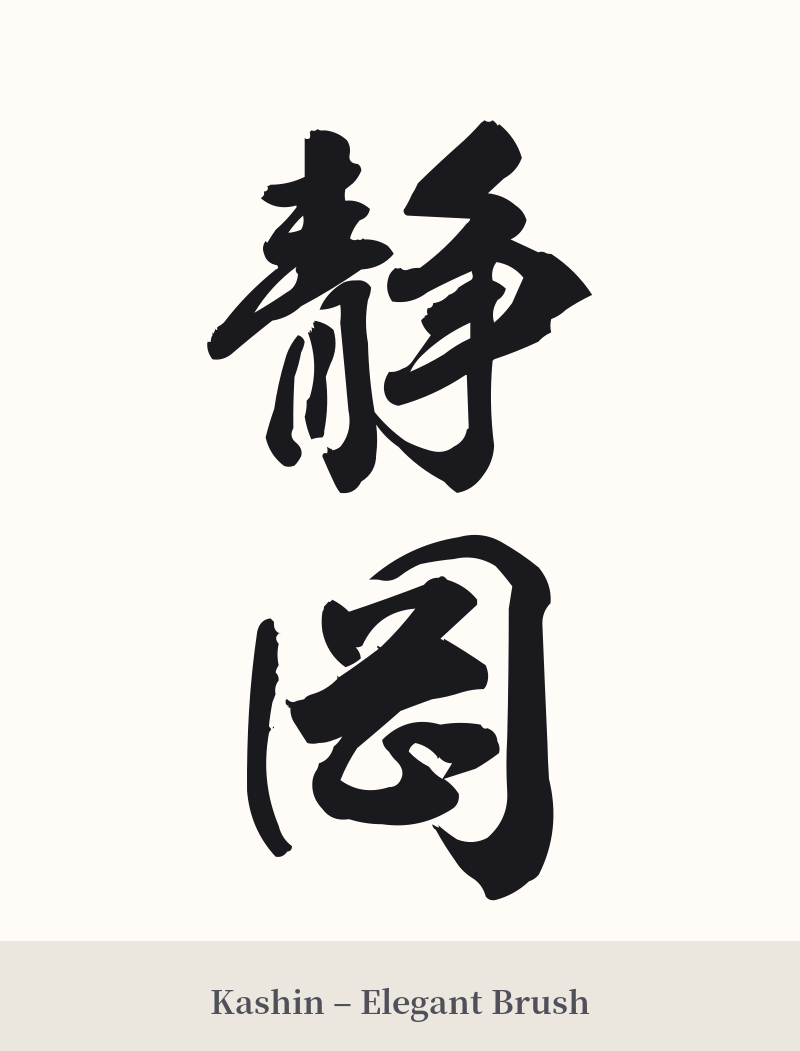
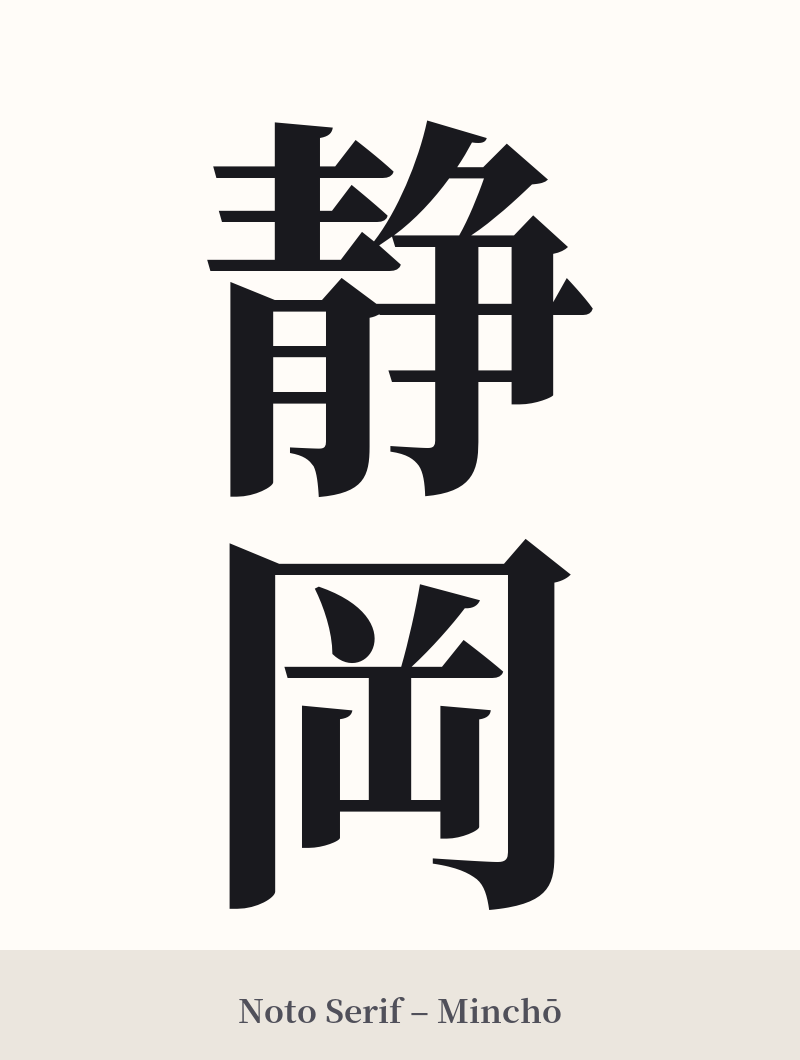
🖌️ Font Styles for 静岡
The same kanji can look dramatically different depending on the calligraphy style. Choose a font that matches the mood you want for your tattoo or design.
🎨 Tattoo Suitability
📐 Tattoo Design Guide
For a tattoo of 静岡, the design can be as symbolic as the name itself. The two characters offer a nice balance of complexity and stability, making them versatile for various styles and placements.
– Placement: A vertical orientation works beautifully on the forearm, calf, or along the spine, emphasizing the calligraphic flow. A horizontal arrangement is well-suited for the chest, upper back, or across the ribs.
– Font Style: Consider a semi-cursive script (Gyosho) to capture the natural, flowing feel of Shizuoka's landscapes and coastline. For a more grounded and historic look, a traditional block script (Kaisho) or an old-style seal script (Tensho) can connect to its Tokugawa-era legacy.
– Visual Tips: To enhance the meaning, consider incorporating elements representative of the prefecture. A subtle silhouette of Mount Fuji behind the kanji can be powerful. You could also intertwine the characters with stylized tea leaves or have them emerge from waves representing the Izu Peninsula's coast. Using shades of green ink could be a beautiful homage to Shizuoka's famous tea fields.
Comments