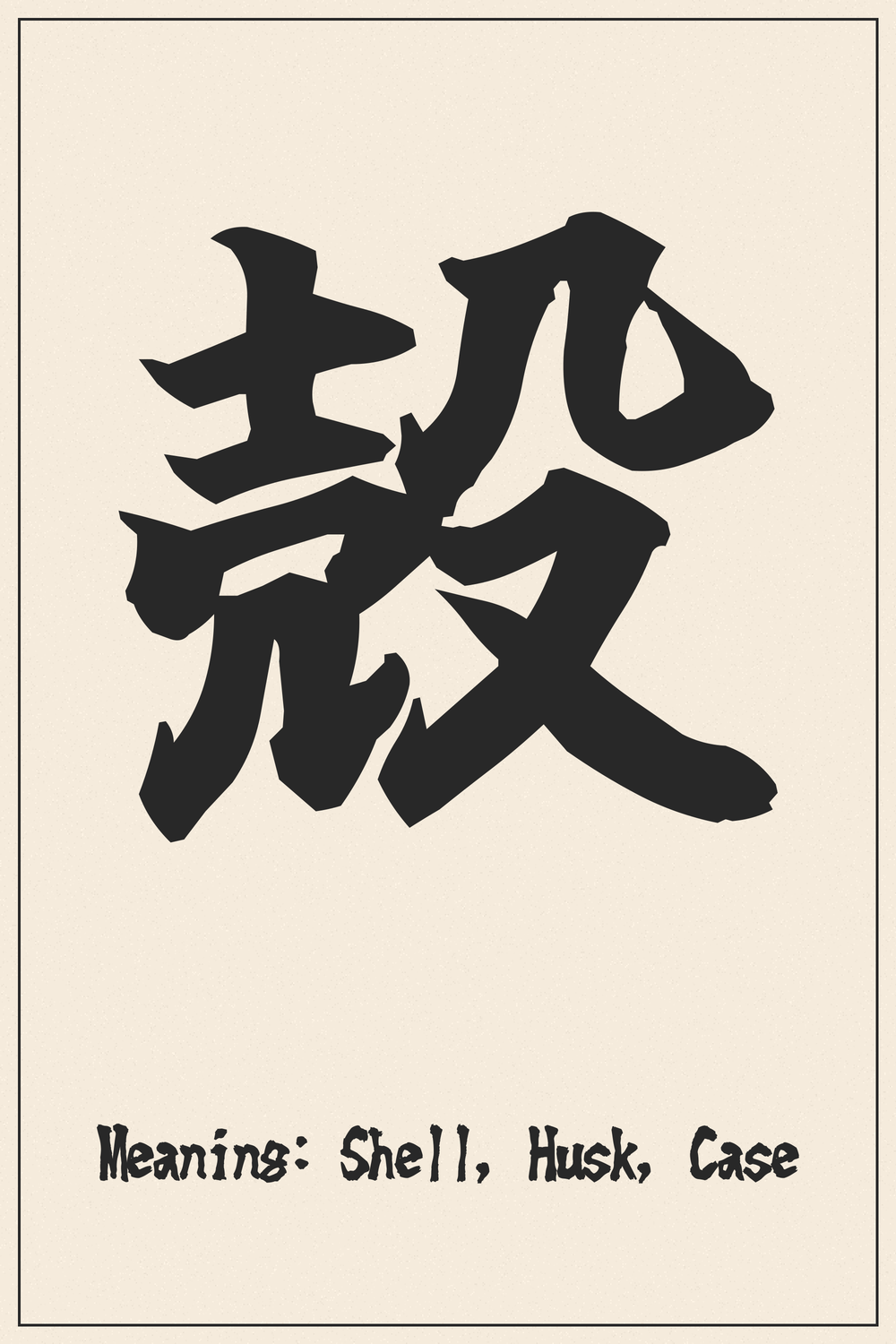
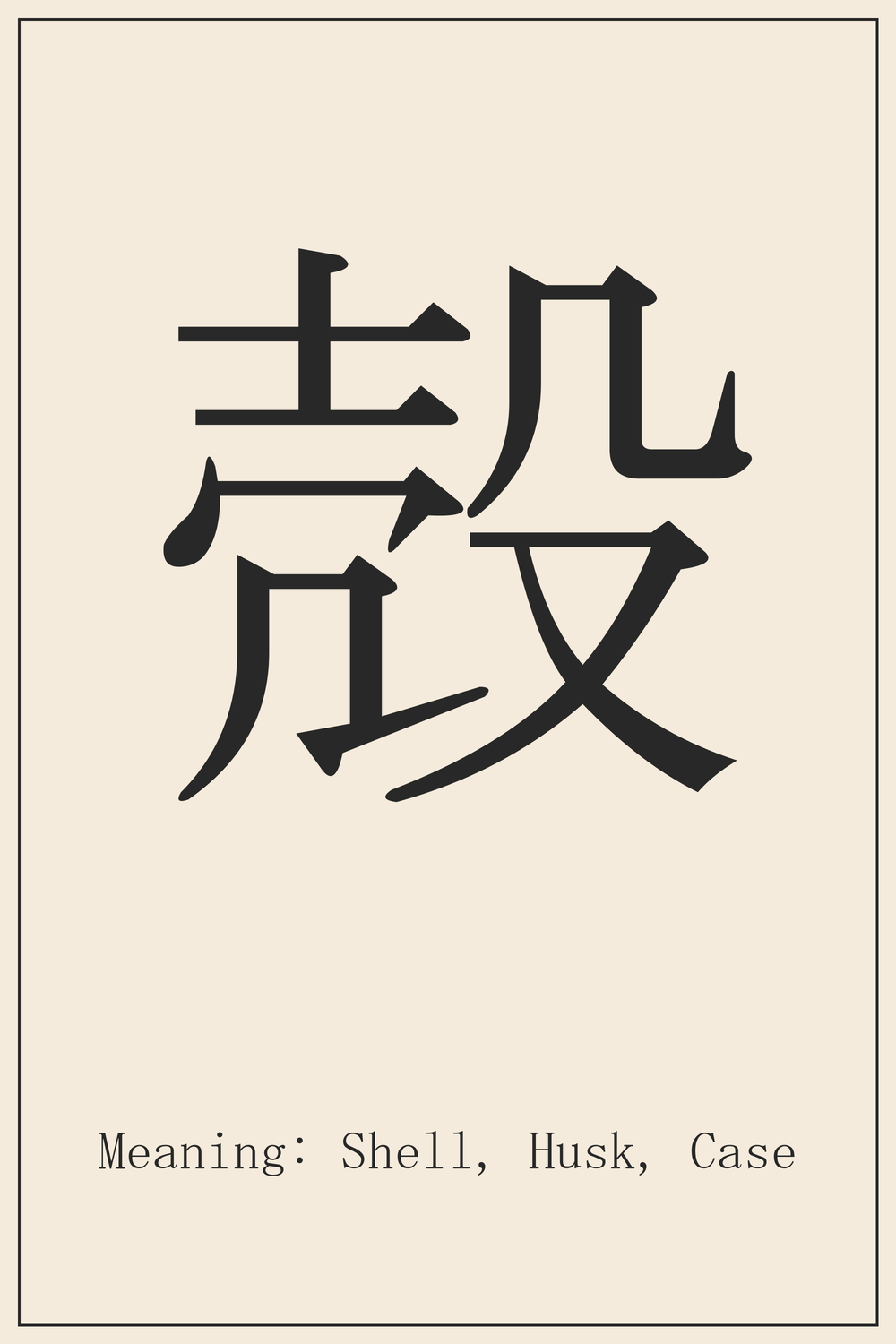
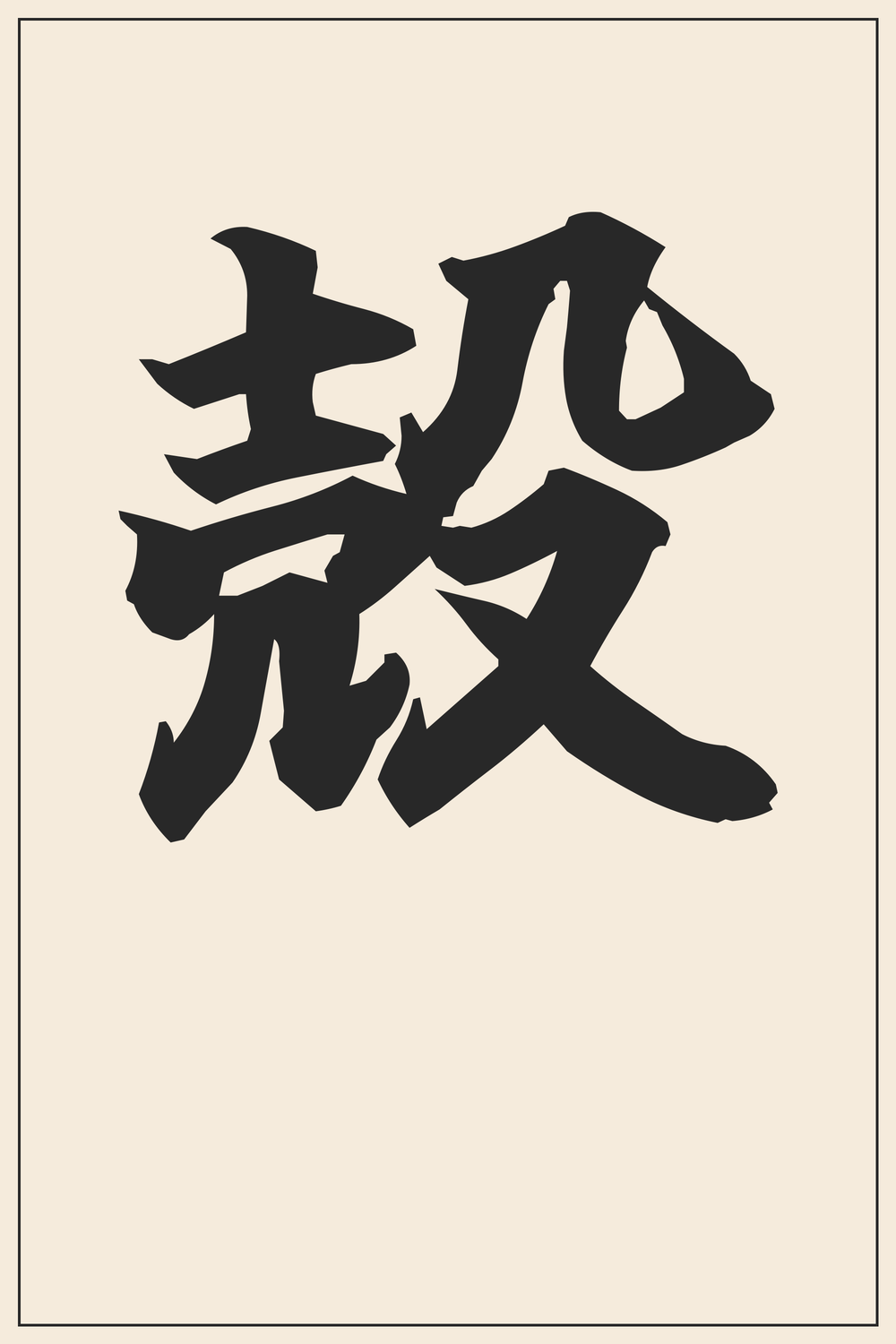
The Kanji 殻 embodies the concept of an outer covering, whether it be a fragile eggshell or a sturdy nut. It represents protection and the boundary between inside and out.
The atmosphere of a Kanji character changes dramatically depending on the font style. A character that looks elegant in a brush style might look bold and modern in a different font.
Recommendation:
Since a tattoo is permanent, we strongly recommend comparing various font styles beyond what is shown here. Use our designs as a trusted reference for the correct structure, but feel free to explore different artistic variations to find the perfect match for your vision.
The Deep Meaning Behind 殻
The Kanji 殻 (kara) fundamentally means ‘shell,’ ‘husk,’ or ‘case.’ It refers to the hard outer covering of an object, animal, or fruit that protects what is within. This concept is ancient, rooted in the observation of nature and the need to describe such protective layers.
Culturally, 殻 is often encountered in everyday contexts, from an eggshell (卵の殻) to a nut’s husk (木の実の殻). Metaphorically, it can also refer to a ‘shell’ one needs to break out of, symbolizing personal growth or overcoming limitations, although this nuance is less direct in the Kanji itself.
Kanji Breakdown
The Kanji 殻 is composed of two primary elements, each contributing to its overall meaning and phonetic quality.
Meaning: This component suggests ’empty’ or ‘hollowed out.’ It evokes the image of something that has been emptied, like a shell from which its contents have been removed.
Meaning: This radical represents a hand holding a club or spear, signifying ‘strike’ or ‘weapon.’ In the context of 殻, it suggests the action of breaking open or removing a hard outer layer.
Conclusion
The Kanji 殻, while seemingly simple, elegantly captures the essence of an outer covering, embodying both protection and the potential for new beginnings once that covering is shed. Its meaning is tangible and directly relatable to the natural world.
For a tattoo, 殻 offers a clear and understated statement, perfect for those who appreciate the straightforward beauty of natural forms or who resonate with the idea of a protective layer. Its moderate complexity ensures a clean and appealing design.
Comments