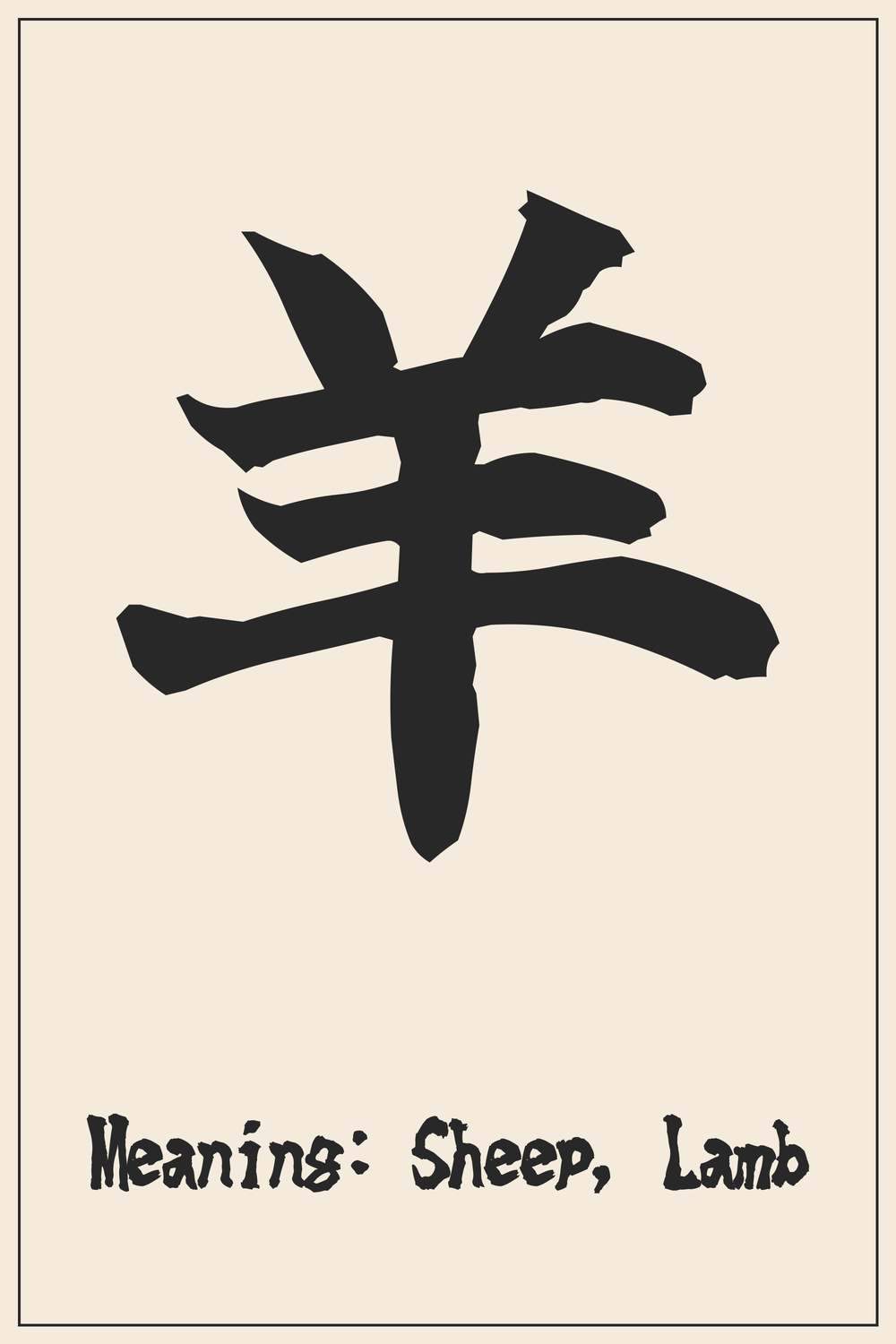
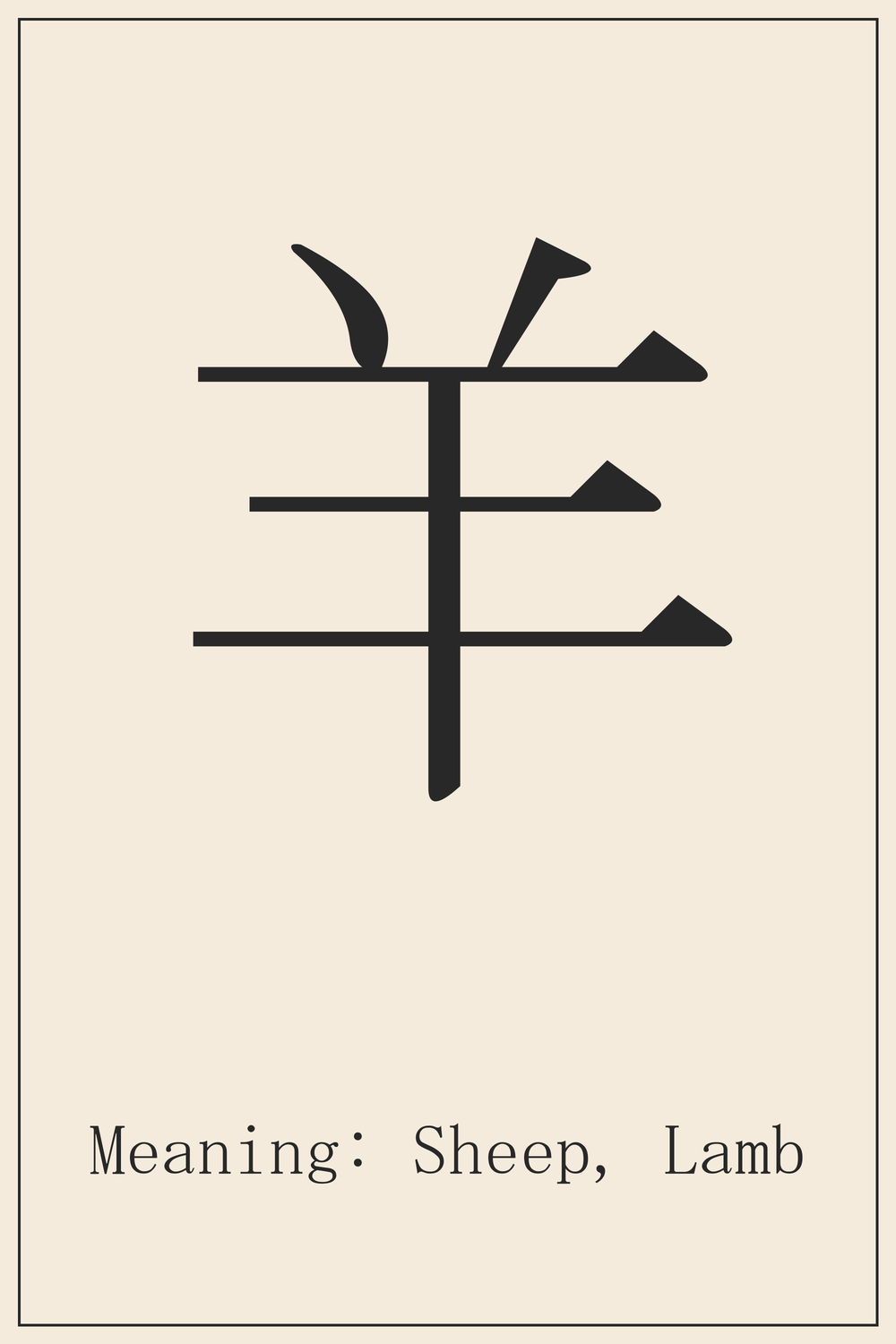
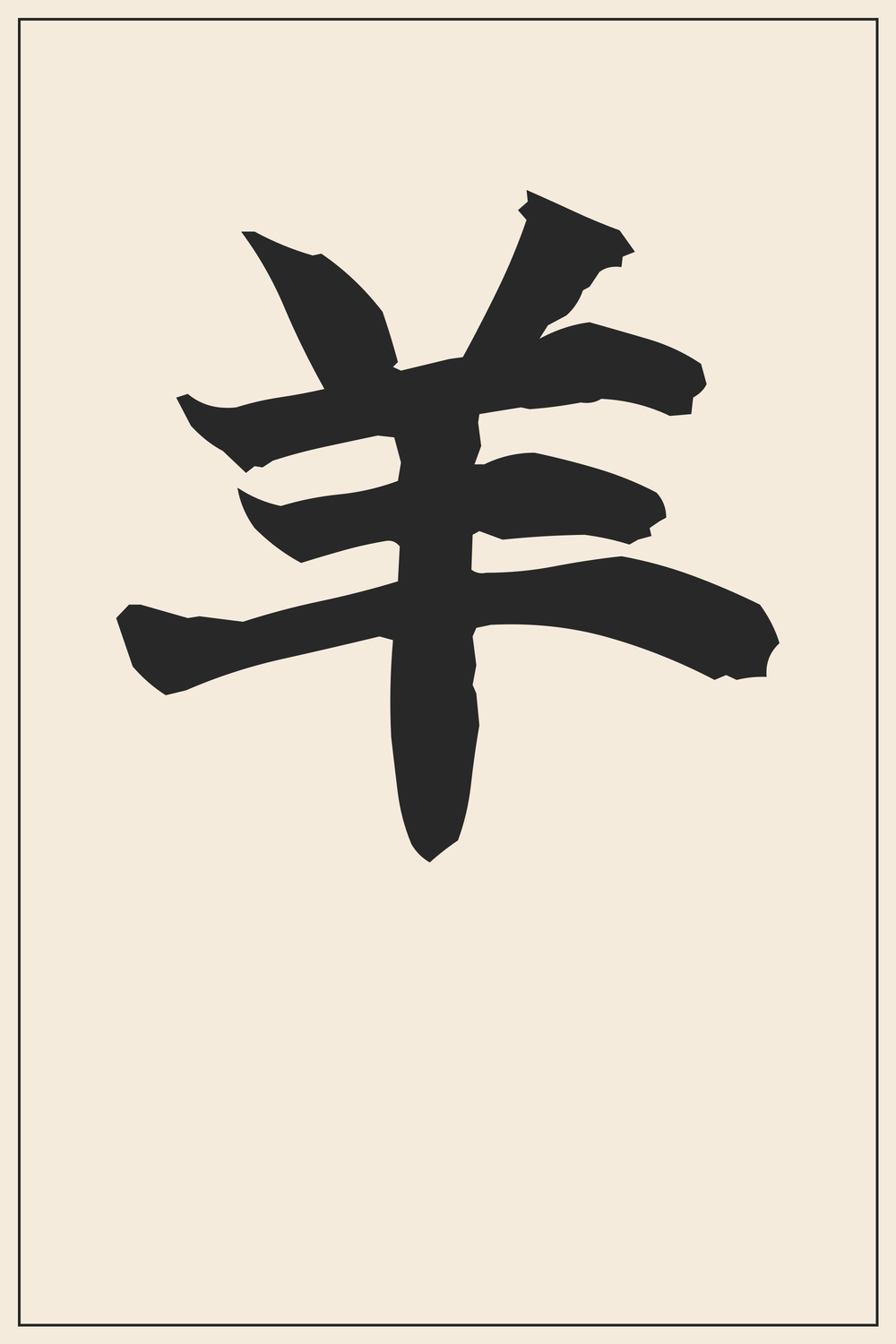
The Kanji 羊 (Hitsuji) embodies the spirit of gentleness and purity, representing the sheep. It offers a subtle yet profound symbol for those seeking a tattoo with soft strength and innate grace.
The atmosphere of a Kanji character changes dramatically depending on the font style. A character that looks elegant in a brush style might look bold and modern in a different font.
Recommendation:
Since a tattoo is permanent, we strongly recommend comparing various font styles beyond what is shown here. Use our designs as a trusted reference for the correct structure, but feel free to explore different artistic variations to find the perfect match for your vision.
The Deep Meaning Behind 羊
The Kanji 羊 (Hitsuji) is a classical pictograph that visually represents a sheep. Its earliest forms clearly depict the head, horns, and body of the animal, making it one of the most straightforward and ancient characters in the Japanese script derived from Chinese.
Culturally, sheep are admired for their gentle nature, purity, and the peace they embody. In East Asian traditions, the character 羊 is often associated with auspiciousness and good fortune, as its pronunciation ‘yáng’ in Chinese is a homophone for ‘sun’ (陽) and ‘ocean’ (洋), extending its positive connotations.
Kanji Breakdown
The character 羊 stands as a complete semantic and phonetic unit, functioning as its own radical. Its structure is inherently linked to its meaning.
Sheep, Lamb: This character is a pictograph of a sheep, with its upper strokes representing the horns and the lower strokes forming the body. It directly conveys the animal’s essence.
Conclusion
The Kanji 羊 (Hitsuji) is more than just a depiction of an animal; it’s a profound symbol of innocence, tranquility, and harmonious existence. Its simplicity in form belies a rich cultural depth, making it a powerful choice for personal expression.
Opting for 羊 as a tattoo can signify a connection to nature’s gentle spirit, a desire for peace, or even a tribute to family bonds and community, often metaphorically referred to as a ‘flock’. It’s an elegant choice for those who resonate with its serene and virtuous qualities.
Comments