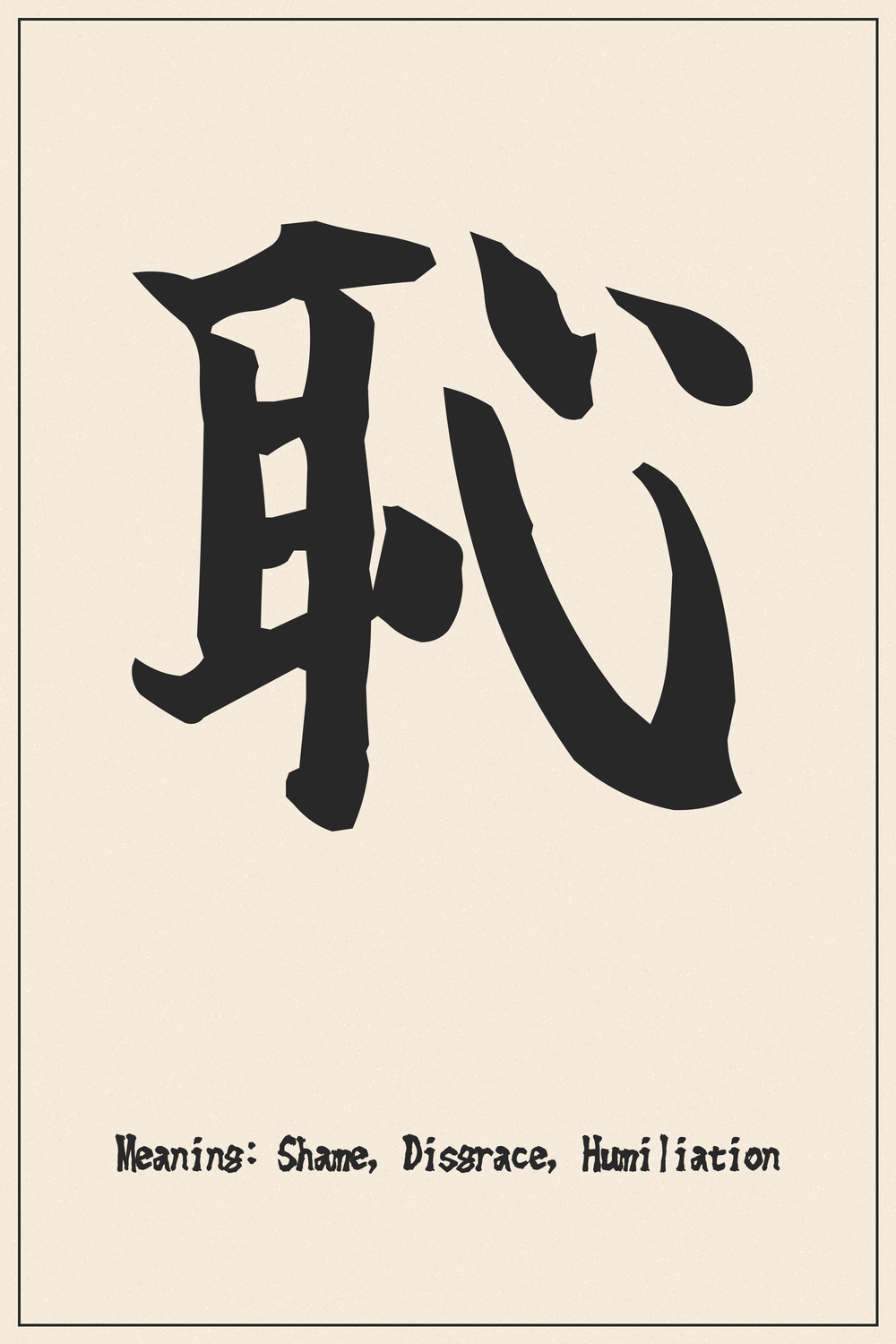
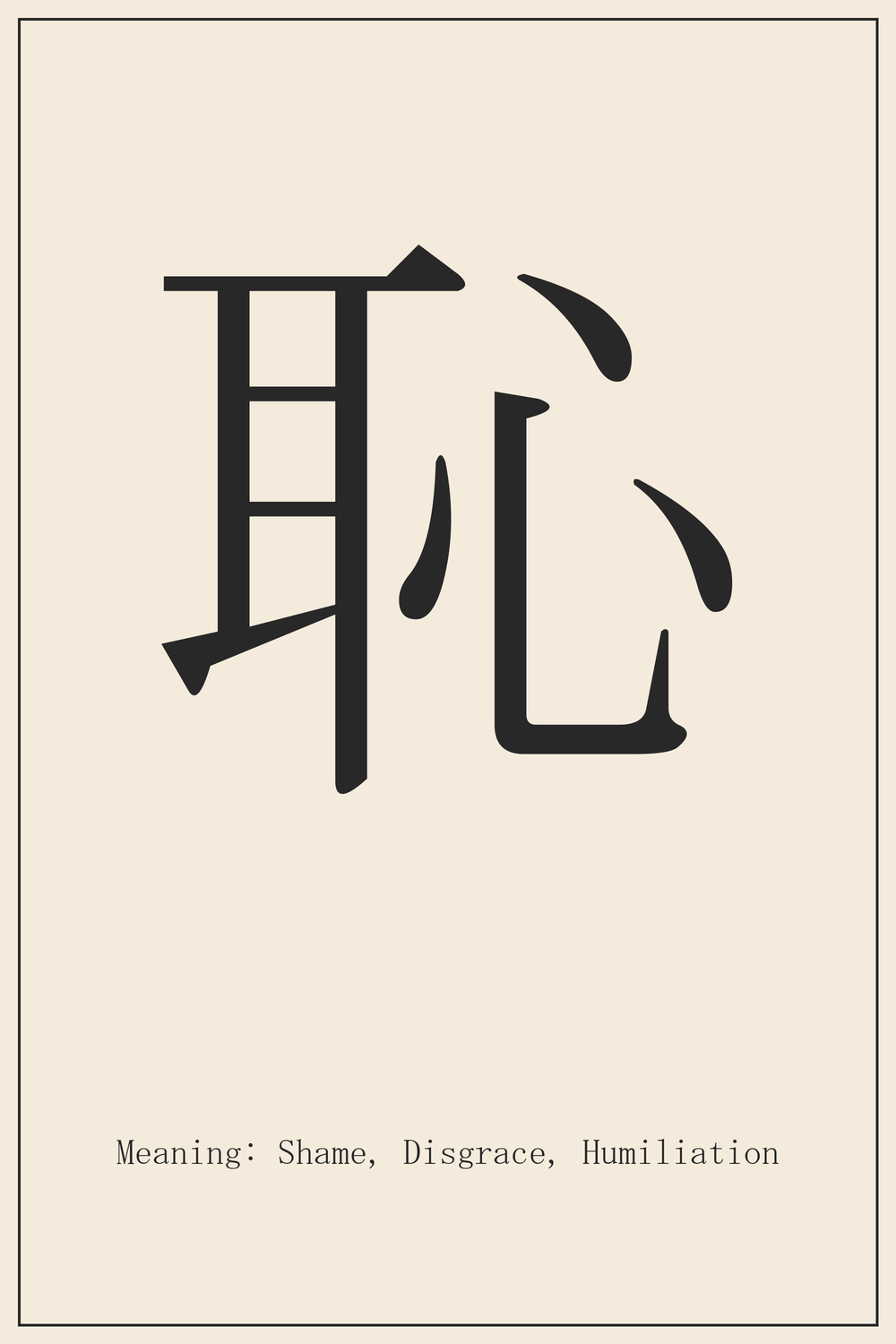
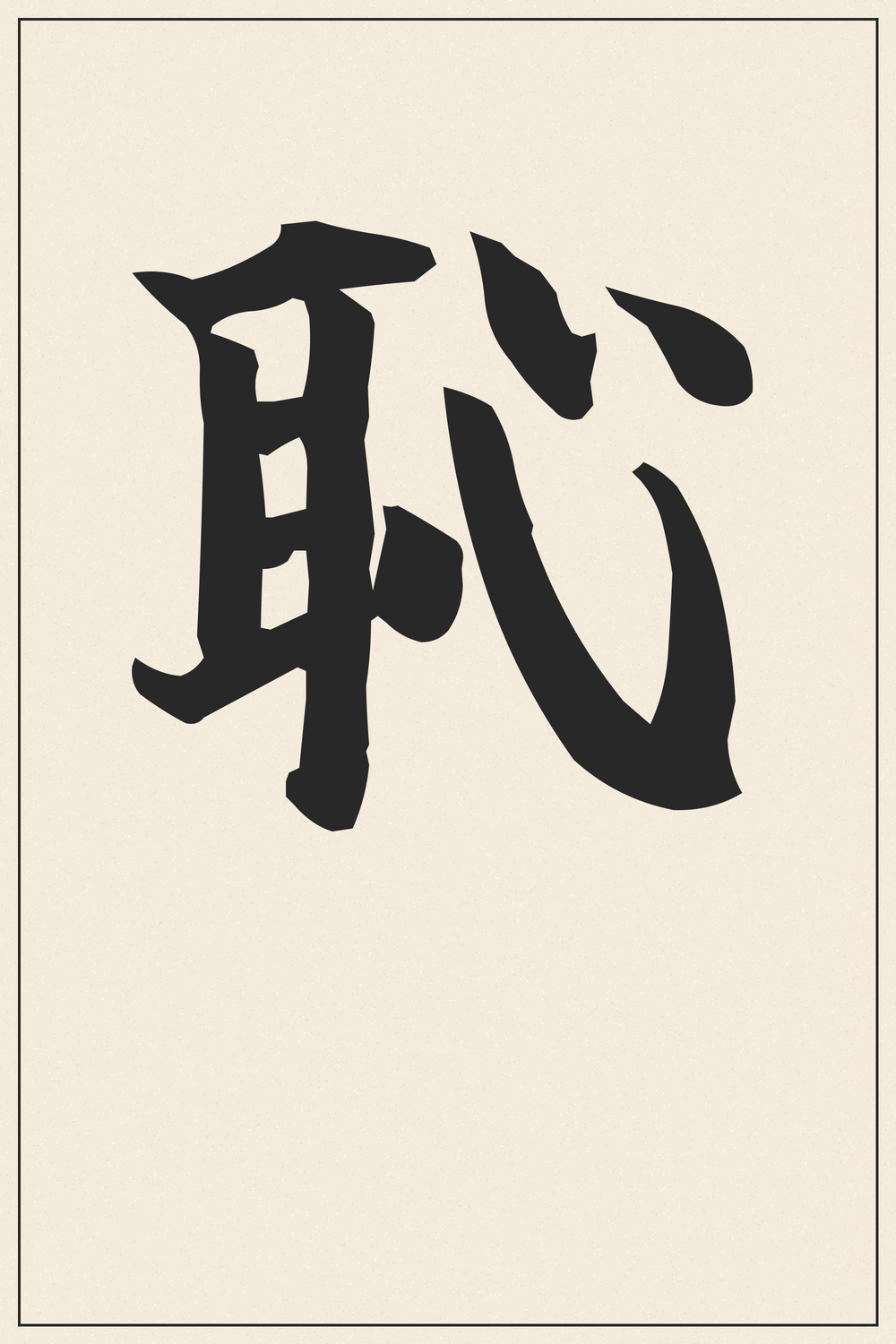
The Kanji 恥 (Haji) encapsulates the complex human emotion of shame, a powerful concept deeply rooted in self-awareness and social morality. It serves as a profound reminder of our internal compass and the impact of our actions.
The atmosphere of a Kanji character changes dramatically depending on the font style. A character that looks elegant in a brush style might look bold and modern in a different font.
Recommendation:
Since a tattoo is permanent, we strongly recommend comparing various font styles beyond what is shown here. Use our designs as a trusted reference for the correct structure, but feel free to explore different artistic variations to find the perfect match for your vision.
The Deep Meaning Behind 恥
The character 恥 combines 耳 (mimi), meaning ‘ear,’ and 心 (kokoro), meaning ‘heart’ or ‘mind.’ Ancient interpretations suggest the image of one’s ears reddening or ‘burning’ due to an inner feeling of impropriety or disgrace. This etymology vividly portrays the physical manifestation of an intense internal emotion.
In Japanese culture, 恥 is a fundamental emotion linked to honor and reputation, both personal and familial. It acts as a significant social regulator, often motivating individuals to adhere to societal norms and uphold their integrity. The concept of ‘haji o shirasu’ (to make someone feel shame) highlights its power as a tool for moral education and social accountability.
Kanji Breakdown
The Kanji 恥 is a fascinating composite, clearly illustrating its conceptual meaning through its components.
Meaning: Ear
Explanation: This component visually represents the ear, hinting at the physical reaction of blushing or reddening that occurs when one experiences intense shame or embarrassment. It grounds the abstract emotion in a tangible human response.
Meaning: Heart, Mind, Spirit
Explanation: The ‘heart’ radical signifies the internal source of the emotion. It points to the inner feeling, consciousness, and moral judgment that lead to the experience of shame. This dual representation—external manifestation and internal origin—makes 恥 a potent symbol.
Conclusion
The Kanji 恥 is more than just ‘shame’; it embodies a deep sense of conscience, self-reflection, and moral responsibility. It reminds us of the profound link between our actions, our inner feelings, and our place within a community.
For a tattoo, 恥 can be a powerful, if challenging, symbol. It is chosen not lightly, but by those who seek a constant reminder to live with integrity, to learn from mistakes, and to cultivate a strong moral character. It represents the courage to confront one’s own imperfections and strive for honor.
Comments