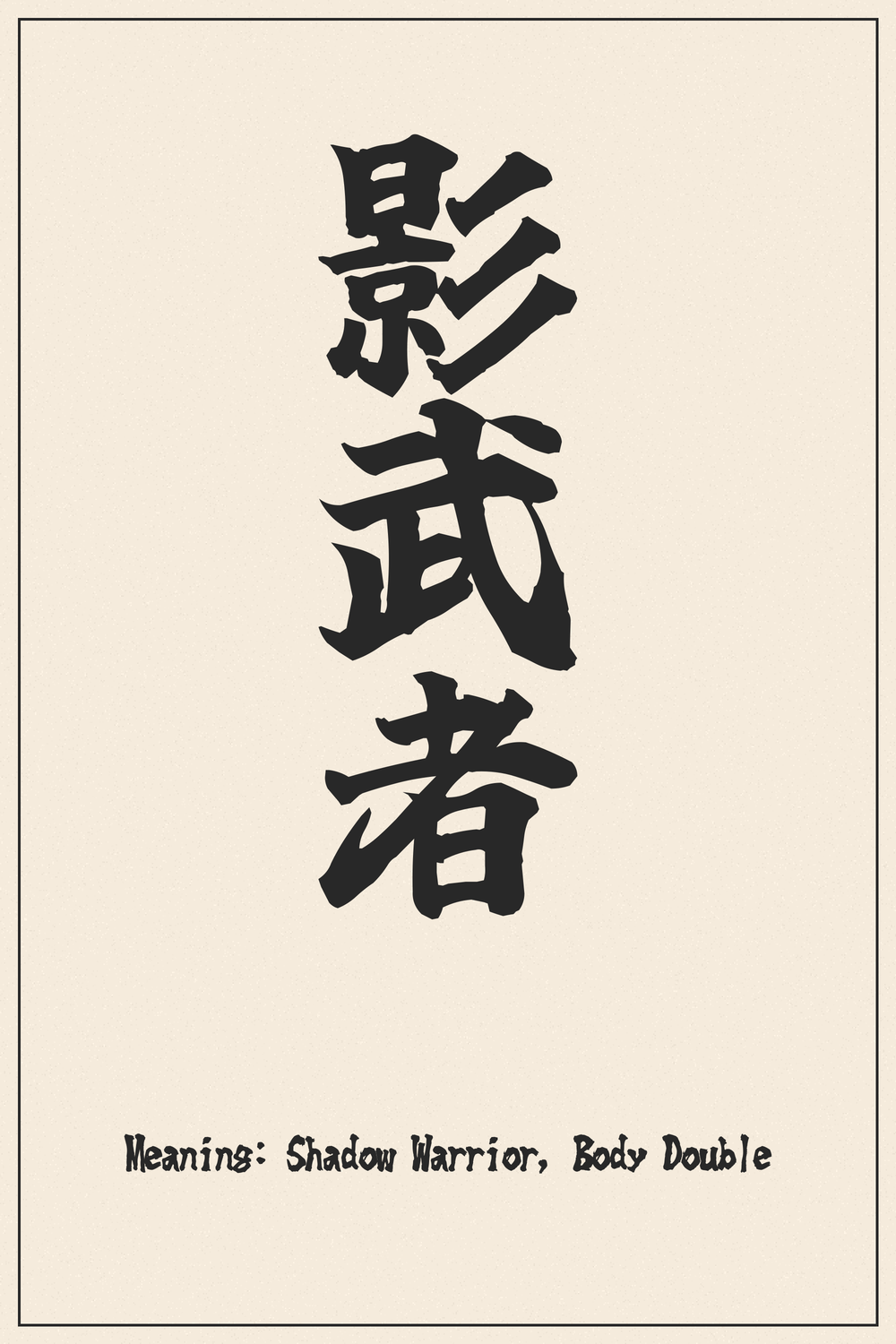
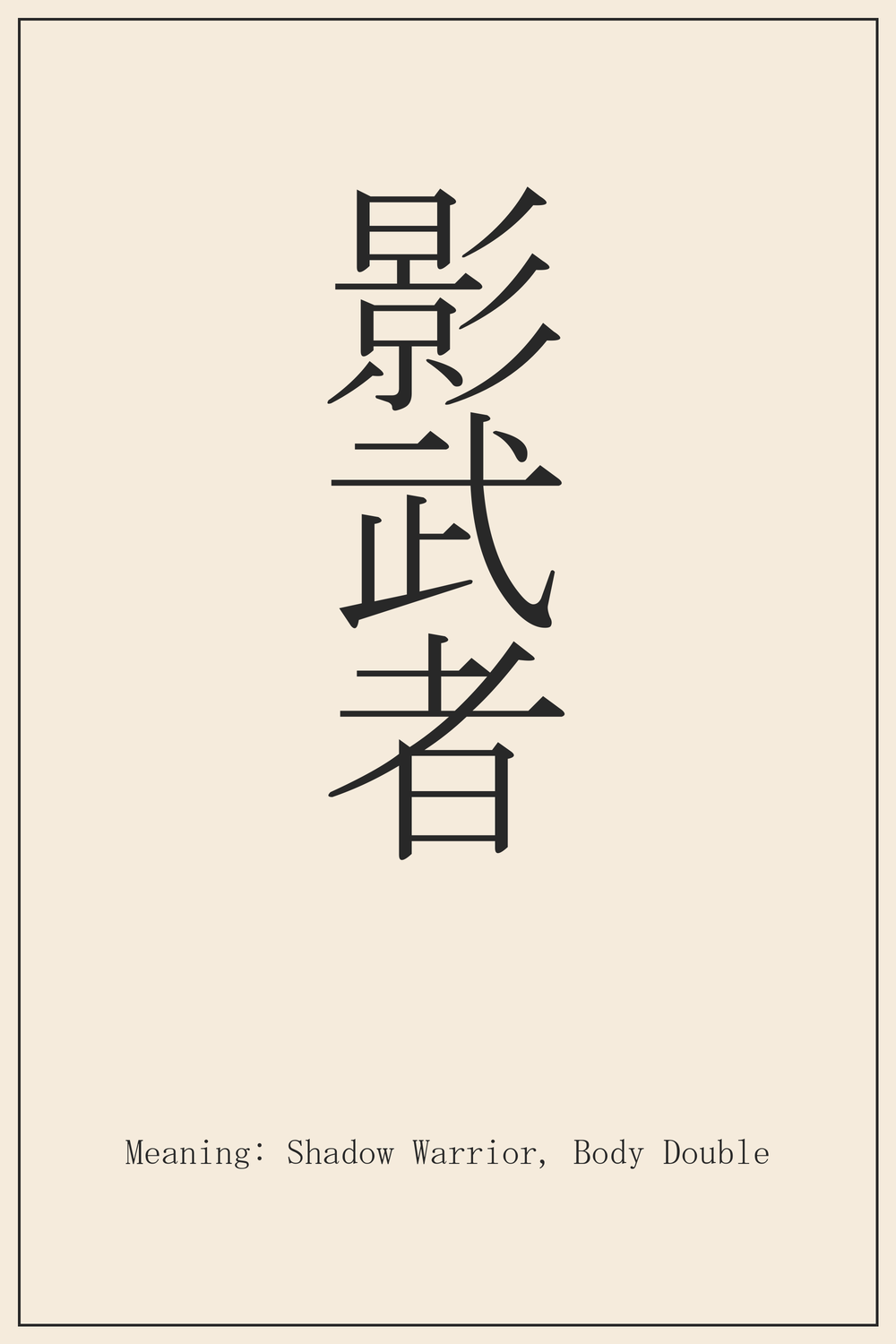
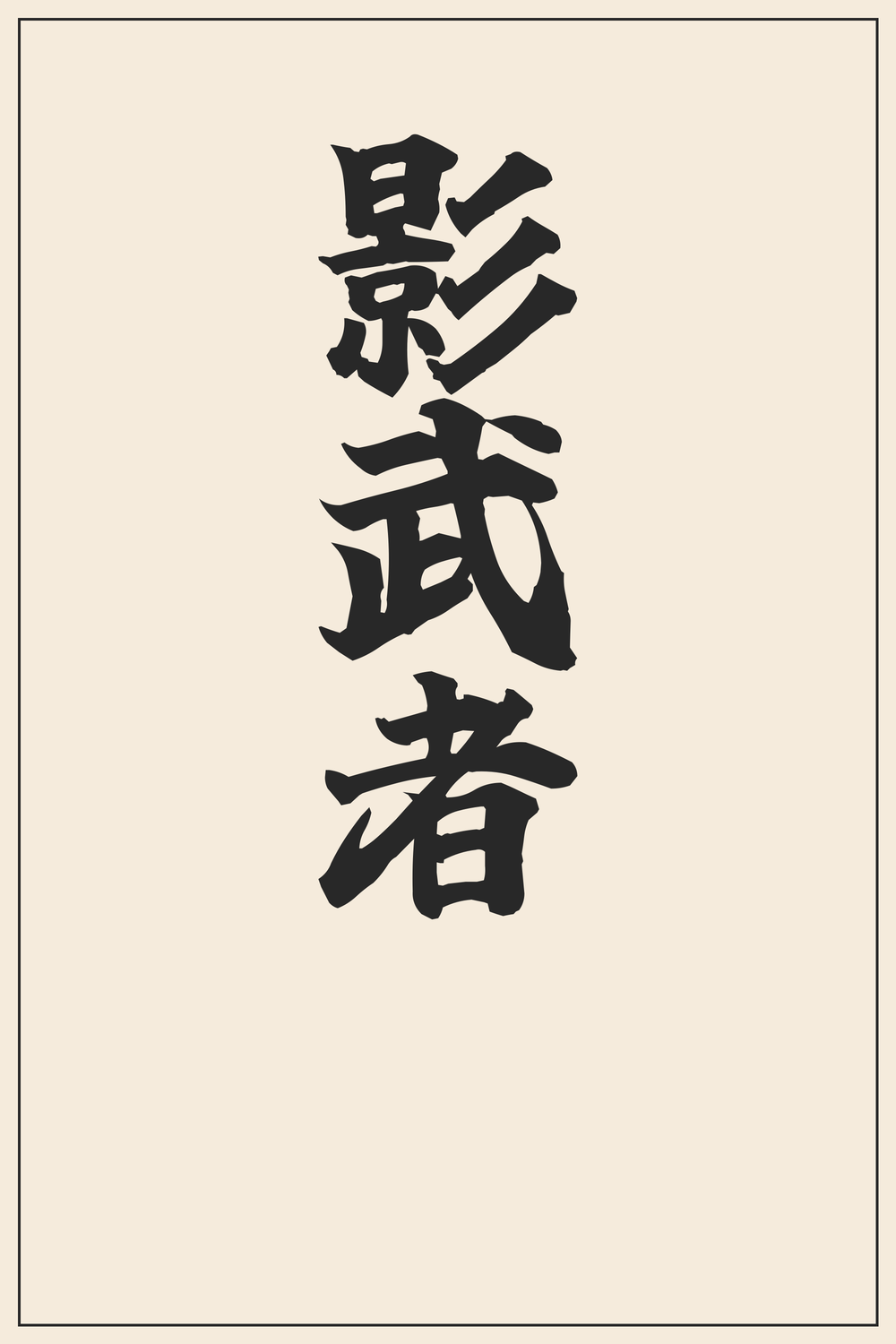
Embrace the enigmatic spirit of the ‘Shadow Warrior,’ a figure steeped in the strategic depth of feudal Japan. This powerful Kanji compound speaks to loyalty, tactical genius, and the art of deception, making it a compelling choice for those drawn to hidden strengths.
The atmosphere of a Kanji character changes dramatically depending on the font style. A character that looks elegant in a brush style might look bold and modern in a different font.
Recommendation:
Since a tattoo is permanent, we strongly recommend comparing various font styles beyond what is shown here. Use our designs as a trusted reference for the correct structure, but feel free to explore different artistic variations to find the perfect match for your vision.
The Deep Meaning Behind Kagemusha
The term ‘Kagemusha’ (影武者) translates literally as ‘shadow warrior’ or ‘phantom warrior.’ Historically, these were body doubles employed in feudal Japan to impersonate a lord or military commander, protecting their life and reputation during battle or public appearances. Their existence often remained a closely guarded secret, a testament to strategic brilliance and survival.
The concept gained significant recognition through figures like Takeda Shingen, whose legendary use of kagemusha is famously depicted in Akira Kurosawa’s critically acclaimed film ‘Kagemusha.’ Beyond mere impersonation, a kagemusha embodied the very essence of a leader, enduring immense risk to maintain morale and deter enemies, showcasing ultimate devotion and self-sacrifice for a greater cause.
Kanji Breakdown
Each character within ‘Kagemusha’ contributes to its rich meaning, layering concepts of perception, martial prowess, and personhood.
Shadow, Silhouette, Reflection: This character depicts a ‘shadow’ or ‘silhouette.’ Its left radical, 景 (kei), means ‘scenery’ or ‘view,’ suggesting something observed. The right side, 彡 (san), relates to hair or bristles, often indicating a patterned or textured form, conveying the elusive and distinct outline of a shadow.
Warrior, Military, Martial: ‘Bu’ signifies ‘martial’ or ‘military.’ Its ancient form combines 止 (shi), meaning ‘to stop,’ and 戈 (ka), meaning ‘halberd’ or ‘spear.’ This suggests the act of ‘stopping a weapon’ or ‘preventing conflict through force,’ embodying the warrior’s role in maintaining order.
Person, One Who: ‘Sha’ denotes ‘person’ or ‘one who.’ While its etymology is complex, it’s often seen as a combination related to ‘seeing’ (represented by 日, sun/eye) and ‘elderly’ (老, simplified here), pointing to an individual or a learned person. In context, it clearly identifies the ‘person’ who performs the action of being a ‘shadow warrior.’
Conclusion
Choosing ‘Kagemusha’ for a tattoo is a powerful statement, embodying traits of strategic thinking, unwavering loyalty, and the quiet strength of those who operate behind the scenes. It represents the profound impact of a hidden influence and the ultimate sacrifice for a cherished cause.
This Kanji compound serves as a timeless emblem for anyone who values discretion, tactical intelligence, and a deep sense of duty. Its historical resonance and strong visual presence make it an exceptional choice for a tattoo that conveys depth and a warrior spirit.
Comments