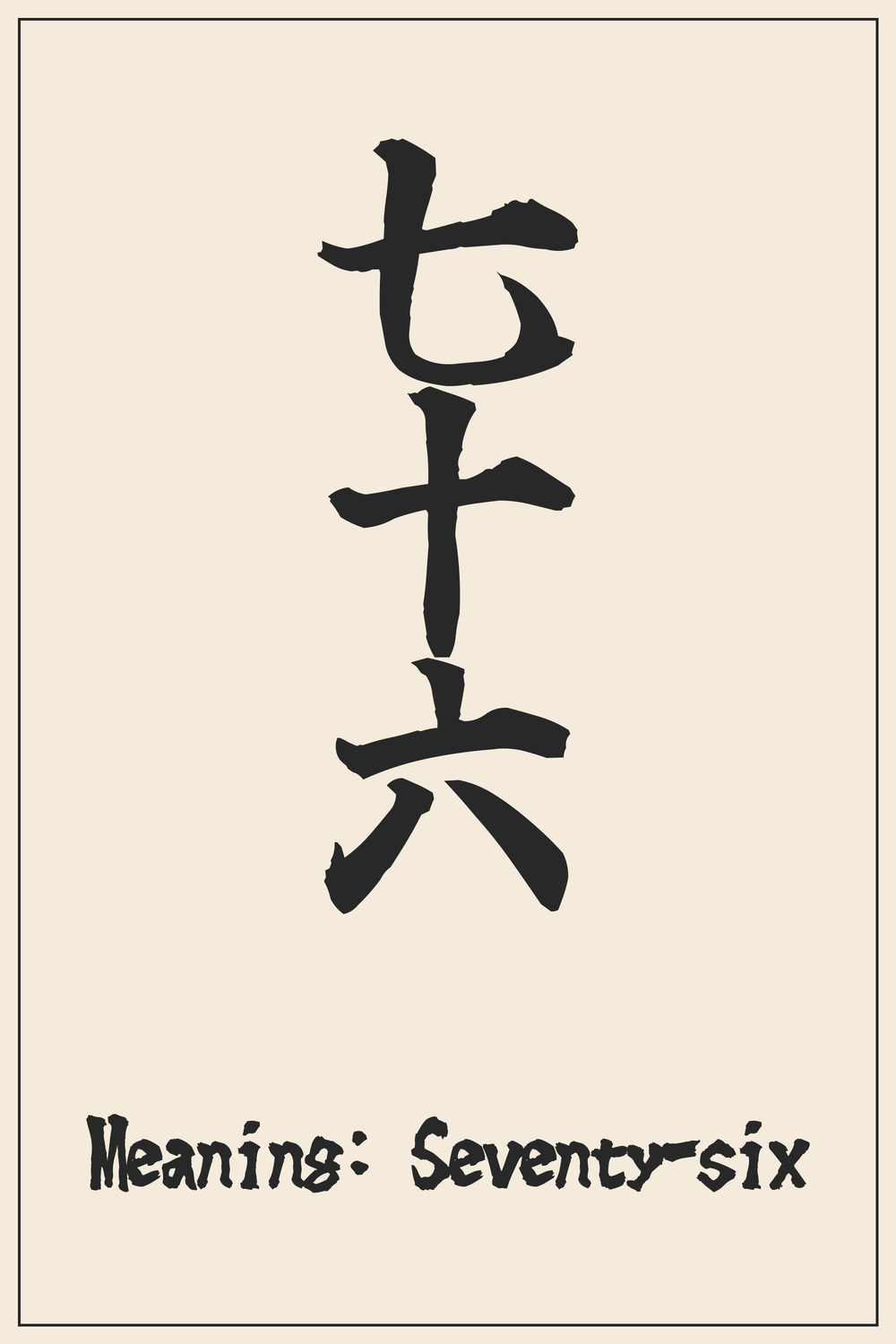
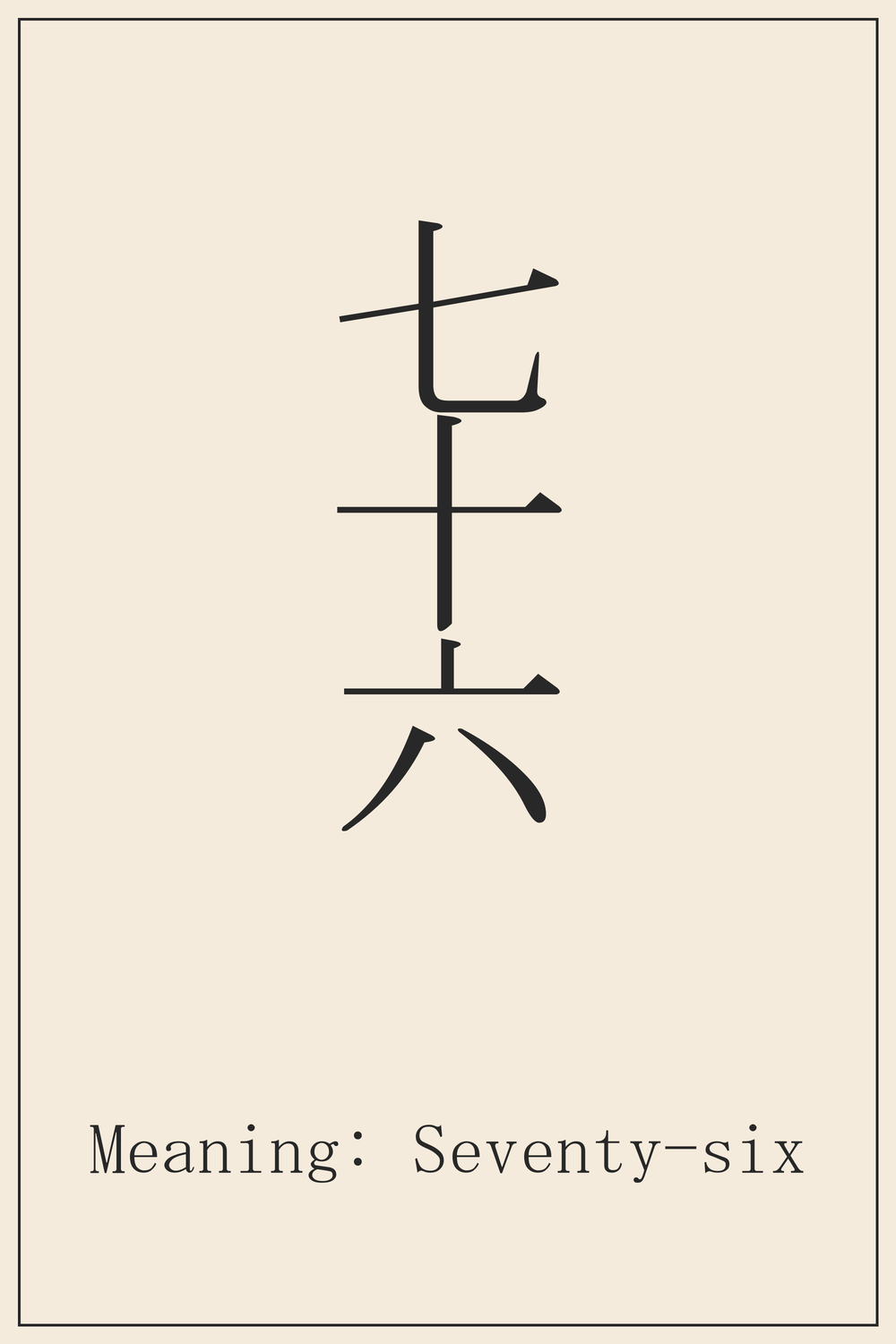
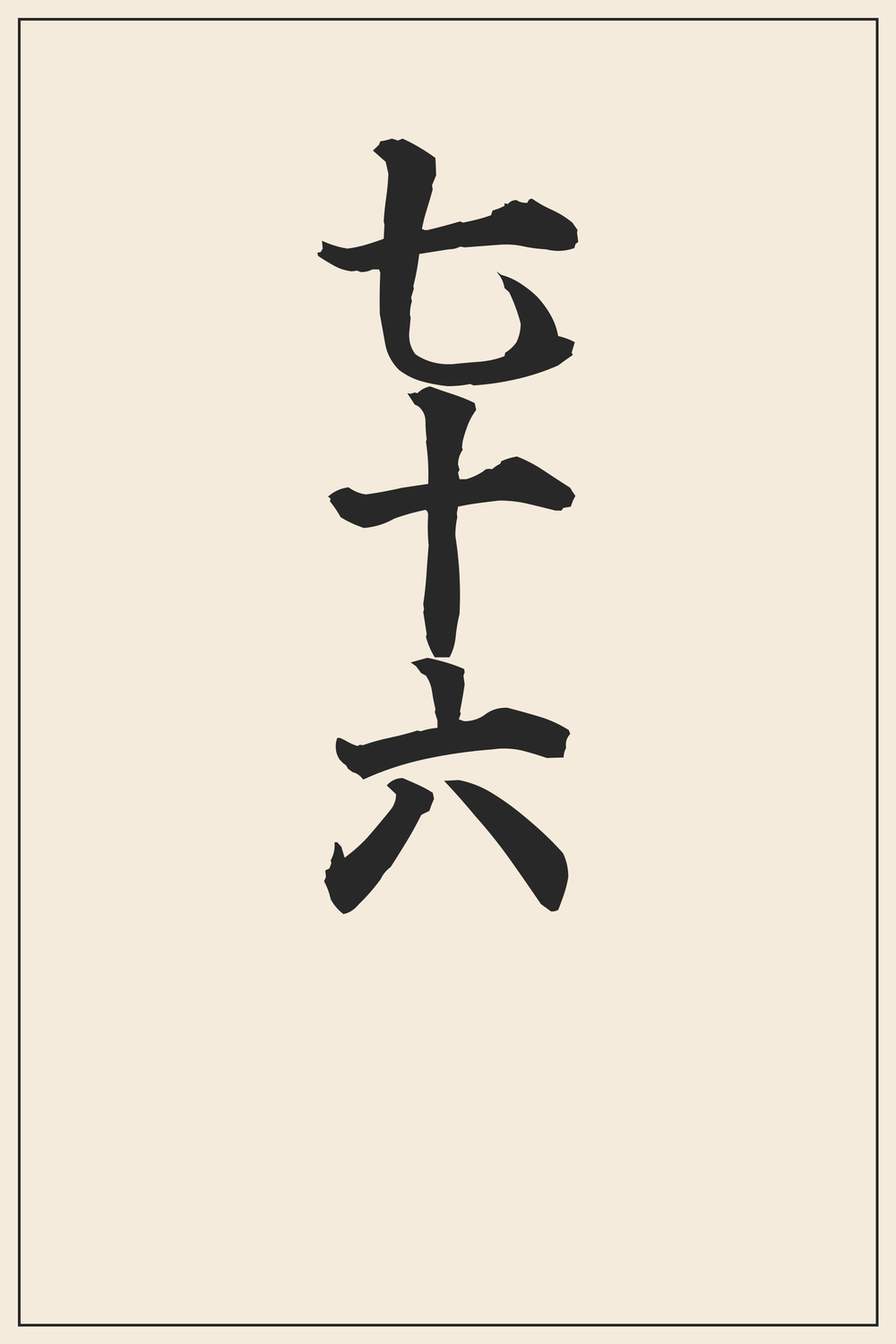
Numbers, while seemingly straightforward, hold a foundational role in defining our world and marking significant life milestones. The Kanji for ‘Seventy-six’ embodies not just a quantity, but potentially a specific point in one’s journey or a symbolic count.
The atmosphere of a Kanji character changes dramatically depending on the font style. A character that looks elegant in a brush style might look bold and modern in a different font.
Recommendation:
Since a tattoo is permanent, we strongly recommend comparing various font styles beyond what is shown here. Use our designs as a trusted reference for the correct structure, but feel free to explore different artistic variations to find the perfect match for your vision.
The Deep Meaning Behind 七十六
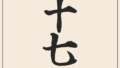
The number seventy-six is formed by combining three fundamental Kanji: 七 (seven), 十 (ten), and 六 (six). Each of these characters carries a distinct etymological origin. 七, meaning ‘seven’, is believed to have originated from a simple pictograph depicting two crossed lines, representing a basic counting mark. 十, meaning ‘ten’, commonly depicts a vertical line passing through a horizontal one, symbolizing completeness or a full cycle in counting.
In Japanese culture, while seventy-six doesn’t have a specific ceremonial significance like some other milestone ages (e.g., Koki for 70 or Kishu for 77), numbers inherently serve as markers of progress, achievement, and the passage of time. As a numerical representation, 七十六 can symbolize a significant personal milestone, an age reached, or a specific quantity with profound meaning to the individual, embodying continuity and accumulated experience.
Kanji Breakdown
The Kanji compound 七十六 is clearly understood by examining its constituent characters:
Meaning: Represents the number seven, often depicted as a simple crossed line in ancient scripts, indicating a numerical count.
Meaning: Meaning ‘ten’, this character historically derives from a pictograph of a vertical line passing through a horizontal one, symbolizing completion or a full count.
Meaning: Meaning ‘six’, its ancient form is believed to have been a pictogram of a dwelling or shelter, later adopted to signify the number six.
Conclusion
The Kanji 七十六, representing the number seventy-six, is more than just a numerical value; it can symbolize a significant juncture, an age achieved, or a personal count of experiences. It is a testament to accumulation and continuity, a simple yet powerful marker in the journey of life.
Choosing 七十六 for a tattoo can serve as a personal emblem of a specific year, an important anniversary, or a profound milestone. Its clean, traditional script offers a clear and enduring symbol of this numerical significance, making it a meaningful and aesthetically pleasing choice for a permanent mark.
Comments