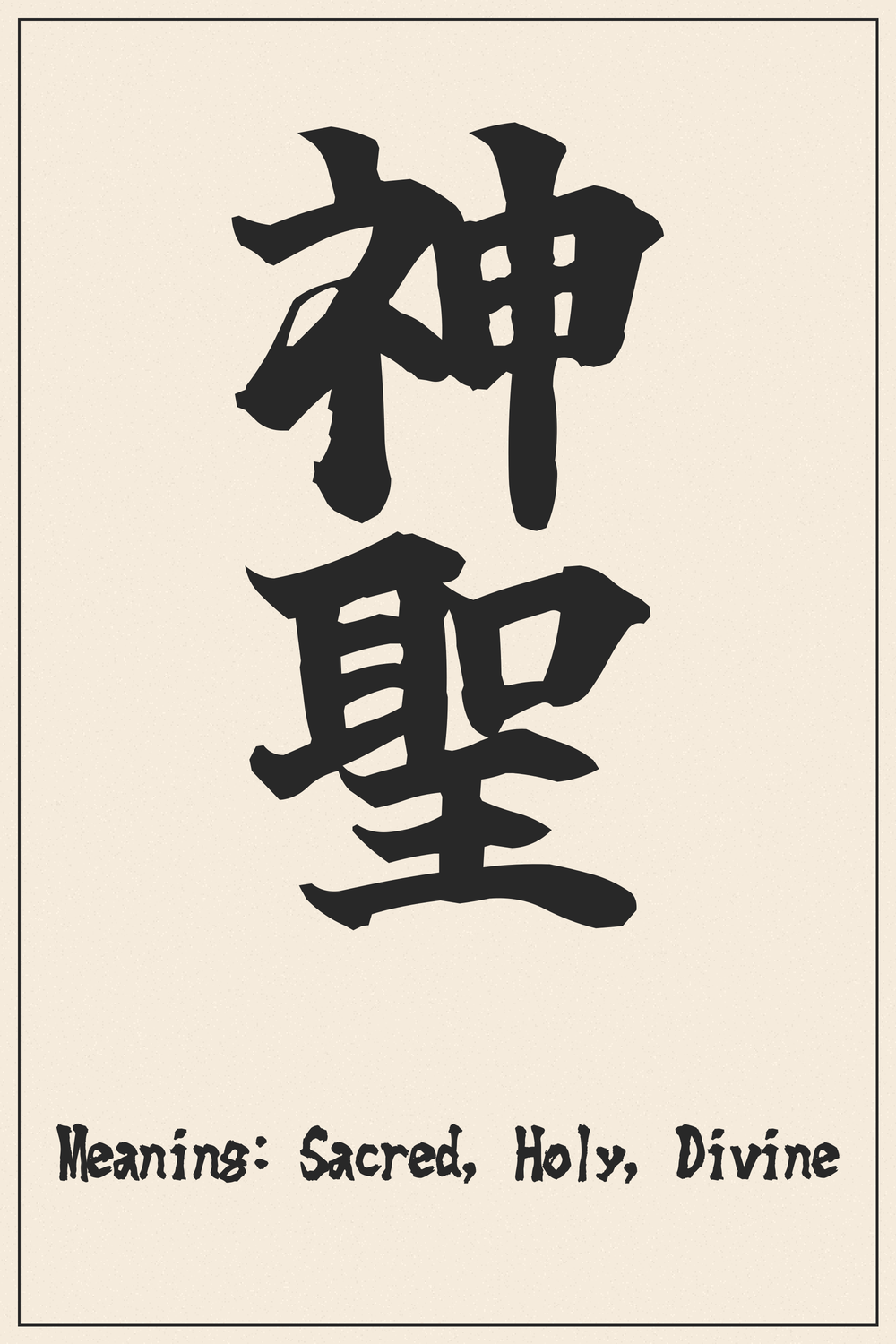
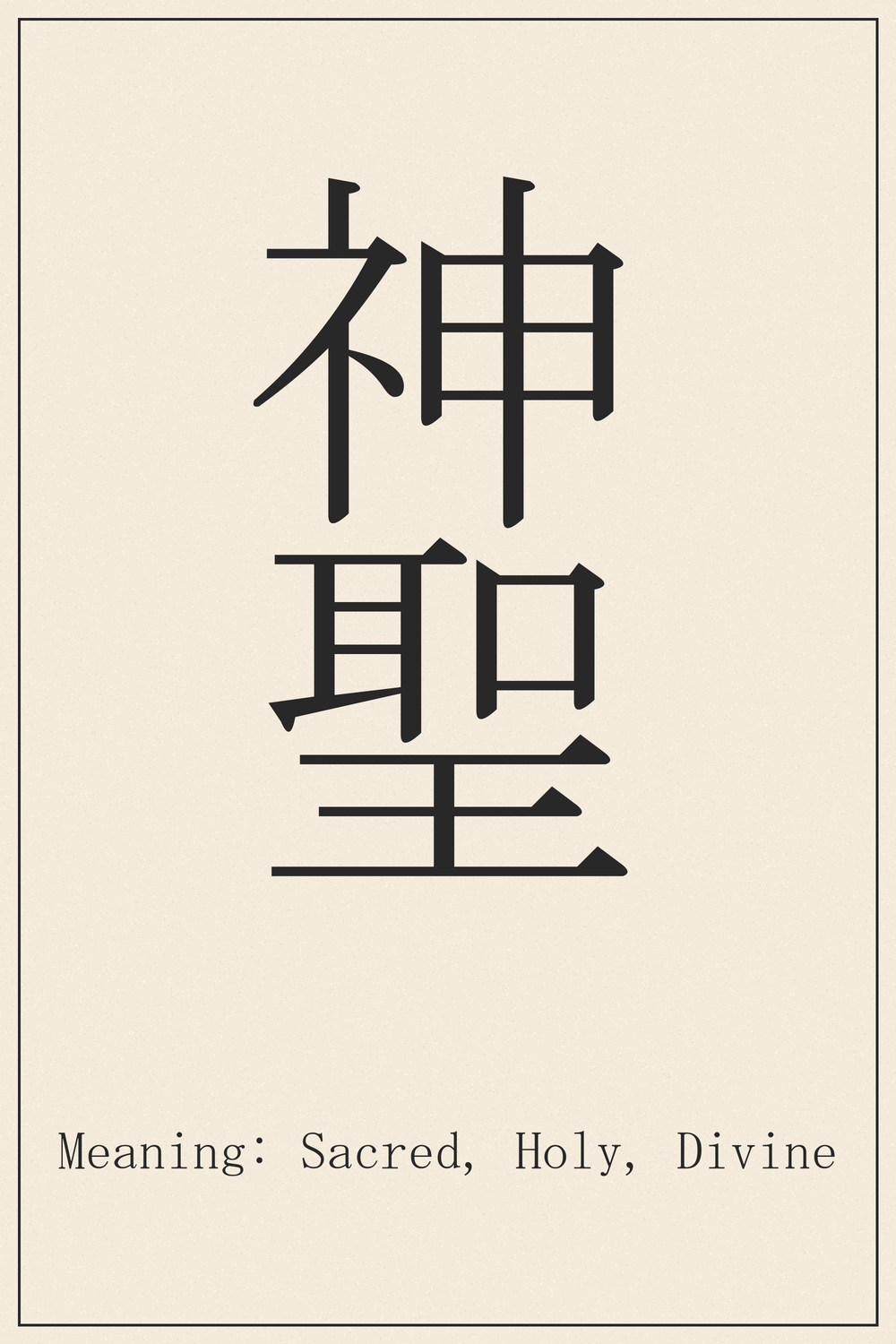
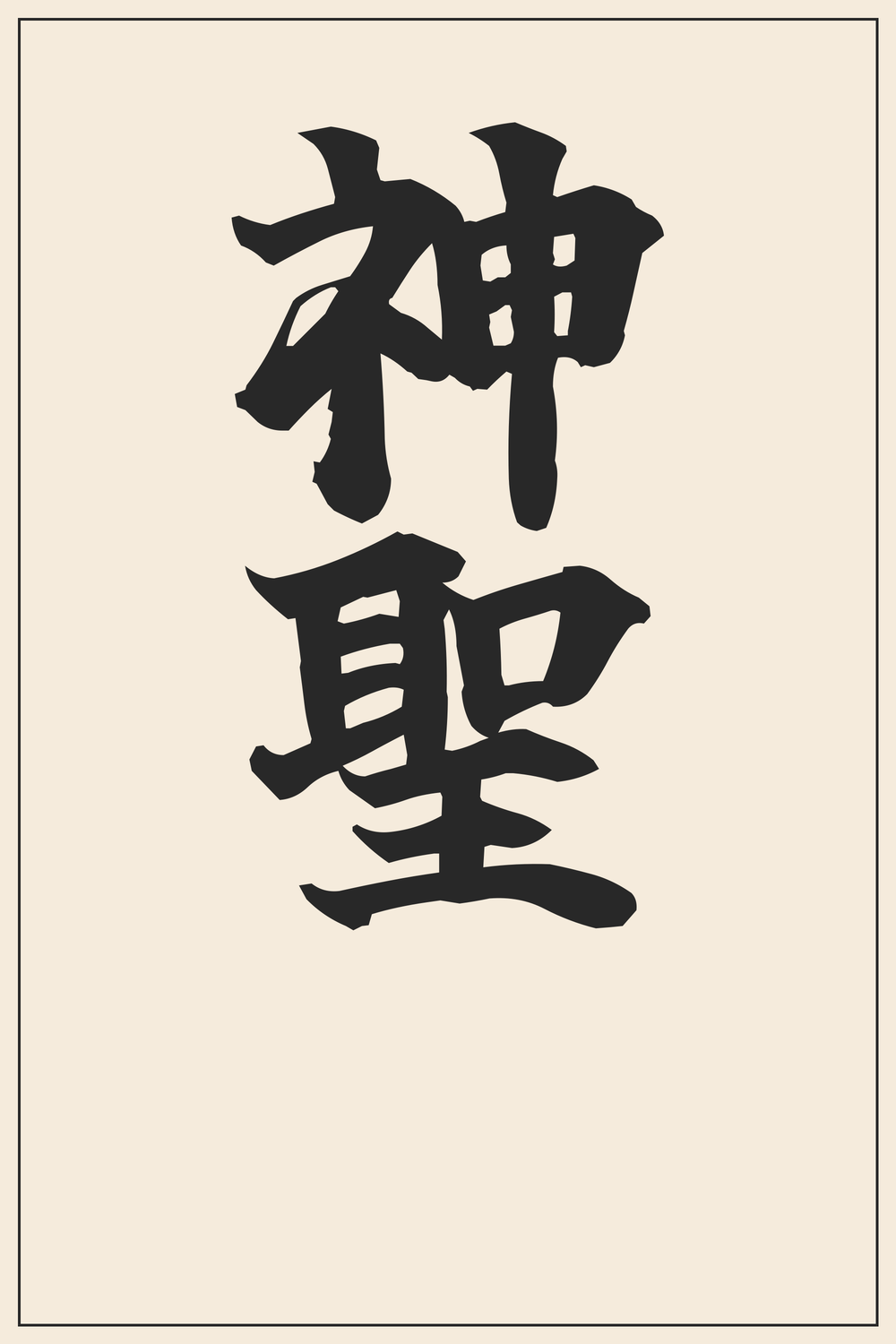
Delve into the profound depths of ‘神聖’ (Shinsei), a Kanji combination that resonates with spiritual purity and reverence. This powerful term captures the essence of that which is beyond the mundane, connecting us to the divine.
The atmosphere of a Kanji character changes dramatically depending on the font style. A character that looks elegant in a brush style might look bold and modern in a different font.
Recommendation:
Since a tattoo is permanent, we strongly recommend comparing various font styles beyond what is shown here. Use our designs as a trusted reference for the correct structure, but feel free to explore different artistic variations to find the perfect match for your vision.
The Deep Meaning Behind 神聖
The term ‘神聖’ (Shinsei) encapsulates the concept of sacredness, holiness, and divinity in Japanese culture and thought. It signifies a profound reverence for that which is perceived as pure, untouchable, and connected to a higher power or spiritual truth.
This concept is deeply embedded in Shintoism, Japan’s indigenous religion, where natural elements, revered ancestors, and specific locations are often considered ‘神聖’ (sacred). It speaks to an intrinsic respect for the spiritual dimension of existence, highlighting purity and awe.
Kanji Breakdown
The compound ‘神聖’ is formed from two powerful Kanji, each contributing significantly to its overall meaning of divine sacredness.
Meaning: God, spirit, deity, divine.
Its components include 示 (shimesu), representing an altar or showing divine revelation, and 申 (shin), an ancient depiction of lightning, symbolizing divine pronouncements. Together, it conveys a connection to the divine or supernatural.
Meaning: Holy, sacred, sage.
This character combines 耳 (mimi – ear), 口 (kuchi – mouth), and an older form of 人 (hito – person). It originally depicted someone who listens well and speaks wisely, thus a sage or a person imbued with spiritual wisdom and holiness.
Conclusion
The Kanji ‘神聖’ (Shinsei) offers a powerful and elegant way to express sacredness, holiness, and a connection to the divine. It represents a profound respect for the spiritual aspects of life and the inherent purity within existence.
Choosing ‘神聖’ for a tattoo is a testament to one’s reverence for spiritual values and the sanctity of life. Its balanced script and deep cultural resonance make it a timeless symbol, allowing you to carry a piece of enduring spiritual wisdom with you always.
Comments