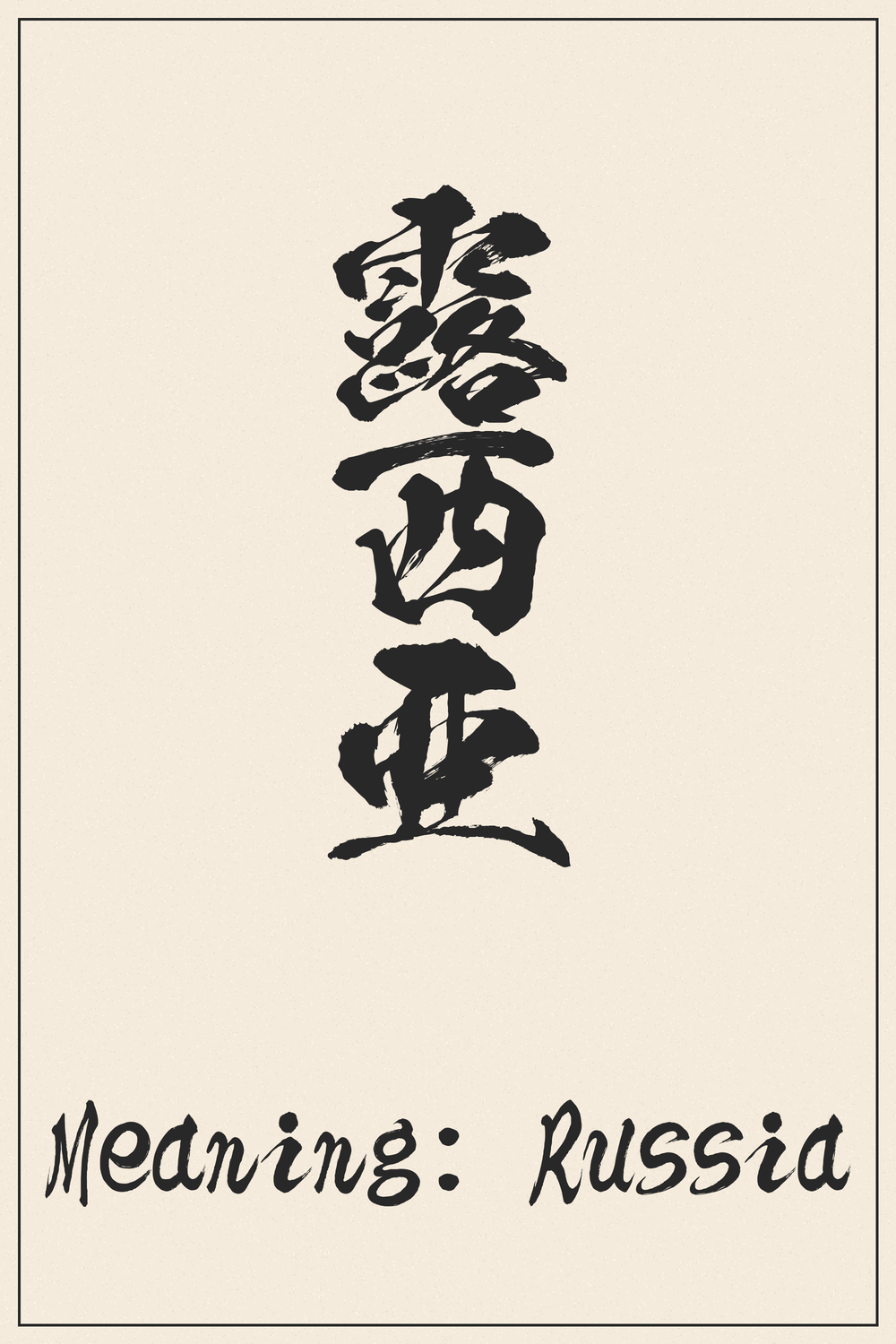
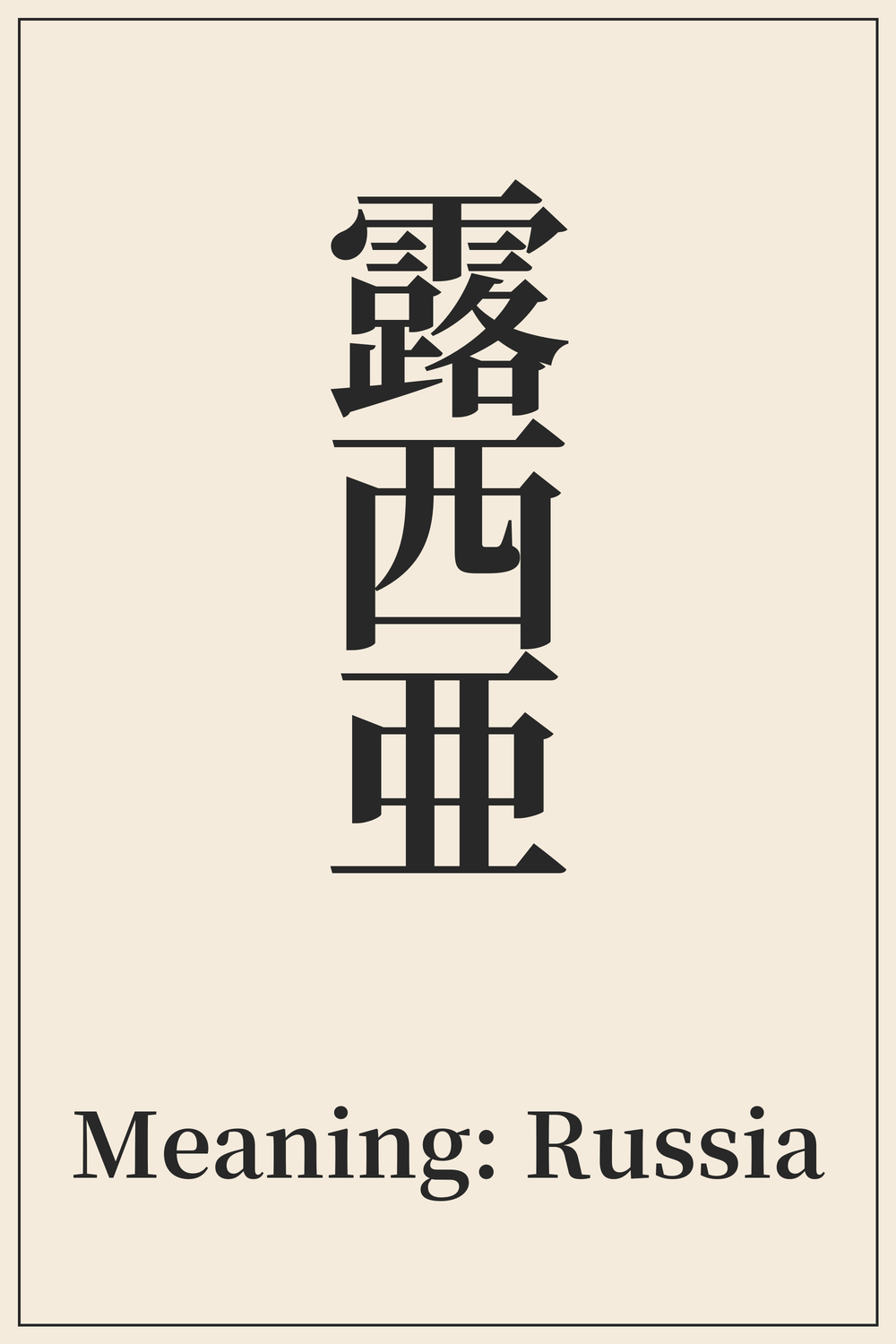
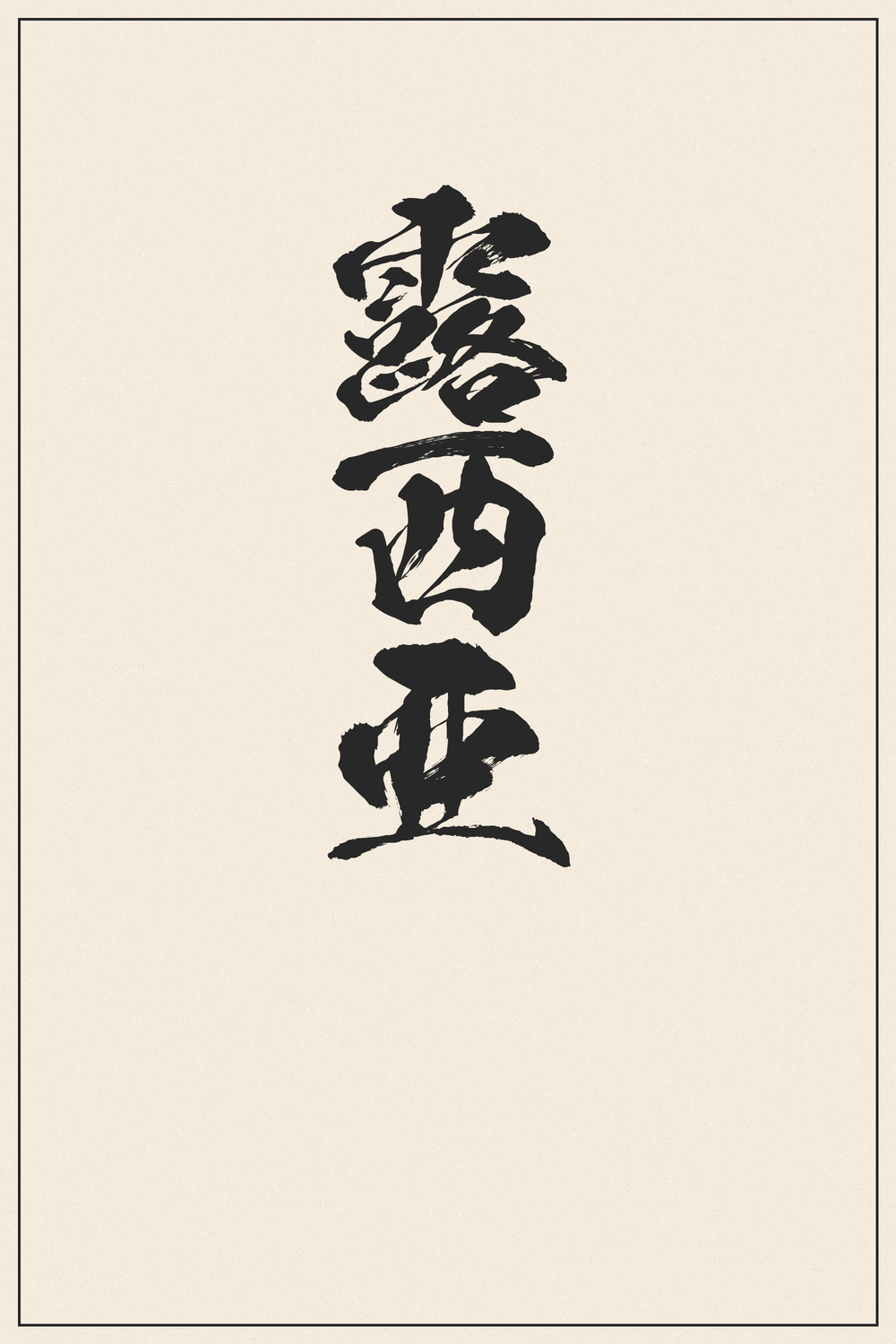
Discover ‘Roshia,’ the powerful Kanji representation for Russia, an elegant example of how Japanese adapts foreign names. This phonetic transcription offers a unique cultural lens into a major world nation.
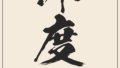
The atmosphere of a Kanji character changes dramatically depending on the font style. A character that looks elegant in a brush style might look bold and modern in a different font.
Recommendation: Since a tattoo is permanent, we strongly recommend comparing various font styles beyond what is shown here. Use our designs as a trusted reference for the correct structure, but feel free to explore different artistic variations to find the perfect match for your vision.
The Deep Meaning Behind 露西亜
The Kanji combination 露西亜 (Roshia) is a classic example of ‘ateji,’ a practice where Japanese characters are chosen purely for their phonetic values to represent foreign words or names, rather than their intrinsic meanings. In this case, each character was selected to approximate the sounds of ‘Russia’ when spoken in Japanese.
Historically, Japan adopted ateji extensively to integrate foreign concepts before standardized transliteration systems became common. For ‘Russia,’ these characters create a distinctive visual and auditory link, illustrating Japan’s linguistic ingenuity in representing global entities within its own writing system.
Kanji Breakdown
While chosen for their sounds, the individual Kanji characters within ‘Roshia’ each possess their own original meanings:
Meaning: Dew, Expose, Open.
Short explanation: This character primarily signifies “dew” or “to be exposed/open.” It contributes the “ro” sound to the phonetic representation of Russia.
Meaning: West.
Short explanation: Representing the cardinal direction “west,” this character provides the “shi” sound in ‘Roshia.’ Its historical form depicted a bird’s nest or the sun setting in the west.
Meaning: Asia, Sub-, Next.
Short explanation: This character often appears in terms like ‘Asia’ (亜細亜) or to denote something “sub-” or “secondary.” Here, it provides the final “a” sound for ‘Roshia.’
Conclusion
The Kanji 露西亜 (Roshia) stands as a testament to Japan’s flexible writing system, employing characters for their sounds rather than their literal definitions to represent the nation of Russia. While the individual characters carry meanings of ‘dew,’ ‘west,’ and ‘sub-,’ their primary function here is phonetic, creating a unique linguistic bridge.
For those considering a tattoo, ‘Roshia’ offers a unique cultural representation of Russia, valued for its historical and phonetic significance in the Japanese language. Its meaning is rooted in its function as a country name, making it a distinctive choice for someone wishing to honor or represent this nation through the artistry of Kanji.
Comments