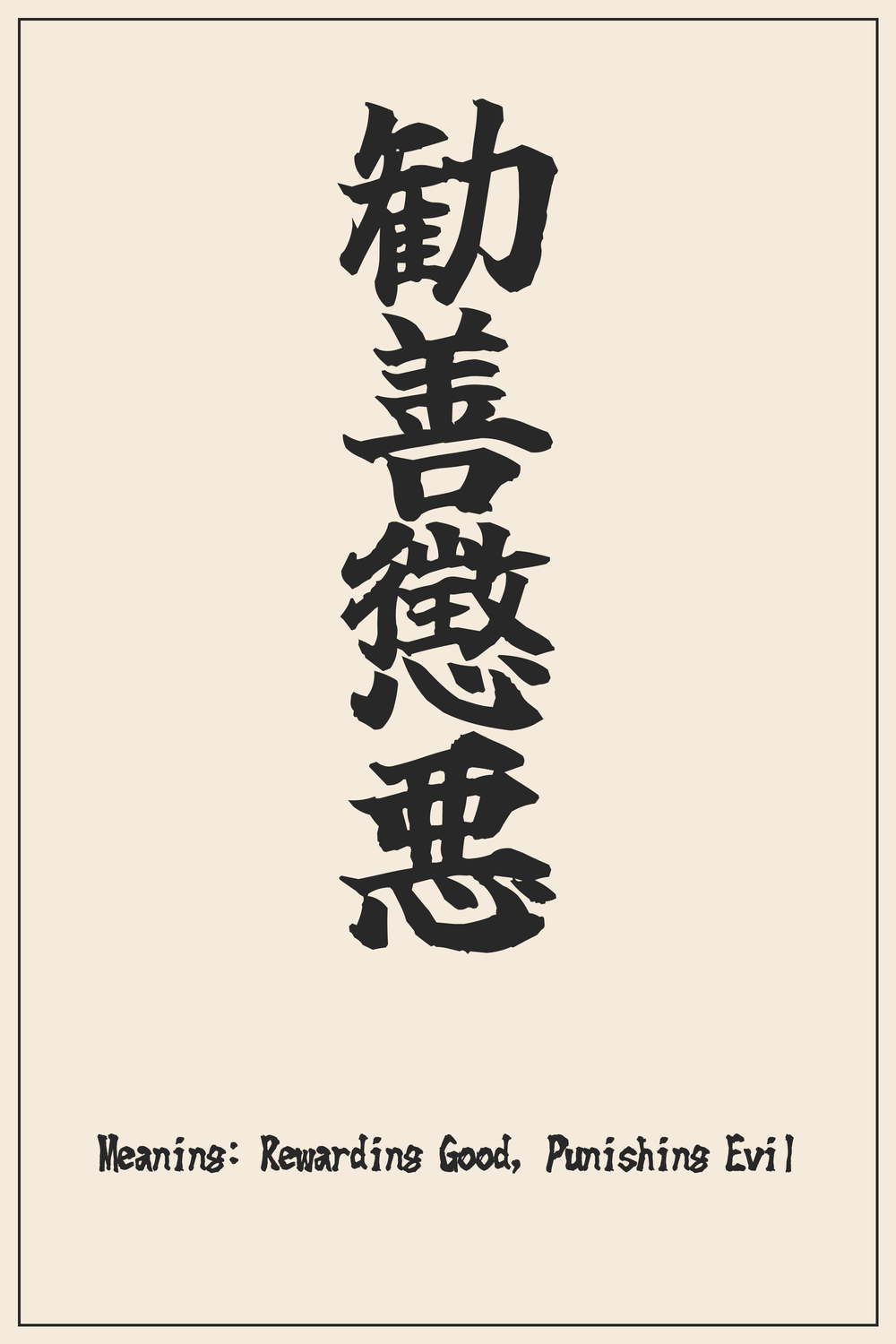
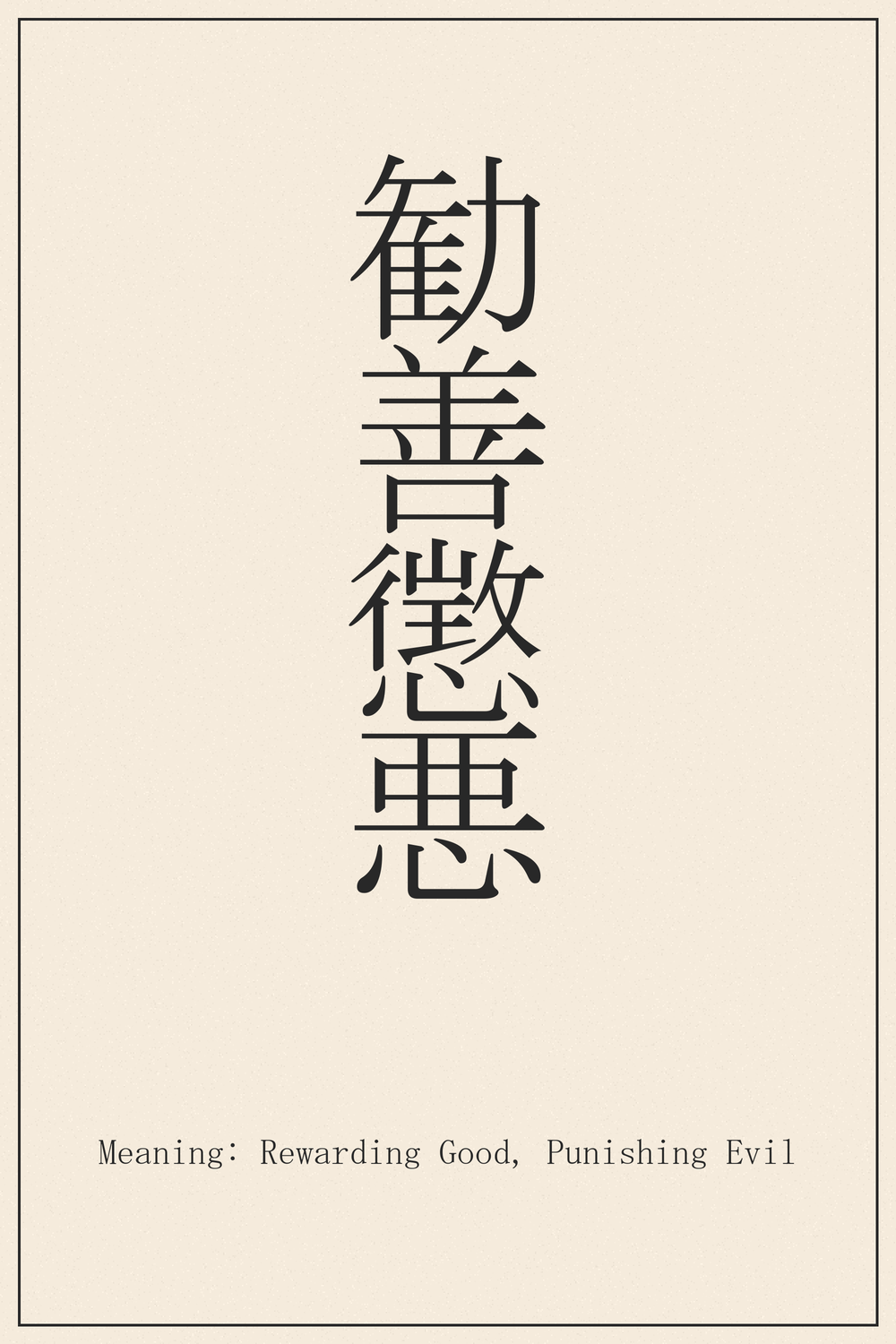
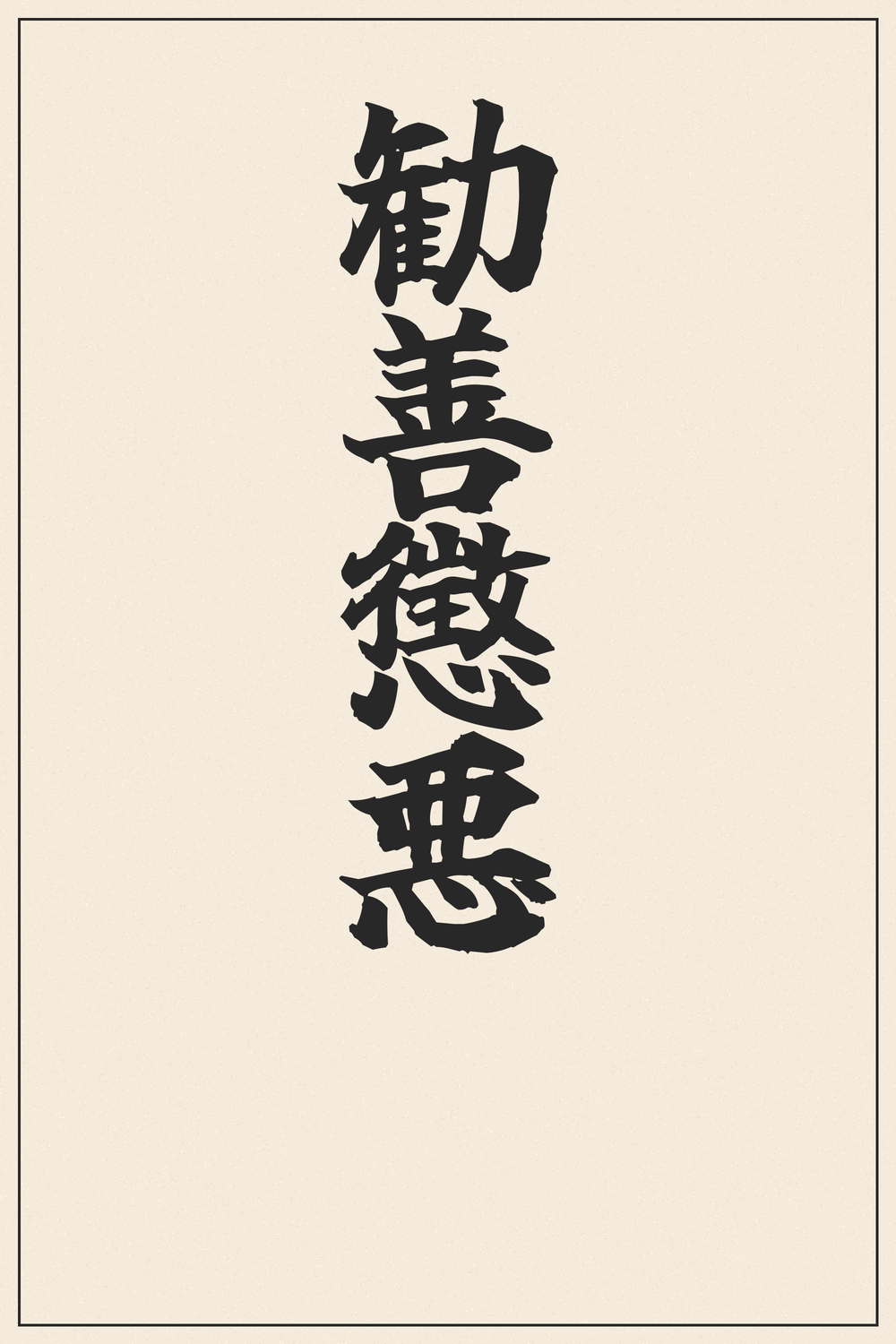
“勧善懲悪” embodies a fundamental principle of justice, serving as a powerful reminder of moral accountability. This four-character idiom encapsulates the ancient belief in upholding righteousness and rectifying wrongdoing.
The atmosphere of a Kanji character changes dramatically depending on the font style. A character that looks elegant in a brush style might look bold and modern in a different font.
Recommendation:
Since a tattoo is permanent, we strongly recommend comparing various font styles beyond what is shown here. Use our designs as a trusted reference for the correct structure, but feel free to explore different artistic variations to find the perfect match for your vision.
The Deep Meaning Behind 勧善懲悪
The phrase 勧善懲悪 (Kanzenchen’aku) originates from ancient Chinese philosophy, particularly gaining prominence in Confucian thought. It articulates a fundamental moral and social principle: the encouragement and reward of virtuous acts, and the condemnation and punishment of malevolent ones.
This concept has deeply permeated Japanese culture, forming a foundational narrative in traditional storytelling, literature, and performing arts like Kabuki and Rakugo. It serves as a moral compass, ensuring societal order by reinforcing the consequences of actions and shaping collective ethical understanding.
Kanji Breakdown
The idiom 勧善懲悪 is composed of four distinct characters, each contributing to its profound meaning.
Meaning: To recommend, encourage, advise. This character conveys the act of promoting good behavior and moral conduct.
Meaning: Good, virtue, righteousness. This character represents moral excellence, uprightness, and all that is considered benevolent.
Meaning: To punish, chastise, discipline. This character signifies the act of imposing consequences for wrongdoing, ensuring accountability.
Meaning: Evil, bad, wickedness. This character denotes malevolence, corruption, and all that is considered morally reprehensible.
Conclusion
The idiom 勧善懲悪 serves as a timeless expression of justice, highlighting the universal desire for a world where virtue is upheld and wrongdoing is addressed. It is a powerful statement about moral clarity and the consequences inherent in human actions.
Choosing “勧善懲悪” for a tattoo signifies a personal commitment to ethical principles and a recognition of the balance between good and evil. It is a striking visual reminder of one’s moral compass and a testament to the enduring ideals of justice and accountability.
Comments