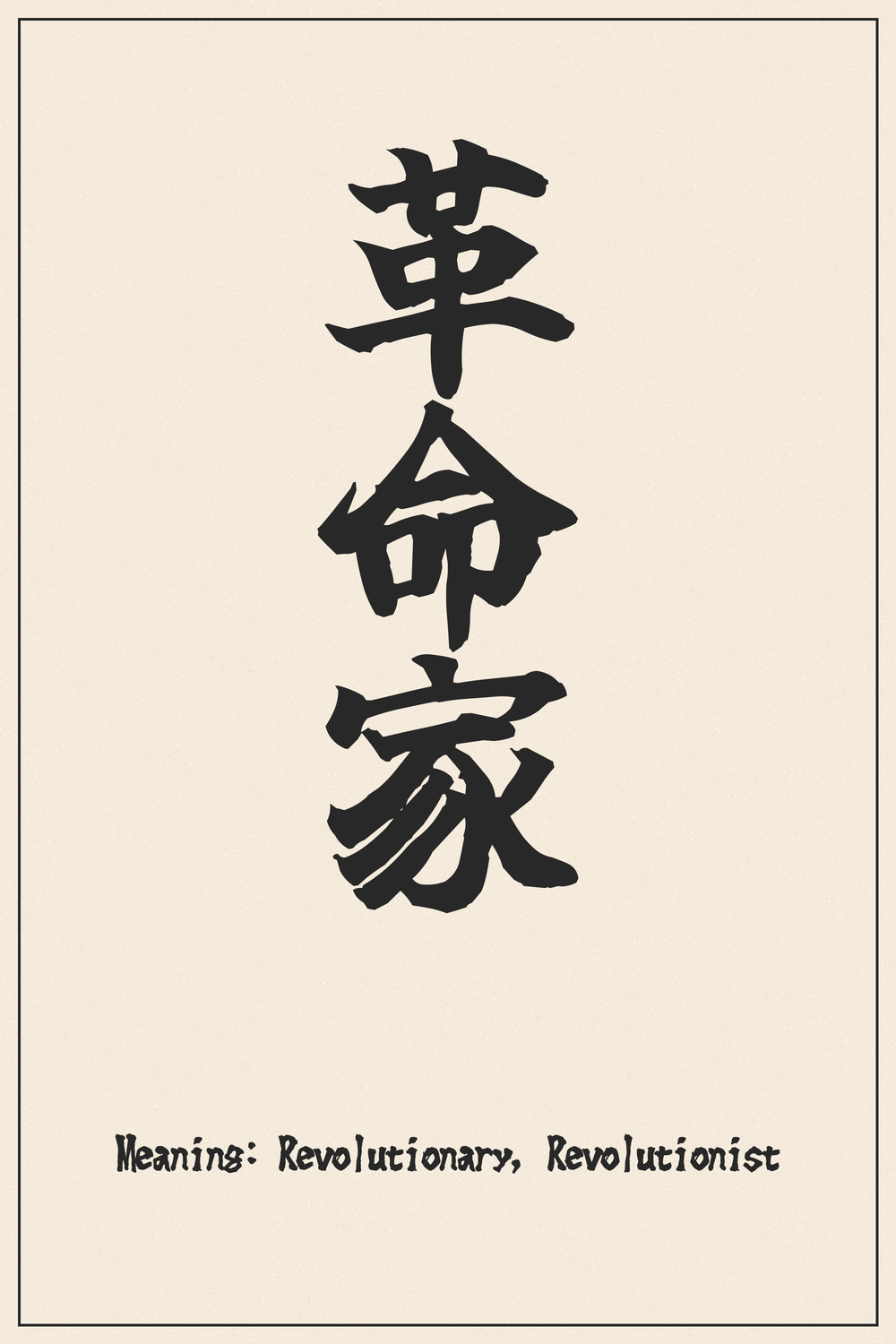
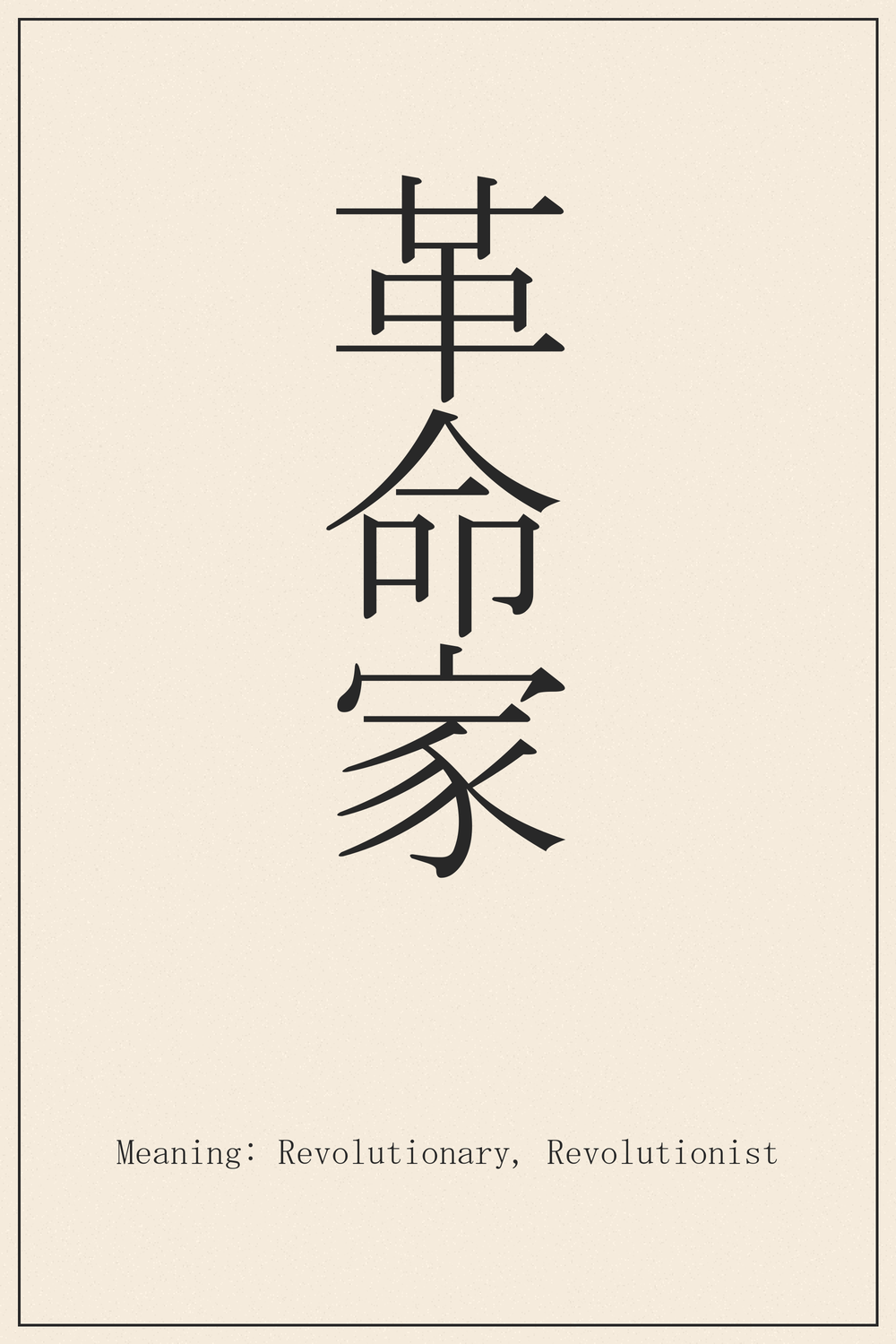
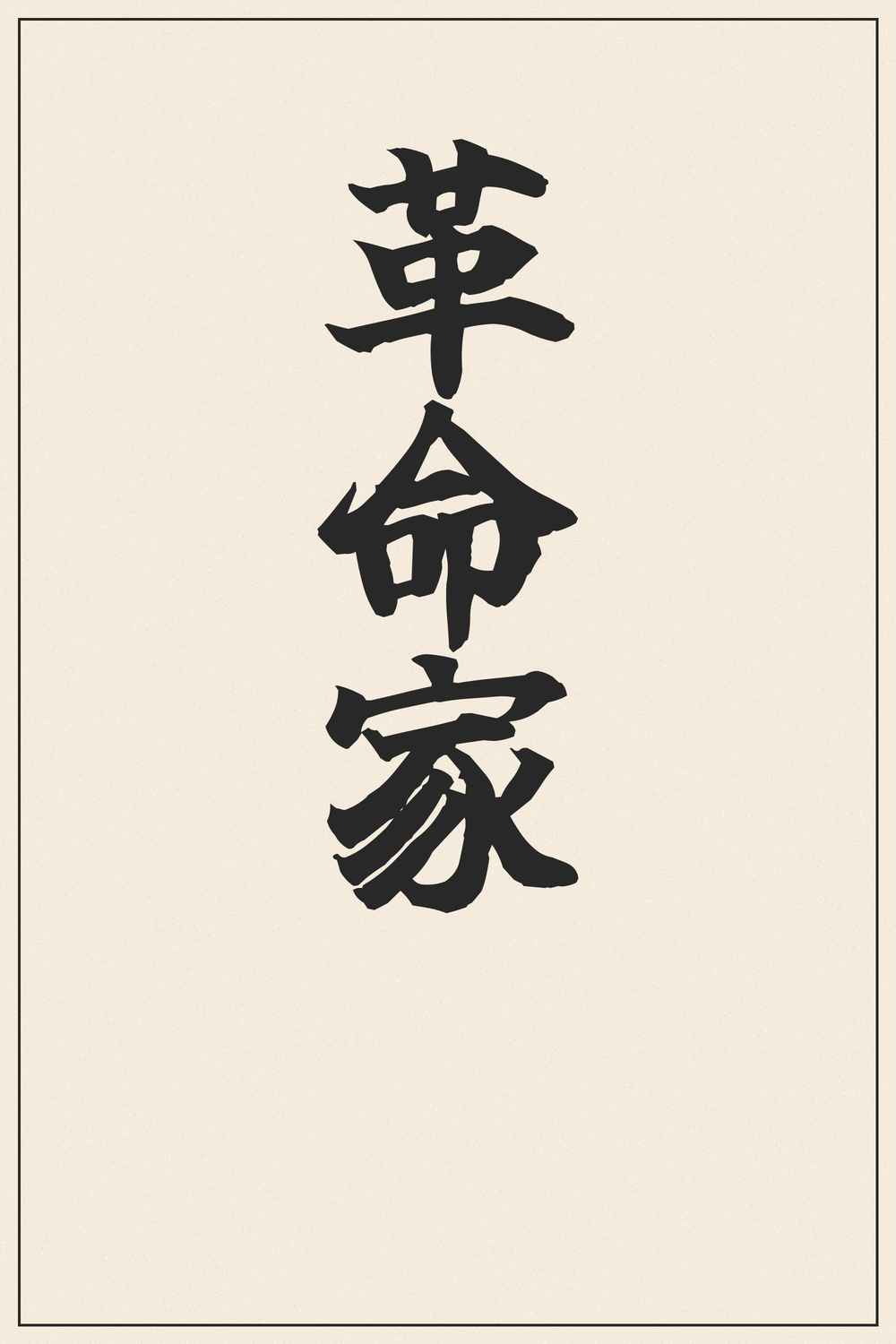
「革命家」(Kakumeika) embodies the spirit of radical transformation and the courage to forge a new path. This potent Kanji compound speaks to those who dare to challenge existing norms and dedicate their lives to significant societal change.
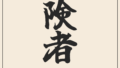
The atmosphere of a Kanji character changes dramatically depending on the font style. A character that looks elegant in a brush style might look bold and modern in a different font.
Recommendation:
Since a tattoo is permanent, we strongly recommend comparing various font styles beyond what is shown here. Use our designs as a trusted reference for the correct structure, but feel free to explore different artistic variations to find the perfect match for your vision.
The Deep Meaning Behind 革命家
The term 革命家 (kakumeika) is a compound formed from three distinct Kanji. 革 (kaku) fundamentally means “leather,” but evolved to signify “to change,” “to reform,” or “revolution,” reflecting the process of stripping and remaking.
命 (mei) denotes “life,” “destiny,” or “command.” 家 (ka) signifies “house,” “family,” or, as a suffix, a “specialist” or “person” engaged in a particular field. Together, they describe an individual committed to fundamentally altering the course of life or destiny.
In Japanese culture, the concept of a “revolutionary” carries significant weight, often associated with historical figures who led movements for political, social, or artistic reform. It reflects a deep commitment to altering fundamental structures, driven by a vision for a transformed society or a new way of being. The term evokes a sense of leadership, conviction, and a willingness to confront adversity for a cause.
Kanji Breakdown
To fully appreciate “革命家,” let’s examine its constituent Kanji:
Revolution, reform, leather: Originally depicting a hide being softened and processed, it came to symbolize a fundamental change or transformation, much like changing the very skin of something.
Life, destiny, command: This character encapsulates the vital essence of existence and the predestined path or divine order. In the context of “revolution,” it implies a fundamental change to the course of life or destiny.
House, family, specialist, person: While meaning “house” or “family,” when used as a suffix, it denotes a person or expert engaged in a particular field, thus signifying a “revolutionary person.”
Conclusion
「革命家」(Kakumeika) is a powerful declaration of one’s commitment to profound change, whether on a personal or societal scale. It signifies a person who embraces transformation, challenges conventions, and strives to shape destiny through deliberate action and conviction.
As a tattoo, 「革命家」 serves as a constant reminder of the strength required to initiate and sustain revolution, embodying the spirit of those who dare to envision and build a new future. It is a symbol for individuals who are not afraid to break from the past and lead the way towards a different tomorrow.
Comments