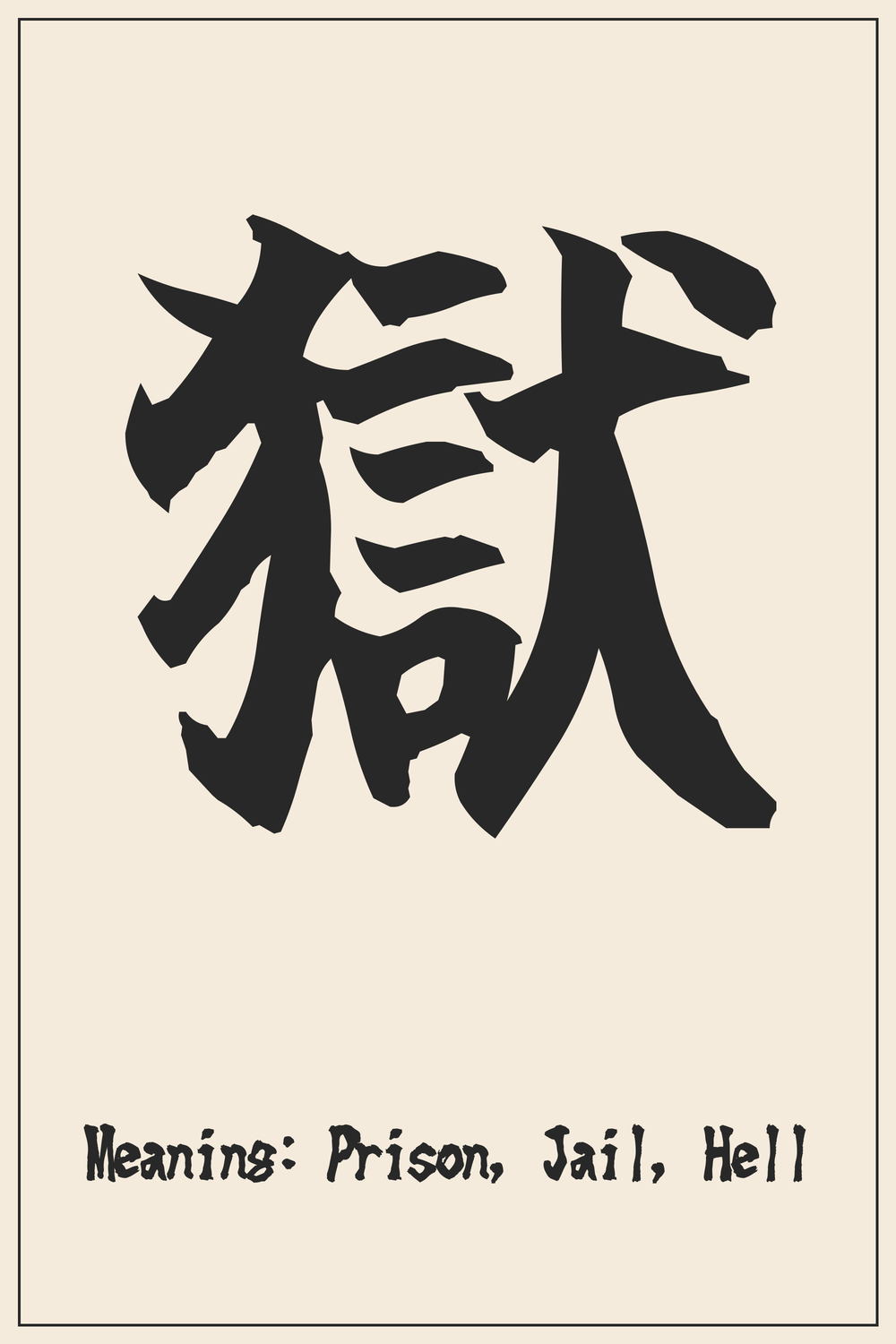
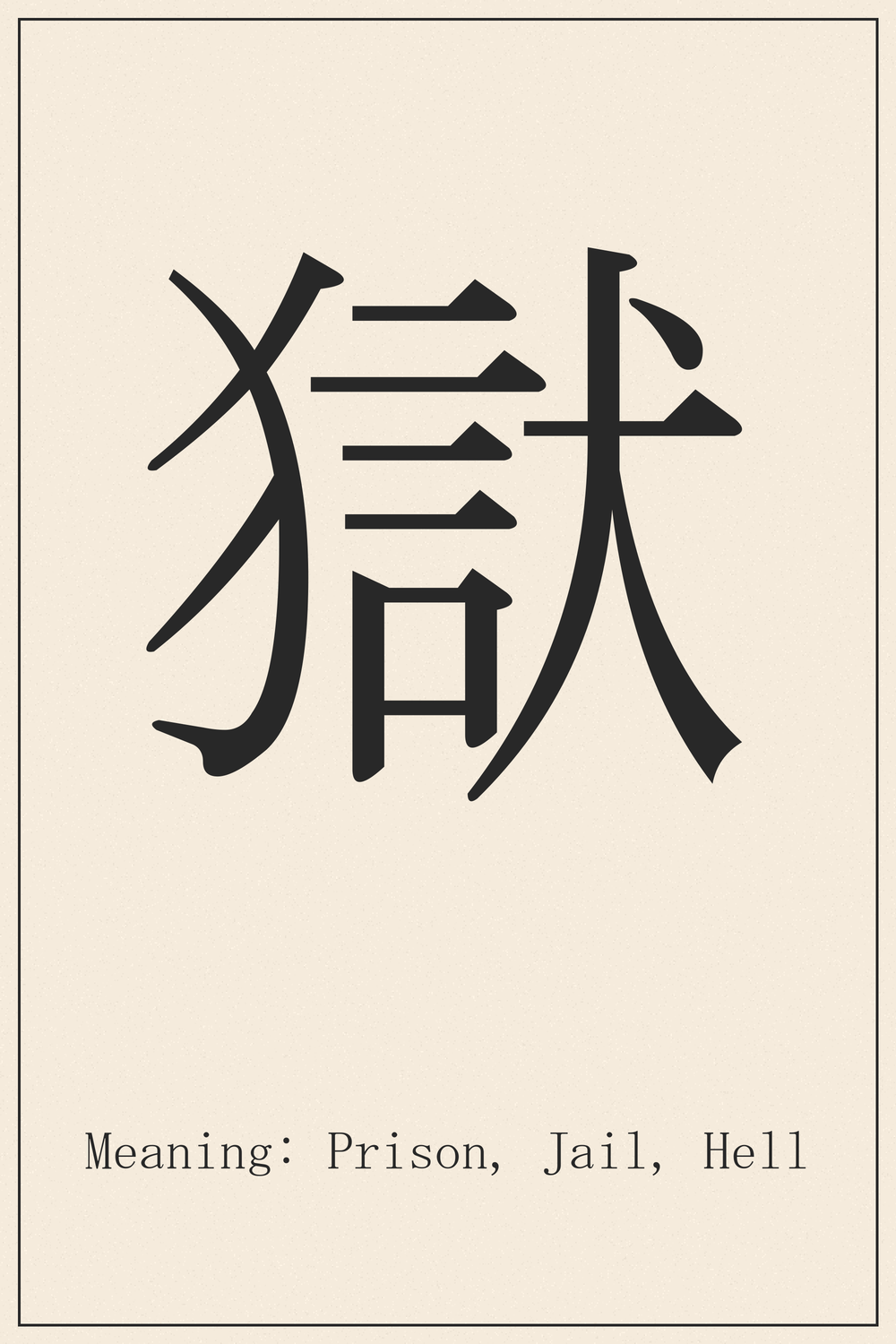
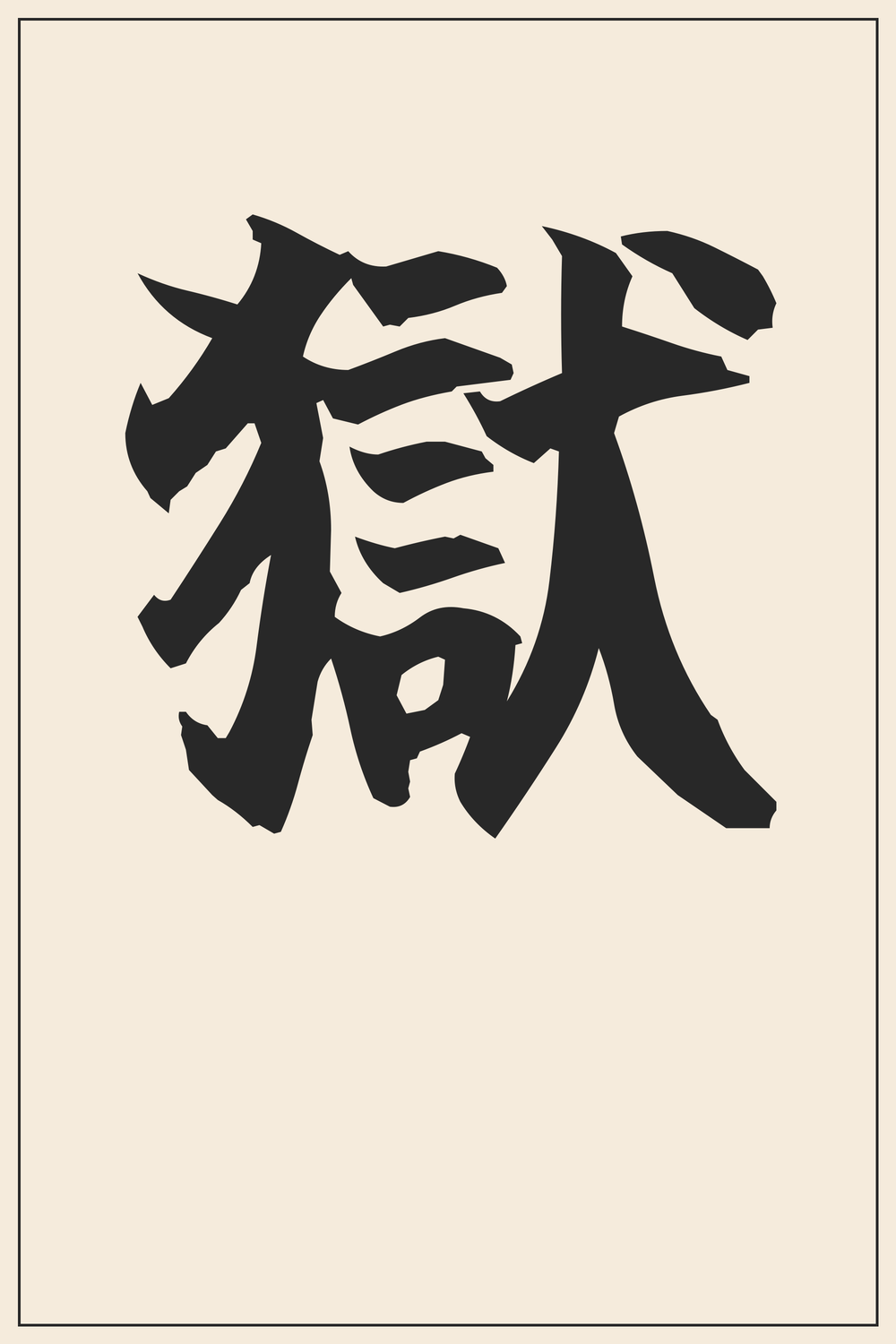
The Kanji 獄 (Goku) profoundly captures the essence of confinement and severe judgment. It is a symbol fraught with the weight of imprisonment and the concept of hellish suffering.
The atmosphere of a Kanji character changes dramatically depending on the font style. A character that looks elegant in a brush style might look bold and modern in a different font.
Recommendation:
Since a tattoo is permanent, we strongly recommend comparing various font styles beyond what is shown here. Use our designs as a trusted reference for the correct structure, but feel free to explore different artistic variations to find the perfect match for your vision.
The Deep Meaning Behind 獄
The Kanji 獄 originates from a pictographic representation that evokes a scene of judgment and confinement. Its ancient form symbolically depicted two dogs (犬) guarding speech (言), suggesting a place where judgments were pronounced and enforced, akin to a court or a place of detention.
Culturally, 獄 is central to concepts of justice, punishment, and the afterlife. It is famously found in terms like 地獄 (jigoku), meaning ‘hell,’ reflecting a profound understanding of retribution and ultimate suffering. This makes it a formidable kanji, embodying the severe consequences of actions.
Kanji Breakdown
The character 獄 (Goku) is a fascinating composition, whose parts vividly illustrate its meaning of imprisonment and judgment.
Meaning: The ‘dog’ radical (けものへん, kemonohen), derived from 犬 (dog). Appearing on both sides of 言, these two radicals symbolize vigilant guards or fierce entities, emphasizing confinement and control.
Meaning: ‘Word’ or ‘speech.’ In this context, it often represents declarations, accusations, or the pronouncements of judgment made in a court of law. This component highlights the judicial aspect of a prison.
Conclusion
The Kanji 獄 is a potent symbol primarily associated with prison, confinement, and the concept of hell. Its etymology underscores themes of judgment and being guarded, reflecting severe circumstances or retribution for actions.
While deeply significant, its strong negative connotations generally make it an ill-advised choice for personal adornment. If considering a Kanji tattoo, it is crucial to select characters that align positively with your personal values and the message you wish to convey.
Comments