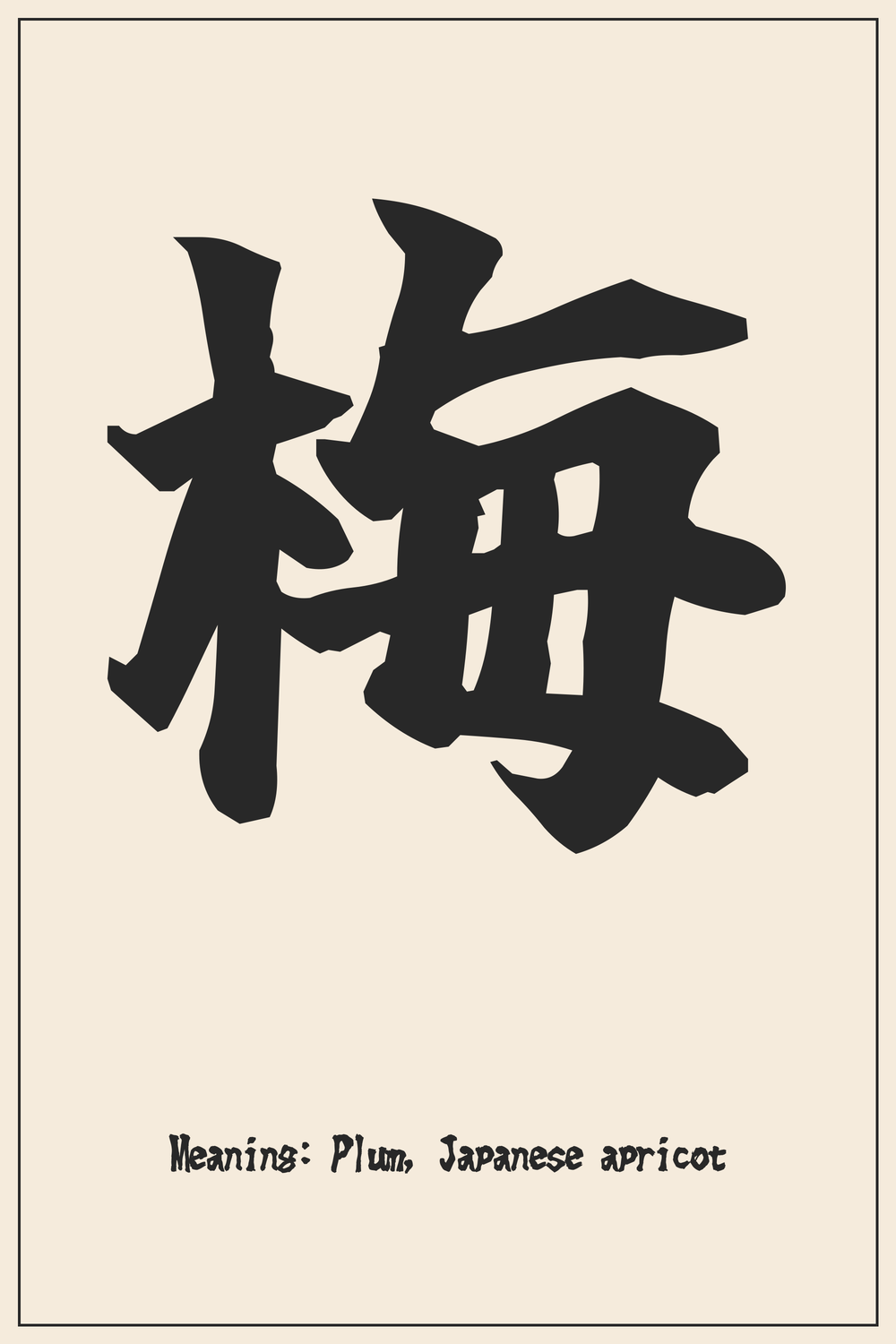
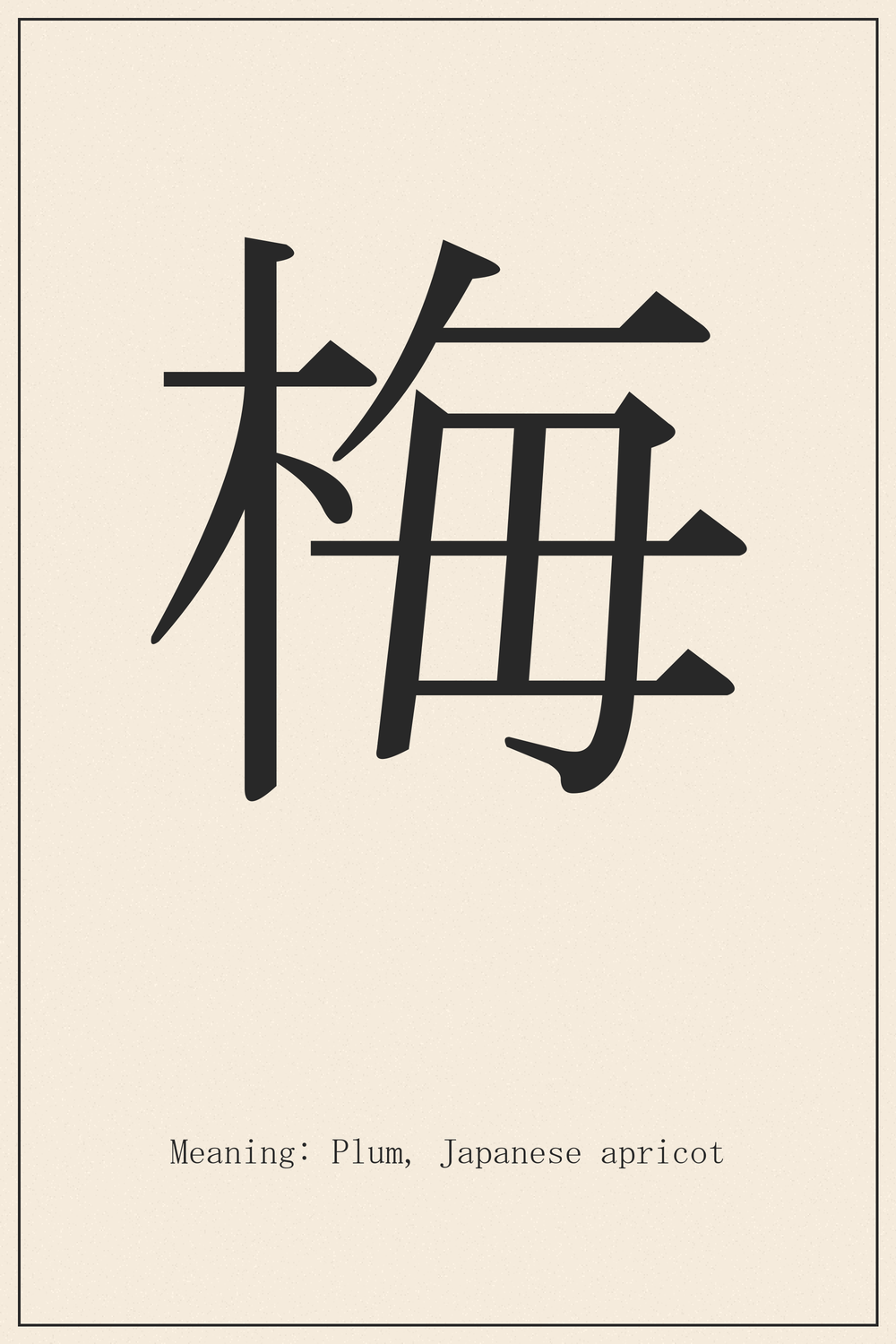
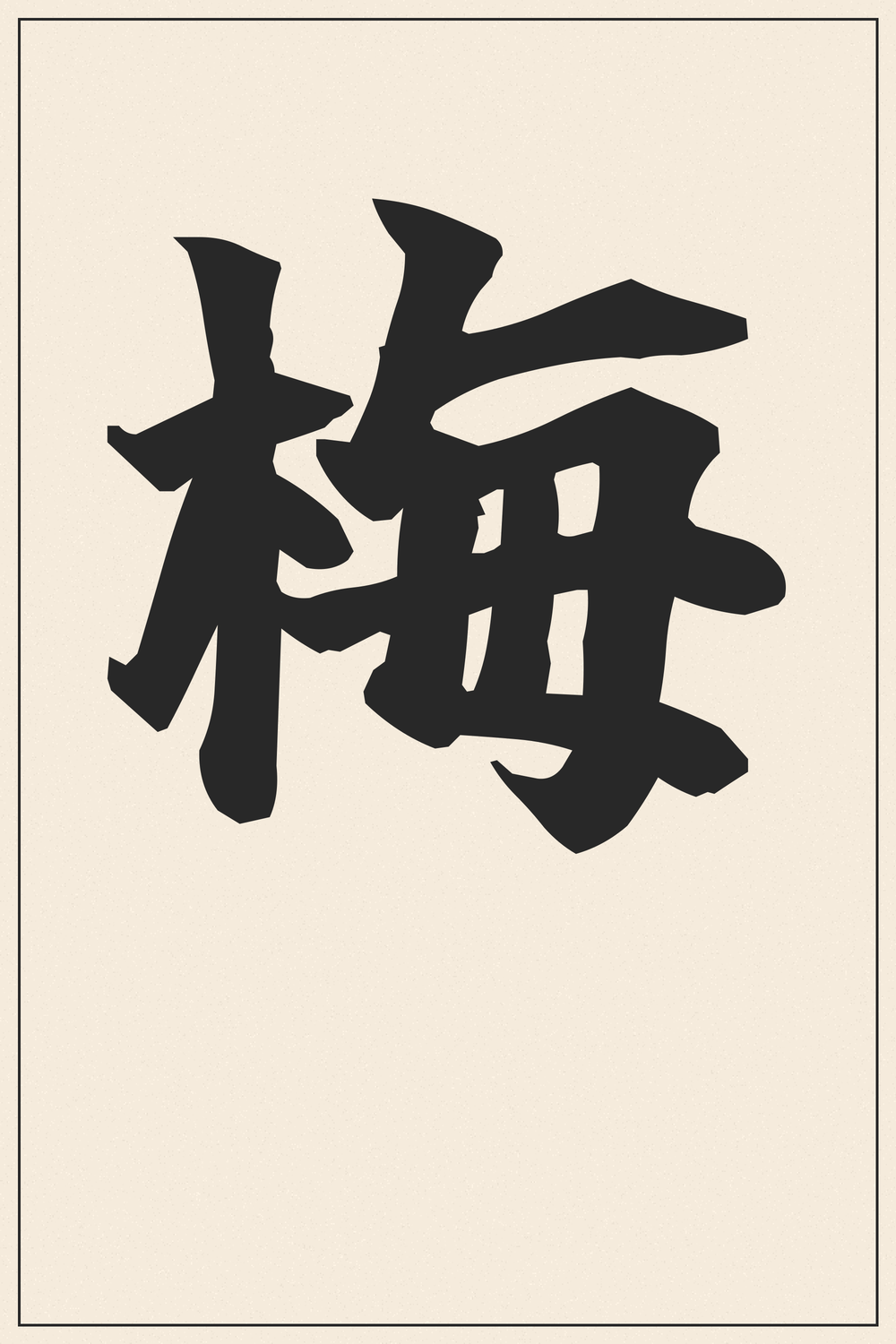
“梅” (Ume) encapsulates the enduring spirit of nature, symbolizing beauty, perseverance, and renewal through its delicate blossoms that brave the winter cold. This Kanji offers a profound connection to Japan’s rich natural and artistic heritage.
The atmosphere of a Kanji character changes dramatically depending on the font style. A character that looks elegant in a brush style might look bold and modern in a different font.
Recommendation:
Since a tattoo is permanent, we strongly recommend comparing various font styles beyond what is shown here. Use our designs as a trusted reference for the correct structure, but feel free to explore different artistic variations to find the perfect match for your vision.
The Deep Meaning Behind 梅
The character 梅 combines 木 (ki), meaning “tree,” with 毎 (mai), which functions primarily as a phonetic component but also carries associations of “every” or “repeatedly.” This combination suggests a tree known for its characteristic and perhaps abundant blooms.
The Japanese plum (ume) is one of the “Three Friends of Winter” (alongside pine and bamboo), celebrated for blooming in late winter, often amidst snow, symbolizing resilience, vitality, and hope. It is a cherished motif in poetry, art, and traditional design, representing beauty, purity, and perseverance in the face of adversity.
Kanji Breakdown
The character 梅 (ume) is composed of two significant elements, offering insight into its meaning and historical context.
Meaning: Tree, wood. This radical is fundamental, directly indicating the character’s relation to plants or trees. It visually grounds “ume” as a botanical entity.
Meaning: Every, each. While primarily a phonetic component here, it historically depicted a woman with an elaborate hairpin, and can suggest recurring or abundant presence, perhaps subtly hinting at the profusion of plum blossoms.
Conclusion
Choosing “梅” for a tattoo means embracing a symbol rich with cultural significance, representing not just a beautiful flower but also the profound virtues of endurance, elegance, and the cyclical promise of renewal. It’s a reminder of beauty found even in challenging times.
A “梅” tattoo is a sophisticated choice, reflecting an appreciation for Japanese aesthetics and a personal connection to its powerful message. Its timeless appeal and deep symbolic resonance make it an exceptional and meaningful mark.
Comments