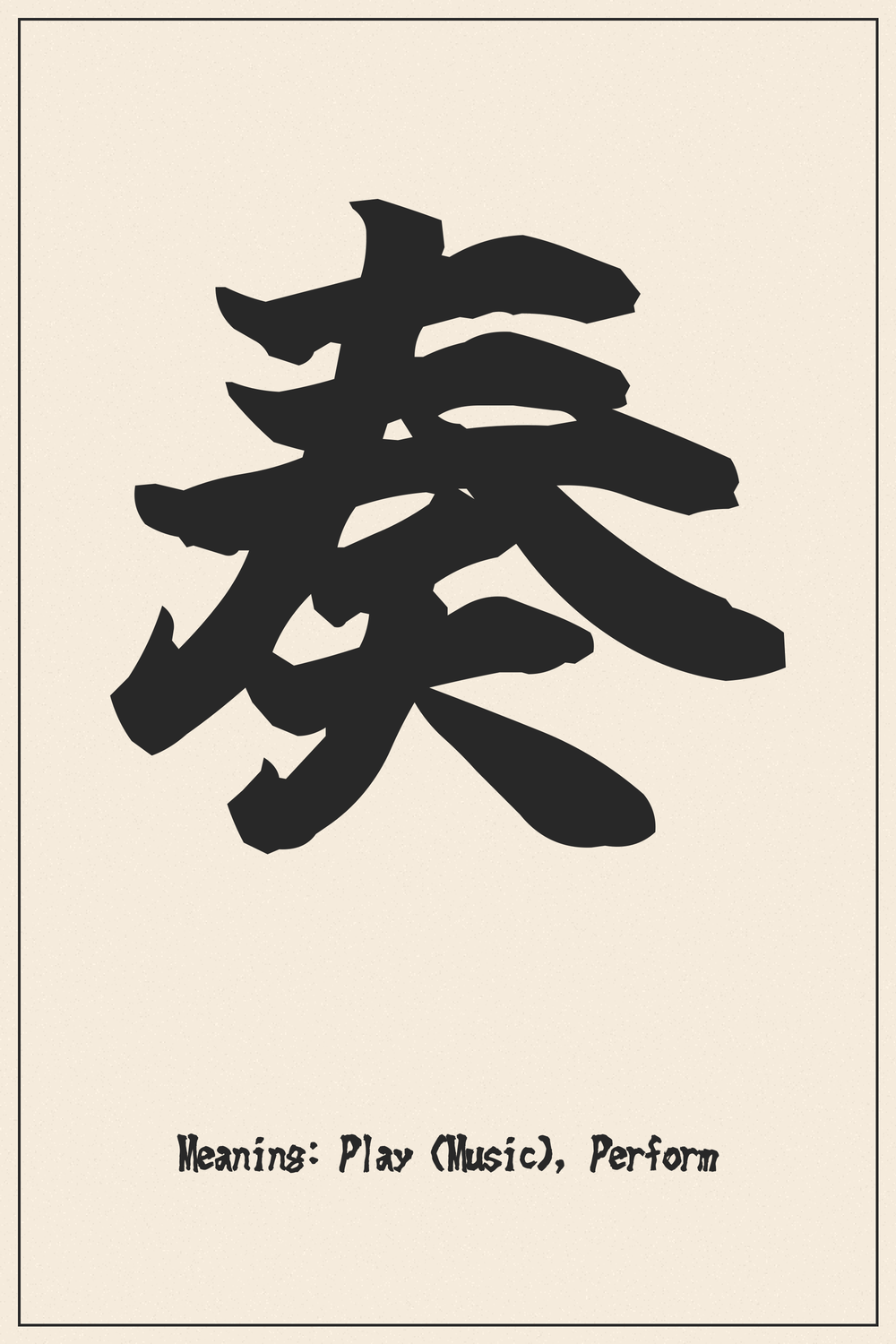
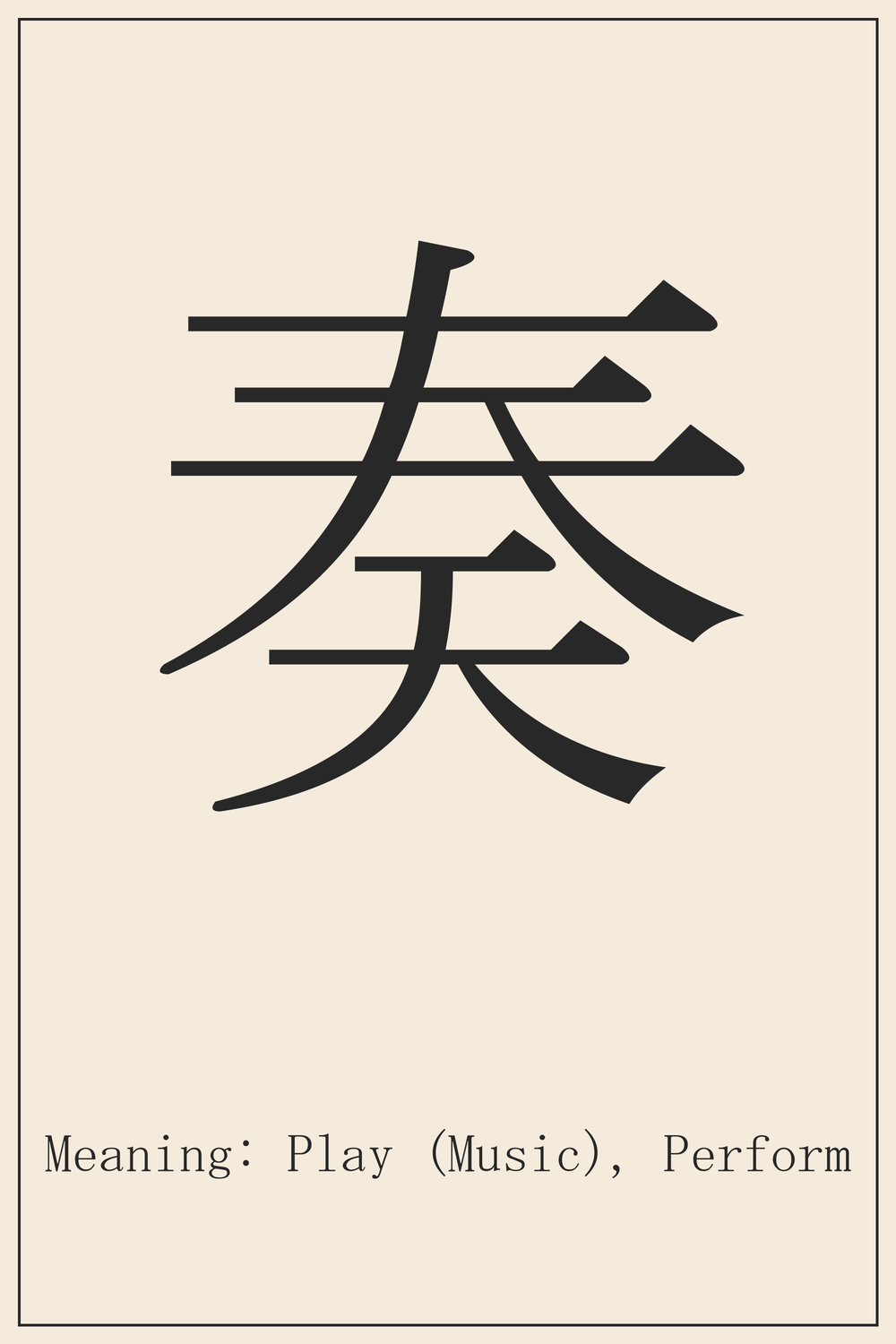
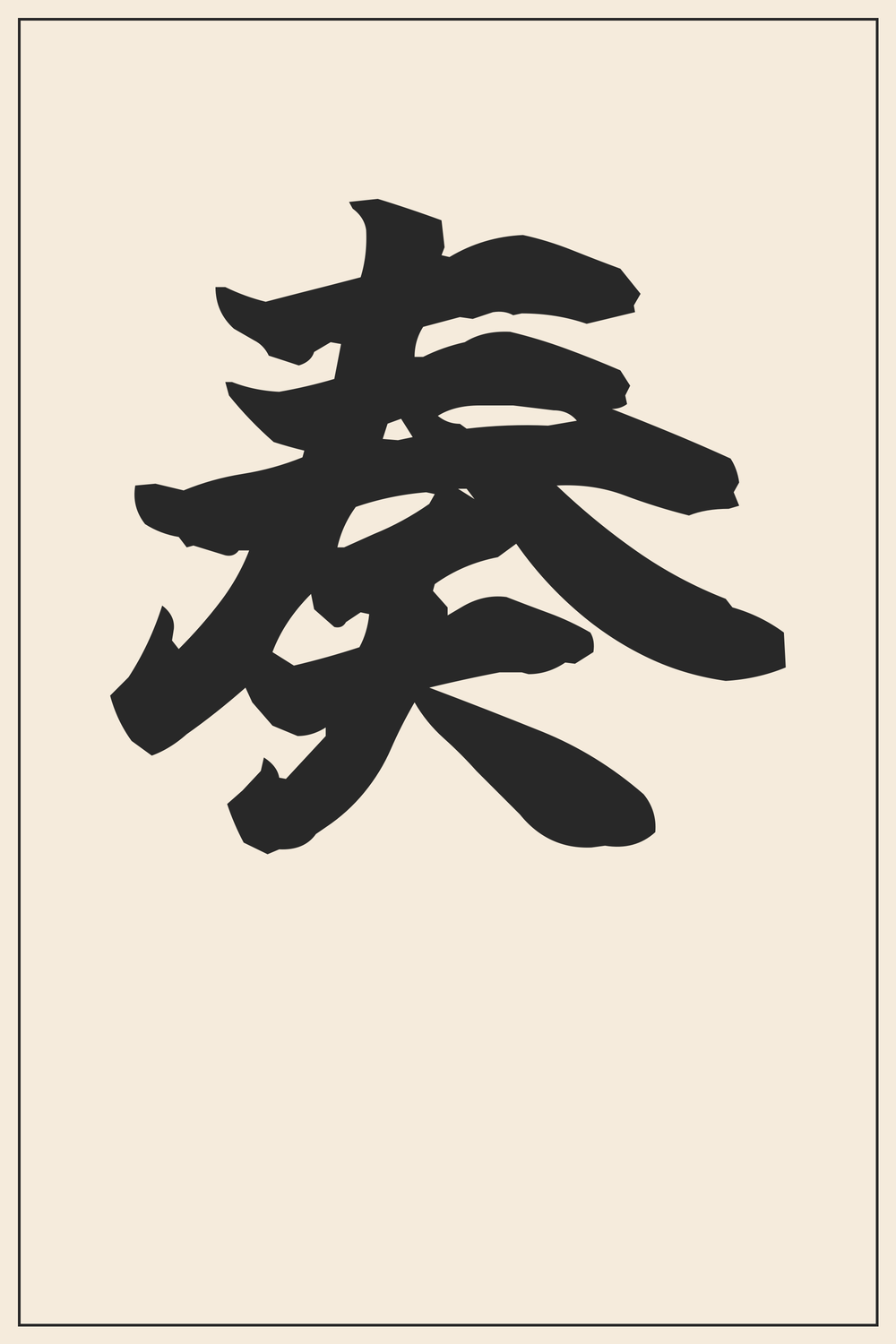
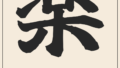
The Kanji 奏 embodies the profound art of musical expression, transforming inner spirit into audible beauty. It resonates with the universal language of performance and artistic dedication.
The atmosphere of a Kanji character changes dramatically depending on the font style. A character that looks elegant in a brush style might look bold and modern in a different font.
Recommendation:
Since a tattoo is permanent, we strongly recommend comparing various font styles beyond what is shown here. Use our designs as a trusted reference for the correct structure, but feel free to explore different artistic variations to find the perfect match for your vision.
The Deep Meaning Behind 奏
The character 奏 (sou) has ancient origins rooted in the act of presentation and offering. Etymologically, it is thought to depict hands (similar to 廾) holding or performing on an instrument or offering something before a superior, often represented by the component 大 (large/person).
Culturally, 奏 is deeply associated with music and performance. It conveys a sense of respectful presentation and skillful execution, whether reporting to an emperor or beautifully rendering a musical piece. The term 奏楽 (sougaku) directly refers to playing music, highlighting its core connection to artistic expression.
Kanji Breakdown
The Kanji 奏 can be understood by examining its key components, which contribute to its meaning of presenting and performing:
Meaning: This component suggests ‘joined hands’ or ‘to lift up’, implying the act of offering or presenting something with reverence.
Meaning: Meaning ‘large’ or ‘great’, this component often depicts a standing person, lending a sense of scale or the presence of an individual to the overall action of 奏.
Conclusion
The Kanji 奏 beautifully encapsulates the essence of bringing forth melody and art, representing not just the act of playing music but the dedicated and expressive spirit behind it. It’s a symbol of artistic endeavor and the heartfelt communication that transcends words.
For those who find their voice or passion in music, performance, or any form of artistic expression, 奏 serves as a timeless emblem of dedication and grace. It is an exquisite choice for a tattoo, embodying both skill and the soulful act of creation, making a profound and elegant statement.
Comments