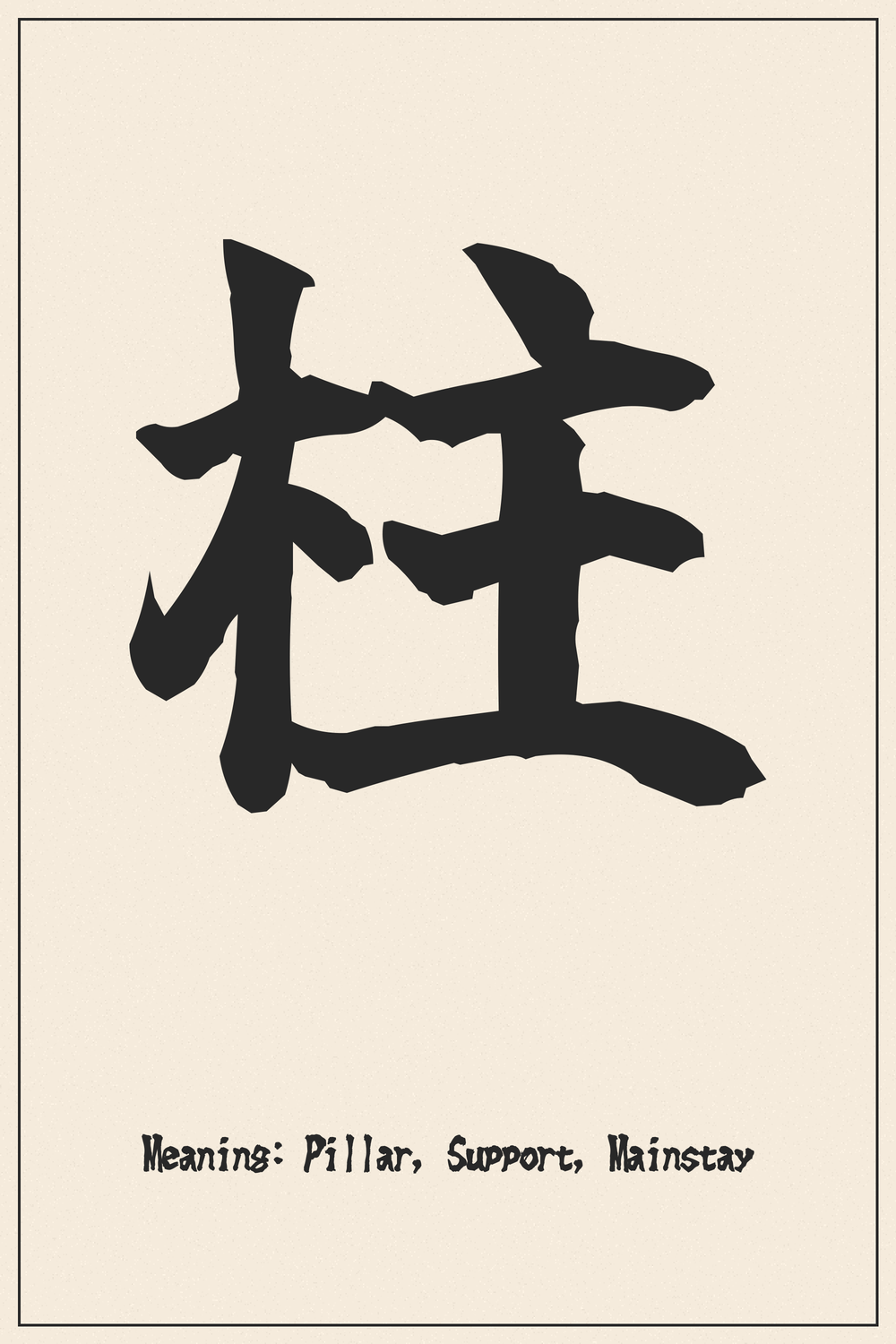
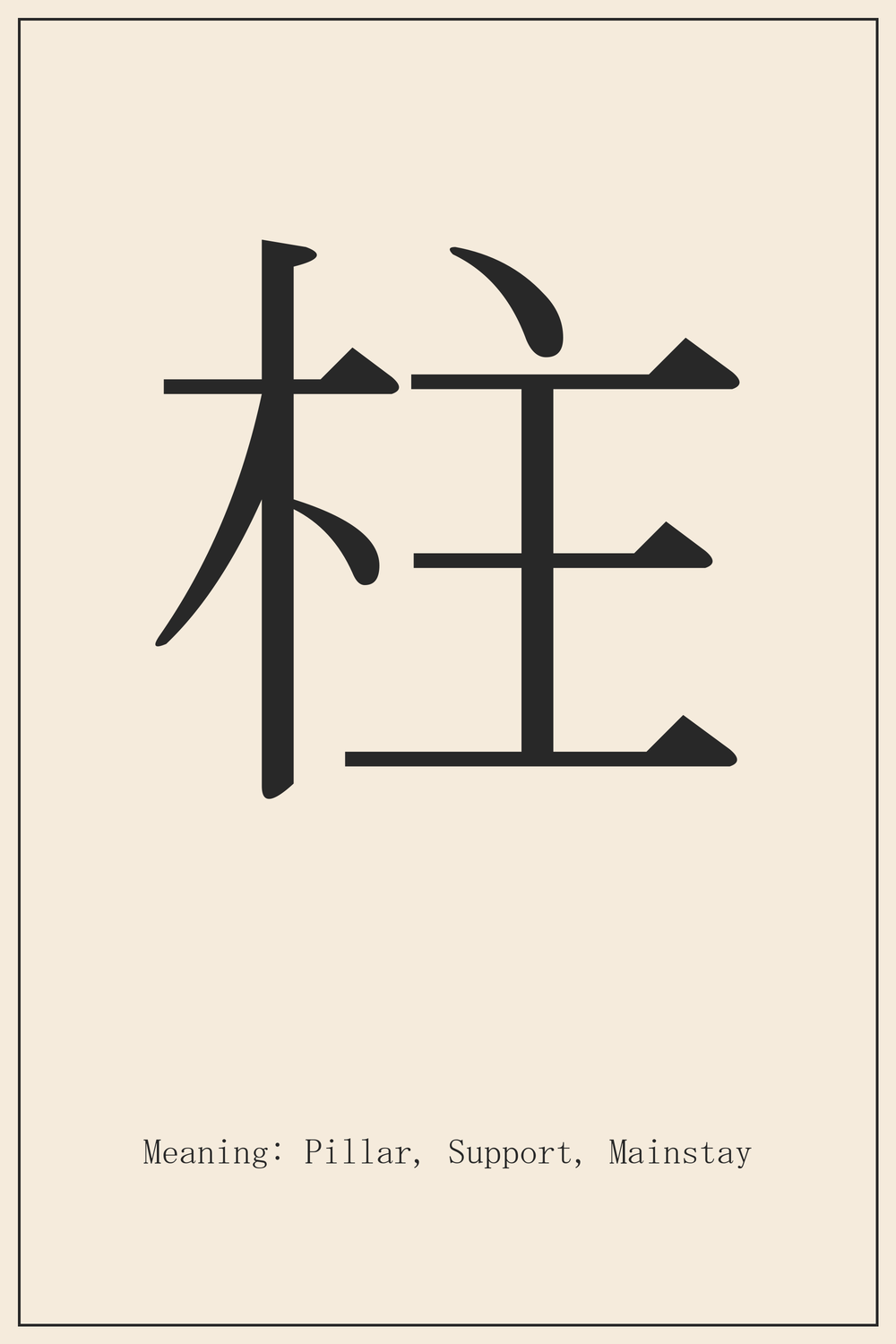
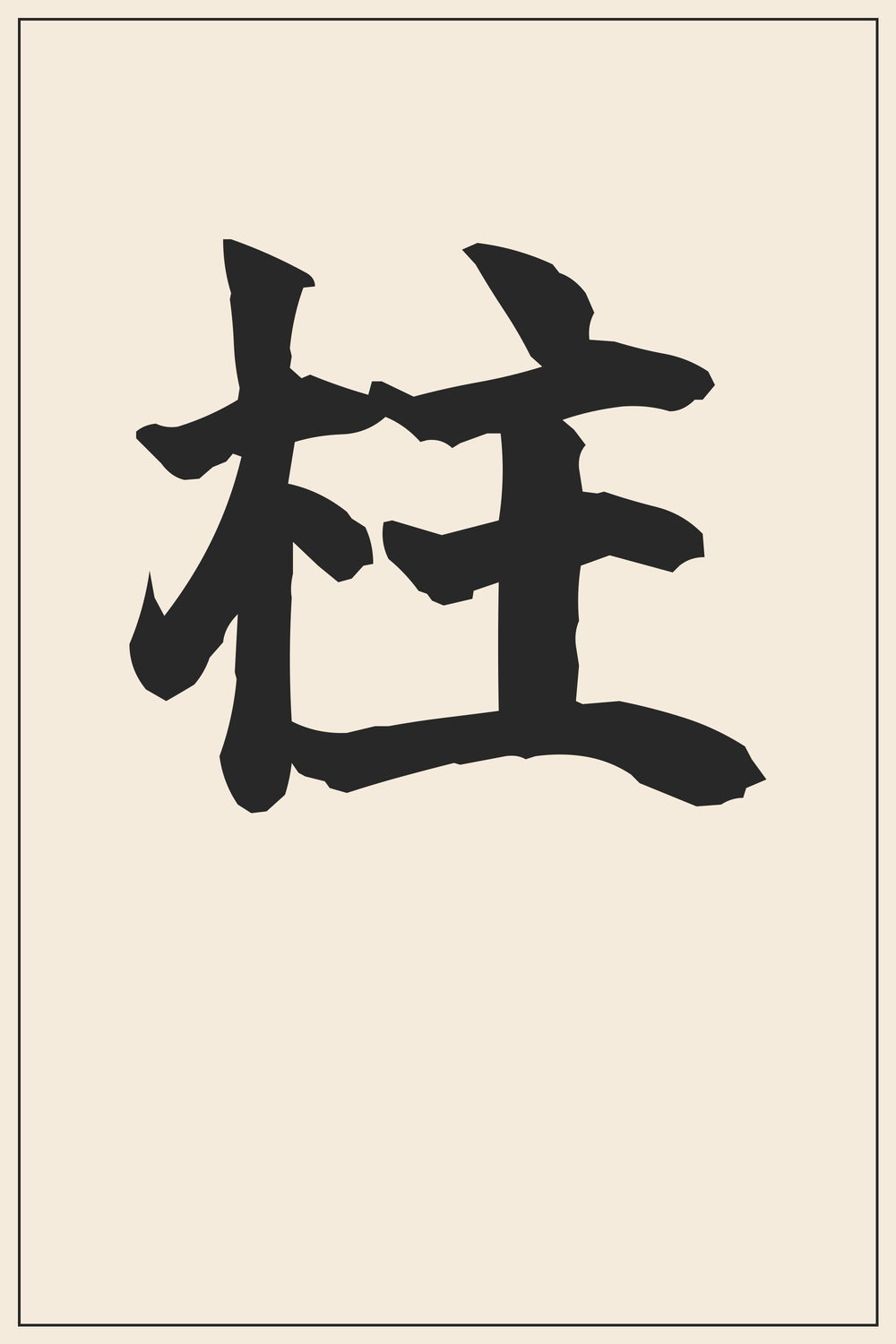
The Kanji 柱 embodies stability and strength, representing not just a physical structure but also a foundational support in life. It signifies resilience and the ability to hold things together, making it a powerful symbol.
The atmosphere of a Kanji character changes dramatically depending on the font style. A character that looks elegant in a brush style might look bold and modern in a different font.
Recommendation:
Since a tattoo is permanent, we strongly recommend comparing various font styles beyond what is shown here. Use our designs as a trusted reference for the correct structure, but feel free to explore different artistic variations to find the perfect match for your vision.
The Deep Meaning Behind 柱
The character 柱 combines 木 (ki), meaning “tree” or “wood,” and 主 (shu), meaning “master,” “lord,” or “main.” Together, they visually depict a significant wooden post, serving as the main support in a structure.
In Japanese culture, 柱 holds deep architectural and symbolic significance. From the central pillars in traditional homes (大黒柱, daikoku-bashira) to the sacred posts in Shinto shrines (御柱, on-bashira), it symbolizes stability, protection, and the core of a community or family.
Kanji Breakdown
The Kanji 柱 is composed of two primary elements that convey its meaning of a fundamental support.
Meaning: Tree, Wood. This radical represents the material from which traditional pillars were made, emphasizing natural strength and foundational properties.
Meaning: Master, Lord, Main. This component denotes the primary or central element, highlighting the pillar’s crucial role as the principal support or mainstay.
Conclusion
The Kanji 柱 is more than just a word for a structural element; it embodies the profound concepts of strength, stability, and unwavering support. It represents something fundamental and essential, whether in architecture, family, or personal character.
Choosing 柱 for a tattoo is a statement of resilience and reliability. Its balanced strokes and significant meaning make it an excellent choice for those who value steadfastness and wish to symbolize their role as a pillar of strength in their own lives or for others.
Comments