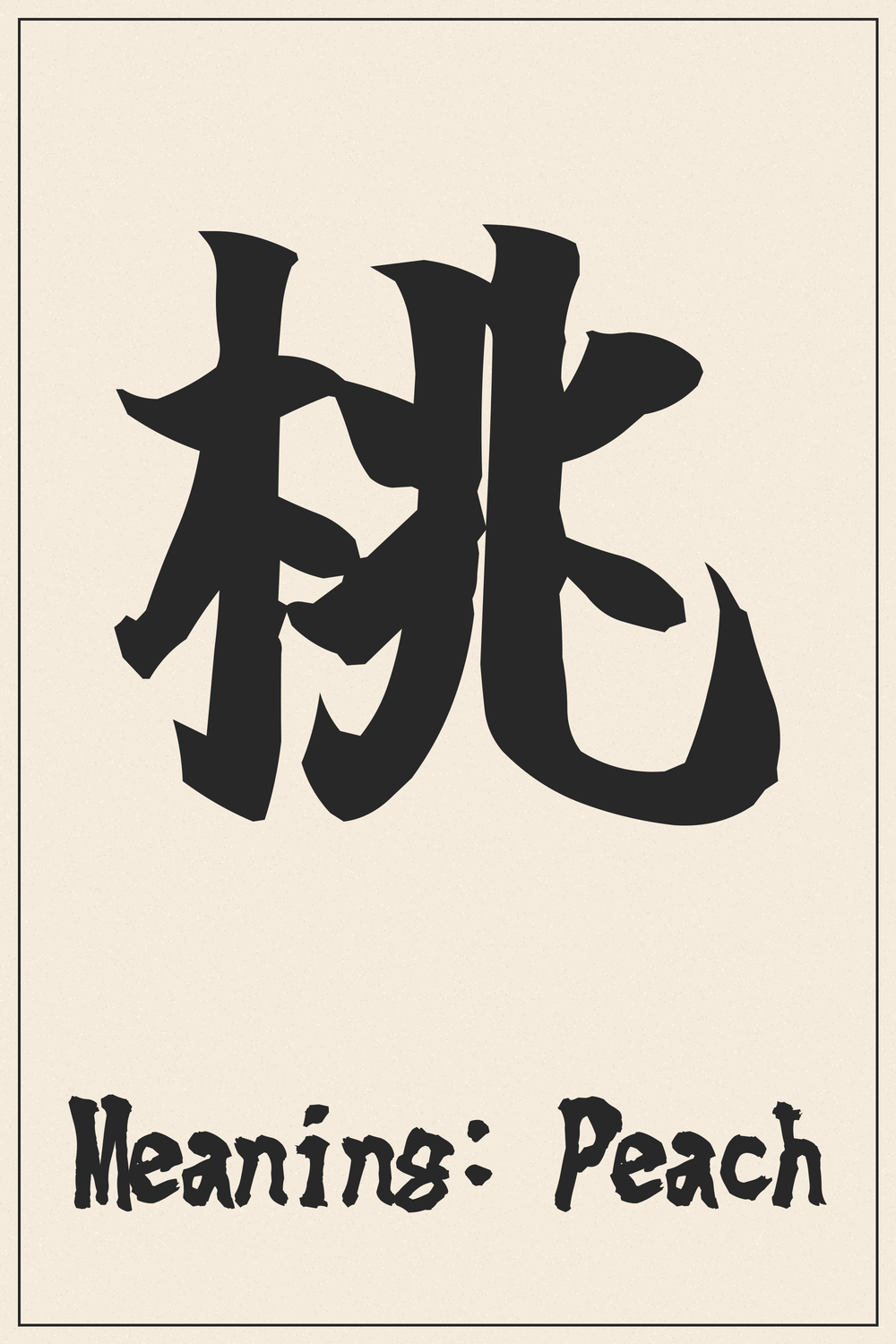
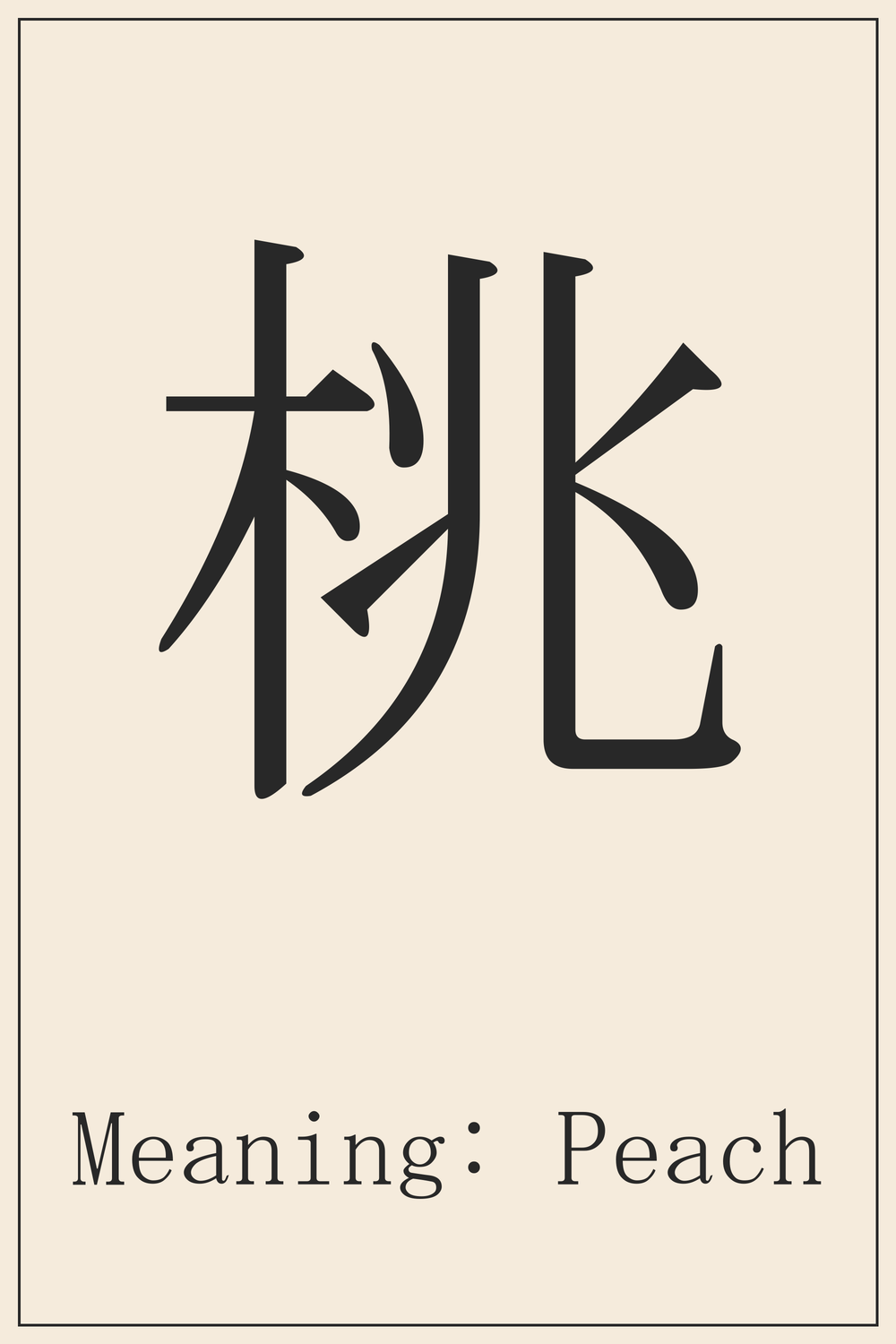
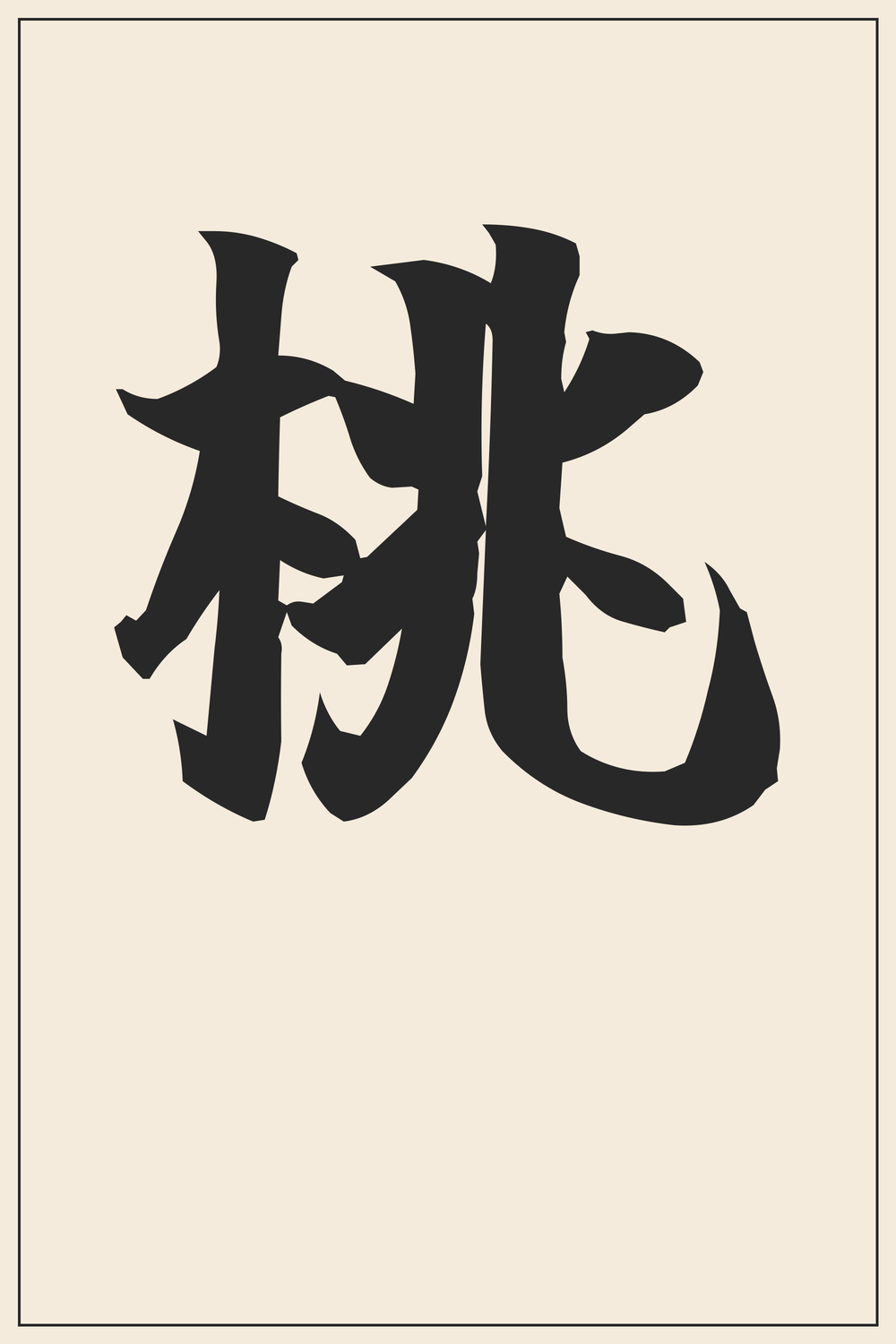
The Kanji ‘桃’ embodies the gentle beauty and cultural significance of the peach. It represents more than just a fruit, carrying connotations of vitality and auspiciousness.
The atmosphere of a Kanji character changes dramatically depending on the font style. A character that looks elegant in a brush style might look bold and modern in a different font.
Recommendation:
Since a tattoo is permanent, we strongly recommend comparing various font styles beyond what is shown here. Use our designs as a trusted reference for the correct structure, but feel free to explore different artistic variations to find the perfect match for your vision.
The Deep Meaning Behind 桃
The Kanji 桃 (momo) for peach is composed of semantic and phonetic elements that hint at its deeper meaning. Its structure clearly links it to trees and nature, while carrying subtle connotations of auspiciousness.
Culturally, the peach holds significant symbolism in Japan and across East Asia. In Japan, it’s famously associated with the folk hero Momotaro, the Peach Boy, symbolizing purity, strength, and triumph over adversity. Beyond this, peaches are widely revered for their beauty, particularly the blossoms, and their association with longevity and immortality in broader East Asian folklore.
Kanji Breakdown
The character 桃 is an example of a phono-semantic compound, where one part indicates meaning and the other sound, though both contribute to its overall essence.
Tree: This radical clearly indicates that 桃 is a plant, specifically a tree, which bears fruit.
Omen / Sign: This component contributes to the ‘momo’ pronunciation in Japanese and also subtly suggests the auspicious and symbolic nature of the peach.
Conclusion
The Kanji 桃 is a beautiful representation of the peach, embodying natural grace, cultural richness, and auspicious symbolism. It stands for purity, strength, and longevity, making it a compelling choice for those seeking a connection to nature and folklore.
Opting for a ‘桃’ tattoo signifies an appreciation for natural beauty and traditional Japanese storytelling. Its elegant form and positive connotations make it a timeless and meaningful piece of body art.
Comments