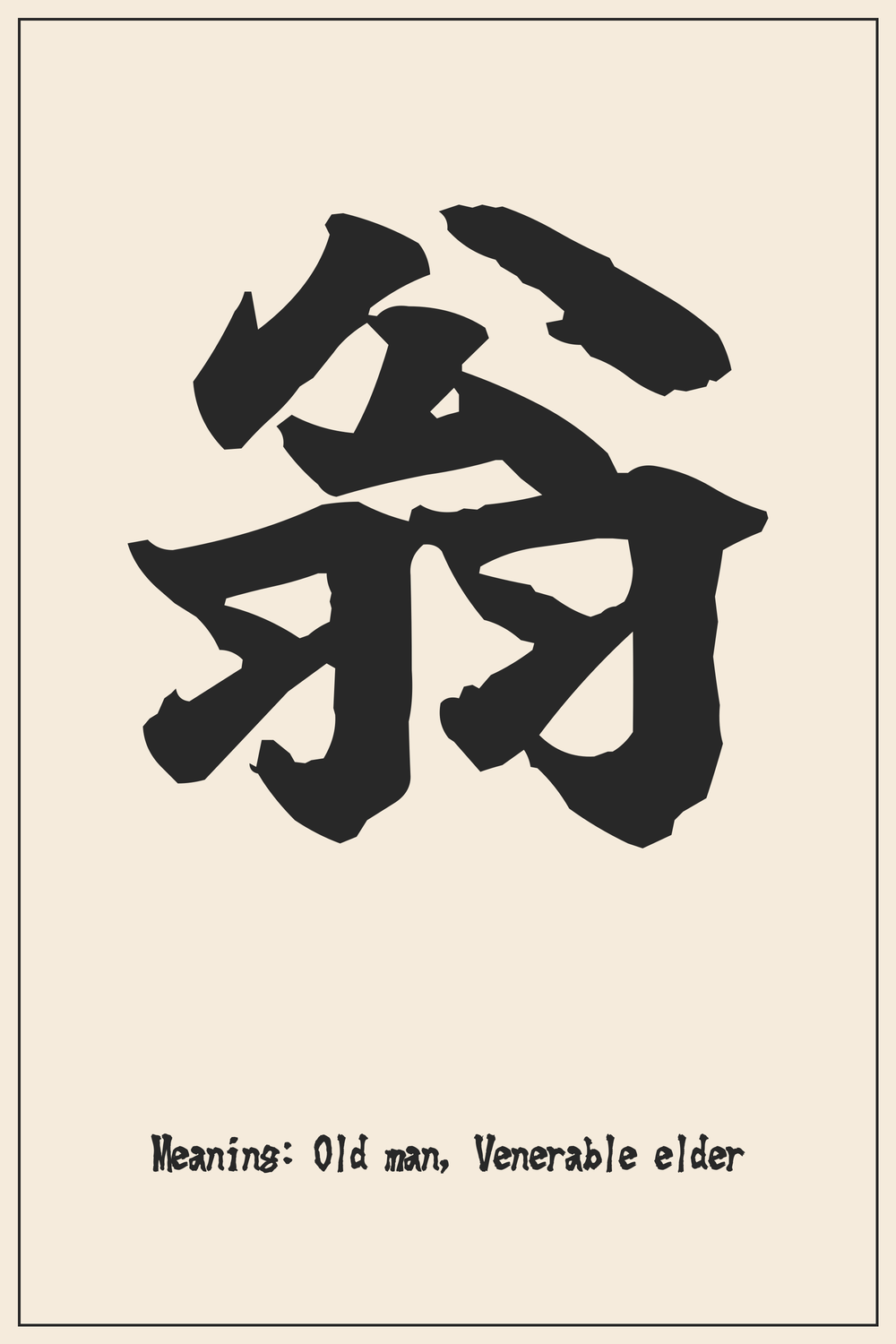
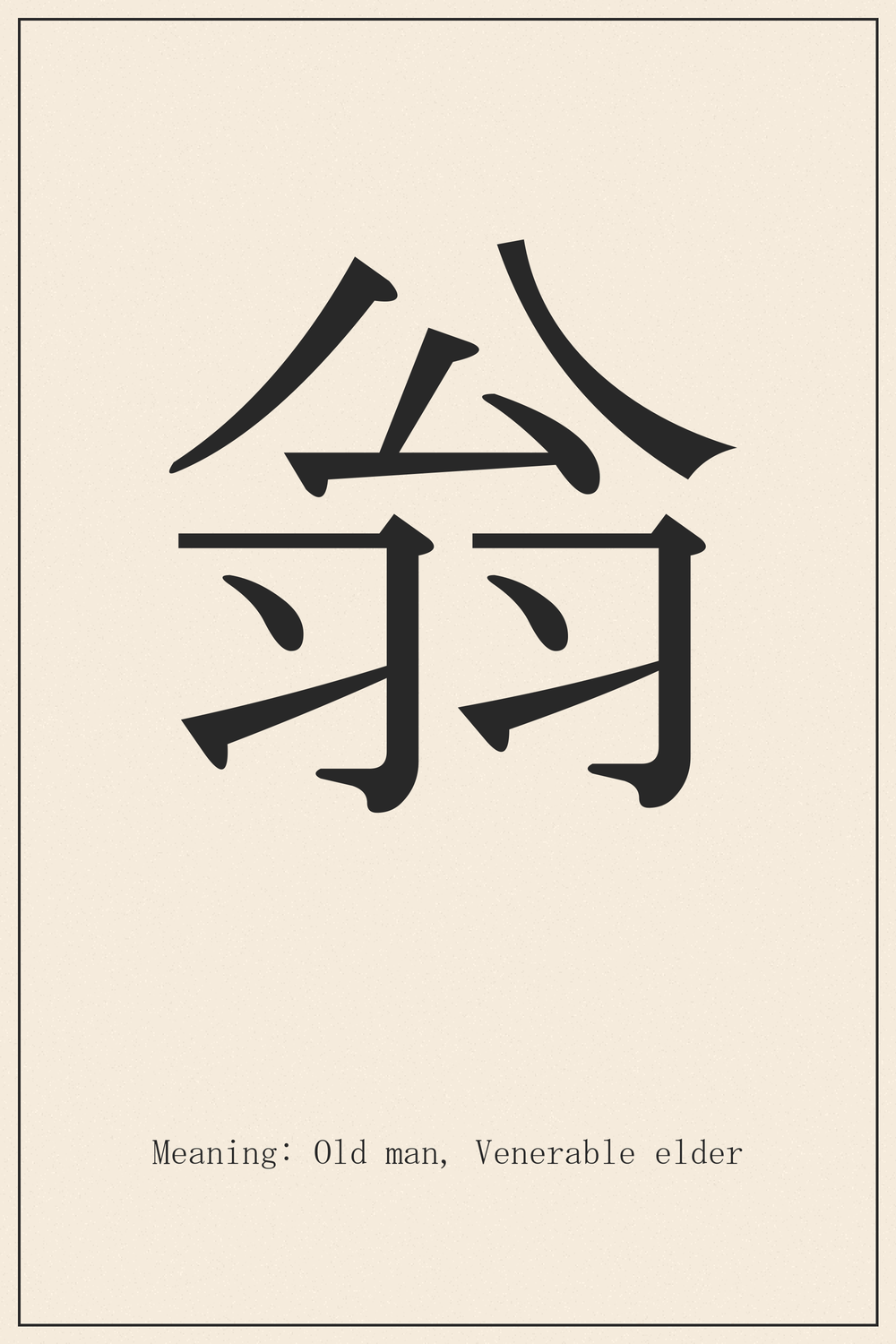
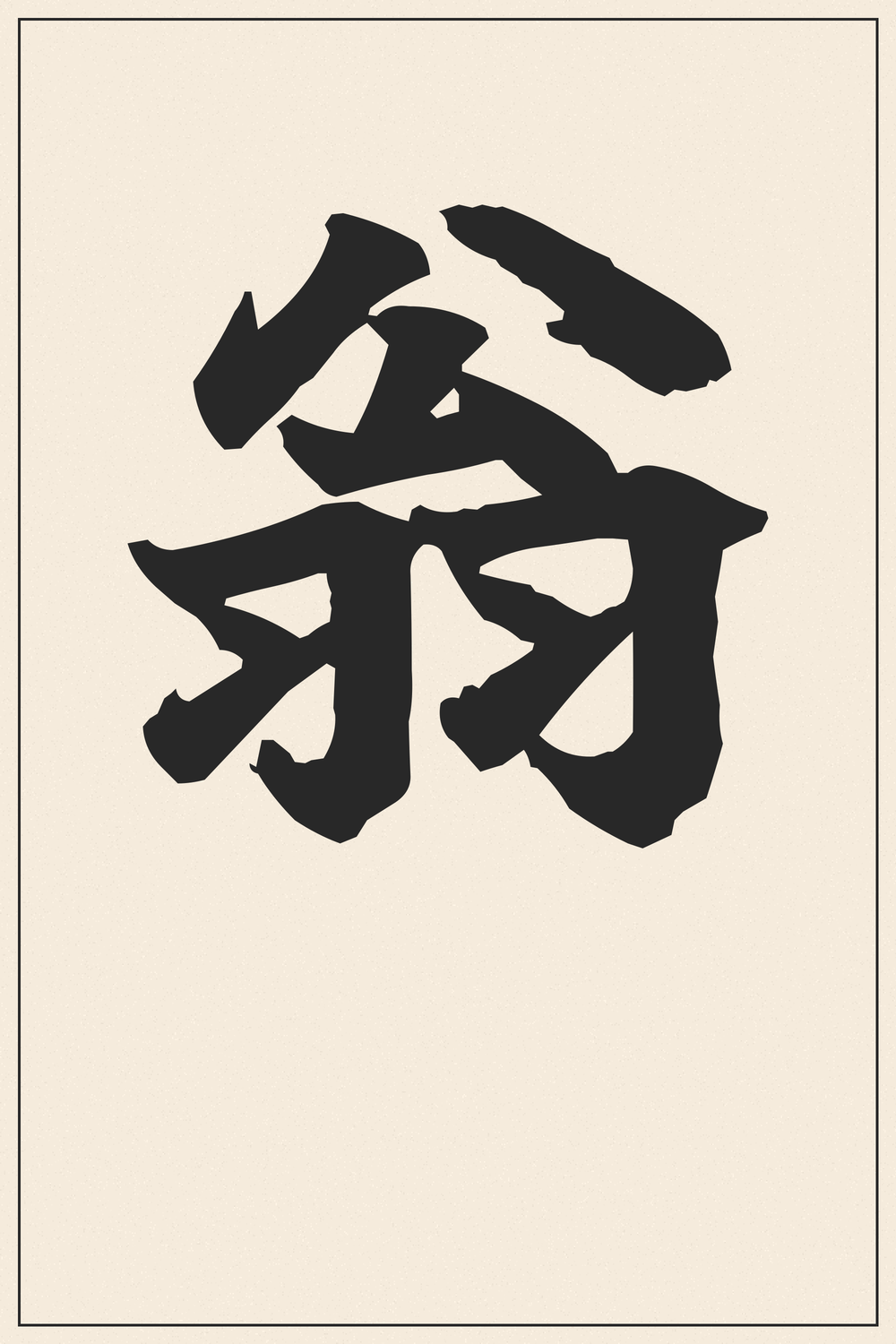
The Kanji 翁 embodies the essence of aged wisdom and profound respect. It is a powerful symbol of longevity and the revered status of elders in Japanese culture.
The atmosphere of a Kanji character changes dramatically depending on the font style. A character that looks elegant in a brush style might look bold and modern in a different font.
Recommendation:
Since a tattoo is permanent, we strongly recommend comparing various font styles beyond what is shown here. Use our designs as a trusted reference for the correct structure, but feel free to explore different artistic variations to find the perfect match for your vision.
The Deep Meaning Behind 翁
The character 翁 (Okina) is composed of two primary elements: 羽 (ha, ‘feathers’ or ‘wings’) and 公 (kō, ‘public’ or ‘lord’). The combination subtly suggests an old man adorned with feathers, perhaps alluding to the long life of a crane, a revered symbol of longevity in East Asian cultures, or an elder held in public esteem like a lord.
Culturally, 翁 often refers to a revered, wise old man, embodying a lifetime of experience and knowledge. This term also famously appears in the context of traditional Japanese Noh theater, where the ‘Okina’ mask represents a divine old man performing a sacred ritual for peace and prosperity, further imbuing the character with spiritual and auspicious connotations.
Kanji Breakdown
The Kanji 翁 is formed from two distinct components, each contributing to its profound meaning.
Feathers, Wings: This radical depicts feathers or wings, often symbolizing lightness, elegance, or long life, especially when associated with birds like cranes or mythical beings.
Public, Lord, Duke: This component signifies something public, open, or a person of high rank and respect, such as a lord or duke. It suggests veneration and community recognition.
Conclusion
The Kanji 翁 is a profound representation of age, wisdom, and profound respect for elders. It carries a rich cultural tapestry, from daily reverence to its sacred role in traditional Japanese performing arts, symbolizing a life lived fully and honorably.
Opting for an 翁 tattoo is a powerful statement, celebrating the journey of life, the wisdom gained through experience, and the deep admiration for those who have walked before us. It is a symbol that resonates with tradition and the enduring value of human connection and legacy.
Comments