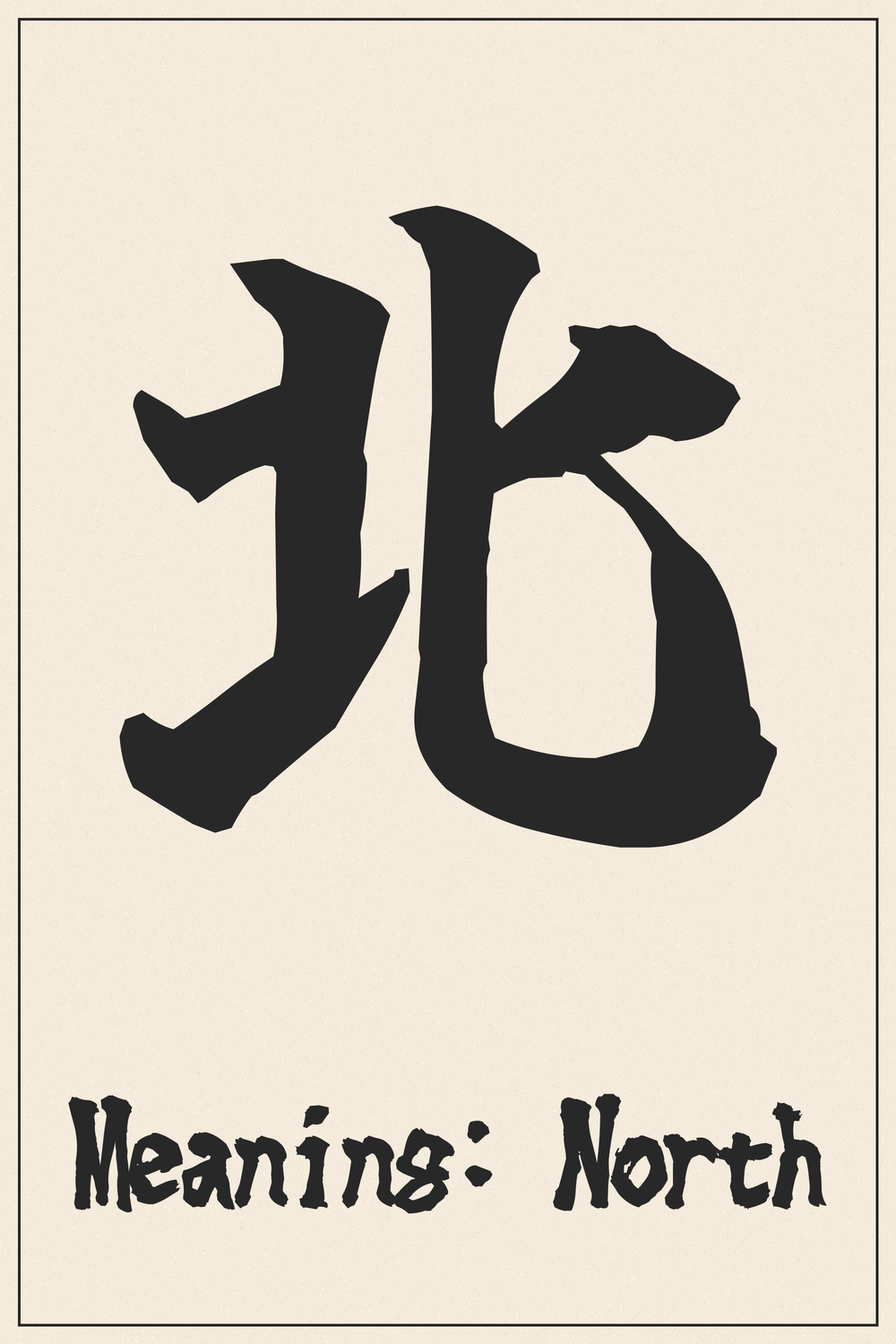
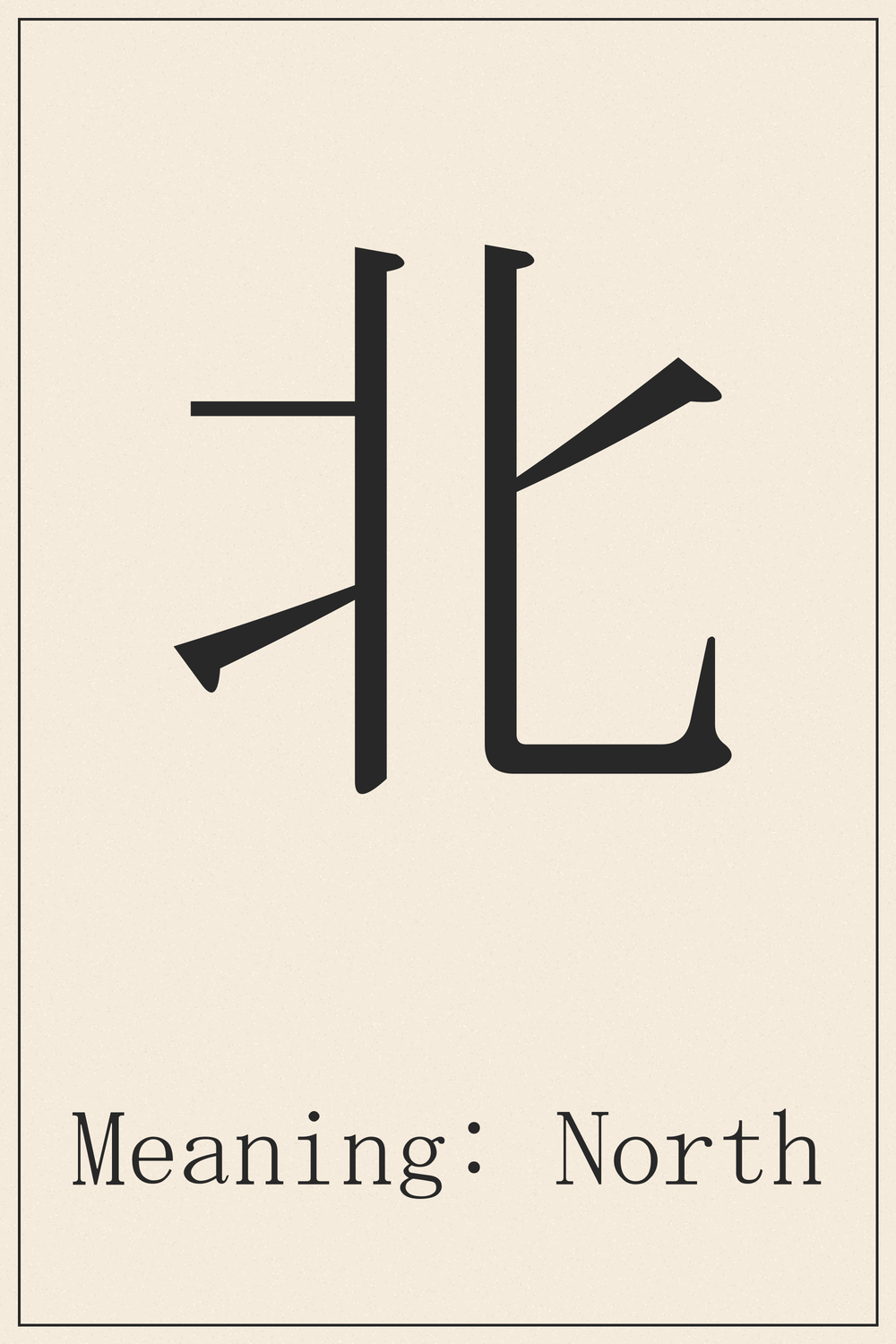
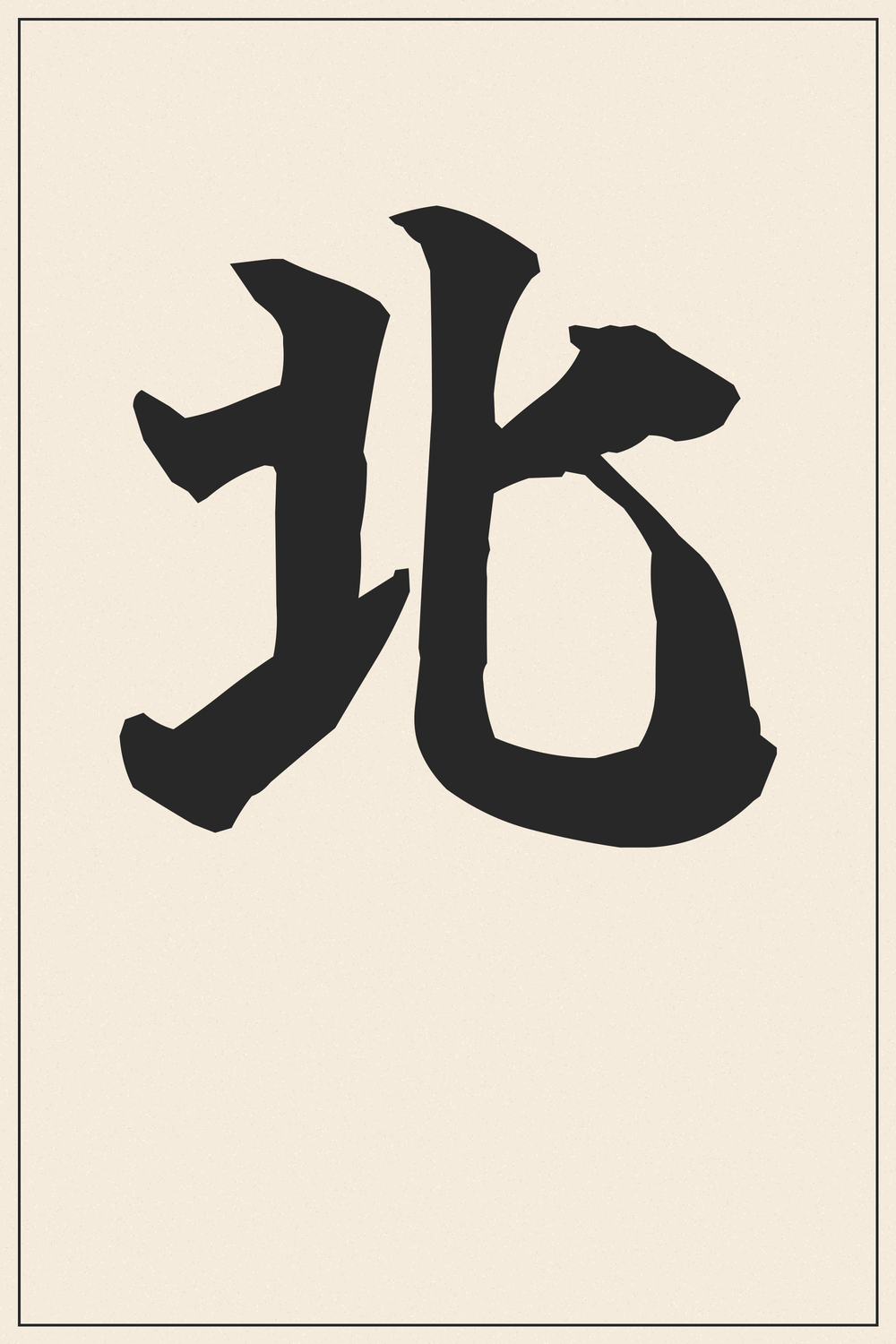
The Kanji 北 (Kita) embodies the concept of ‘North’, a fundamental direction that shapes our world. It speaks to orientation, guidance, and the unwavering nature of a fixed point.
The atmosphere of a Kanji character changes dramatically depending on the font style. A character that looks elegant in a brush style might look bold and modern in a different font.
Recommendation:
Since a tattoo is permanent, we strongly recommend comparing various font styles beyond what is shown here. Use our designs as a trusted reference for the correct structure, but feel free to explore different artistic variations to find the perfect match for your vision.
The Deep Meaning Behind 北
The Kanji 北, meaning ‘North’, has a fascinating etymology rooted in ancient pictographs. Its original form is believed to depict two people standing back-to-back, symbolizing opposition or ‘the back’. This foundational meaning gradually extended to represent the northern direction, often associated with the ‘back’ or ‘rear’ in relation to the sun’s path.
Culturally, ‘North’ holds significance as a cardinal direction essential for navigation and orientation. It is often linked to the North Star (Polaris), a steadfast celestial guide. In East Asian cosmology, the North can be associated with winter, cold, and a sense of enduring strength or a fixed point in the natural world.
Kanji Breakdown
The character 北 is a single, integral unit, yet its form implicitly suggests a fascinating history:
Origin & Meaning: This character originally depicted two individuals positioned back-to-back, which conveyed the idea of ‘back’ or ‘to turn one’s back’. Over time, this evolved to denote ‘north’, as one often turns their back to the cold north wind or it signifies a rearward direction. It represents a fundamental point of orientation.
Conclusion
The Kanji 北 is a profound symbol of direction and steadfastness. It represents a guiding force, much like the North Star, offering a sense of orientation and constancy in a changing world. It can signify the pursuit of one’s true path or the enduring strength found in a firm foundation.
Choosing 北 for a tattoo embodies a connection to nature’s compass and a commitment to one’s chosen direction. Its clean lines and deep etymology make it a meaningful and aesthetically pleasing choice, symbolizing guidance, stability, and an unwavering spirit.
Comments