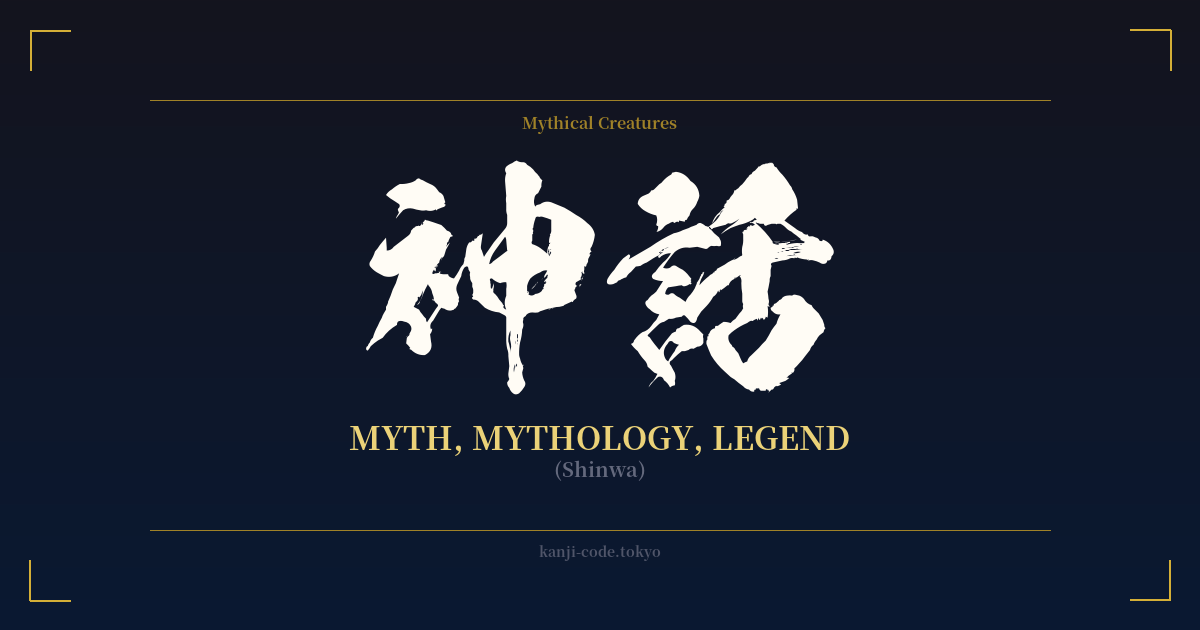
✍️ 神話 (Shinwa) — Contexto cultural
神話 (Shinwa) es la palabra japonesa para mito o mitología, pero su significado es mucho más profundo de lo que sugiere una simple traducción. Los kanji ofrecen la primera pista: 神 (shin o kami) significa "dios" o "espíritu divino", y 話 (wa o hanashi) significa "relato" o "historia". Juntos, se traducen literalmente como "relatos de los dioses".“
Este término es la puerta de entrada al alma misma de las narrativas fundacionales de Japón. Las colecciones más importantes de shinwa japonesas son el Kojiki (古事記, “Registro de Asuntos Antiguos”) y el Nihon Shoki (日本書紀, “Crónicas de Japón”), ambas compiladas en el siglo VIII. Estos textos exponen el mito de la creación japonesa, comenzando con el surgimiento de las primeras deidades y la formación de las islas de Japón por la pareja divina, Izanagi e Izanami.
La figura central de estos mitos es la diosa del sol Amaterasu Ōmikami, soberana de los cielos y la deidad más venerada del sintoísmo. Los relatos narran su rivalidad con su impetuoso hermano, Susanoo-no-Mikoto, dios de los mares y las tormentas, y detallan el linaje divino que culmina con el primer emperador de Japón, Jimmu. Esta ascendencia divina de la línea imperial ha sido un pilar fundamental de la identidad y la estructura política japonesas durante siglos, conectando el reino terrenal con el plano celestial.
A diferencia de las mitologías occidentales, a menudo consideradas reliquias del pasado, el shinwa japonés sigue siendo una parte viva de la cultura. Estos relatos no son meras historias; constituyen la base de los rituales y festivales sintoístas, así como del concepto mismo de kami: las innumerables deidades y espíritus que, según la creencia popular, habitan en todo, desde montañas y ríos hasta árboles y cascadas. Visitar un santuario sintoísta es adentrarse en un espacio físico dedicado a un kami cuya historia se narra en el shinwa.
En la actualidad, la influencia del shinwa es omnipresente. Proporciona una vasta fuente de personajes, temas y motivos para la narrativa contemporánea en anime, manga y videojuegos. Series como Noragami presentan dioses modernos, mientras que la épica de Naruto se inspira profundamente en figuras y conceptos mitológicos. El videojuego Ōkami permite a los jugadores encarnar a la diosa Amaterasu. Elegir 神話 como diseño implica abrazar toda esta tradición épica, desde las crónicas antiguas hasta sus vibrantes expresiones modernas.
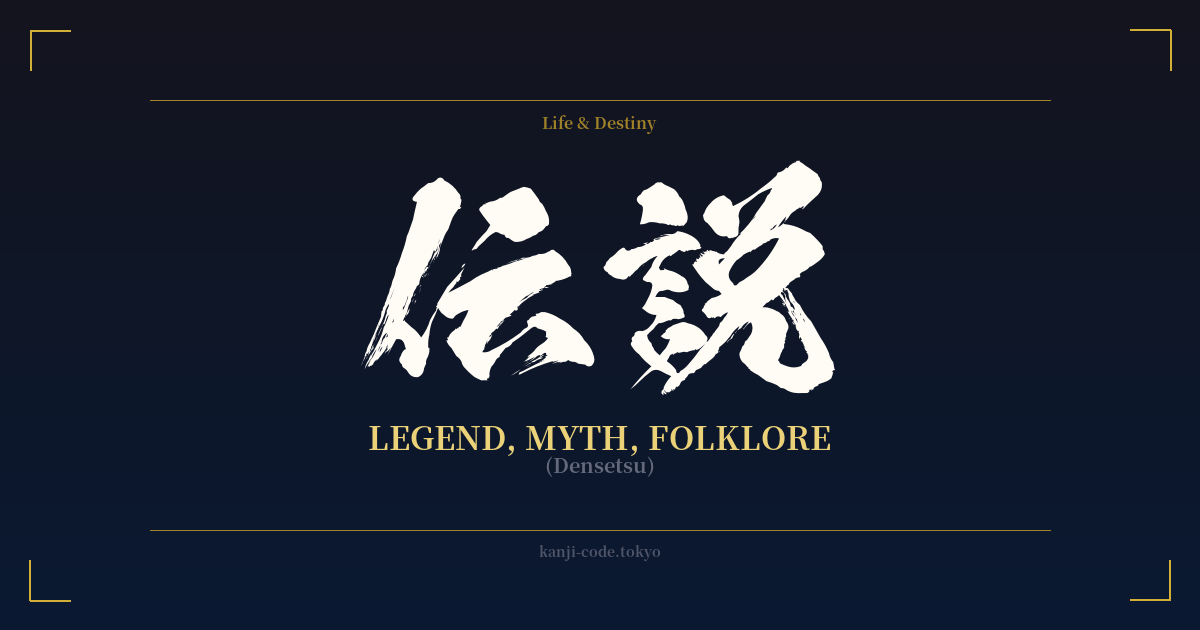
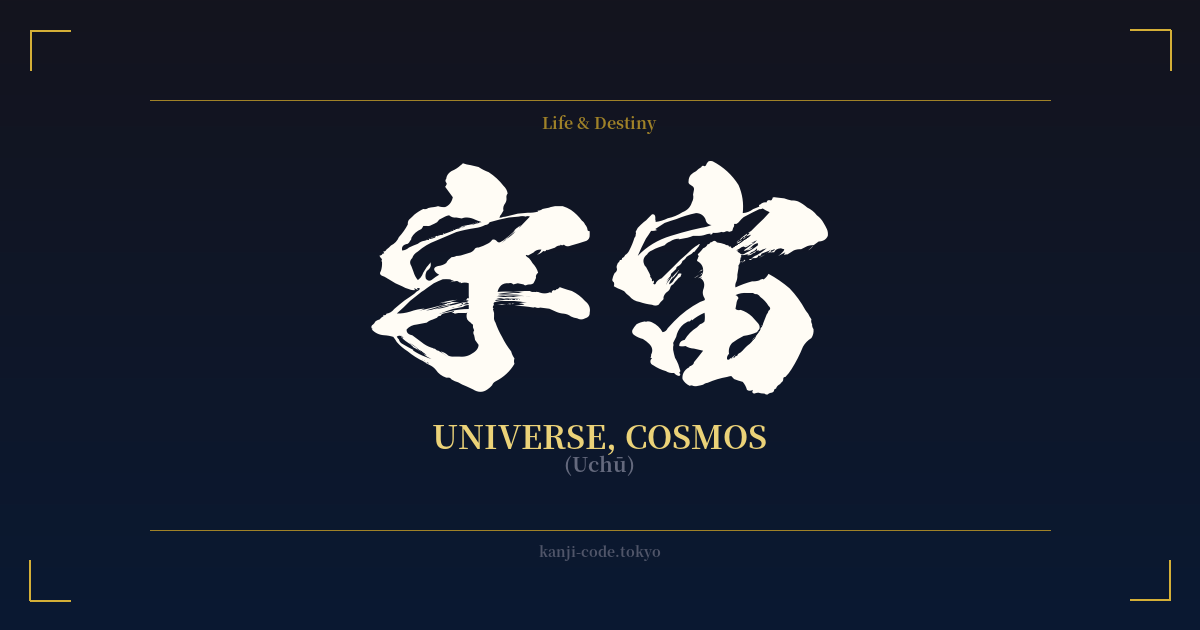
🖌️ Estilos de fuente para 神話
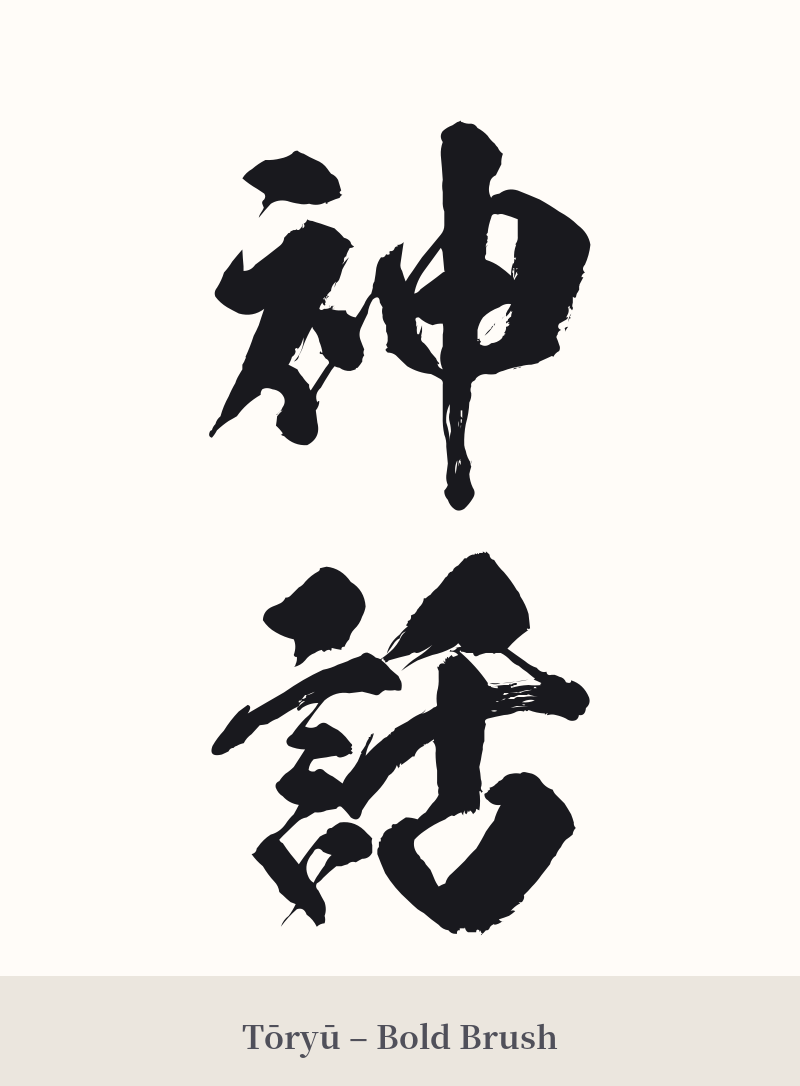
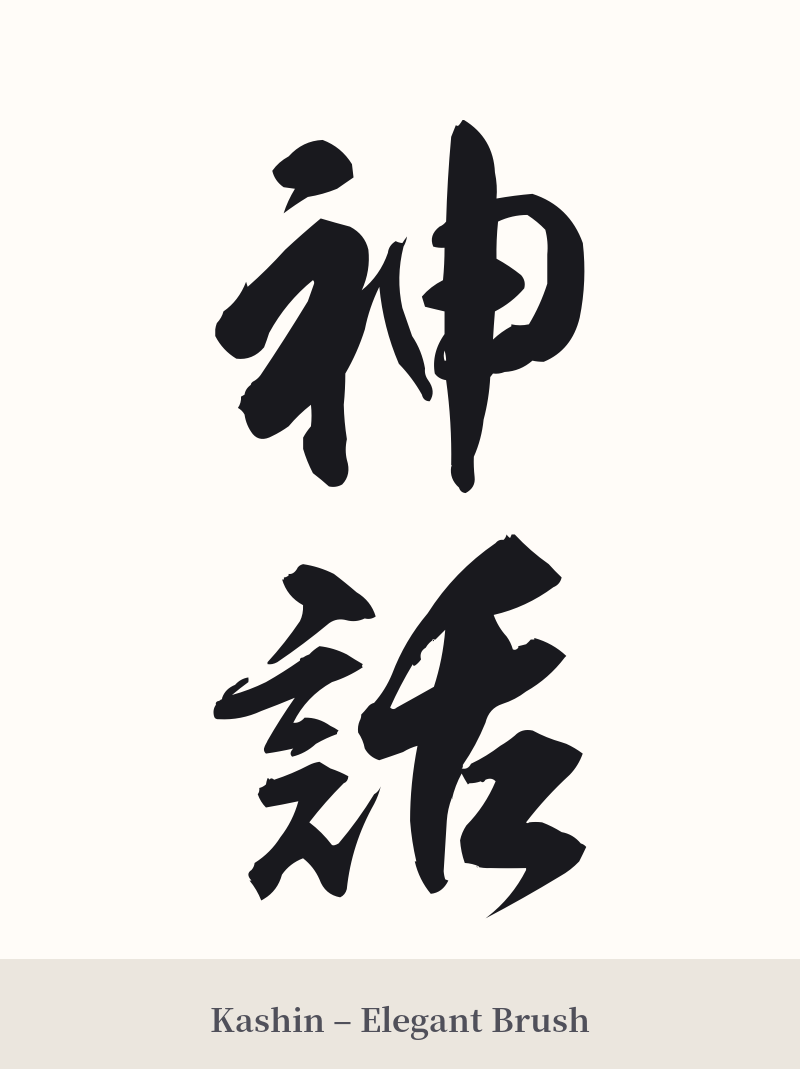
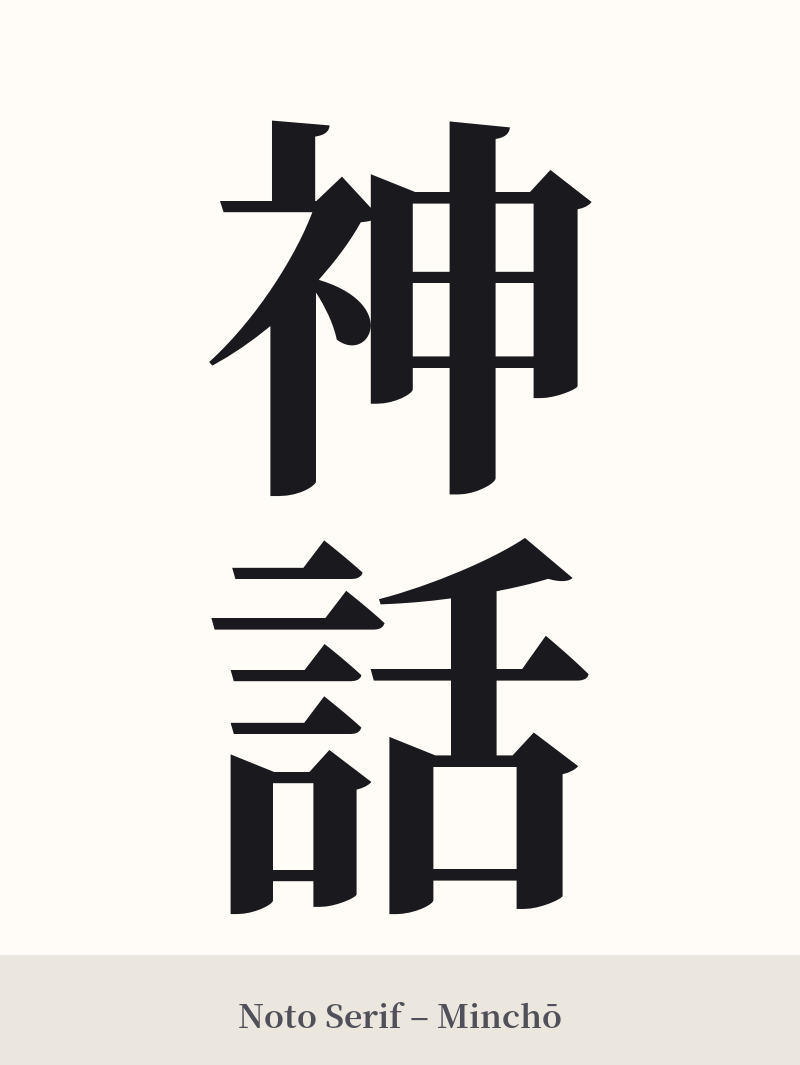
Los mismos caracteres kanji pueden verse muy diferentes según el estilo de caligrafía. Elige una fuente que se ajuste al ambiente que deseas para tu tatuaje o diseño.
🎨 Idoneidad para tatuajes
📐 Guía de diseño de tatuajes
神話 es una palabra visualmente equilibrada y significativa que funciona bien para una variedad de diseños de tatuajes. Sus dos caracteres ofrecen una agradable simetría.
– Colocación: La orientación vertical es clásica y luce impactante en el antebrazo, la pantorrilla o a lo largo de la columna vertebral. El diseño horizontal se ajusta bien al pecho, la parte superior de la espalda o la parte interna del bíceps.
– Estilo: Para una sensación de historia y fluidez, considere una escritura semicursiva como Gyōsho (行書). Este estilo evoca la sensación de pergaminos antiguos y narraciones. Para una declaración más audaz e impactante, un Kaisho (楷書) marcado o incluso un estilo Shodo dramático y con salpicaduras de pintura serían excelentes.
– Elementos visuales: Si bien los kanji tienen fuerza por sí solos, se pueden combinar con imágenes de la mitología japonesa. Considere incorporar elementos como nubes arremolinadas, un sol rojo que simboliza a Amaterasu, un dragón (Ryū) o una sutil puerta torii al fondo para enmarcar los caracteres.
Comentarios