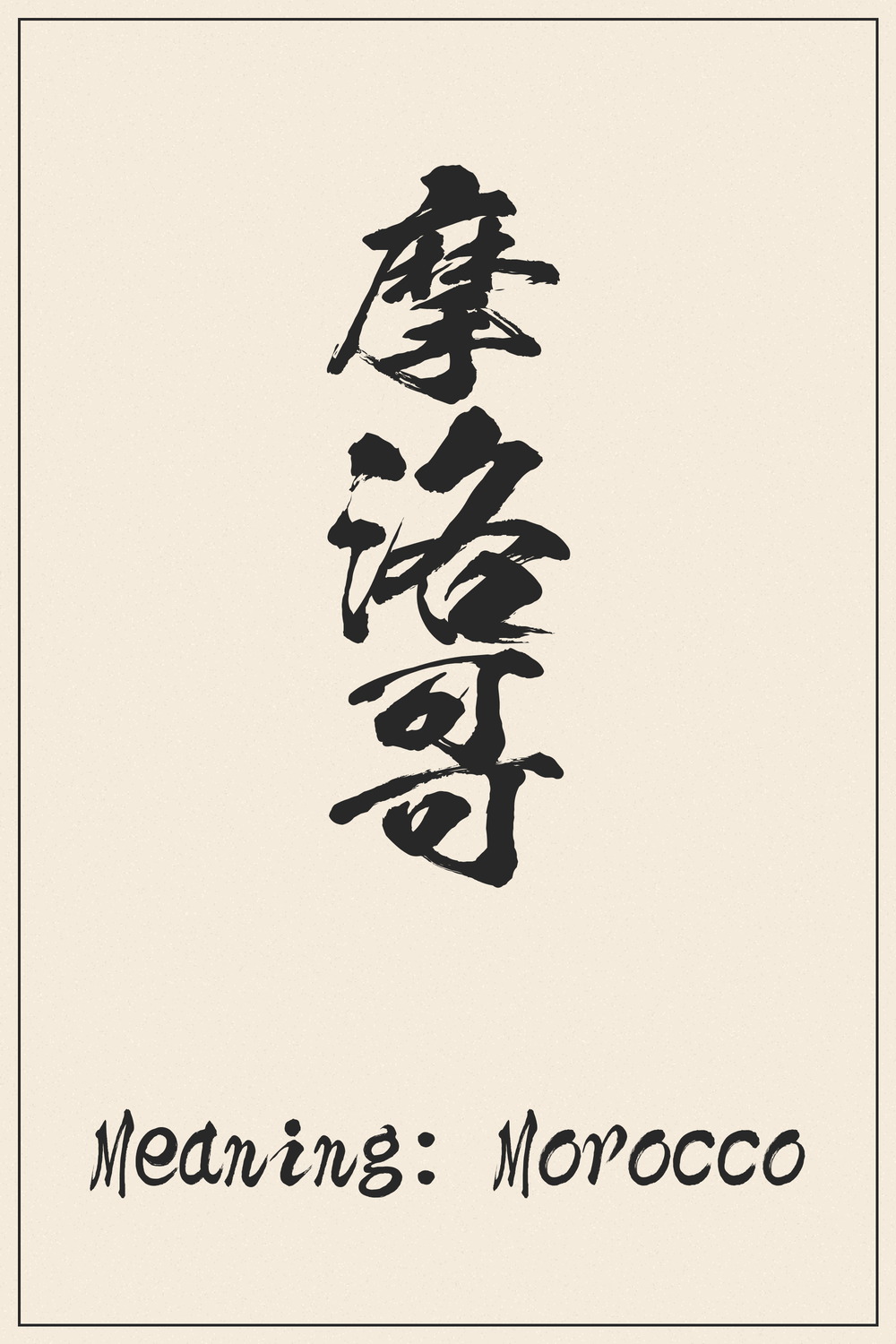
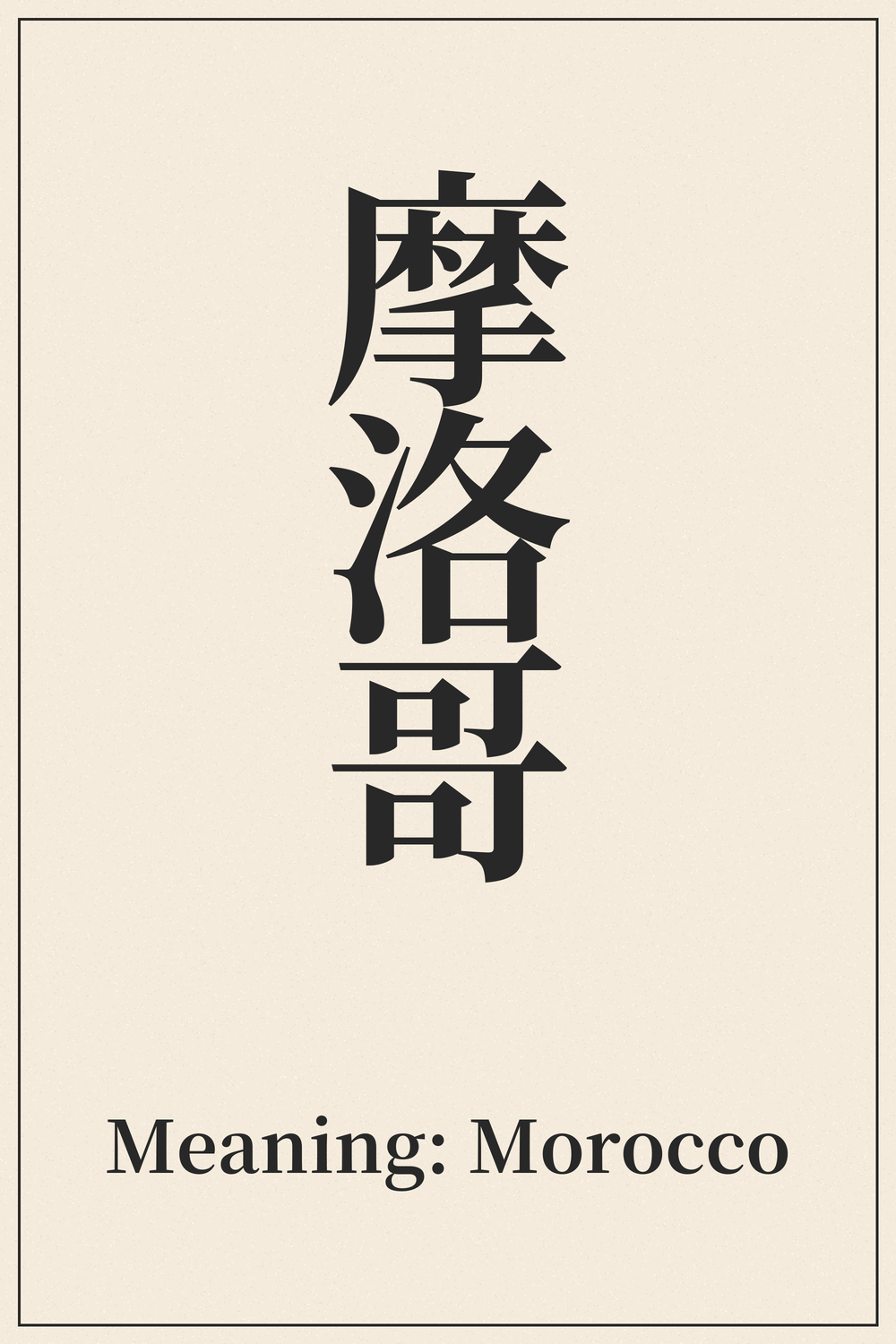
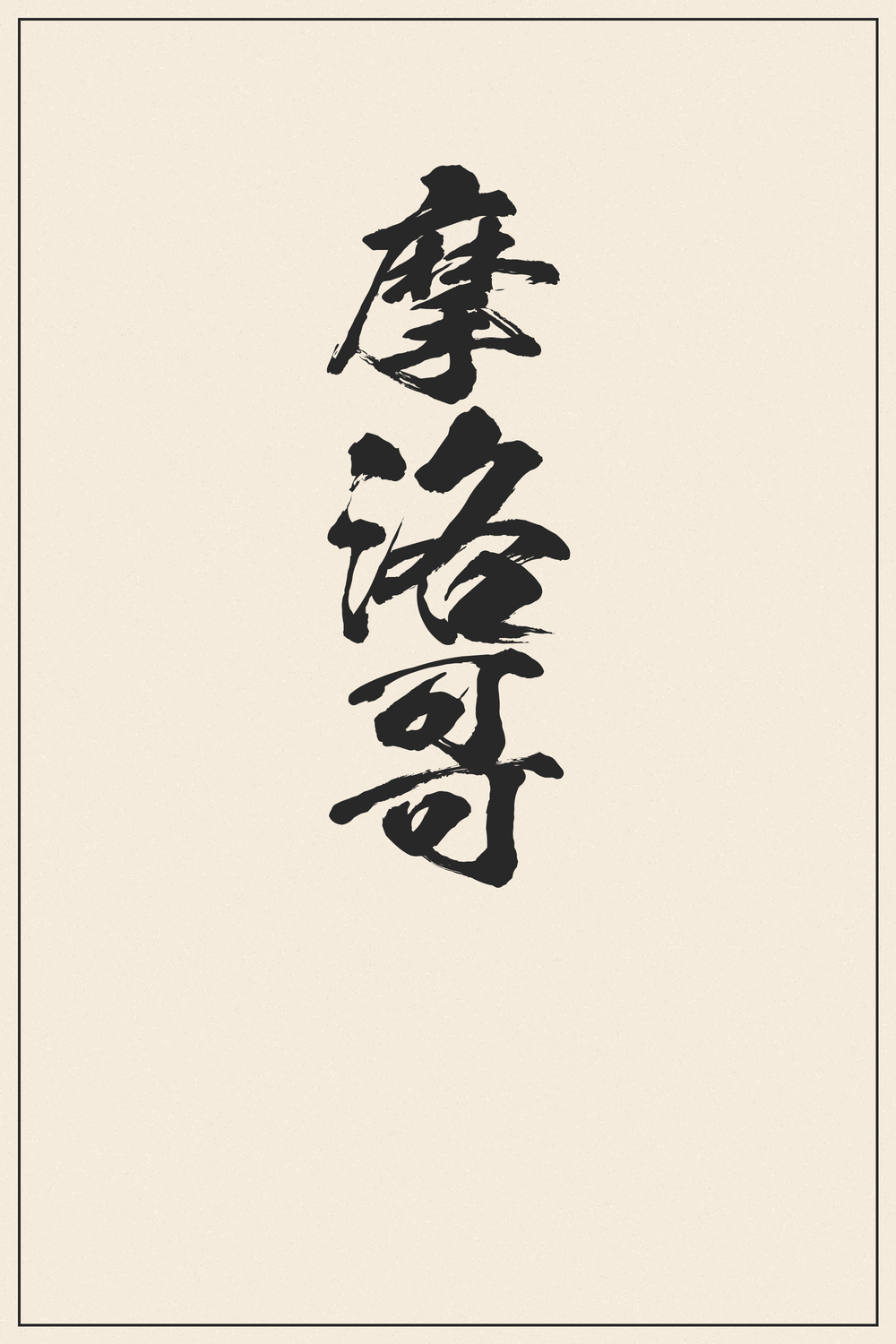
Dive into the fascinating world of Kanji with ‘摩洛哥’ (Morocco). This unique combination of characters serves as a phonetic bridge, linking the exotic North African nation to the rich tapestry of Japanese script.
The atmosphere of a Kanji character changes dramatically depending on the font style. A character that looks elegant in a brush style might look bold and modern in a different font.
Recommendation: Since a tattoo is permanent, we strongly recommend comparing various font styles beyond what is shown here. Use our designs as a trusted reference for the correct structure, but feel free to explore different artistic variations to find the perfect match for your vision.
The Deep Meaning Behind 摩洛哥
The Kanji combination ‘摩洛哥’ (Morokko) is a classic example of ateji (当て字), a Japanese writing system where characters are used purely for their phonetic values, often to represent foreign words or names. In this case, the individual meanings of ‘摩’ (ma: rub, grind), ‘洛’ (ro: fall, capital), and ‘哥’ (ko: elder brother) are secondary to their sounds, which together approximate ‘Morocco’.
This practice of using ateji for foreign country names reflects Japan’s historical engagement with global cultures. It provided a method to integrate new vocabulary into the existing writing system without creating new characters. For ‘摩洛哥’, the selection of these specific Kanji creates a unique visual representation of the country within Japanese language.
Kanji Breakdown
The characters in ‘摩洛哥’ are chosen for their sounds rather than their literal meanings to phonetically represent ‘Morocco’.
Meaning: To rub, to polish, to chafe. This character often implies friction or contact. In ‘摩洛哥’, it is used for its phonetic ‘ma’ or ‘mo’ sound, not its literal meaning.
Meaning: To fall, a capital city (often referring to Kyoto). Historically, it’s associated with water currents or falling. Here, its primary function is to provide the ‘raku’ or ‘ro’ sound for the country’s name.
Meaning: Elder brother. This character is commonly used to denote an older male sibling. For ‘摩洛哥’, it contributes the ‘ka’ or ‘ko’ sound, completing the phonetic approximation of ‘Morocco’.
Conclusion
While the individual Kanji ‘摩’, ‘洛’, and ‘哥’ possess distinct literal meanings of ‘rub’, ‘fall’, and ‘elder brother’, their combination in ‘摩洛哥’ serves a purely phonetic purpose. This ateji represents the North African country of Morocco, showcasing the adaptability of the Japanese writing system.
Choosing ‘摩洛哥’ as a symbol is a nod to the cultural practice of ateji and a unique way to honor Morocco. It embodies the nation not through intrinsic character meanings, but through a fascinating linguistic bridge, making it a thoughtful choice for those connected to the country.
Comments