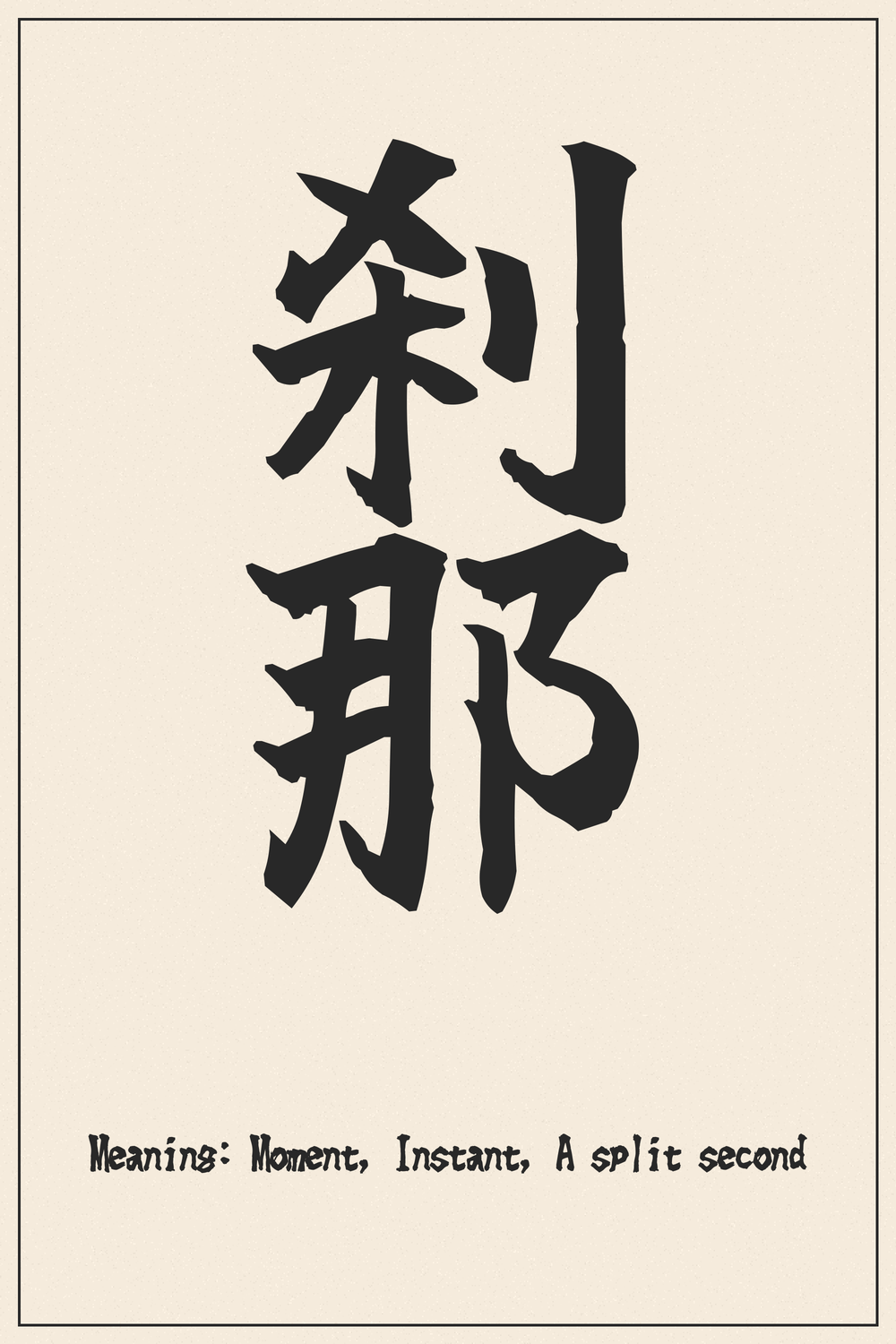
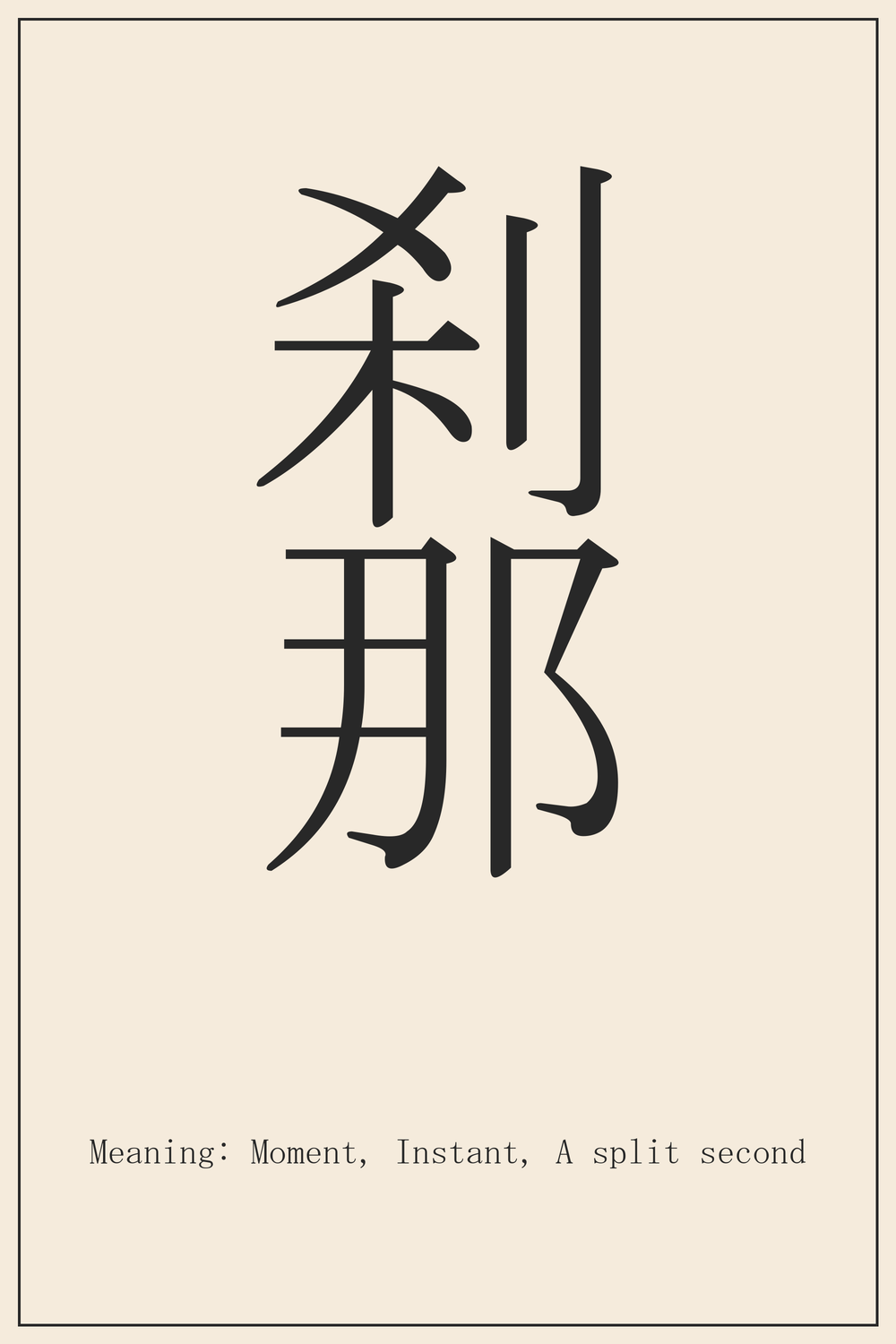
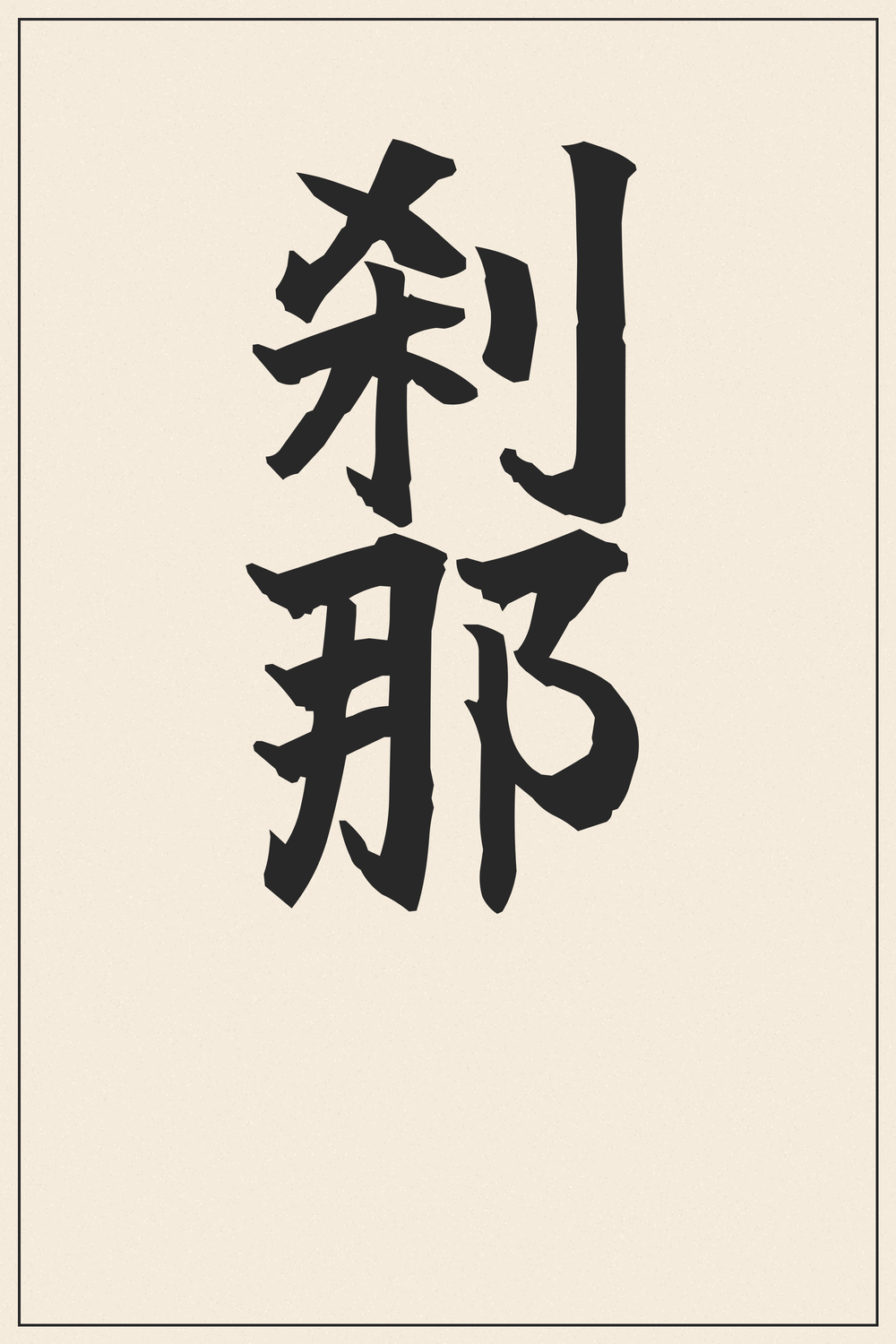
刹那 (Setsuna) captures the profound essence of a single, fleeting moment. This powerful compound embodies the Buddhist concept of impermanence, urging us to cherish the present.
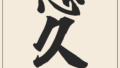
The atmosphere of a Kanji character changes dramatically depending on the font style. A character that looks elegant in a brush style might look bold and modern in a different font.
Recommendation:
Since a tattoo is permanent, we strongly recommend comparing various font styles beyond what is shown here. Use our designs as a trusted reference for the correct structure, but feel free to explore different artistic variations to find the perfect match for your vision.
The Deep Meaning Behind 刹那
The term 刹那 (Setsuna) originates from the Sanskrit word ‘kṣaṇa’ (क्षण), which denotes the smallest conceivable unit of time in ancient Indian and Buddhist philosophy. It was adopted into Japanese with its original profound meaning, emphasizing the brevity of existence.
In Japanese culture, 刹那 is often associated with the aesthetic of mono no aware (物の哀れ), the bittersweet recognition of the ephemeral nature of beauty and life. It encourages an appreciation for the present moment, understanding that all things are transient and impermanent.
Kanji Breakdown
Breaking down the compound 刹那 reveals the individual components that contribute to its profound meaning.
Meaning: Instant, Moment, Temple. In ‘刹那’, this character primarily conveys the idea of an ‘instant’ or a ‘split second’, drawing conceptually from the idea of cutting or abruptly stopping time. It also historically relates to ‘kṣaṇa’ and Buddhist temples, particularly ‘刹土’ (satsudo – Pure Land), where profound philosophical concepts reside.
Meaning: That, Which. In the compound ‘刹那’, this character largely serves a phonetic role to form the word ‘setsuna’, though it can also imply ‘that moment’ or ‘that instant’, subtly reinforcing the concept of a specific, defined instant.
Conclusion
The Kanji 刹那 profoundly encapsulates the fleeting nature of existence and the preciousness of each moment. It is a powerful reminder to live consciously and appreciate the transient beauty of life.
A tattoo of 刹那 is more than just calligraphy; it’s a philosophical statement, a commitment to mindful living, and a beautiful homage to the depth of Japanese and Buddhist thought. Choose this Kanji to carry a constant reminder of life’s impermanent yet beautiful journey.
Comments