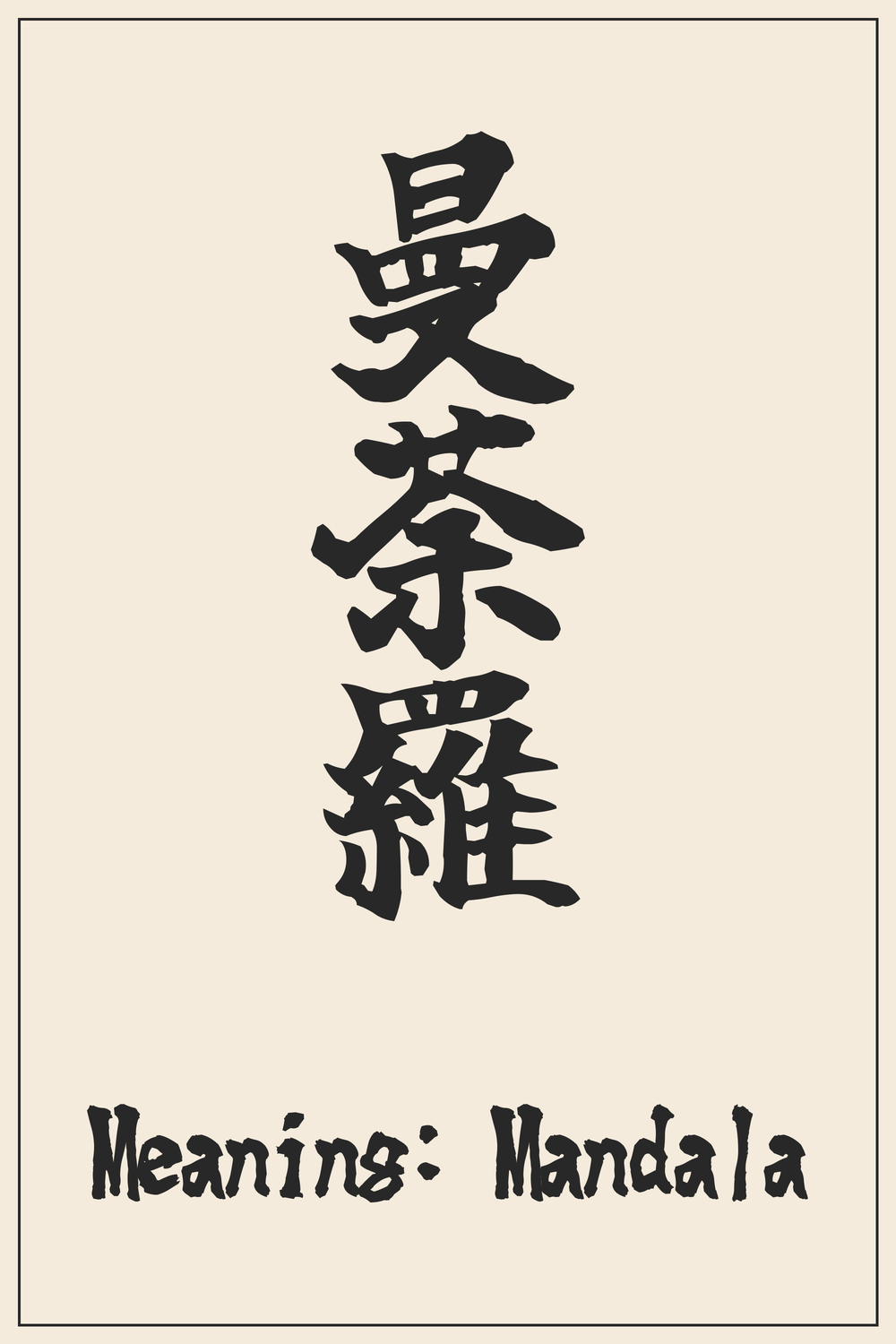
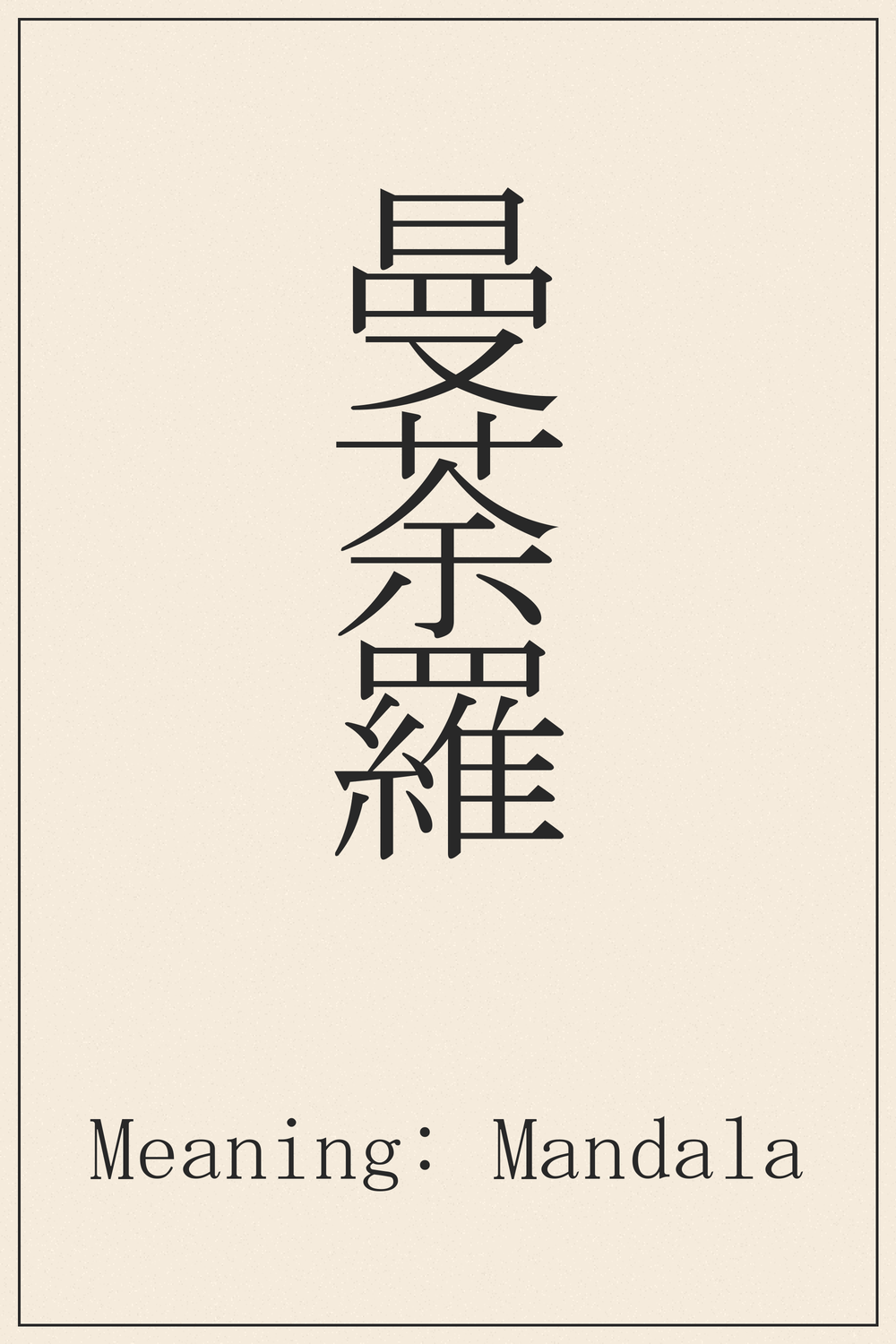
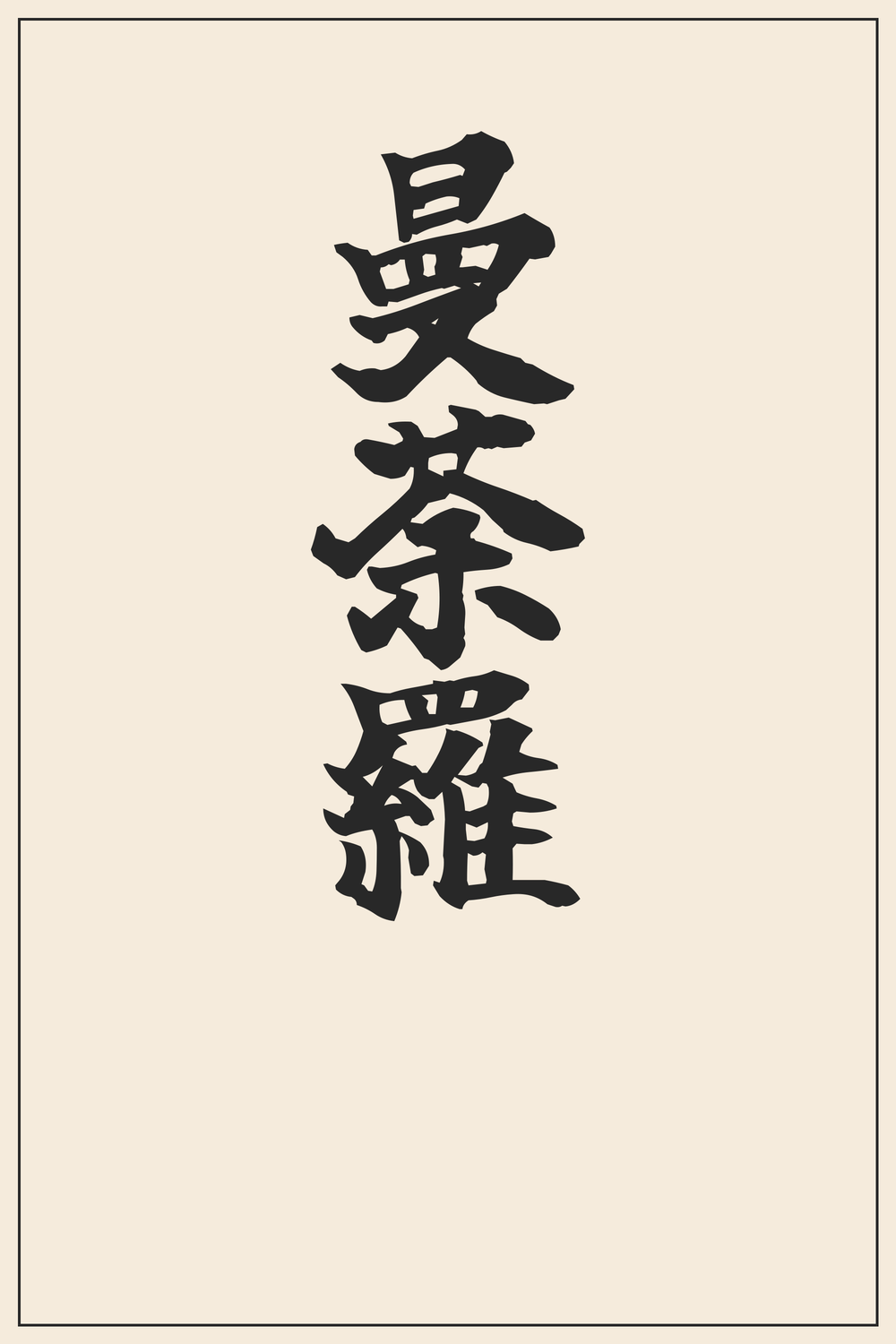
The Kanji for Mandala, 曼荼羅, encapsulates a universe of spiritual meaning and artistic intricacy. This powerful symbol offers a visual representation of cosmic order and the path to enlightenment.
The atmosphere of a Kanji character changes dramatically depending on the font style. A character that looks elegant in a brush style might look bold and modern in a different font.
Recommendation:
Since a tattoo is permanent, we strongly recommend comparing various font styles beyond what is shown here. Use our designs as a trusted reference for the correct structure, but feel free to explore different artistic variations to find the perfect match for your vision.
The Deep Meaning Behind 曼荼羅
“曼荼羅” (Mandara) is the Japanese transliteration of the Sanskrit word “maṇḍala,” meaning “circle” or “container of essence.” Introduced to Japan with Esoteric Buddhism, particularly the Shingon and Tendai schools, it became a fundamental visual tool for meditation and teaching.
In Japanese Buddhism, mandalas serve as sacred diagrams of the cosmos and the divine realms. They are used to represent the spiritual journey, guiding practitioners through intricate patterns and deity arrangements towards enlightenment. These visual aids facilitate concentration and deepen understanding of complex Buddhist doctrines.
Kanji Breakdown
The term 曼荼羅 is a phonetic transliteration of the Sanskrit ‘maṇḍala’, with each character contributing to its unique Japanese form.
Meaning: Extended, beautiful, vast.
While meaning “long” or “beautiful” on its own, in this compound, 曼 primarily functions as a phonetic component, reproducing the “man” sound from the original Sanskrit. It evokes a sense of expansive beauty, fitting the cosmic scope of a mandala.
Meaning: Bitter herb, tea (archaic).
Similar to 曼, 荼 is largely a phonetic component for the “da” sound. Historically, it referred to a bitter plant or an old form of tea, but in “Mandara,” its primary role is phonetic, helping to form the transliteration.
Meaning: Net, gauze, silk, arrange, spread out.
This character carries significant metaphorical weight within “Mandala.” It evokes the intricate, interconnected patterns and “nets” of deities or cosmic elements that are “spread out” in a mandala’s design. The radical 糸 (thread) hints at its association with woven patterns and fine fabrics, reflecting the delicate complexity.
Conclusion
曼荼羅 (Mandara) represents much more than a simple drawing; it is a profound spiritual map and a gateway to understanding the universe. It embodies cosmic order, divine beauty, and the intricate path to spiritual realization.
For those drawn to its deep philosophical and artistic significance, a tattoo of 曼荼羅 can serve as a powerful, personal emblem of spiritual journey, inner peace, and connection to the vastness of existence. Its intricate design, when executed thoughtfully, makes for a truly inspiring and meaningful piece of body art.
Comments