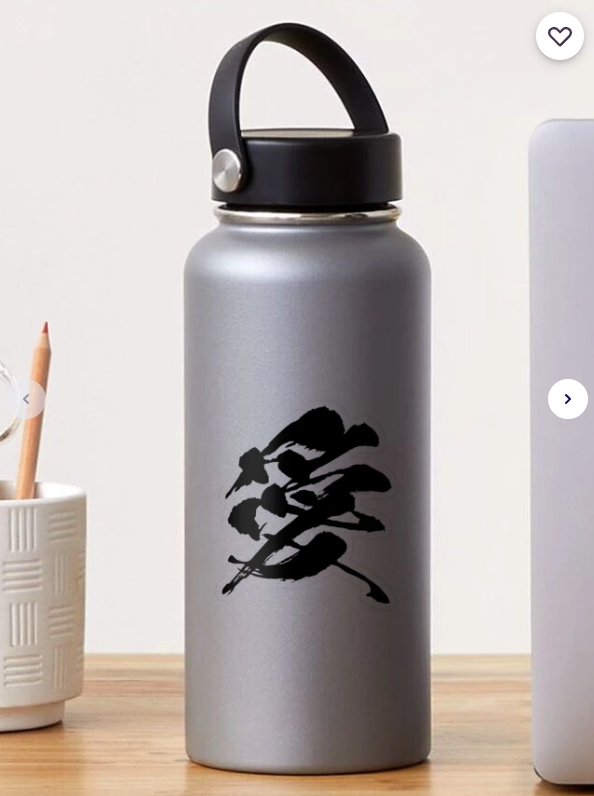
愛
Love
A single character that holds the entire universe of human connection within its 13 strokes.
Picture a hand reaching down, holding a heart with infinite care—that’s the ancient image carved into this character thousands of years ago. The kanji 愛 (ai) evolved from forms showing someone embracing another with tenderness, wrapping protection around what matters most.
When Buddhist monks brought this character to Japan centuries ago, it meant something darker—a craving, an attachment that binds. But over the centuries, especially after the Meiji period around 150 years ago, Japanese culture transformed it into the love we recognize today: the warmth between parent and child, the fire between lovers, the unbreakable thread connecting friends.
Walk through Tokyo today and you’ll see 愛 everywhere. It appears in charity slogans like “愛は地球を救う” (Love will save the Earth), adorns wedding halls, and graces countless baby names like 愛子 (Aiko, “child of love”). This single kanji carries romantic passion, familial devotion, and that inexplicable pull toward what makes life worth living.
✨ Kanji Styles Gallery
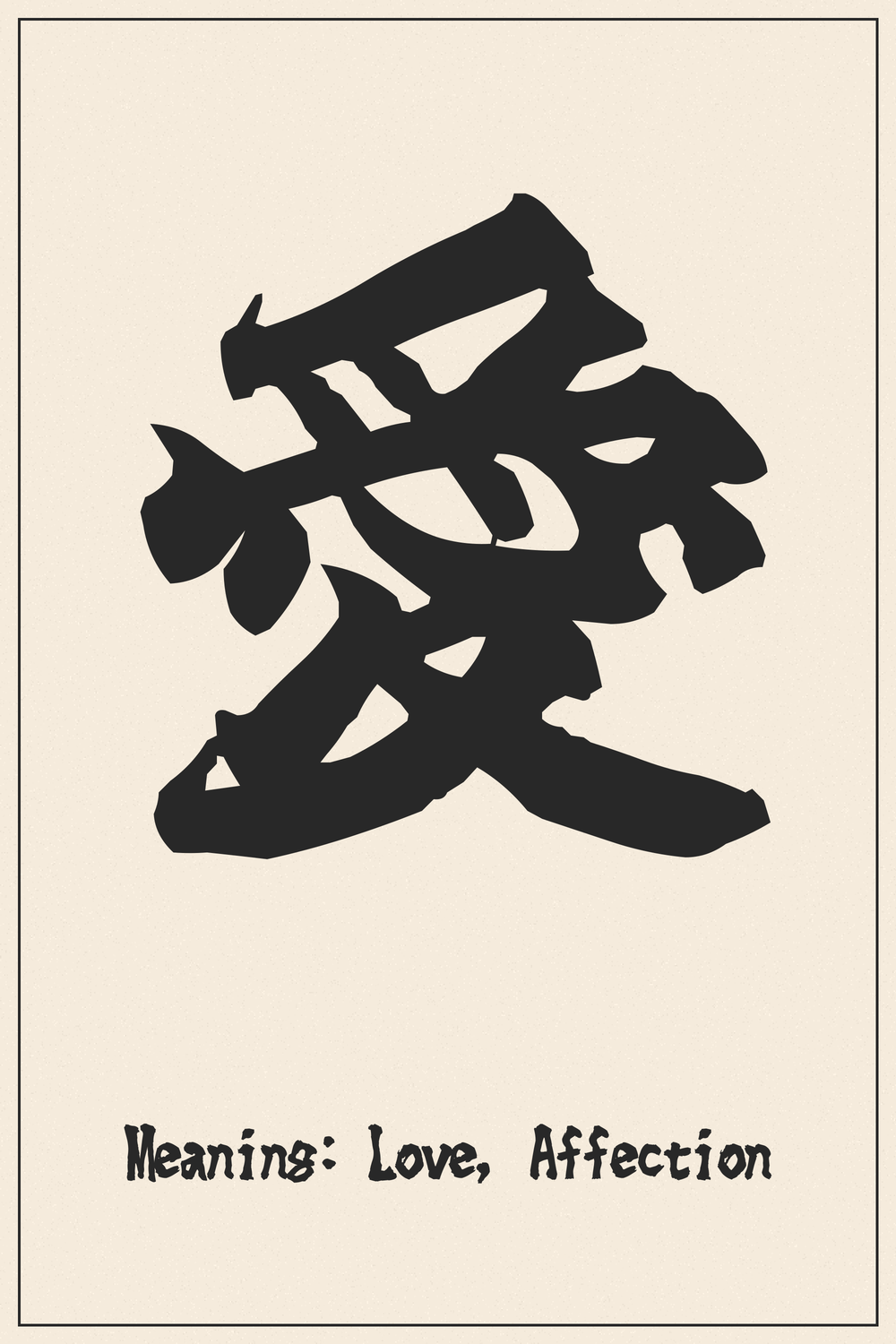
🖌️ Calligraphy Style
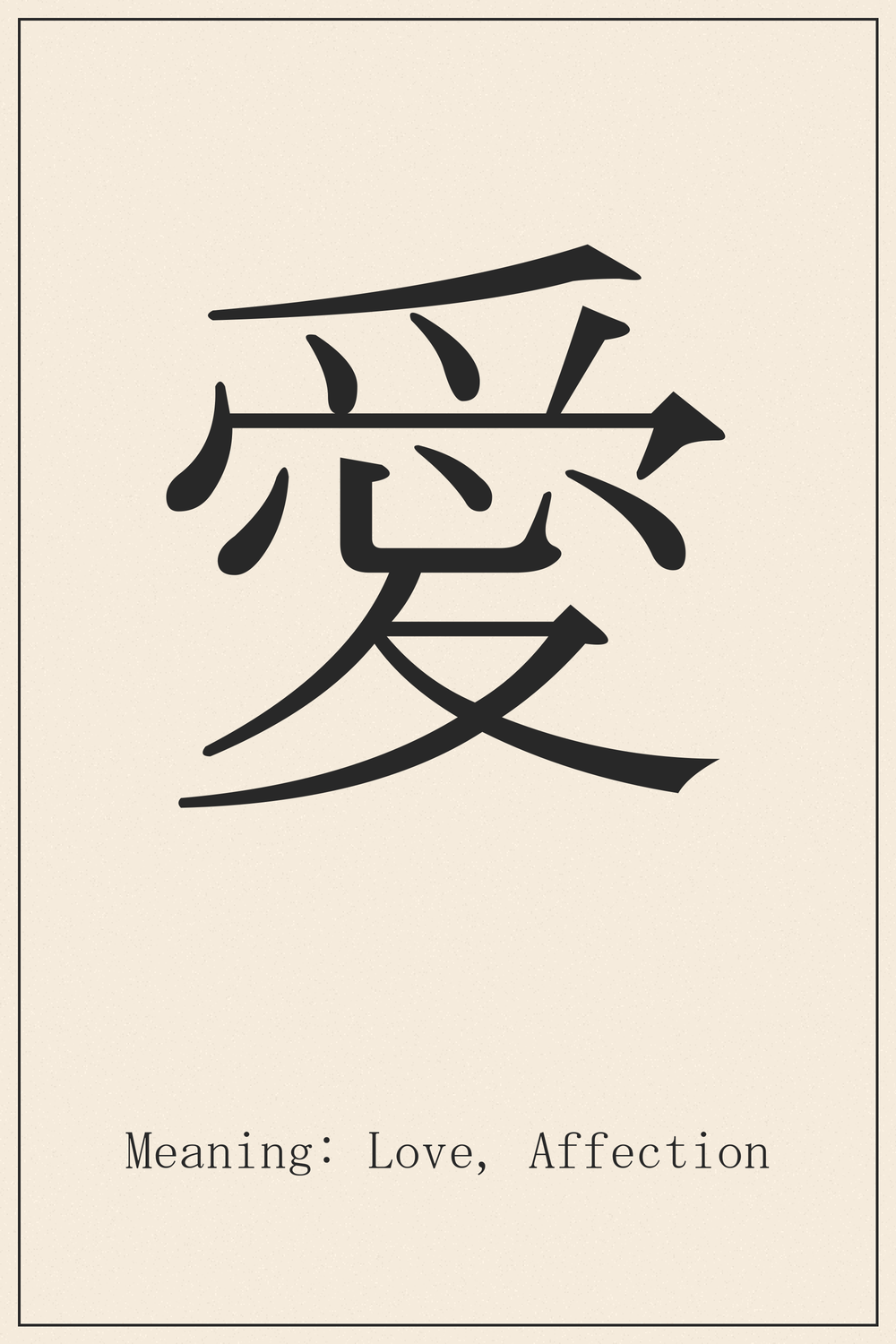
📝 Mincho Style
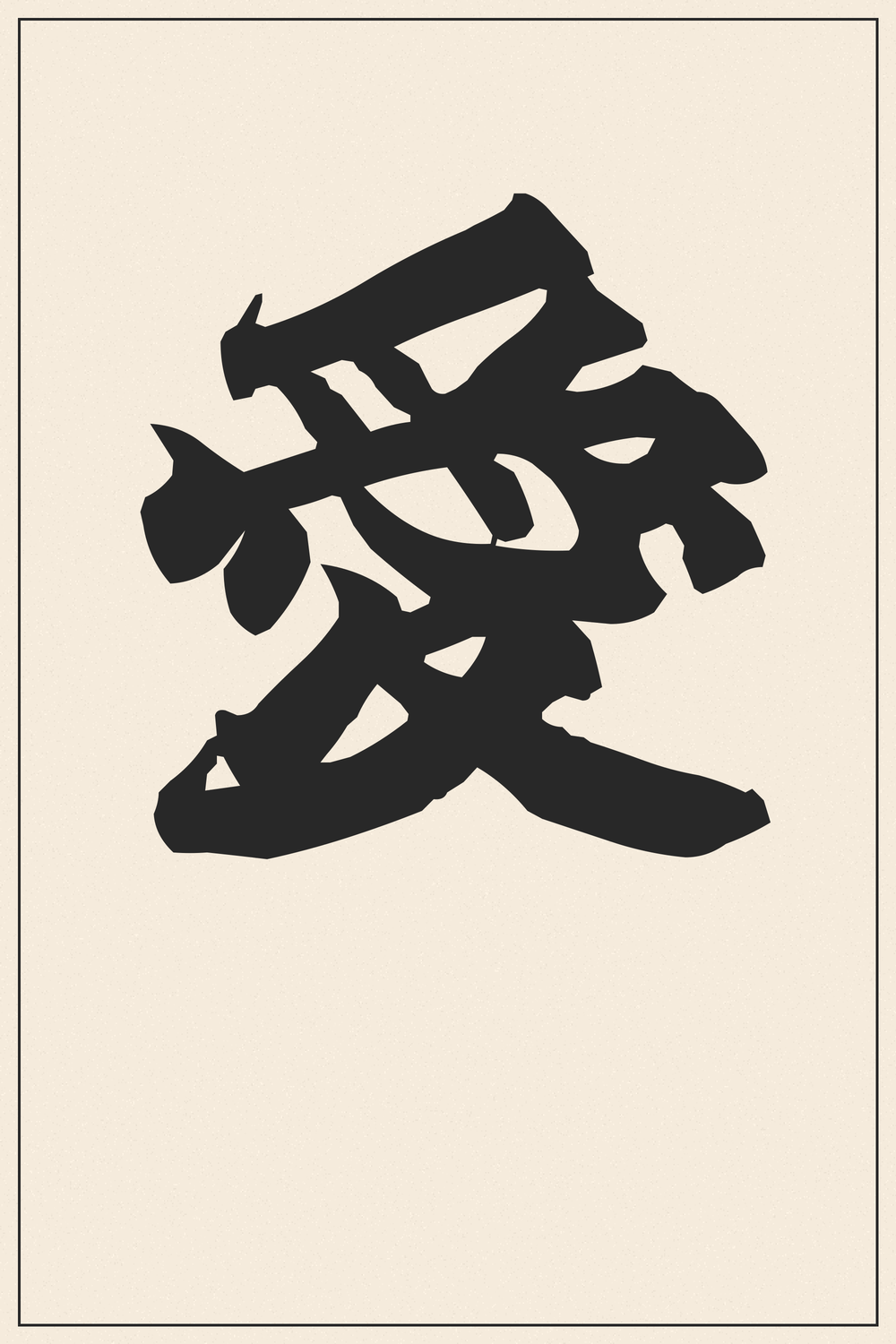
📜 Vertical Writing
⚡ Quick Facts
The Hidden Anatomy of 愛
Most people see 愛 as one beautiful shape, but ancient scribes built it from four distinct pieces, each telling part of love’s story. At the very center beats 心 (kokoro)—the heart, the seat of all emotion. This isn’t metaphorical. Japanese culture literally places feelings in the chest, not the head.
Above the heart, a covering element wraps around like protective shelter. Ancient texts show this as someone bending over to shield what they cherish. The top component suggests hands or claws—holding, grasping gently, never letting go. And at the bottom, the radical for “moving slowly” or “approaching with small steps,” showing how love draws us closer, step by careful step.
When Buddhism imported 愛 from China over a thousand years ago, it actually meant “dangerous attachment”—the kind of desire that causes suffering. It took Japanese culture centuries to flip its meaning into the positive force we tattoo on our bodies today. That’s cultural transformation carved into ink.
愛 vs 恋: The Love Showdown
Here’s where it gets spicy. Japanese has two major “love” characters, and mixing them up changes everything. The kanji 恋 (koi) describes passionate, yearning, butterflies-in-stomach romantic love—think early dating, crushing hard, staying up texting till 3 AM. It’s thrilling but unstable.
Meanwhile, 愛 represents deeper waters: the love that survives life’s storms, the bond between parent and child, the affection in a 40-year marriage. Japanese even combines them as 恋愛 (ren’ai) to capture the full spectrum—from first spark to eternal flame. When choosing a tattoo, 愛 says “this is forever love,” while 恋 screams “I’m falling hard right now.”
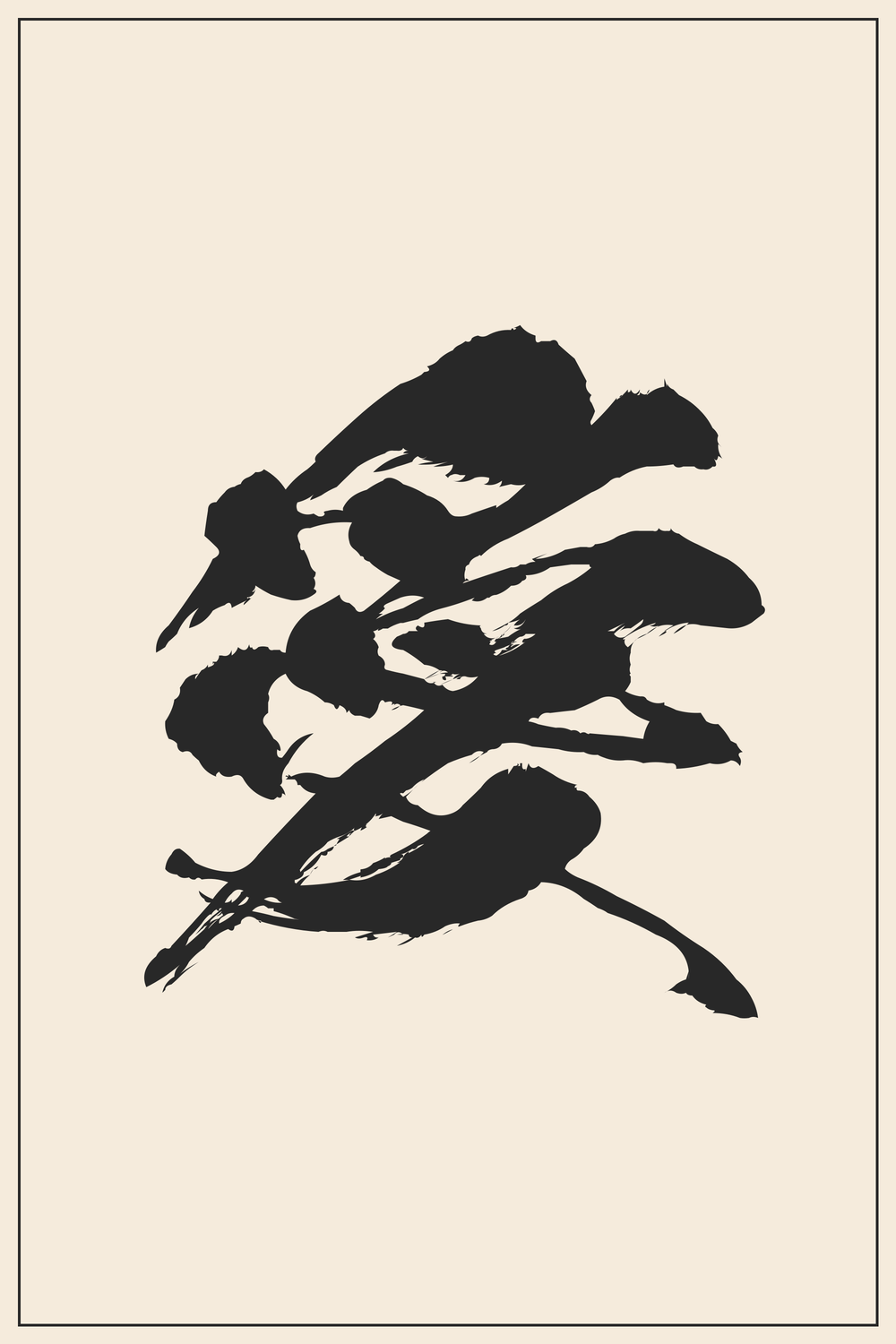
Traditional brush strokes transform love into visual poetry
愛 in Japanese Daily Life
Open any Japanese baby name book and you’ll drown in 愛 combinations. Parents weave it into daughters’ names like 愛美 (Manami, “beautiful love”) or 愛子 (Aiko, “child of love”). Boys get it too, though less commonly. It’s basically wishing love upon your child from their first breath.
The character pops up in everyday compounds: 愛車 (aisha) means “beloved car”—yes, Japanese people love their vehicles enough to use the love kanji. 愛国 (aikoku) combines love with country for “patriotism.” 愛情 (aijō) layers on extra emotion to mean “tender affection.” This kanji doesn’t just sit in dictionaries; it’s working overtime in modern Japan.
Despite being the “love” kanji, Japanese people rarely say “愛してる” (aishiteru, “I love you”) out loud—even to romantic partners. It feels almost too heavy, too serious. They prefer showing love through actions rather than declarations. So this tattoo might say things your Japanese friends wouldn’t dare speak.
Reading and Pronunciation Guide
The standard reading is “ai” (あい)—sounds like the English word “eye.” That’s the on’yomi reading, borrowed from Chinese pronunciation centuries ago. But this kanji has secret alternative readings that show up in older texts and fancy names.
The kun’yomi (native Japanese) readings include “ito(shii)” meaning “dear” or “beloved,” and “mana,” an ancient word appearing in classical poetry from the Man’yōshū (759 CE). When someone names their daughter 愛 and pronounces it “Mana,” they’re reaching back 1,300 years to touch Japan’s oldest recorded love poetry. That’s historical weight most tattoos can’t match.
🎨 Tattoo Design Ideas
- ✨ Brush Calligraphy Style – Flowing strokes with visible ink texture capture traditional Japanese artistry. The imperfect edges show human hands created this, not a printer. Perfect for chest or back pieces where the character can breathe at 4-6 inches.
- ✨ Minimalist Line Work – Clean, precise strokes in solid black work beautifully for wrist or ankle placements. Think 2-3 inches max. The simplicity lets the meaning carry the weight, not decorative flourishes.
- ✨ Vertical Orientation – Traditional Japanese writing flows top to bottom. Placing 愛 vertically along your spine, forearm, or side rib honors authentic reading direction. Adds an extra layer of cultural authenticity.
- ✨ Red Ink Accent – While most kanji tattoos use pure black, adding crimson red to the heart radical (心) in the center makes symbolic sense. Just that one element in color creates visual punch without looking cartoonish.
- ✨ Combination Design – Pair 愛 with complementary kanji like 永遠 (eternity) or 家族 (family) to tell a fuller story. Just make sure they’re properly spaced—Japanese doesn’t smoosh characters together like English words.
What Japanese People Actually Think
Let’s address the elephant in the tattoo parlor: what do Japanese people think when they see 愛 inked on a foreigner? Reactions vary wildly. Older generations might raise eyebrows—tattoos still carry yakuza associations for some. But younger Japanese, especially in urban areas, generally find it cool that foreigners appreciate kanji enough to wear it permanently.
The real judgment comes if you butcher the character. Get those 13 strokes in proper order and proportion, or prepare for polite Japanese people to internally cringe. Stroke order matters. Balance matters. That’s why finding a tattoo artist who actually understands kanji structure—not just copying a JPEG—makes the difference between cultural appreciation and a permanent mistake.
Some onsen (hot springs) and public pools in Japan still ban visible tattoos completely. Your beautiful 愛 tattoo might literally keep you out of cultural experiences you traveled to Japan to enjoy. Research carefully, or invest in those giant waterproof bandages if you plan to visit.
The 13 Strokes That Matter
Every kanji has a stroke count, and 愛 clocks in at exactly 13. That might seem random, but in traditional Japanese numerology, 13 doesn’t carry Western superstitions. What matters more is that those 13 strokes must flow in specific order: top to bottom, left to right, with certain rules about when horizontal lines come before vertical ones.
Japanese children spend hours practicing this exact stroke order in elementary school. Getting it wrong doesn’t just look odd—it reveals you never learned proper form. Your tattoo artist might not care about stroke order since it’s a static image, but understanding the correct sequence shows respect for the tradition you’re wearing. Plus, it helps you spot bad reference images online.
Why This Kanji Endures
In a digital age where emoji replaced words and attention spans shrank to seconds, 愛 still commands presence. You can’t swipe past it. You can’t scroll away. Inked on skin, this single character becomes a permanent statement that some things—love, connection, devotion—deserve more than fleeting pixels.
People choose 愛 tattoos after life-changing moments: surviving illness, losing someone precious, finding the one, becoming a parent. It marks a before-and-after line in their personal timeline. The weight of 1,300 years of Japanese cultural meaning backs up that personal story, giving individual experience historical echo.
Unlike trendy symbols that age like milk, 愛 has survived dynasties, wars, cultural upheavals, and the internet. It’ll outlast whatever’s currently viral. That’s the quiet confidence of wearing a character that’s been expressing love since before English existed as a language.
Comments