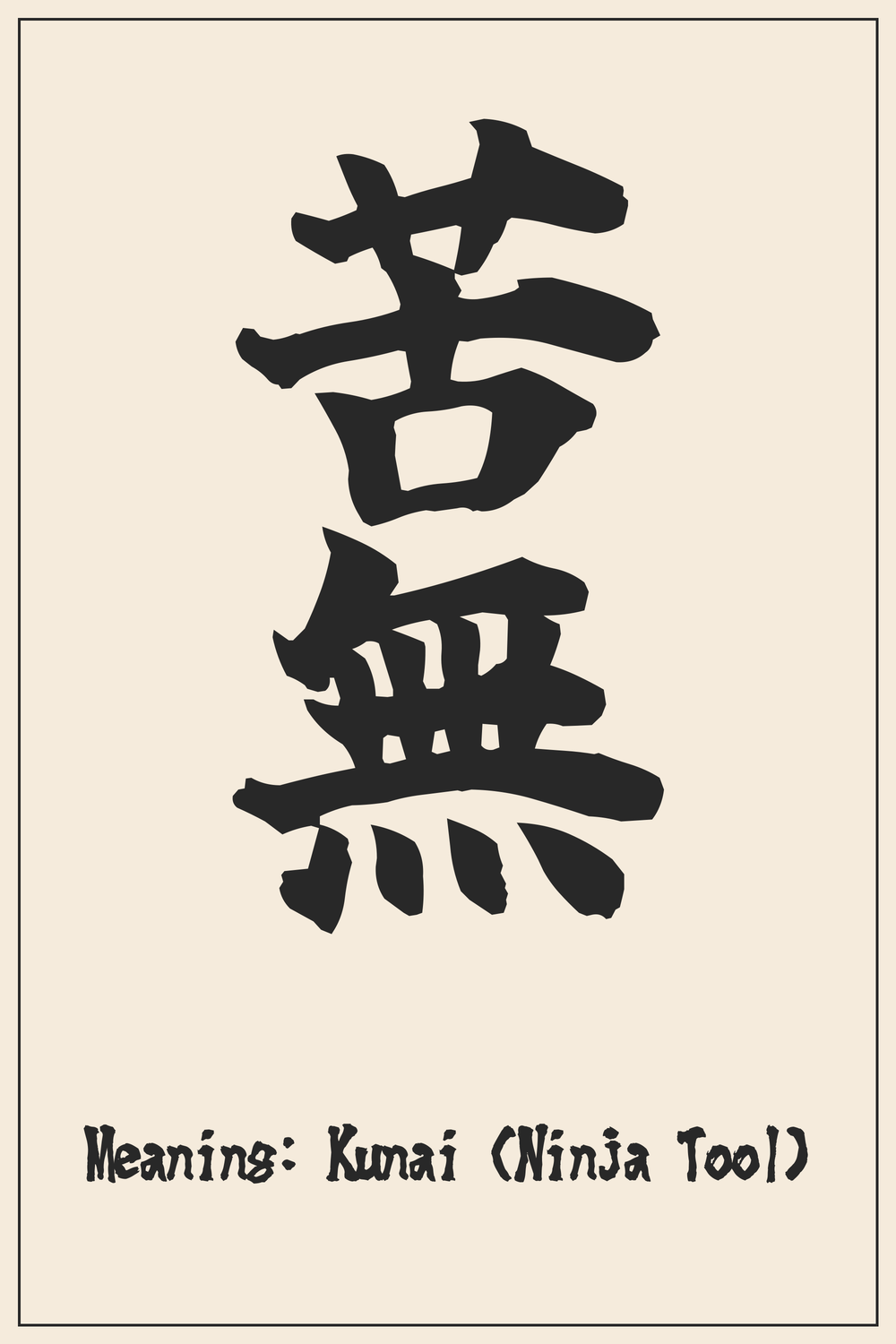
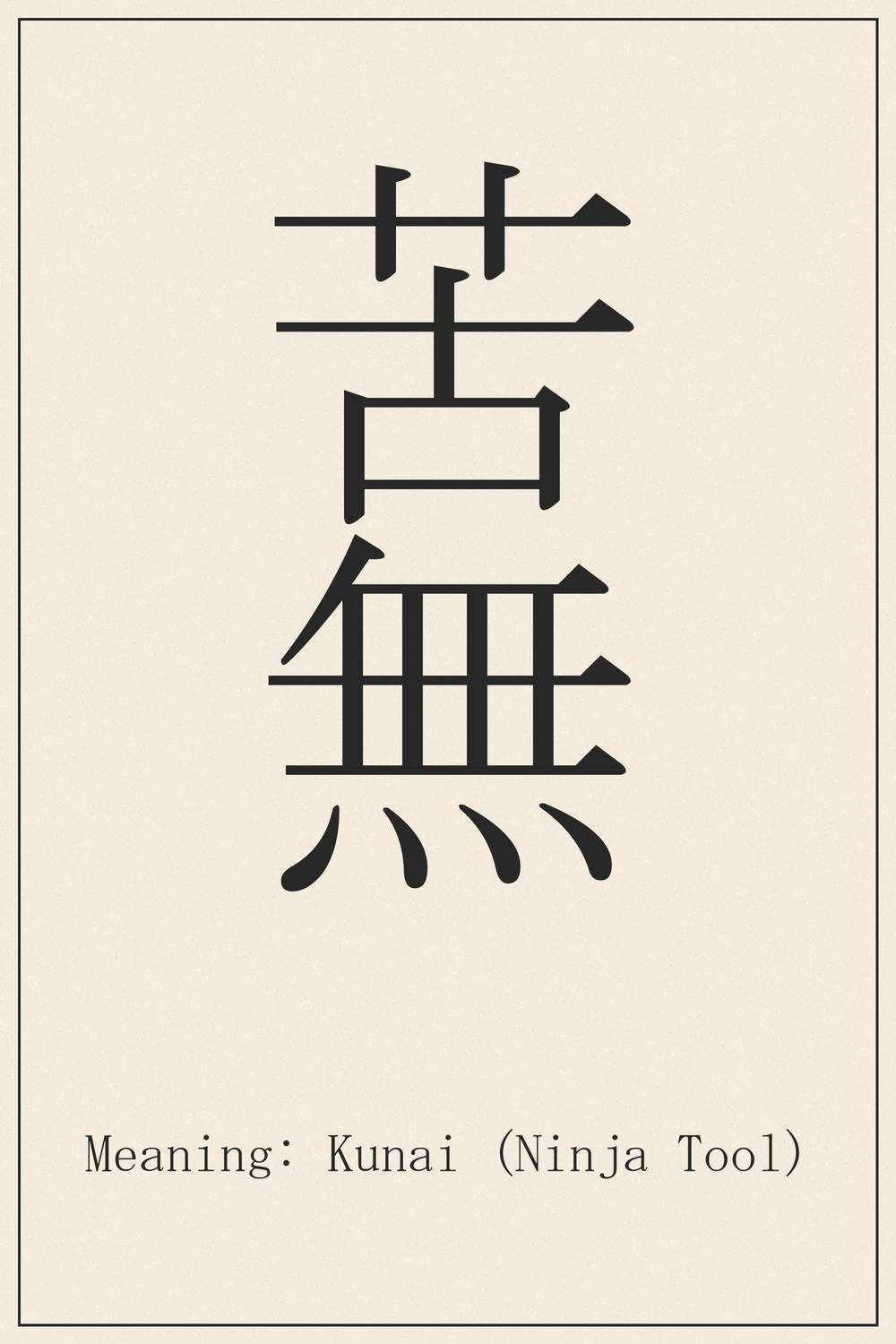
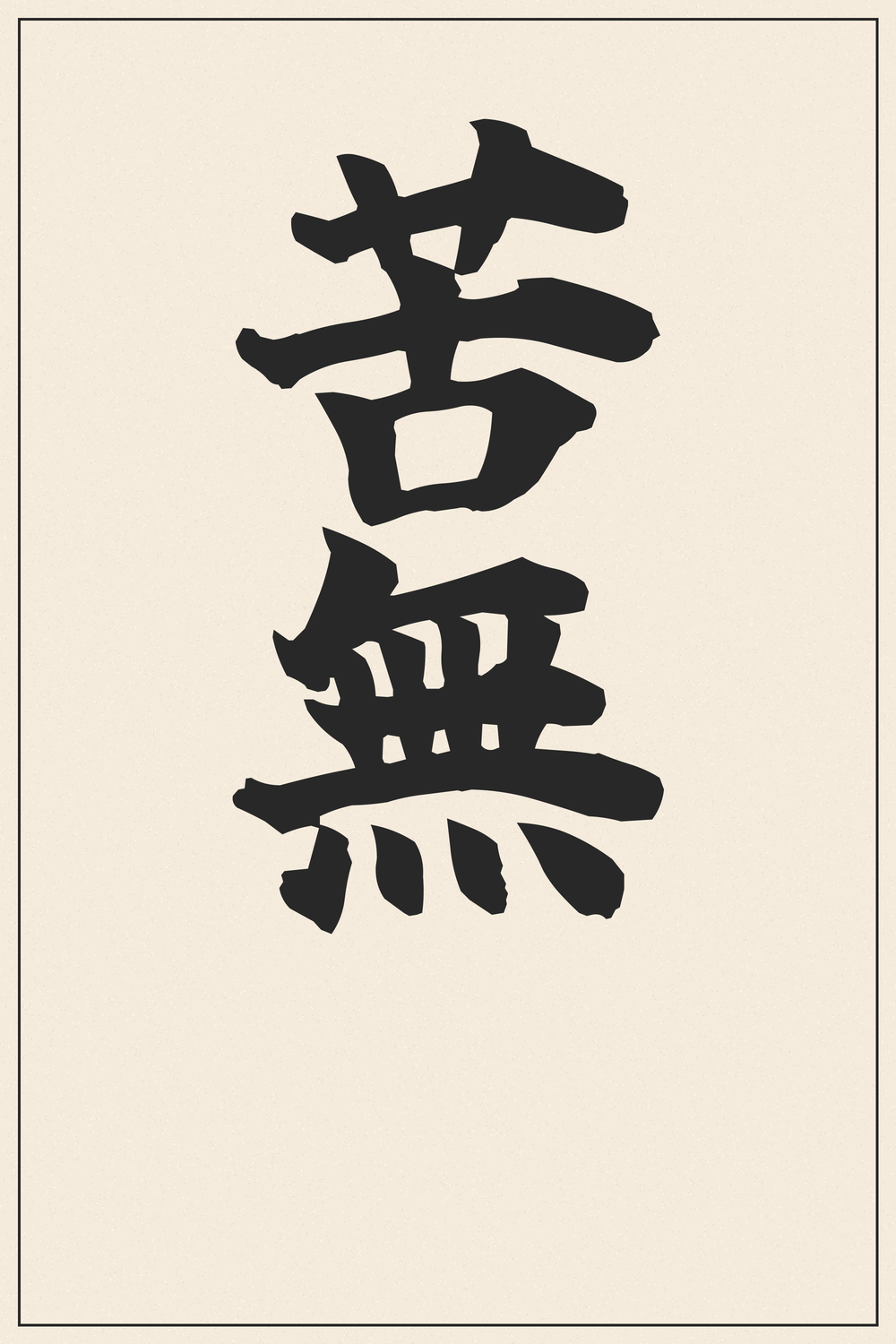
The Kanji for Kunai embodies the clandestine artistry and practical ingenuity of ancient Japan. It signifies more than just a tool; it represents stealth, versatility, and mastery.
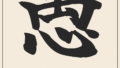
The atmosphere of a Kanji character changes dramatically depending on the font style. A character that looks elegant in a brush style might look bold and modern in a different font.
Recommendation:
Since a tattoo is permanent, we strongly recommend comparing various font styles beyond what is shown here. Use our designs as a trusted reference for the correct structure, but feel free to explore different artistic variations to find the perfect match for your vision.
The Deep Meaning Behind 苦無
The Kunai (苦無) is a traditional Japanese multi-purpose tool, famously associated with the ninja. Originating likely as a masonry or farming tool, its robust design and sharp point made it incredibly versatile, adapted by shinobi for climbing, digging, prying, and as a throwing weapon.
The characters 苦無 themselves are an example of ‘ateji,’ a phonetic application where Kanji are used for their sound rather than their literal meaning. This phonetic representation lends an air of mystique, allowing the tool to speak for itself through its iconic form and historical association with stealth and precision in Japanese martial arts culture.
Kanji Breakdown
The word ‘Kunai’ is an example of ‘ateji,’ where Kanji are used phonetically rather than for their literal meaning. While the individual characters ‘苦’ and ‘無’ do not semantically form ‘kunai’ as a tool, understanding their core meanings offers additional depth.
Meaning: Hardship, suffering, pain. This character, traditionally depicting a plant with a bitter taste, evokes a sense of resilience and endurance, qualities essential to a shinobi’s training and mission.
Meaning: Nothing, non-existence, without. This character symbolizes absence or void. In a martial context, it can subtly imply leaving no trace, acting unseen, or the absence of fear in the face of danger.
Conclusion
The Kanji for Kunai represents more than a mere weapon; it embodies the adaptation, stealth, and practical skill associated with the legendary ninja. It is a symbol of resourcefulness, quiet effectiveness, and the ability to transform the mundane into the extraordinary.
For those seeking a tattoo that connects to traditional Japanese martial arts, a rich historical legacy, or the spirit of overcoming challenges with ingenuity, “Kunai” offers a striking and profoundly meaningful choice that speaks of hidden strength and versatile mastery.
Comments