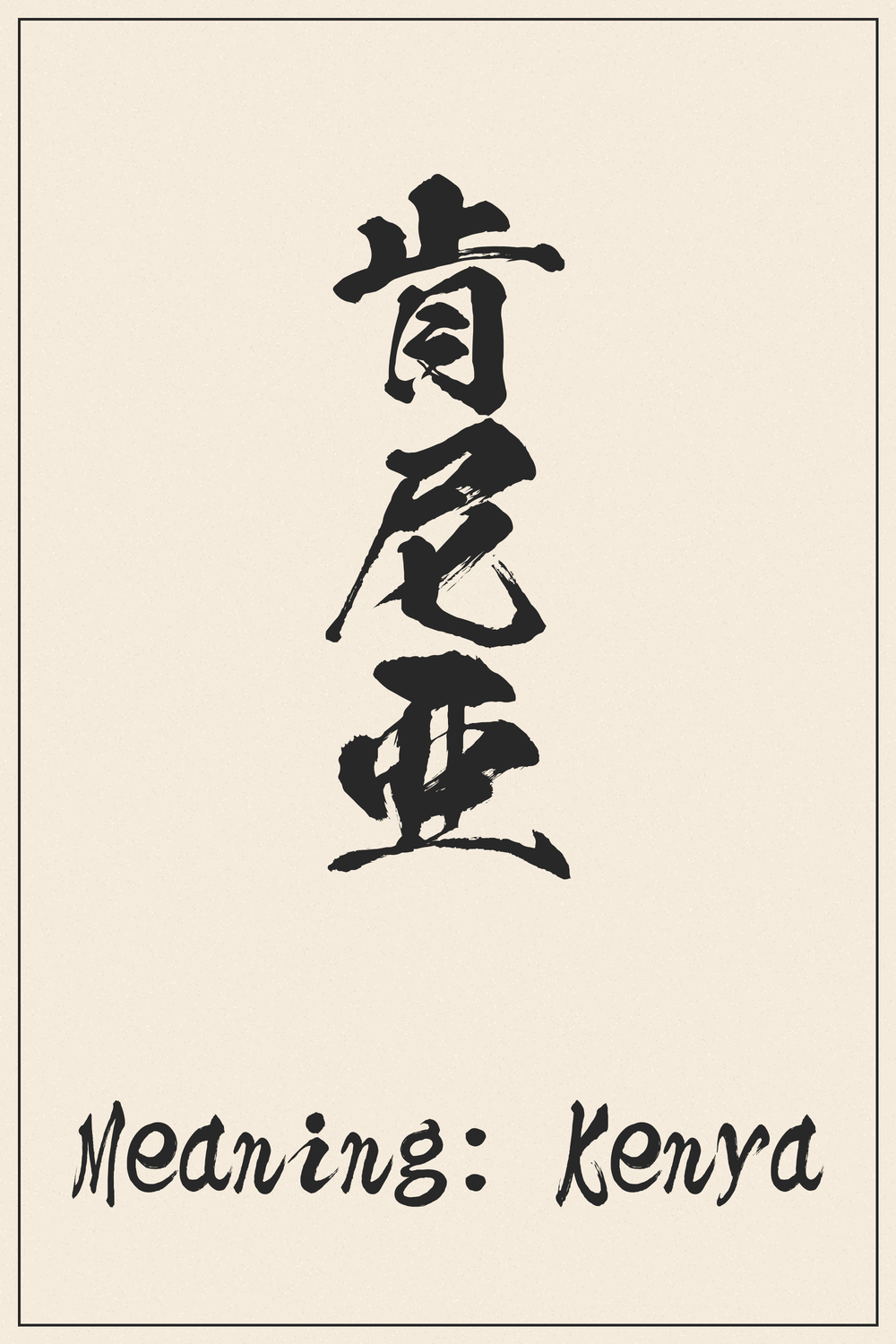
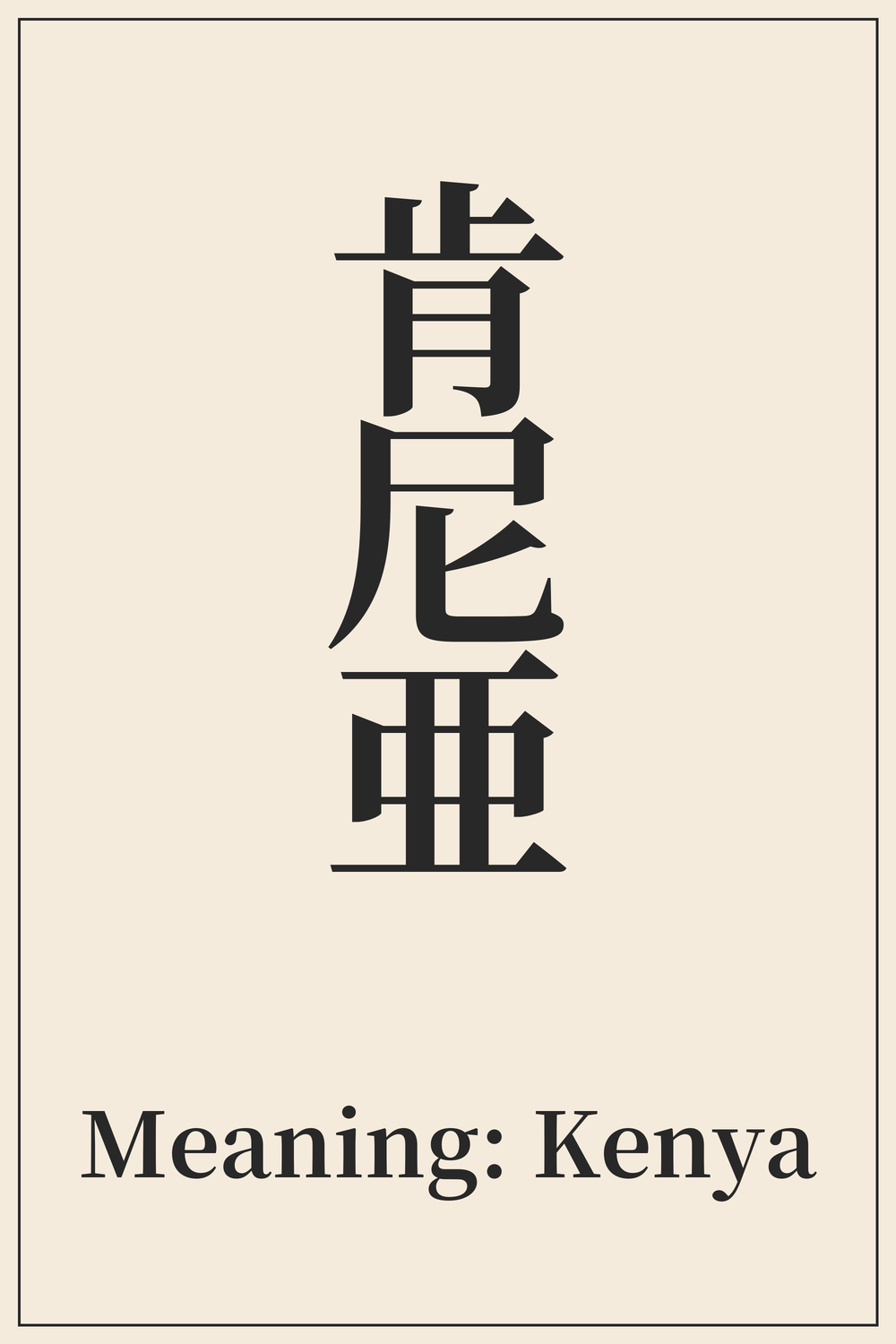
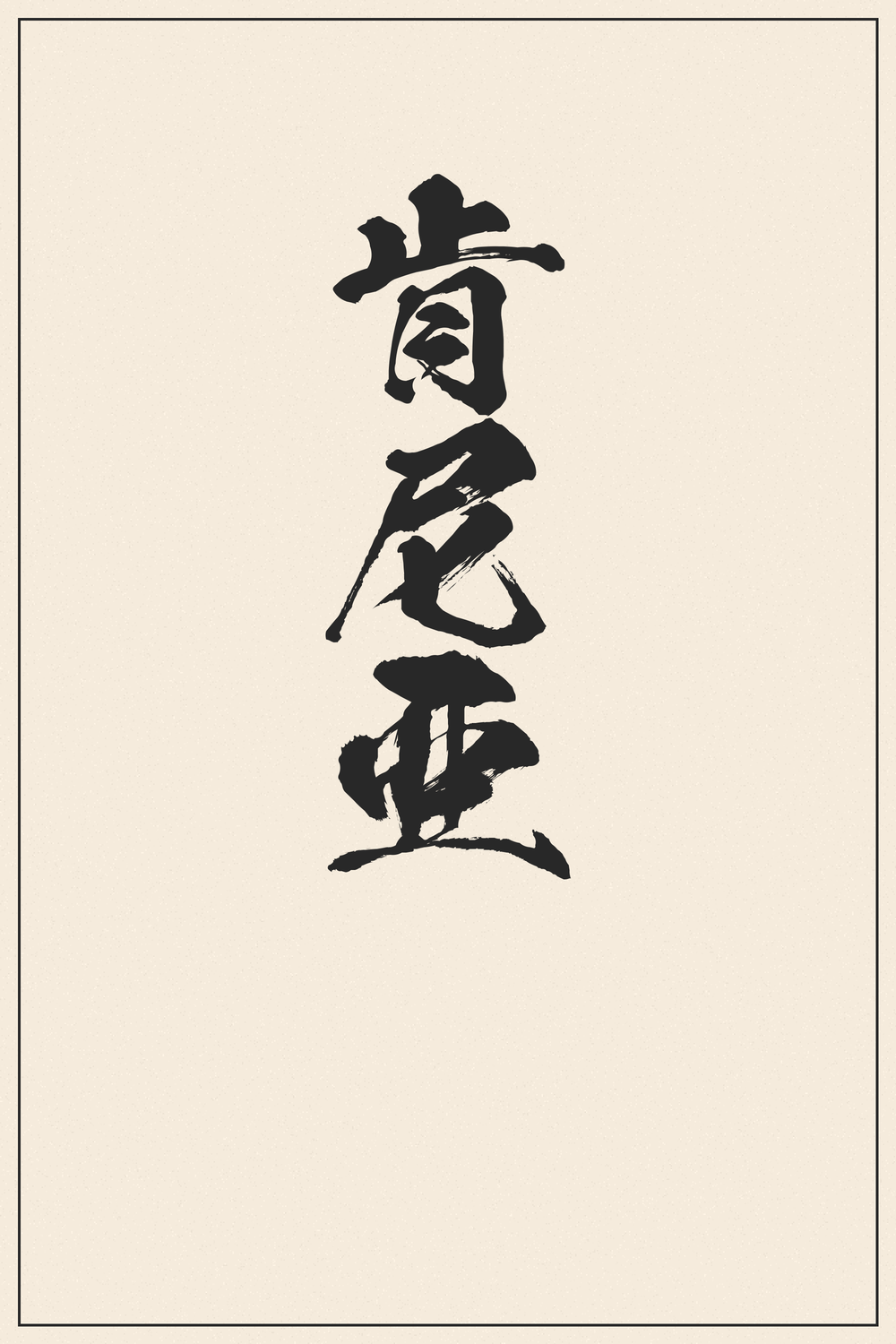
The Kanji combination 肯尼亜 (Kenia) represents the vibrant East African nation of Kenya. This unique rendering is an example of ‘ateji,’ where characters are chosen purely for their phonetic value to transcribe foreign words.
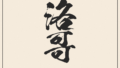
The atmosphere of a Kanji character changes dramatically depending on the font style. A character that looks elegant in a brush style might look bold and modern in a different font.
Recommendation: Since a tattoo is permanent, we strongly recommend comparing various font styles beyond what is shown here. Use our designs as a trusted reference for the correct structure, but feel free to explore different artistic variations to find the perfect match for your vision.
The Deep Meaning Behind 肯尼亜
The term 肯尼亜 is a classic example of *ateji* (当て字), a Japanese practice of using Kanji characters solely for their sounds, rather than their inherent meanings, to represent foreign words or concepts. In this case, the characters were selected to approximate the sounds “Ke-ni-a” from the English “Kenya.” This phonetic approach allows the Japanese language to incorporate names from around the globe.
While the individual Kanji have their own distinct meanings—肯 (agree/affirm), 尼 (nun), and 亜 (Asia/sub)—these literal interpretations are disregarded when used as *ateji* for “Kenya.” The primary function here is to convey the sound of the country’s name, establishing a direct phonetic link for Japanese speakers. It’s important to understand that its significance lies in its sonic representation, not in any metaphorical connection to “agree nun Asia.”
Kanji Breakdown
The Kanji characters in 肯尼亜 are used purely for their phonetic values:
Meaning: Agree, consent, affirm.
In the context of 肯尼亜, this character’s literal meaning is set aside; it functions purely as the phonetic “Ken” sound, providing the initial syllable of Kenya.
Meaning: Nun.
This character traditionally refers to a Buddhist nun. As part of the *ateji* for Kenya, its meaning is entirely irrelevant, serving only to provide the “ni” sound phonetically.
Meaning: Asia, sub-, come after.
This character often means “Asia” or “sub-” (as in subsidiary). For 肯尼亜, it is adopted solely for its phonetic value “a,” completing the country’s name phonetically.
Conclusion
The Kanji 肯尼亜 (Kenia) is a phonetic transliteration (ateji) for the country Kenya. Its individual characters—肯 (agree), 尼 (nun), and 亜 (Asia)—contribute their sounds rather than their meanings to form the name.
For those considering 肯尼亜 as a tattoo, it’s crucial to appreciate its function as an *ateji*. While it beautifully represents “Kenya” phonetically, its literal meaning of “Agree Nun Asia” is arbitrary and not inherently profound. Its significance is purely in its phonetic representation of the country. If the connection to Kenya itself is deeply personal, then its phonetic beauty might be appealing. However, do not seek a hidden profound meaning in its constituent characters, as they are not meant to convey one in this context.
Comments