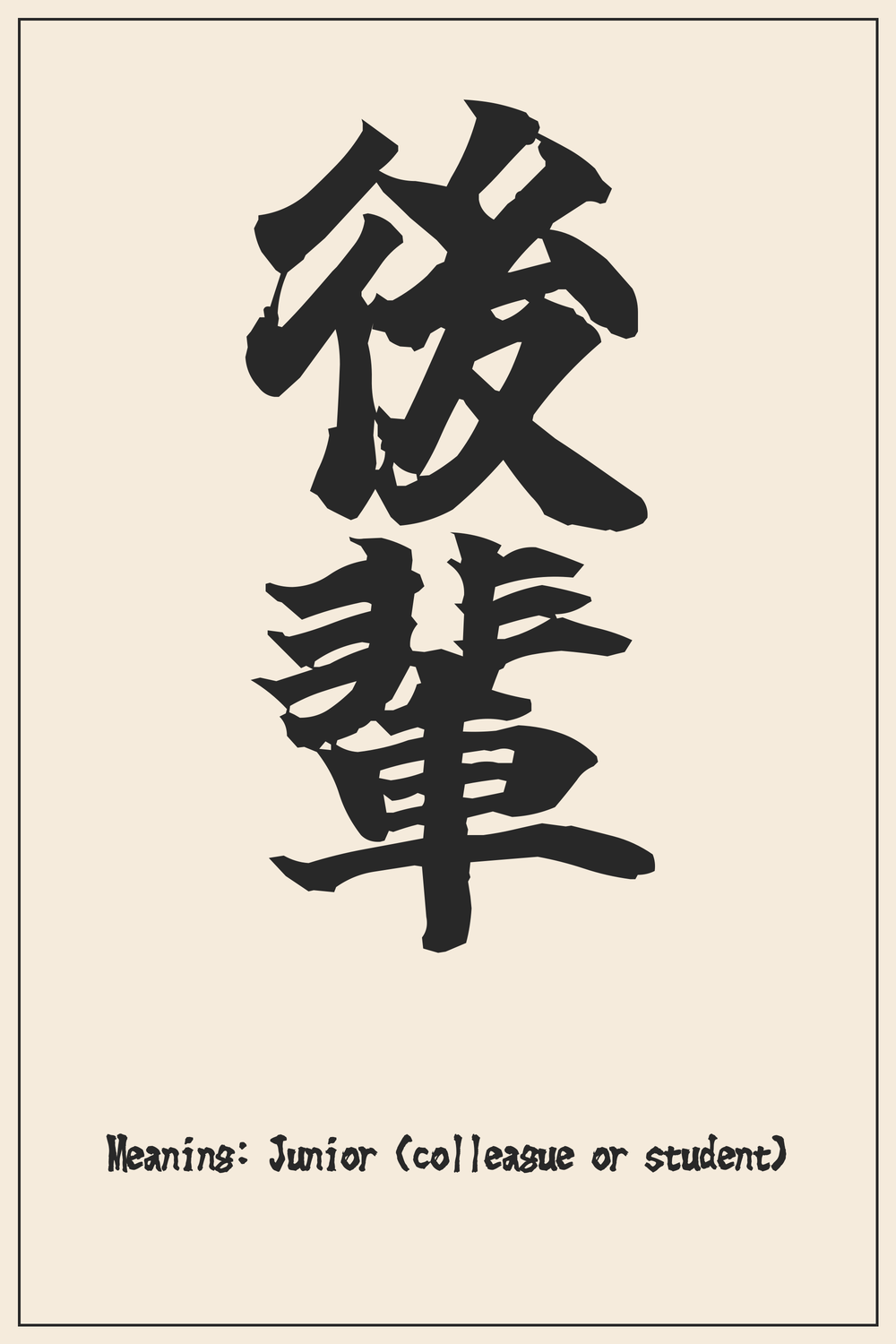
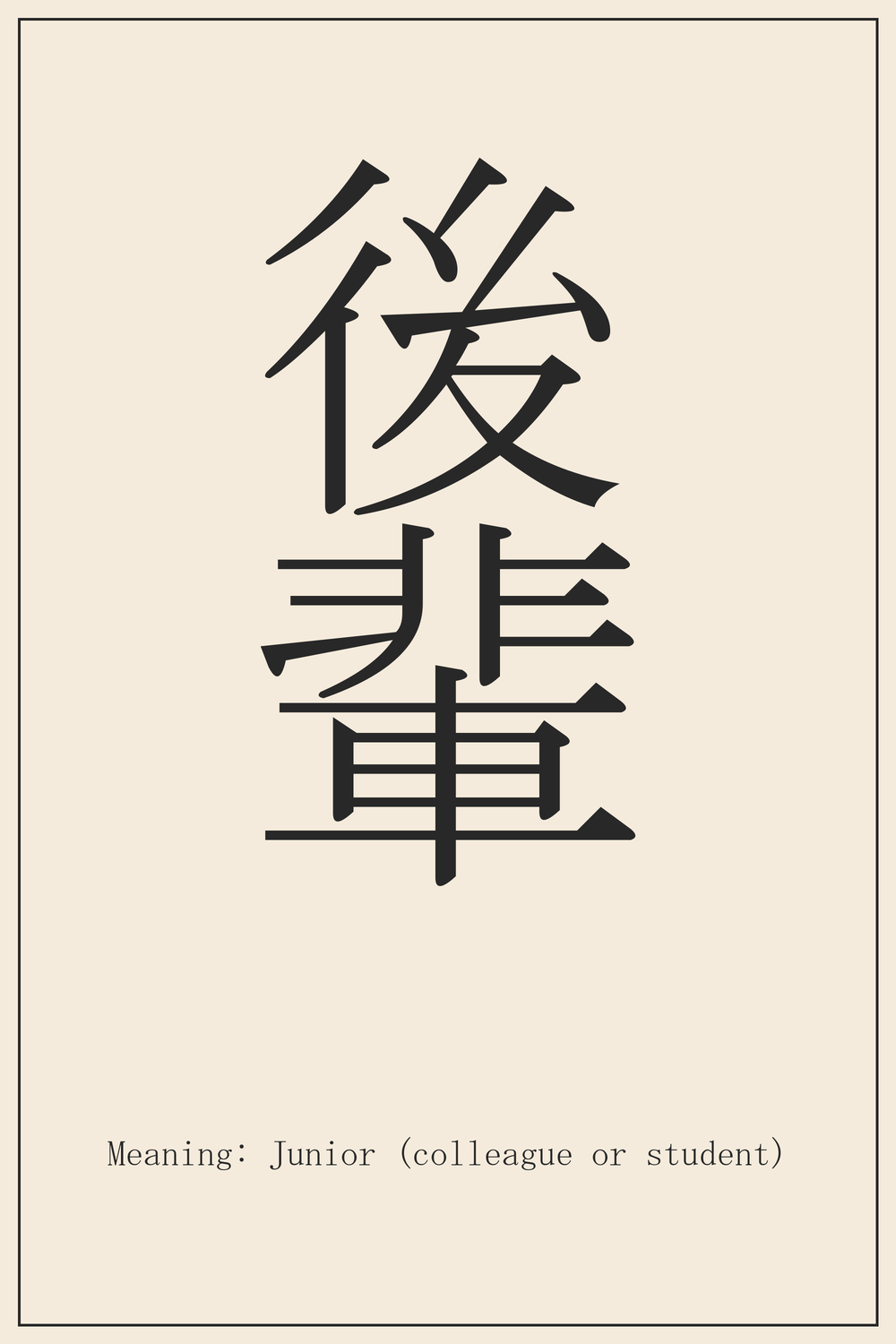
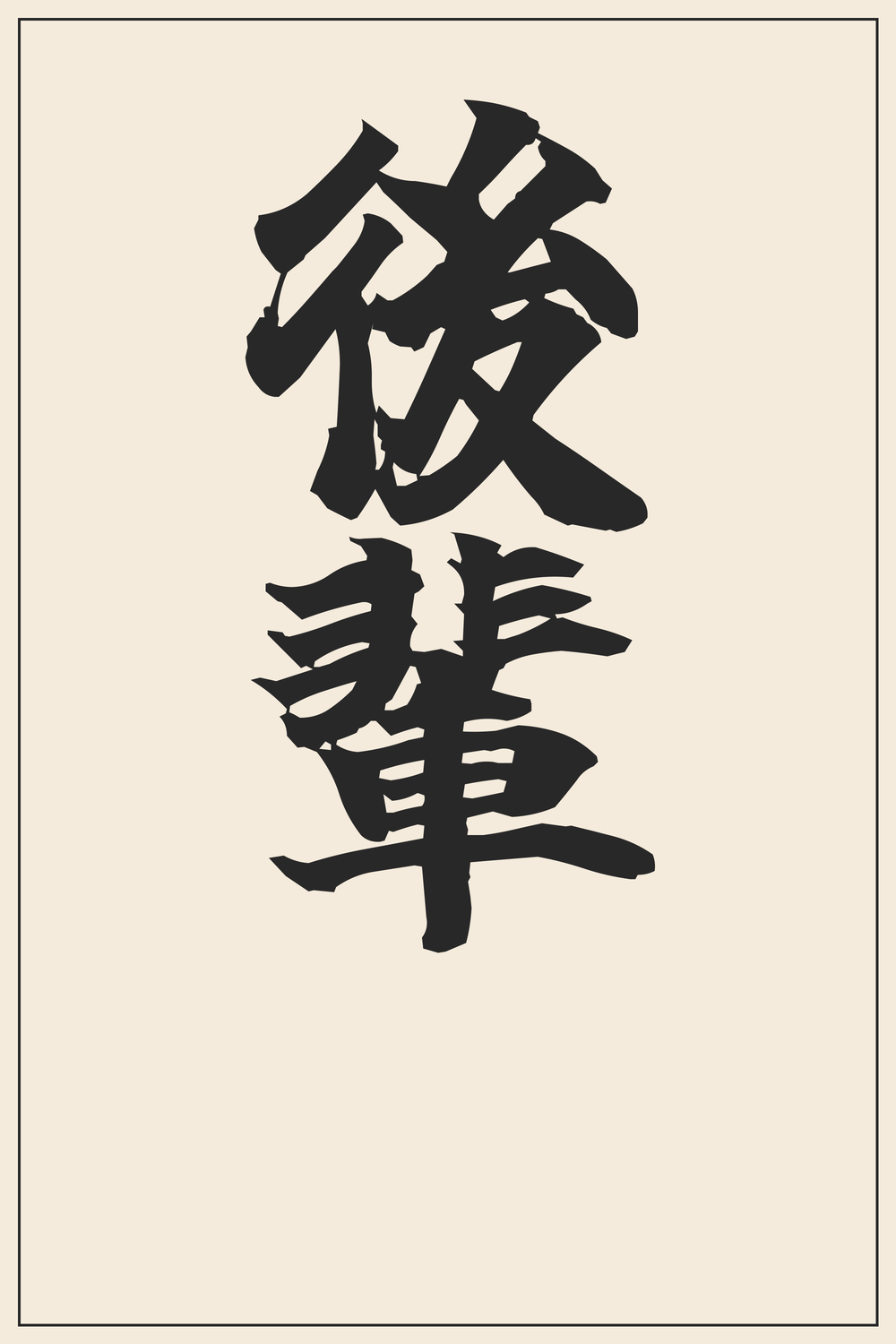
The Kanji compound 後輩 (Kouhai) represents the significant concept of a junior in a relationship, often within professional or academic settings. It embodies themes of guidance, growth, and the hierarchical bonds that shape personal and professional development.
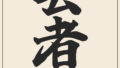
The atmosphere of a Kanji character changes dramatically depending on the font style. A character that looks elegant in a brush style might look bold and modern in a different font.
Recommendation:
Since a tattoo is permanent, we strongly recommend comparing various font styles beyond what is shown here. Use our designs as a trusted reference for the correct structure, but feel free to explore different artistic variations to find the perfect match for your vision.
The Deep Meaning Behind 後輩
後輩 (Kouhai) is a compound Kanji where 後 (kou/ato) means ‘after’ or ‘behind’, and 輩 (hai/tomo) originally referred to ‘companions’ or ‘fellows’ in a group. Together, they signify someone who comes after another in a specific context, often implying a junior status within a social or organizational structure.
In Japanese culture, the concept of 後輩 (Kouhai) is deeply intertwined with the ‘Senpai-Kouhai’ system, a fundamental aspect of social dynamics, particularly in schools, workplaces, and clubs. This system emphasizes mutual respect, with Senpai (senior) guiding and Kouhai (junior) learning and showing deference, fostering strong bonds and collective growth.
Kanji Breakdown
The compound 後輩 is formed by two distinct Kanji, each contributing to its overall meaning.
After, Later, Behind: The character 後 depicts a foot (止) and a small enclosure (夂) implying coming *after* or *behind*. It fundamentally conveys the concept of sequence in time or position.
Fellow, Companion, Classmate: The character 輩 combines 車 (kuruma, car/vehicle) and 非 (hi, not/wrong, often indicating negation or opposition). Originally, it referred to a group of people traveling together in carriages, evolving to mean ‘fellows’ or ‘companions’.
Conclusion
Choosing 後輩 for a tattoo signifies an appreciation for the journey of growth, mentorship, and the invaluable relationships forged through shared experiences and hierarchical structures. It represents a journey of learning, respect, and contribution within a community.
For those who have been a Kouhai, or value the relationships formed within such a system, this Kanji serves as a powerful and elegant reminder of those connections and the path of development they represent.
Comments