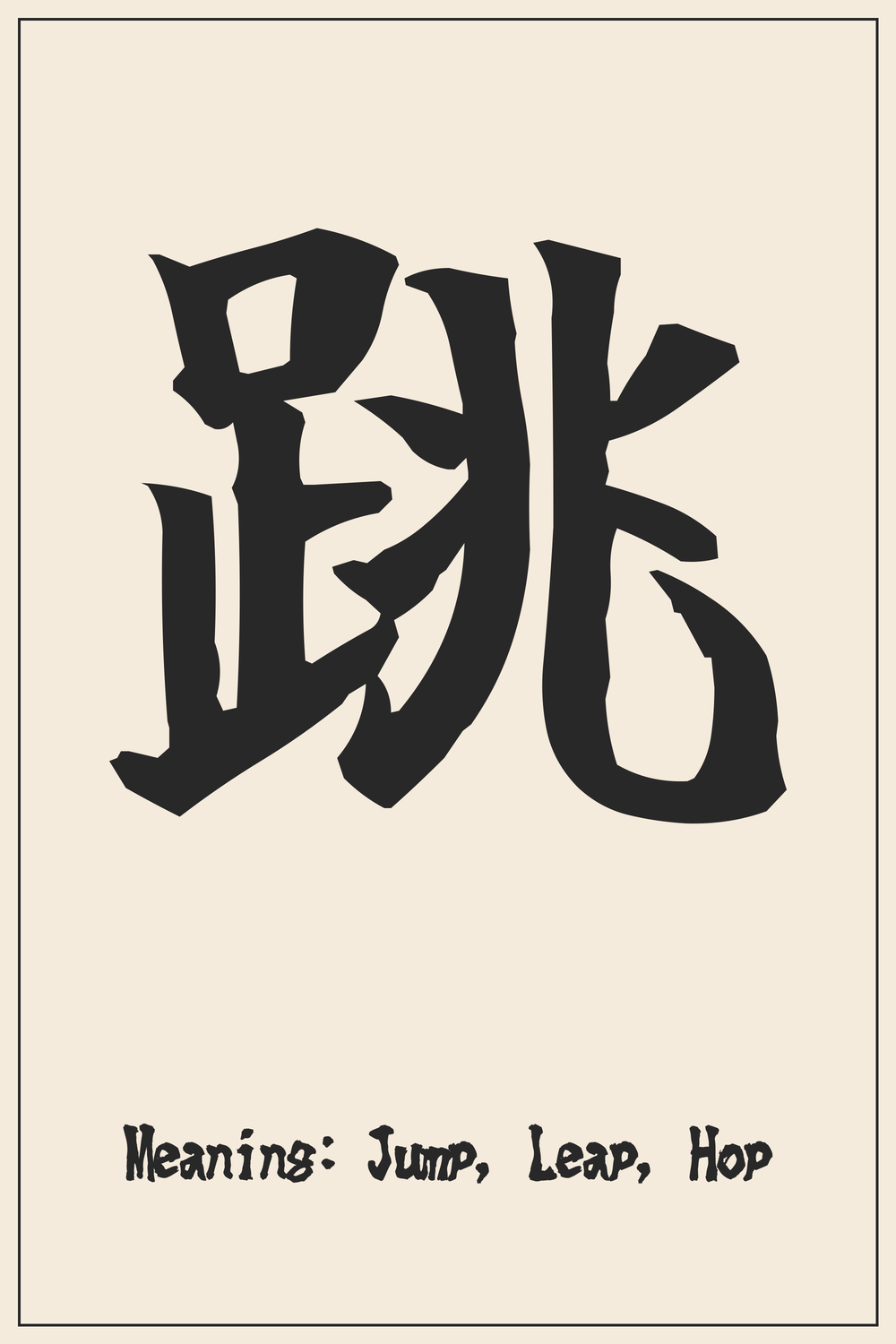
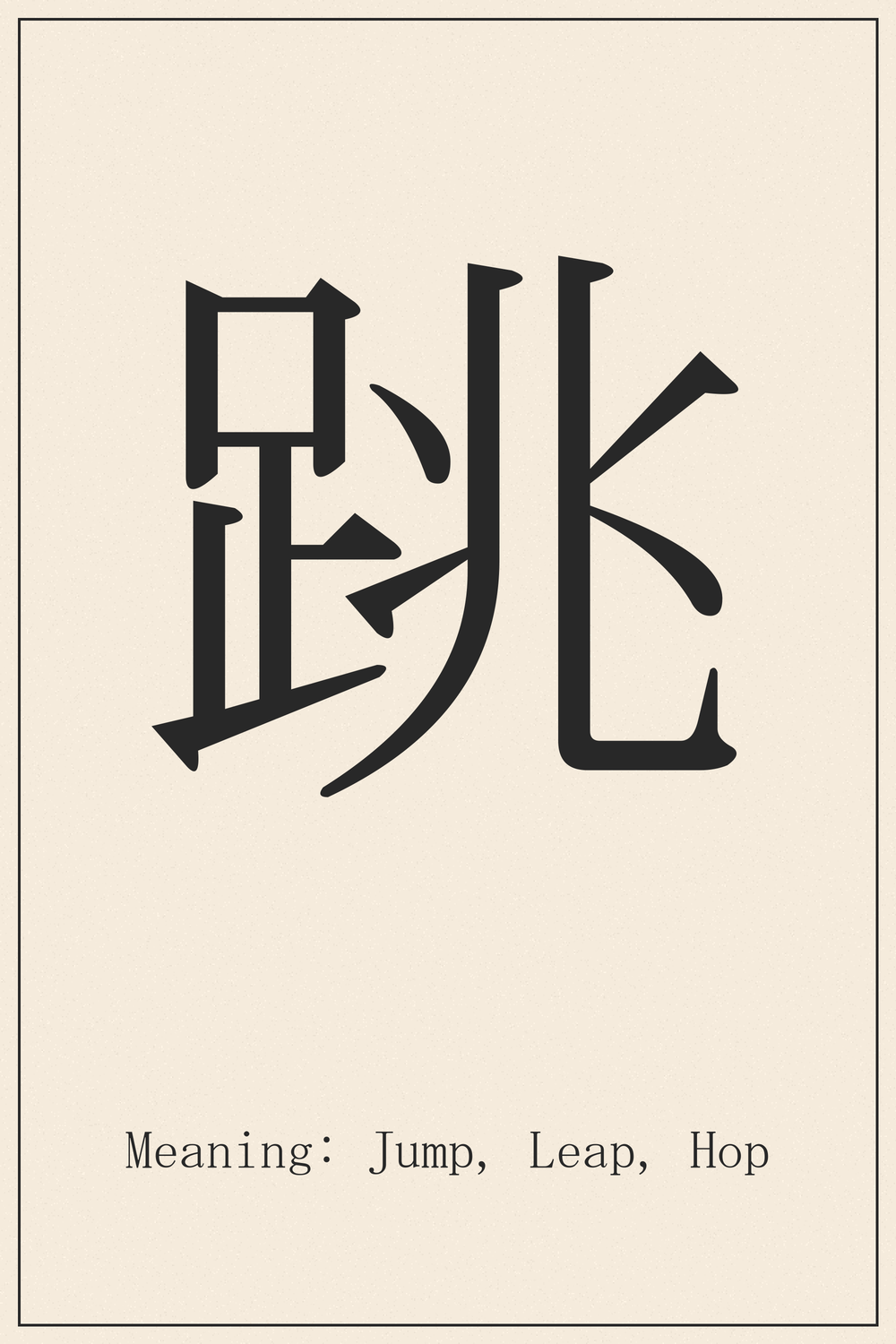
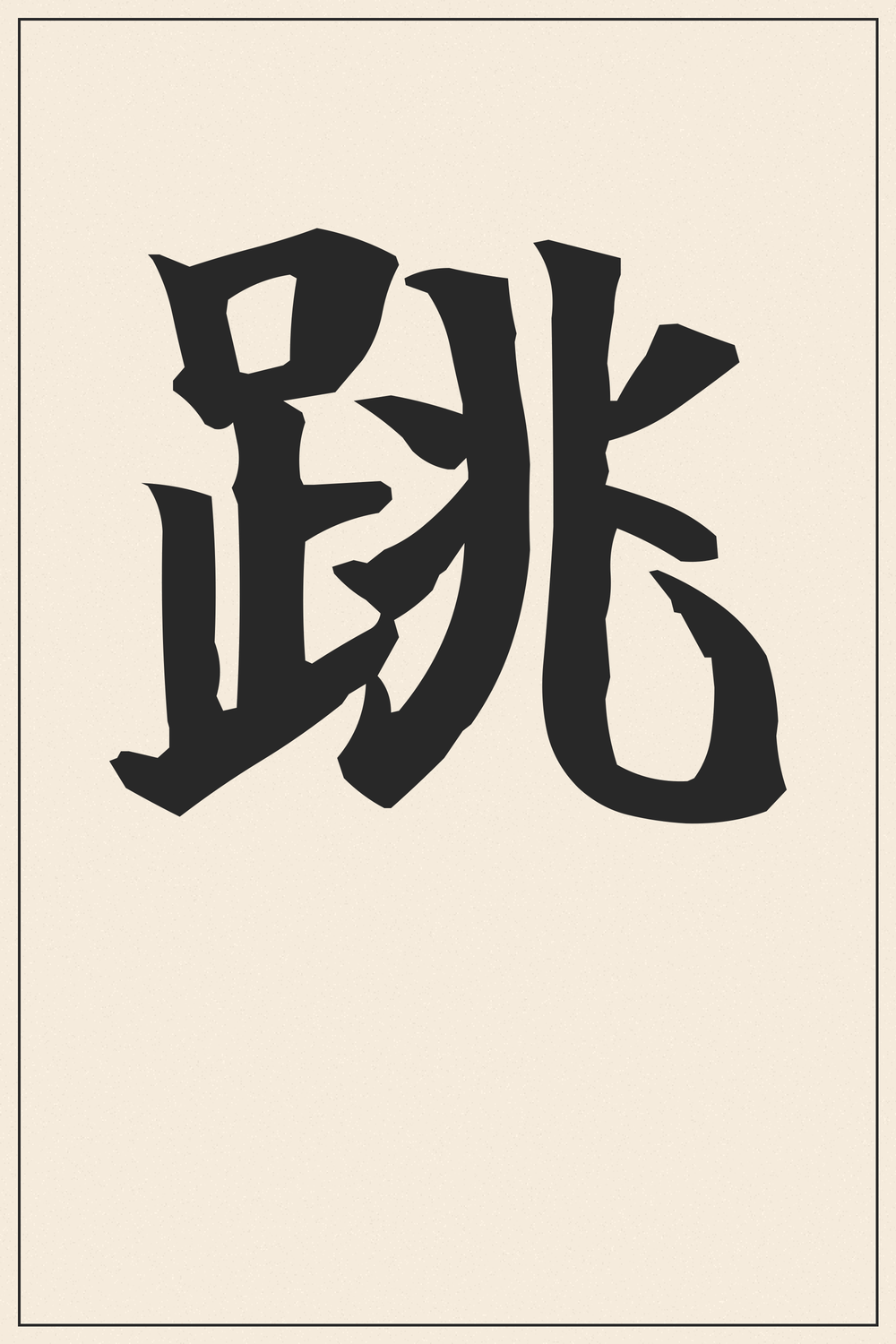
The Kanji 跳 embodies the essence of dynamic movement and overcoming, symbolizing a powerful ascent or a decisive shift forward. It captures the energy of physical action and the spirit of making a significant leap.
The Deep Meaning Behind 跳
The Kanji 跳 (chō, haneru) combines the radical 足 (ashi), meaning “foot” or “leg,” with the phonetic component 兆 (chō). The 足 radical clearly indicates an action involving the feet.
The 兆 component, while meaning “trillion” or “omen” in modern context, historically depicted a person with stretched legs, symbolizing a quick, upward movement or the sprouting of something. In Japanese culture, “to jump” or “to leap” often signifies more than just physical movement; it can represent a metaphorical “leap of faith,” a significant advancement, or the overcoming of a challenge. It’s a word imbued with a sense of vitality and forward momentum, reflecting resilience and the will to progress.
Kanji Breakdown
The character 跳 is composed of two primary elements, each contributing to its overall meaning of dynamic movement.
Meaning: Foot, Leg
This radical provides the fundamental context for the kanji, directly linking it to actions performed with the lower limbs, such as walking, running, or, in this case, jumping.
Meaning: Omen, Sign, Trillion (phonetic/semantic)
While primarily phonetic here, 兆 hints at the “upward” or “sprouting” motion. Its ancient form depicted something rising or moving quickly, lending a sense of swift, upward movement to the kanji 跳.
Conclusion
The Kanji 跳 is a powerful symbol of upward movement, progress, and the energetic act of leaping forward. It encapsulates a spirit of dynamism and the courage to advance.
Opting for 跳 as a tattoo can be a striking declaration of one’s determination to overcome hurdles and embrace new beginnings. It serves as a constant reminder to take courageous steps and aim higher in life.
Comments