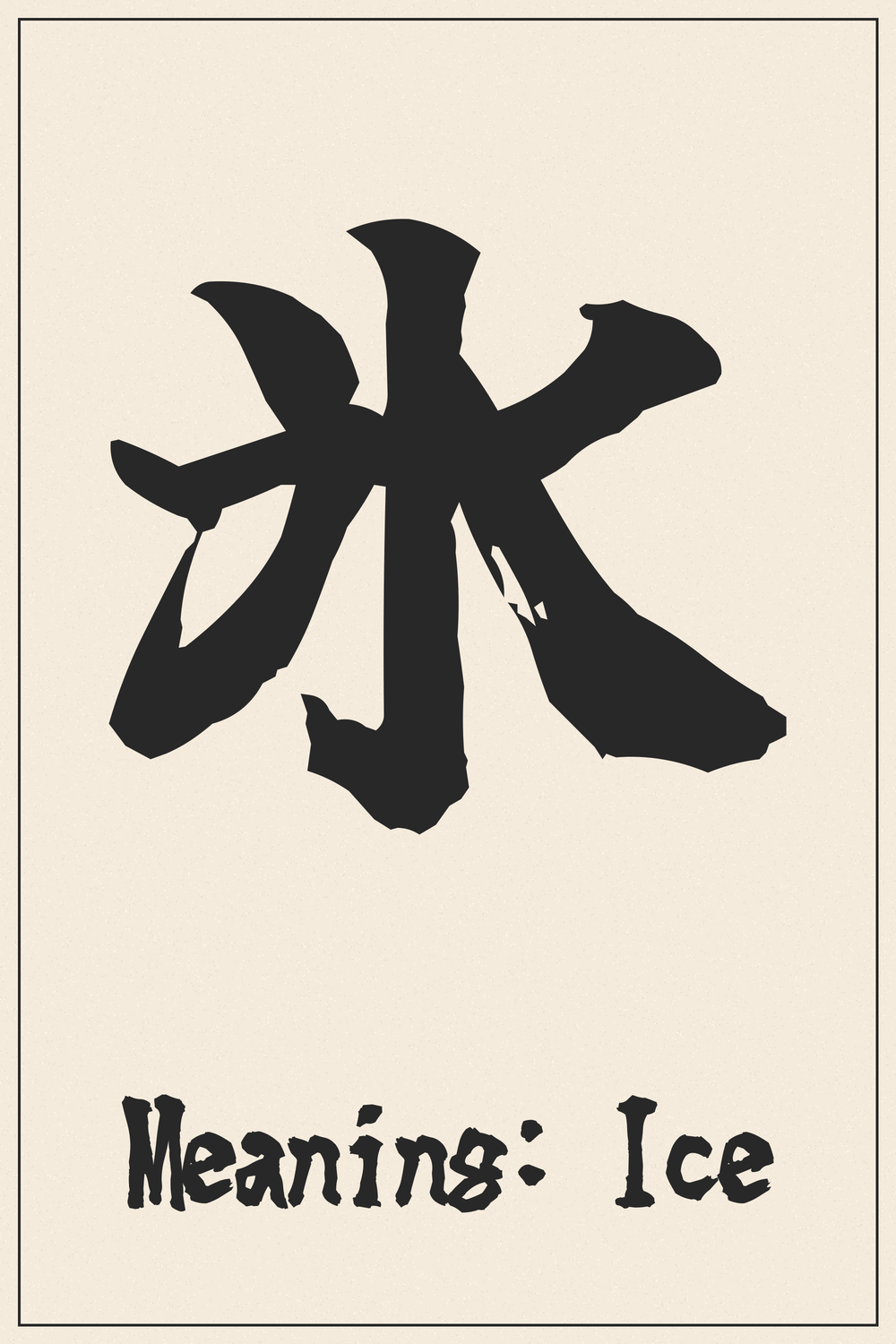
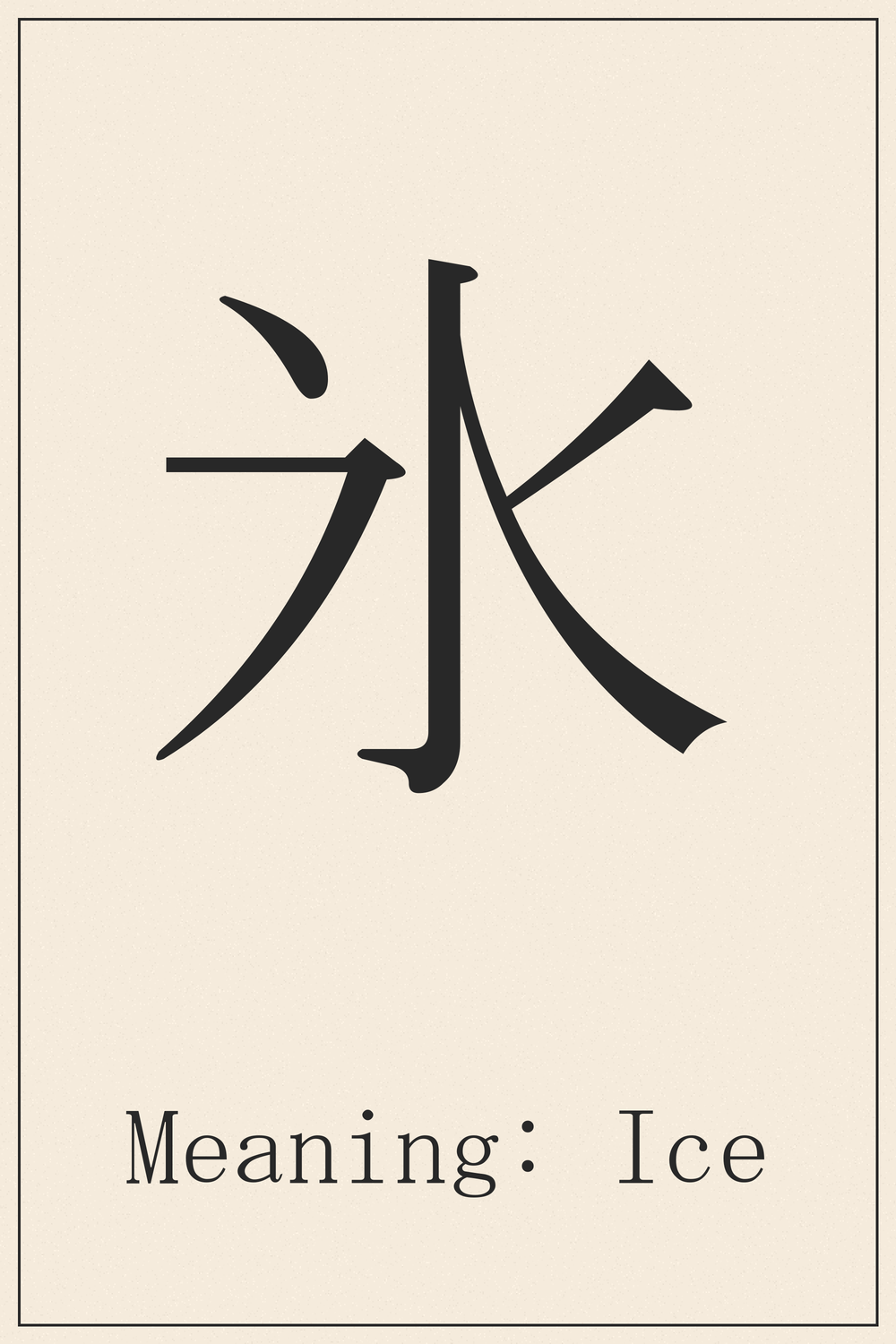
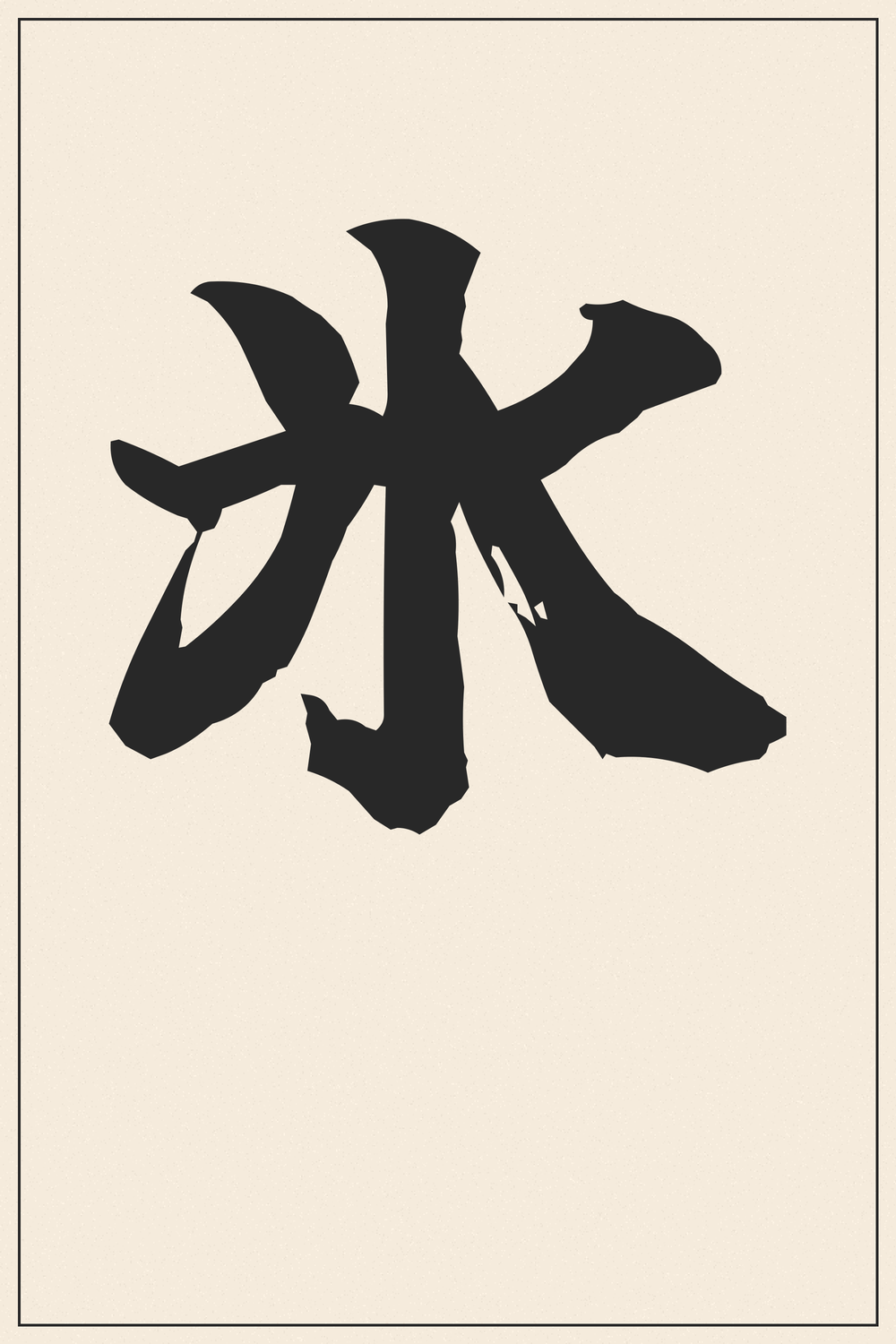
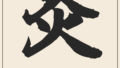
The Kanji 氷 captures the essence of frozen water, symbolizing purity, resilience, and the transient beauty of winter. It embodies both stillness and formidable power.
The atmosphere of a Kanji character changes dramatically depending on the font style. A character that looks elegant in a brush style might look bold and modern in a different font.
Recommendation:
Since a tattoo is permanent, we strongly recommend comparing various font styles beyond what is shown here. Use our designs as a trusted reference for the correct structure, but feel free to explore different artistic variations to find the perfect match for your vision.
The Deep Meaning Behind 氷
The character 氷 (kōri/hyō) originates from a pictographic representation of ice. Ancient scripts depicted water with two droplets, and later the addition of the ‘ice’ radical (冫) emphasized its frozen state, visually representing solidifying water.
In Japanese culture, 氷 is deeply tied to the changing seasons, signifying the arrival of winter and the pristine beauty of nature. It often represents purity, clarity, and an unyielding, resilient spirit, as well as the ephemeral nature of life.
Kanji Breakdown
The Kanji 氷 is itself a fundamental character, often understood through its structure that visually evokes frozen water.
Ice radical / Frozen water: The main character 氷 functions as both the radical and the complete character. Its form, with the central strokes and two ‘dots’ on the left, visually represents water solidifying into ice, with the dots often seen as ice crystals or droplets of water turning to ice.
Conclusion
The Kanji 氷 is a potent symbol for those who appreciate the austere beauty of winter, the clarity of thought, or the strength found in stillness. It represents a state of being that is both serene and incredibly powerful.
Choosing 氷 for a tattoo signifies an embrace of purity, resilience, and the captivating, often tranquil, force of nature. It’s a timeless choice that speaks volumes about one’s connection to the natural world and inner fortitude.
Comments