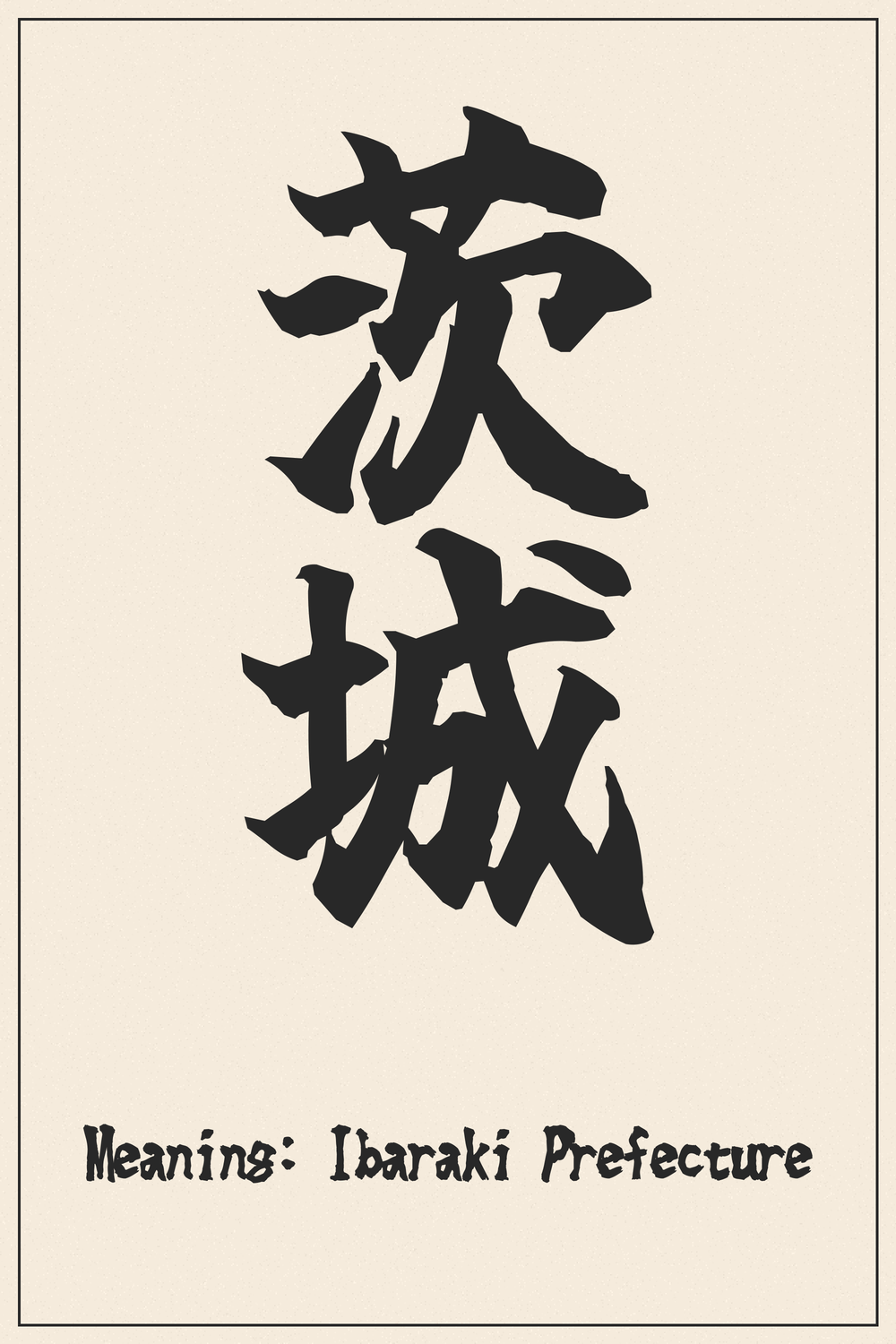
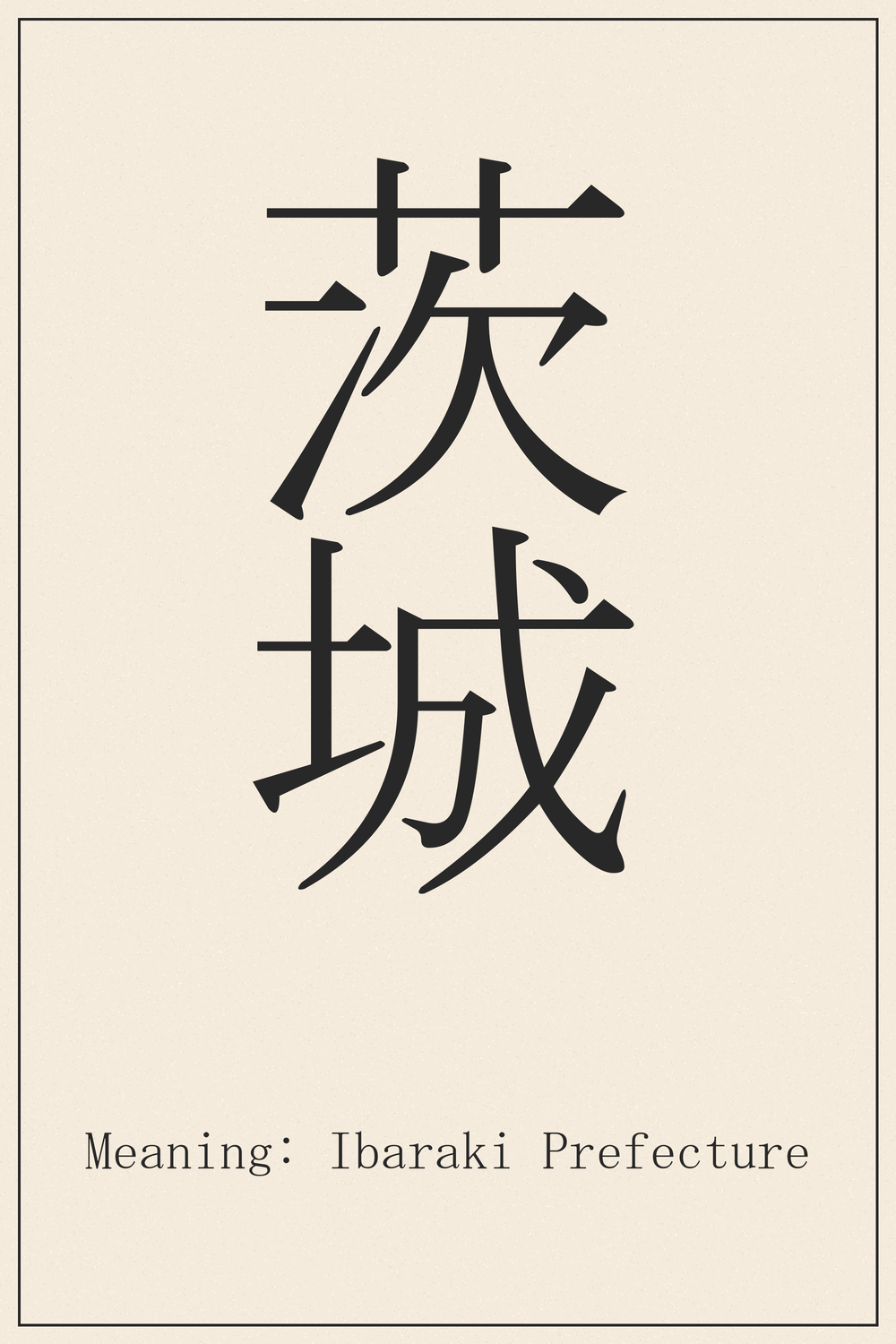
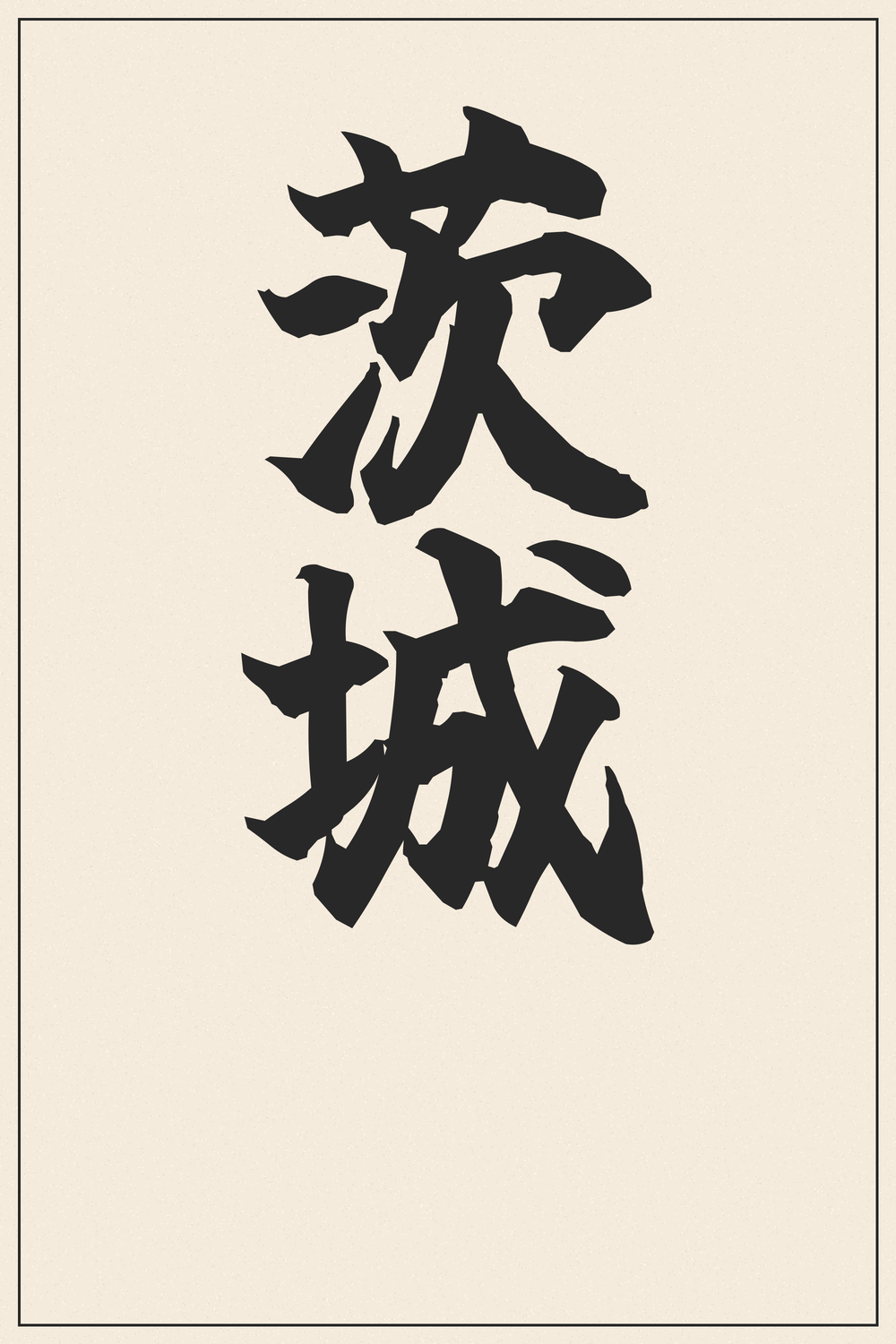
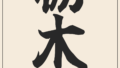
The Kanji for ‘Ibaraki’ represents a unique blend of nature and historical defense. It’s a powerful symbol for those with deep connections to this vibrant Japanese prefecture.
The atmosphere of a Kanji character changes dramatically depending on the font style. A character that looks elegant in a brush style might look bold and modern in a different font.
Recommendation:
Since a tattoo is permanent, we strongly recommend comparing various font styles beyond what is shown here. Use our designs as a trusted reference for the correct structure, but feel free to explore different artistic variations to find the perfect match for your vision.
The Deep Meaning Behind 茨城
The name ‘Ibaraki’ is derived from the ancient ‘Ibaraki-no-sato’ region. The first character, 茨 (ibara), refers to thorny bushes or brambles, evoking images of wild nature and possibly a defensive barrier. The second character, 城 (ki or shiro), directly means ‘castle’ or ‘fortress’, suggesting a place of historical significance and strength.
Culturally, Ibaraki Prefecture is known for its diverse landscapes, from the serene Kairakuen Garden to the rugged Pacific coastline. It’s an area rich in agricultural produce and historical sites, reflecting a blend of natural beauty and enduring heritage. The Kanji embodies this duality, symbolizing both the untamed natural world and the enduring human constructs within it.
Kanji Breakdown
The compound Kanji ‘茨城’ is composed of two distinct characters, each contributing to its overall meaning and imagery.
Meaning: Thorn, bramble, wild rose. The character is composed of the ‘plant’ radical (艹) and a phonetic component (次) that also suggests ‘next’ or ‘sequence’. It evokes images of natural, often untamed, vegetation.
Meaning: Castle, fortress, walled city. This character combines the ‘earth’ radical (土) with a phonetic component (成) meaning ‘to become’ or ‘to complete’. It signifies a constructed defensive structure, often built on elevated land.
Conclusion
Choosing the Kanji ‘茨城’ for a tattoo is a profound way to honor a connection to Ibaraki Prefecture. It symbolizes a place of natural beauty, historical resilience, and a unique blend of untamed wilderness with enduring human legacy.
This Kanji provides a distinctive and meaningful representation of regional identity. Its balanced composition ensures clarity and aesthetic appeal, making it an excellent choice for a tattoo that conveys pride and personal connection to this notable Japanese region.
Comments