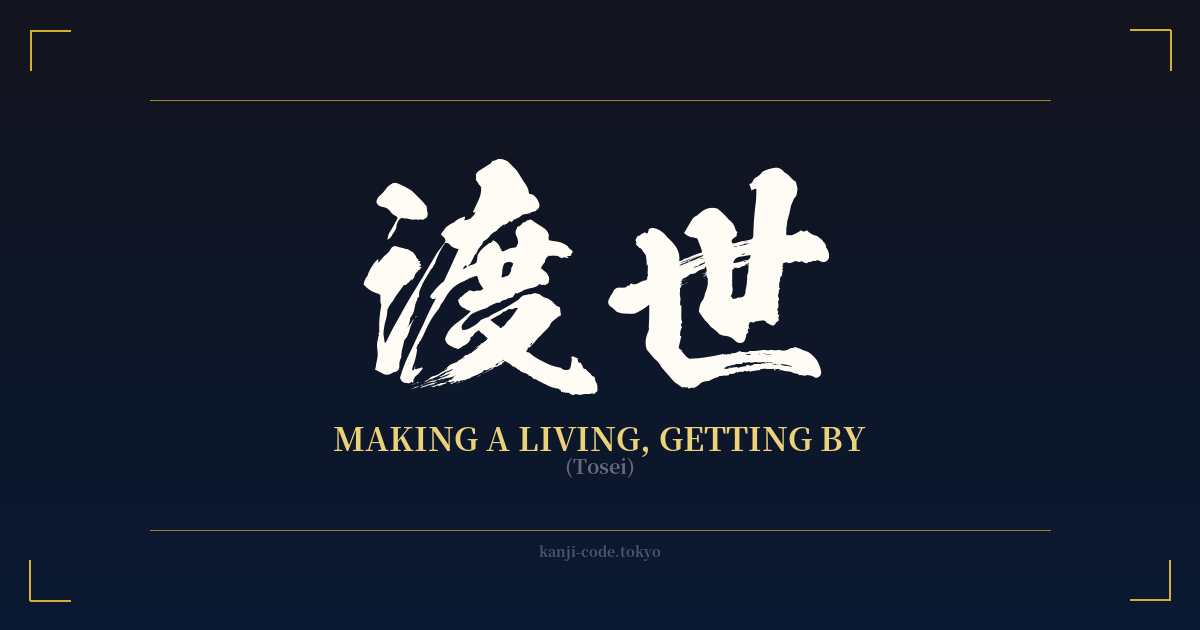
✍️ 渡世 (Tosei) — Cultural Context
The word 渡世 (Tosei) offers a fascinating glimpse into the undercurrents of Japanese society, holding a dual meaning that is both philosophical and deeply specific. On the surface, its characters—渡 (to cross) and 世 (the world)—combine to literally mean 'crossing the world.' This can be interpreted as the universal human experience of navigating life's challenges, making a living, and getting by day to day. It evokes the image of a journey, fording the river of life with all its difficulties and uncertainties.
However, this broad, poetic meaning is almost entirely overshadowed by its more specific and potent cultural connotation. In Japan, 渡世 is inextricably linked to the world of the yakuza and its historical predecessors. During the Edo period, 'toseinin' (渡世人) were itinerant wanderers—gamblers, peddlers, and mercenaries who lived outside the rigid class structure of mainstream society. They followed their own codes of conduct and survived by their wits and strength, forming the basis for what would eventually evolve into modern organized crime syndicates.
Because of this history, 渡世 came to signify not just 'making a living,' but making a living outside the law. It represents a life on the fringes, a conscious choice to operate within a parallel world with its own rules, hierarchies, and concepts of honor (like 'jingi' – 仁義). It implies a gritty, precarious existence where one's survival depends on navigating a dangerous and often violent social landscape. Unlike the neutral, everyday word for 'livelihood,' 生活 (seikatsu), 渡世 carries a heavy weight of defiance, marginalization, and outlaw spirit.
To use or display the word 渡世 is to invoke this entire subculture. For those within the yakuza world, it is a term of identity. For outsiders, it is a piece of jargon that immediately flags a connection to organized crime. Therefore, while it speaks to a profound theme of struggle and survival, its practical meaning is so specialized and loaded that it cannot be separated from its criminal associations.
🖌️ Font Styles for 渡世
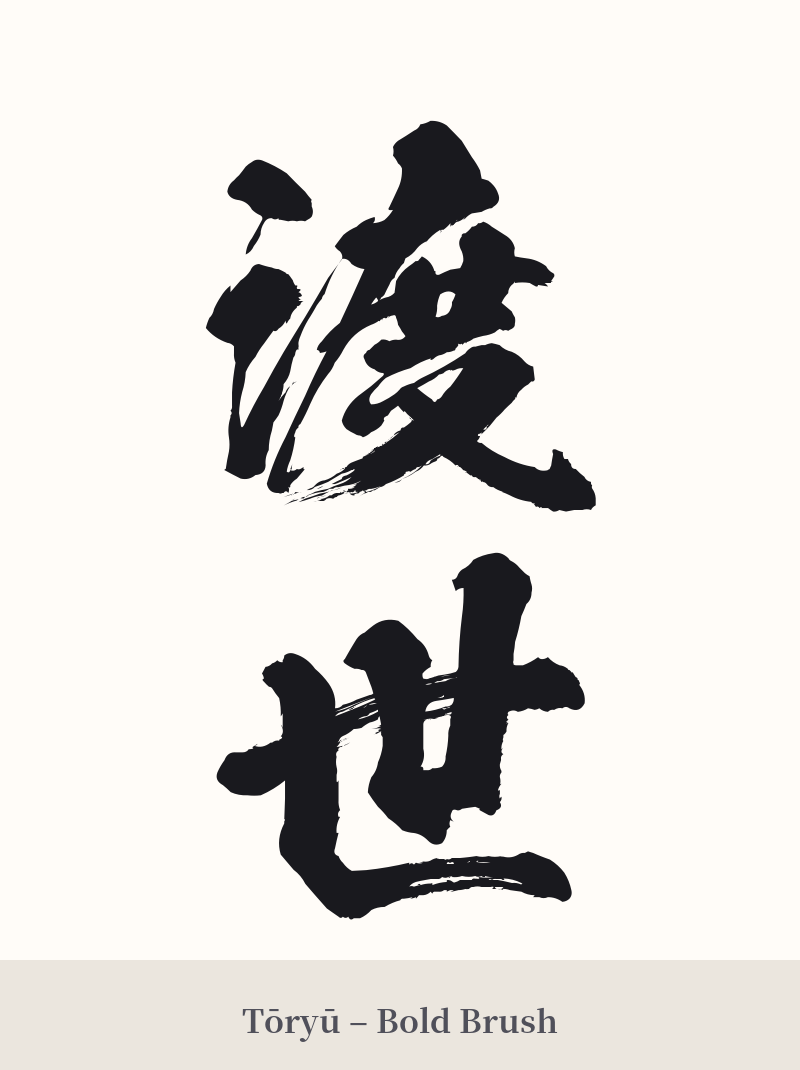
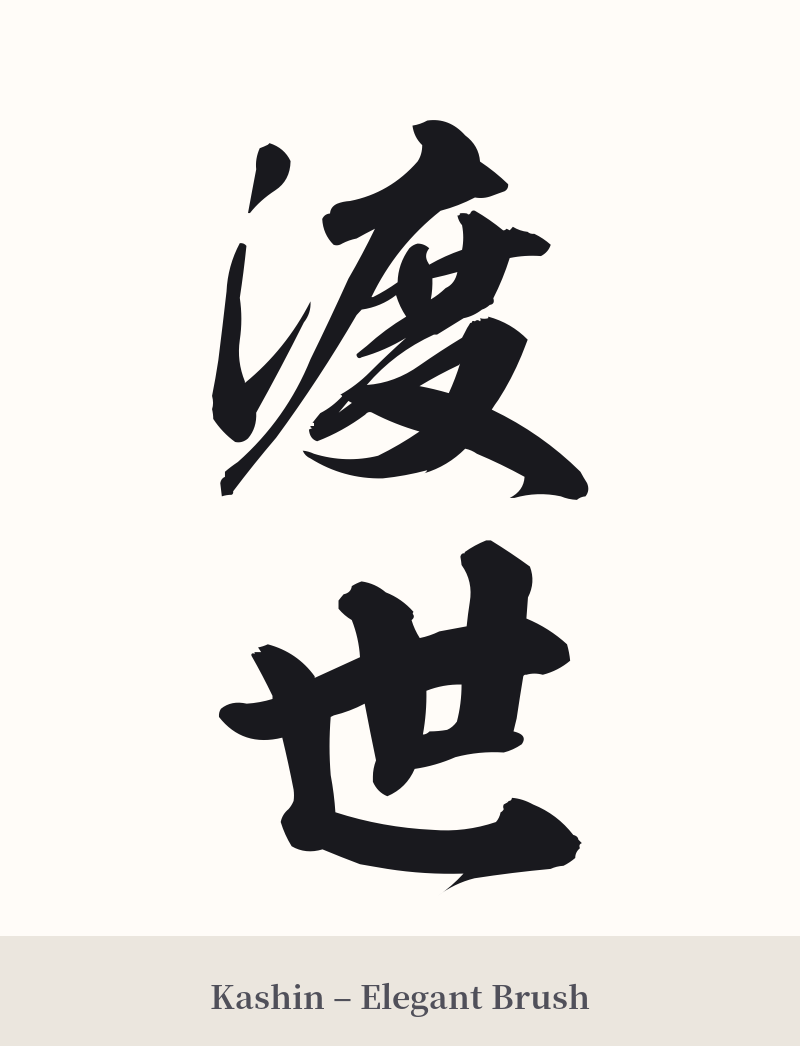
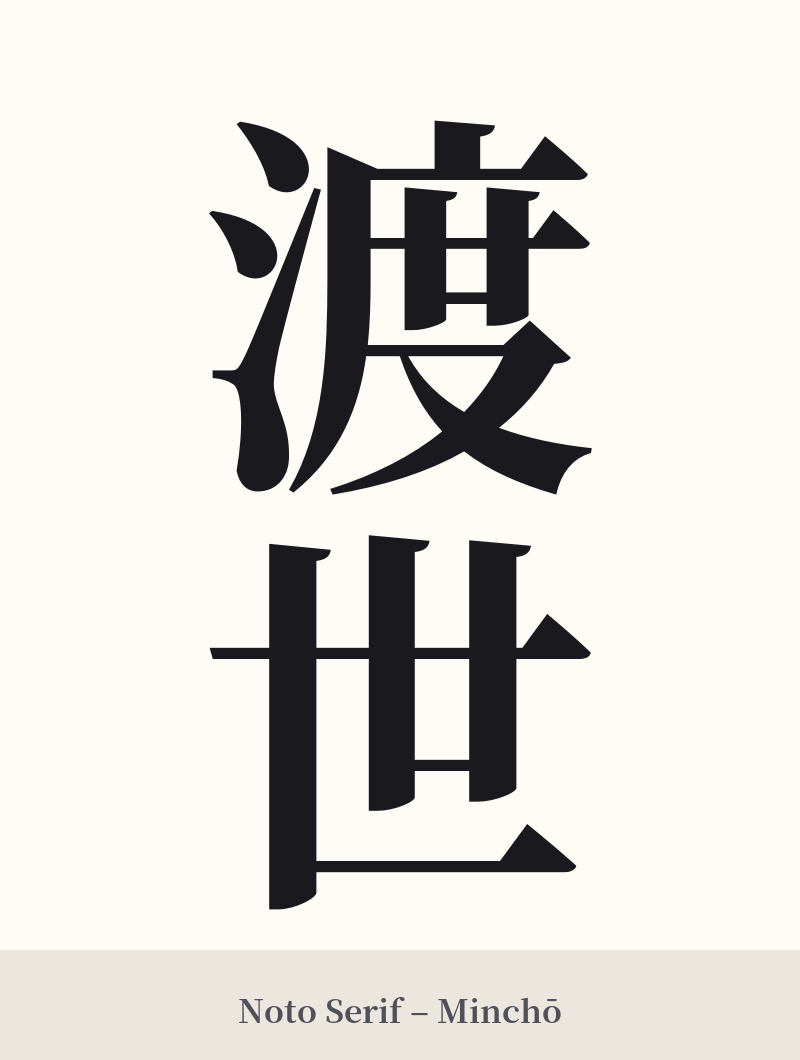
The same kanji can look dramatically different depending on the calligraphy style. Choose a font that matches the mood you want for your tattoo or design.
🎨 Tattoo Suitability
📐 Tattoo Design Guide
Given the heavy cultural baggage of this word, design choices should be made with extreme care. If you proceed, the aesthetic should match the gritty, historical nature of the term.
– Placement: A vertical orientation on the forearm, calf, or along the ribs can emphasize the feeling of a 'path' or 'journey.' A placement on the back could symbolize carrying the weight of this lifestyle.
– Font Style: A rough, semi-cursive calligraphy style (Gyosho) would suit the transient, wandering nature of the 'toseinin.' A bold, angular script (Kaisho) could reflect the rigid codes and unyielding nature of the outlaw world. Avoid modern, clean, or cute fonts, as they would clash with the word's meaning.
– Visual Elements: It's best to let the kanji stand alone to avoid amplifying the yakuza connection. If you must add an element, a simple motif like a rolling wave (symbolizing the turbulent 'world' to be crossed) could work. Avoid cliché yakuza imagery like dragons, tigers, or cherry blossoms unless you fully intend to embrace that aesthetic and its consequences.
Comments