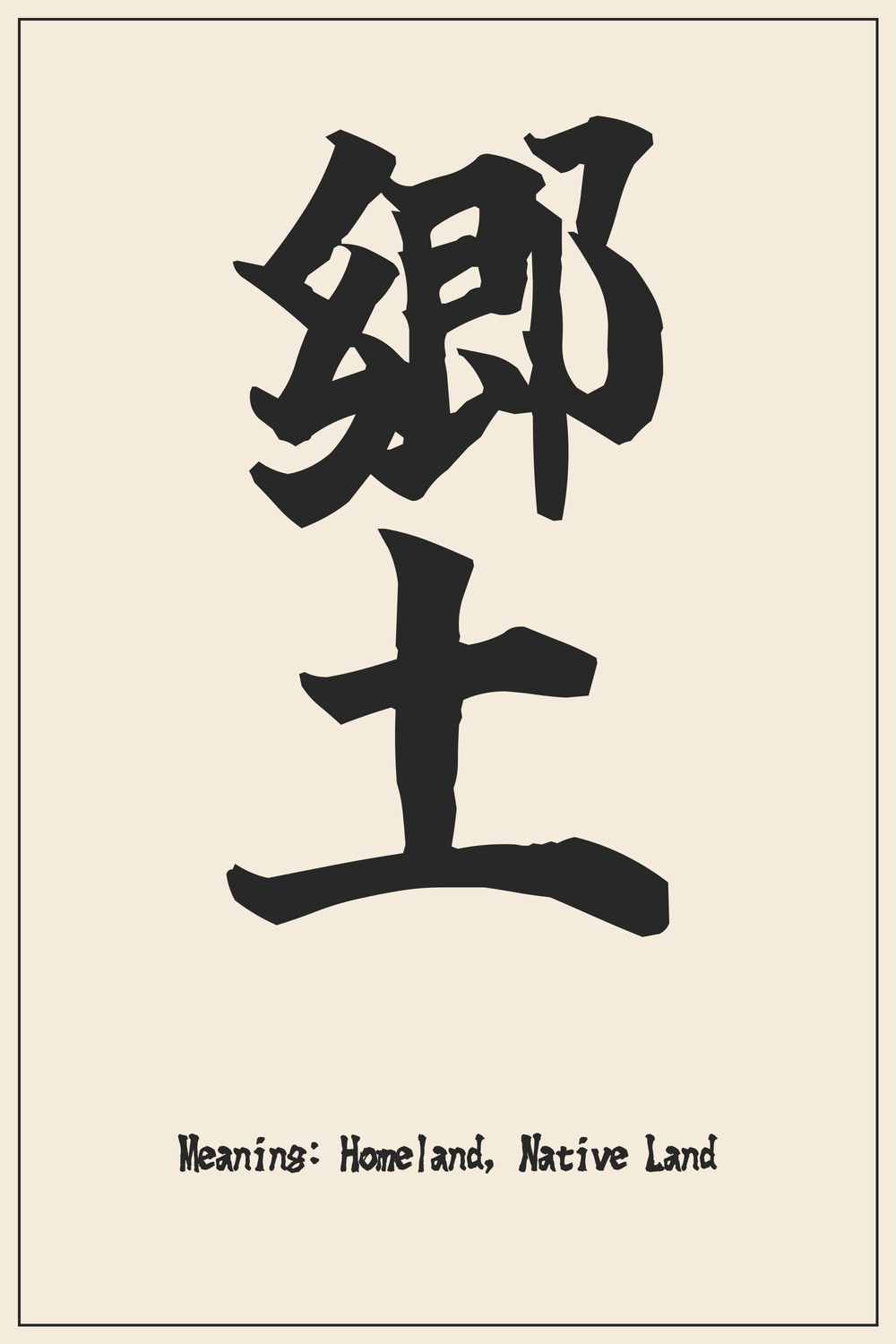
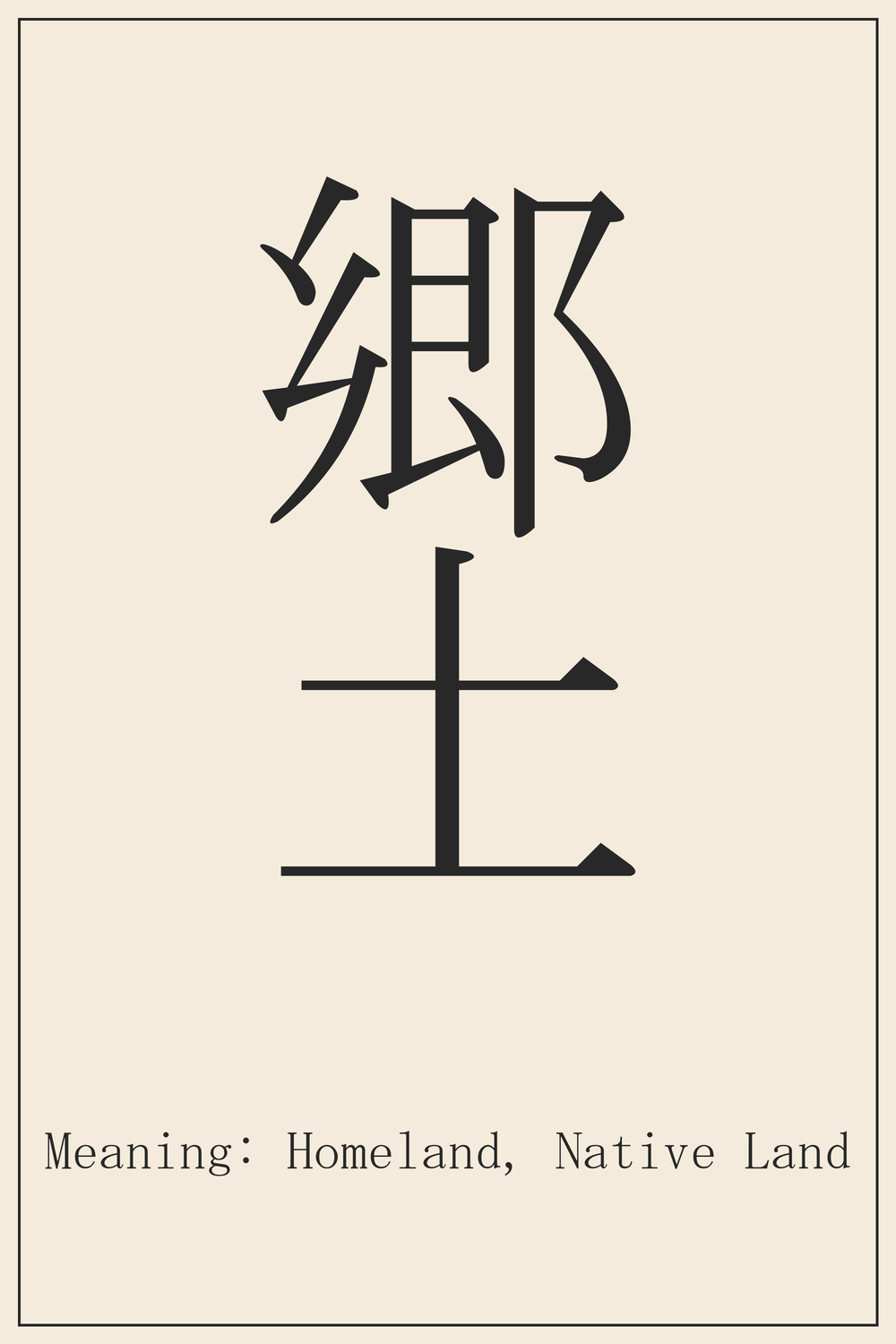
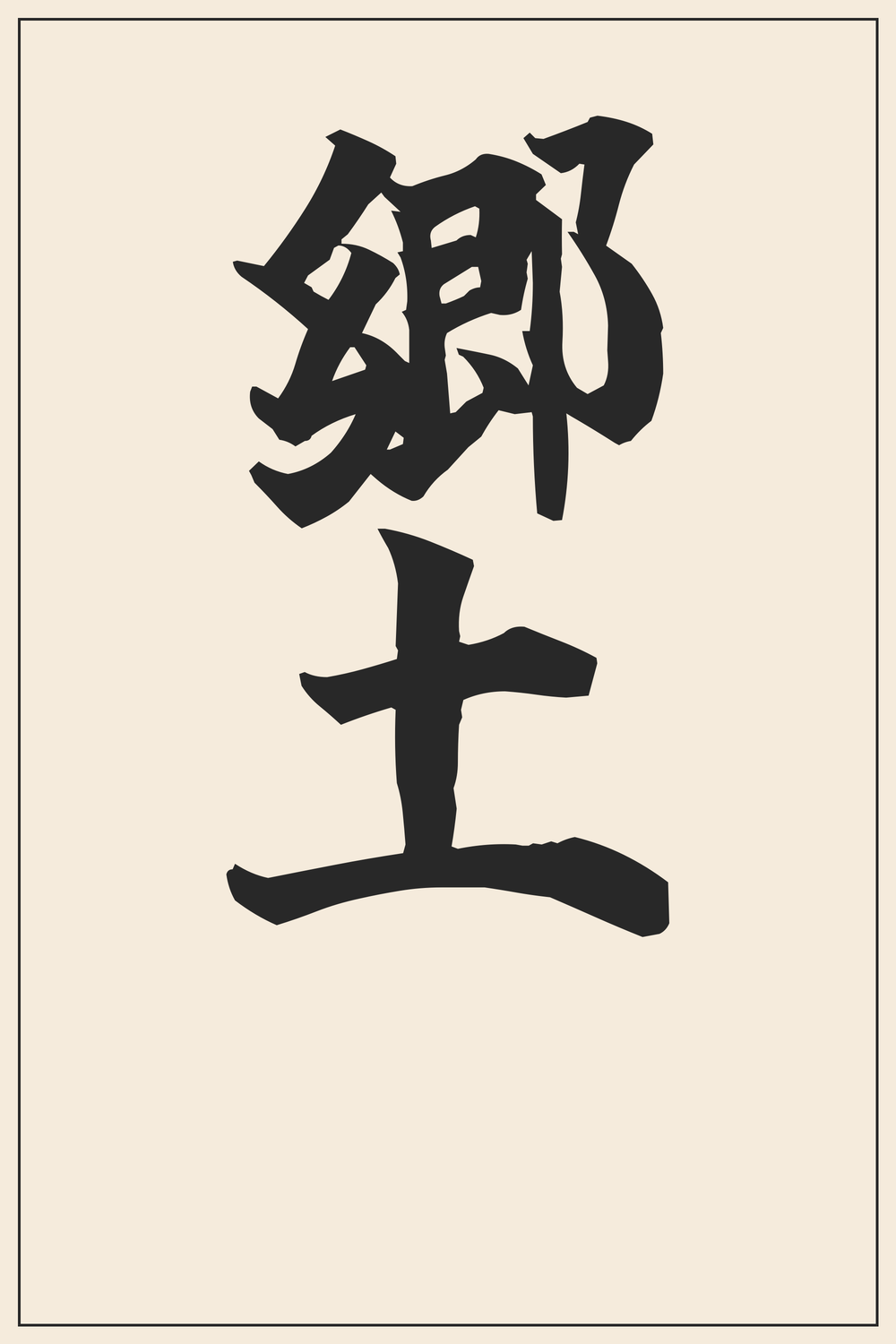
The Kanji compound 郷土 encapsulates the profound emotional connection to one’s birthplace and heritage. It symbolizes a sense of belonging, memory, and the foundational aspects of identity.
The atmosphere of a Kanji character changes dramatically depending on the font style. A character that looks elegant in a brush style might look bold and modern in a different font.
Recommendation:
Since a tattoo is permanent, we strongly recommend comparing various font styles beyond what is shown here. Use our designs as a trusted reference for the correct structure, but feel free to explore different artistic variations to find the perfect match for your vision.
The Deep Meaning Behind 郷土
The concept of 郷土 (Kyoudo) extends beyond a mere geographical location; it embodies the deep-seated attachment to one’s place of origin. This term encapsulates the memories, traditions, and the very essence of where one’s roots lie, reflecting a powerful bond to a specific community and landscape.
In Japanese culture, the notion of ‘furusato’ (故郷), often interchangeable with 郷土, carries significant emotional weight, representing an idealized image of home that often evokes nostalgia and warmth. It symbolizes the spiritual and cultural foundation upon which an individual’s identity is built, influencing their perspective and values throughout life.
Kanji Breakdown
The compound 郷土 is formed by two characters, each contributing to its rich meaning of ‘homeland’ or ‘native land’.
Meaning: Hometown, village, native place. Its ancient form depicted two people facing away from each other over a vessel, or a person returning to their village (represented by the 阝 radical derived from 邑 for ‘settlement’). It signifies the concept of one’s origin and community.
Meaning: Earth, soil, land. This character is a simple pictogram depicting a mound of earth, representing the physical ground or territory. It grounds the abstract idea of ‘home’ in a tangible, geographical context.
Conclusion
郷土 (Kyoudo) represents more than just a place on a map; it is a powerful symbol of identity, belonging, and the enduring ties to one’s origins. It reflects the emotional landscape of home, filled with memories and cultural heritage.
Choosing 郷土 for a tattoo is a profound way to honor your roots, heritage, or a place that holds significant meaning in your life. It serves as a constant reminder of where you come from and the foundations that have shaped who you are.
Comments