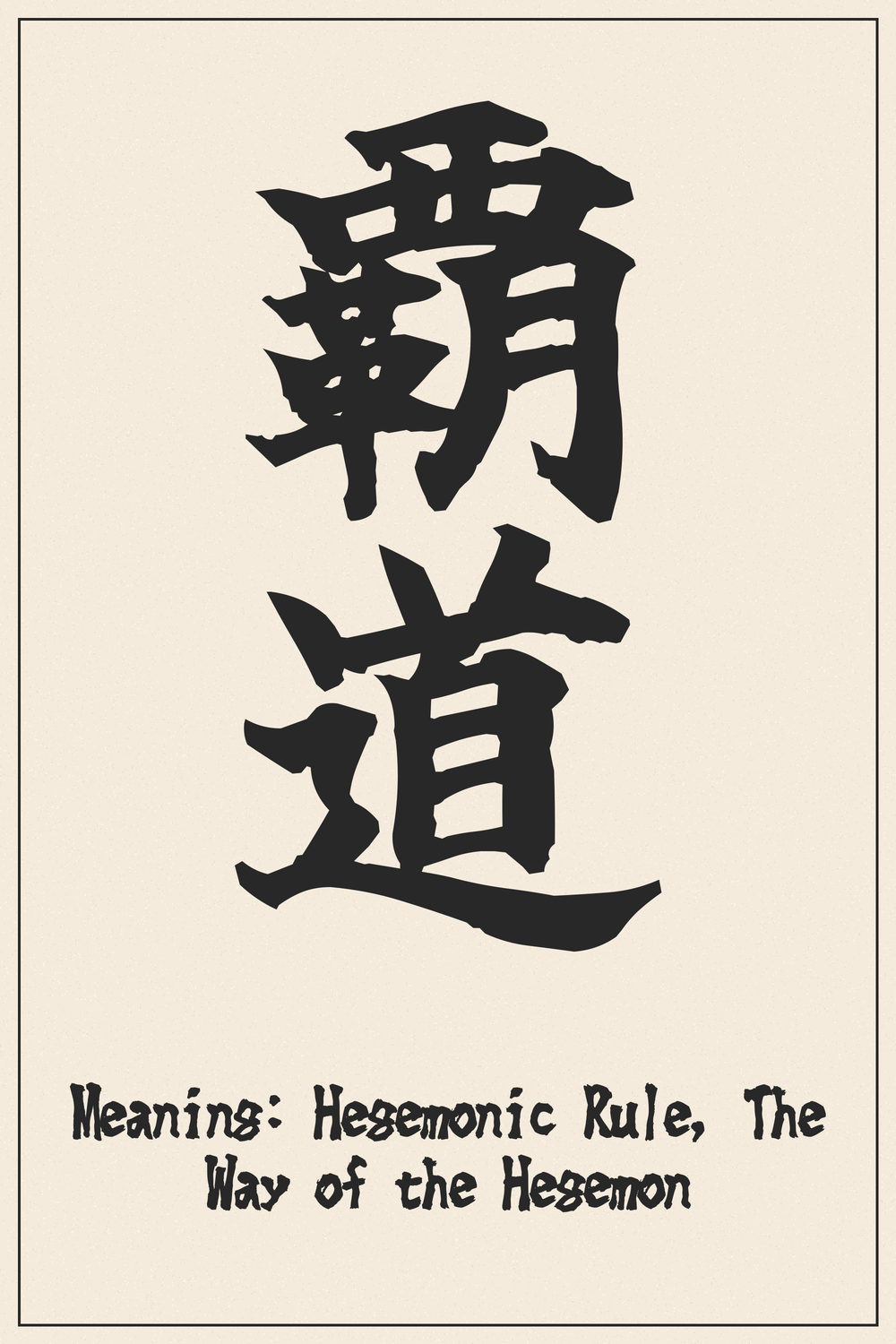
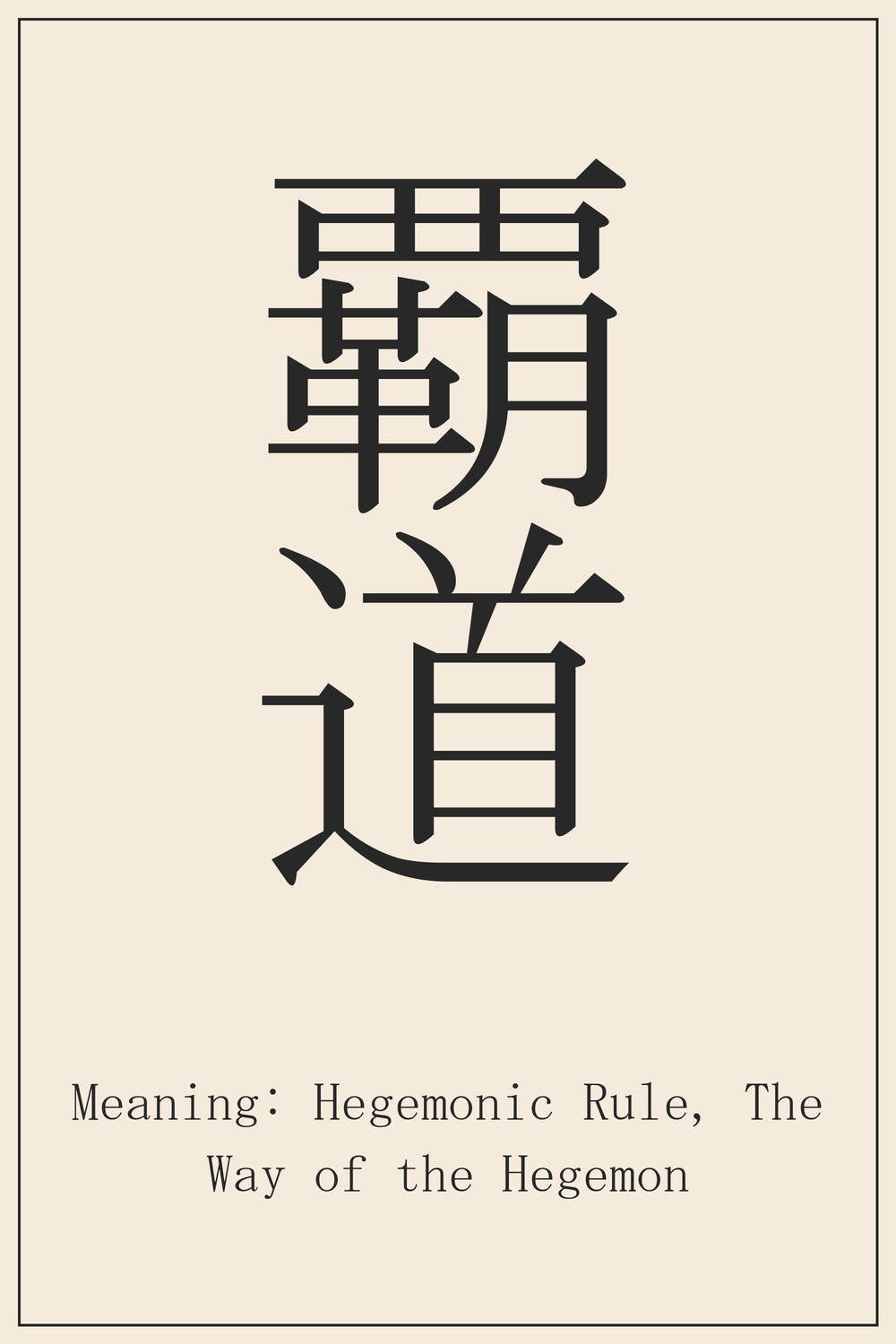
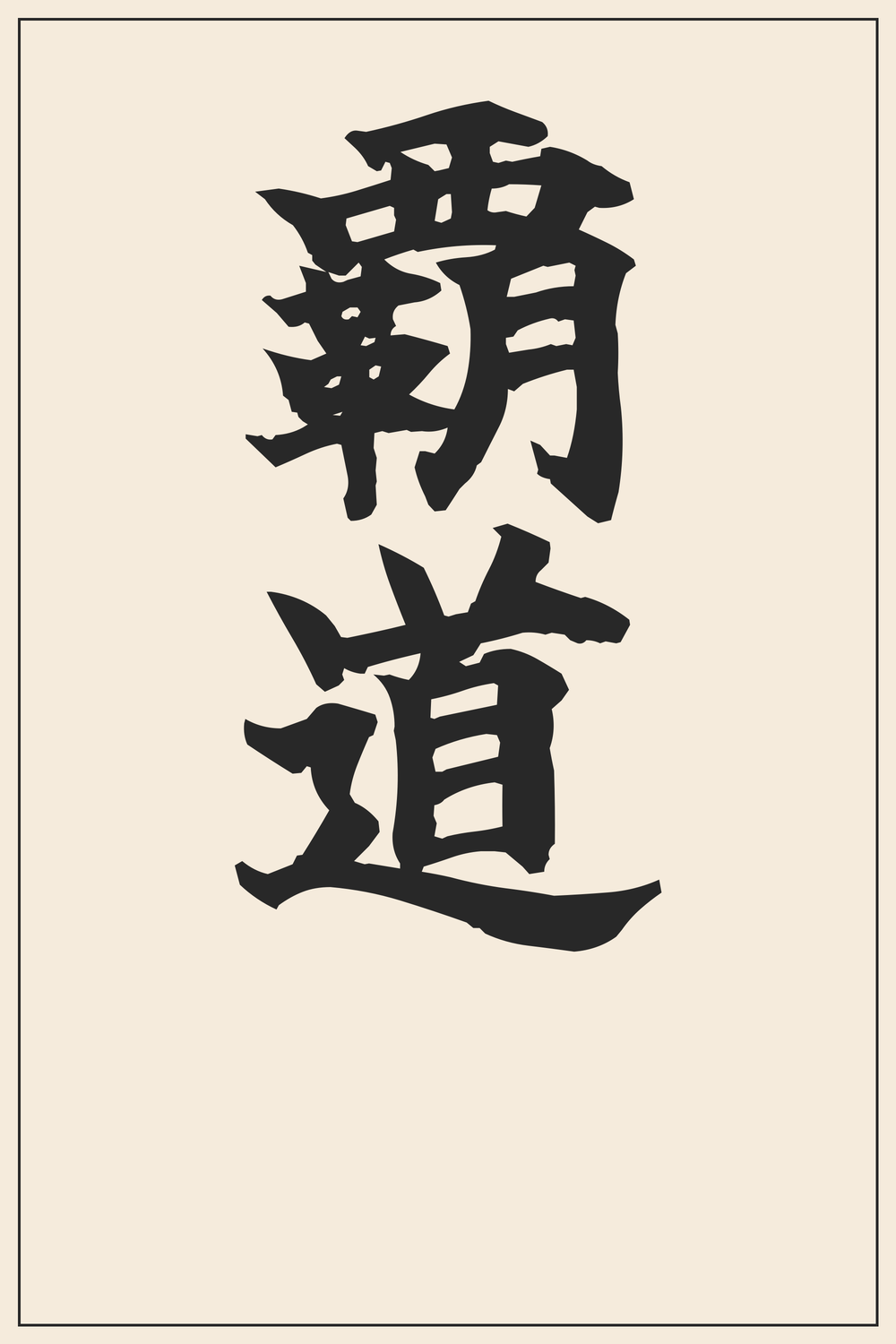
Dive into the powerful philosophy of Hadō, a concept embodying the pragmatic pursuit of leadership and dominance. This Kanji compound represents a forceful approach to governance, where might often dictates direction.
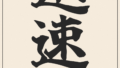
The atmosphere of a Kanji character changes dramatically depending on the font style. A character that looks elegant in a brush style might look bold and modern in a different font.
Recommendation:
Since a tattoo is permanent, we strongly recommend comparing various font styles beyond what is shown here. Use our designs as a trusted reference for the correct structure, but feel free to explore different artistic variations to find the perfect match for your vision.
The Deep Meaning Behind 覇道
The term 覇道 (Hadō) combines 覇 (ha), meaning ‘hegemon’ or ‘supremacy,’ and 道 (dō), meaning ‘path’ or ‘way.’ Historically, 覇 referred to a powerful feudal lord who, while not necessarily holding imperial authority, commanded great influence and military might over other lords, effectively maintaining order through power.
In East Asian political philosophy, 覇道 is often contrasted with 王道 (Ōdō), the ‘kingly way’ or ‘benevolent rule.’ While 王道 emphasizes moral authority and virtuous governance, 覇道 focuses on pragmatic power, strategic influence, and the assertion of will to achieve control. It represents a realistic, often ruthless, approach to securing and maintaining power.
Kanji Breakdown
Understanding the individual components of 覇道 reveals its layered meaning, illustrating how a philosophy of governance through strength is constructed.
Hegemon, Supremacy, Dominance: The character 覇 (ha) originally depicted a leader or chief, signifying authority and control. Its complex structure hints at the encompassing nature of a hegemon, one who gathers and exerts power over others.
Path, Way, Principle: 道 (dō) fundamentally means ‘path’ or ‘road,’ symbolizing direction, method, or a guiding principle. When combined with 覇, it signifies the ‘way’ or ‘principle’ by which a hegemon operates, emphasizing their chosen method of rule.
Conclusion
覇道 encapsulates a powerful and often challenging philosophy of leadership driven by strength and strategic dominance. It’s a concept for those who understand that power can be a necessary tool to shape their world.
For a tattoo, 覇道 serves as a bold statement of ambition, resilience, and a pragmatic approach to life’s challenges. It speaks to a will to lead and to forge one’s own path, even if it requires force.
Comments