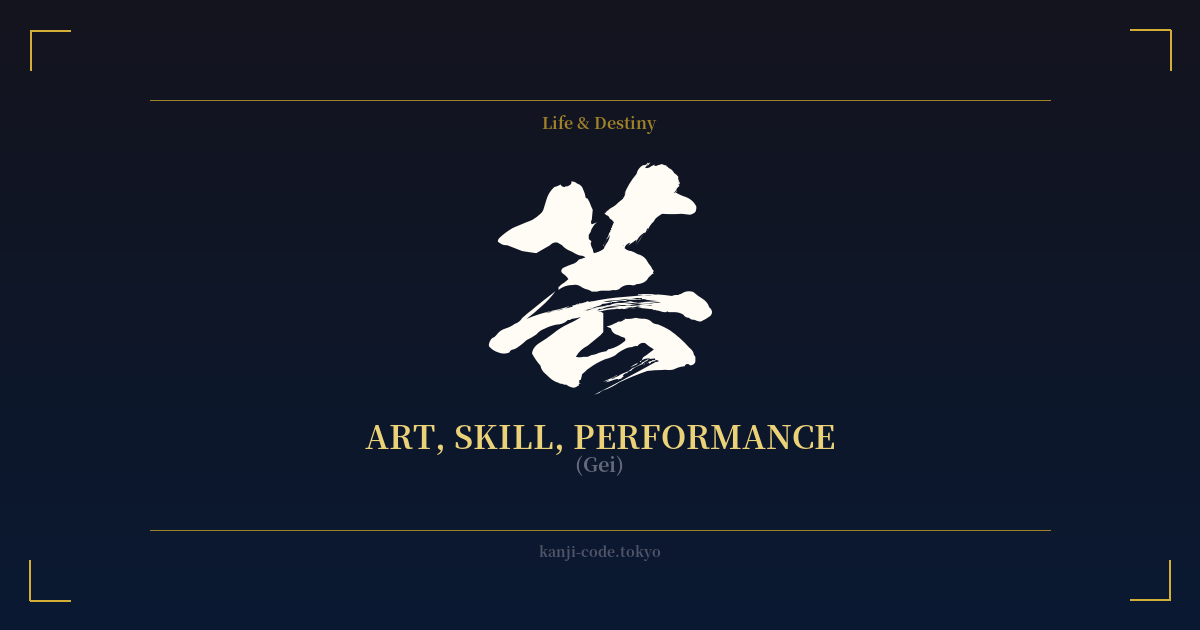
✍️ 芸 (Gei) — Cultural Context
The kanji 芸 (Gei) is a beautifully concise character that encapsulates the essence of art, skill, and refined performance in Japanese culture. While often translated simply as 'art,' its meaning is far more rooted in the concept of a disciplined craft that has been honed through years of dedicated practice.
Originally, the character was written in a more complex form, 藝. This traditional version (kyūjitai) is a rich pictograph, showing a person (on the bottom) planting a sapling (木) with both hands, suggesting cultivation and nurturing. This beautifully illustrates the idea that skill is not an innate gift but something that must be carefully cultivated over time. The modern, simplified character 芸 (shinjitai) was adopted for common use after World War II, losing this visual story but retaining the core meaning.
In Japan, the concept of 'Gei' extends far beyond what the West might consider 'fine art.' It is present in a vast array of disciplines. For example, 武芸 (bugei) refers to the martial arts, where physical prowess is a form of disciplined skill. 芸事 (geigoto) describes traditional accomplishments and arts like the tea ceremony (sadō), flower arranging (ikebana), and playing classical instruments. These are not mere hobbies, but 'ways' or 'paths' (dō) toward self-mastery and spiritual refinement.
The world of the geisha is perhaps one of the most famous embodiments of 芸. The very word 'geisha' (芸者) means 'person of art.' Their extensive training in music, dance, conversation, and ceremony is a living testament to the deep cultural value placed on mastering these skills. They are not just entertainers; they are artisans of social grace and traditional performance.
In the modern era, 芸 is also a key component of 芸能 (geinō), the world of mass entertainment, including television, movies, and pop music. It’s also central to 芸術 (geijutsu), which is closer to the Western concept of 'art' as in painting, sculpture, and literature. But even here, the emphasis remains on the technical skill and dedication of the creator.
Ultimately, 芸 represents the profound respect in Japanese culture for any skill performed with mastery and heart. It’s the spirit of the shokunin (artisan), the dedication of the martial artist, and the grace of the performer all rolled into one simple, elegant character.
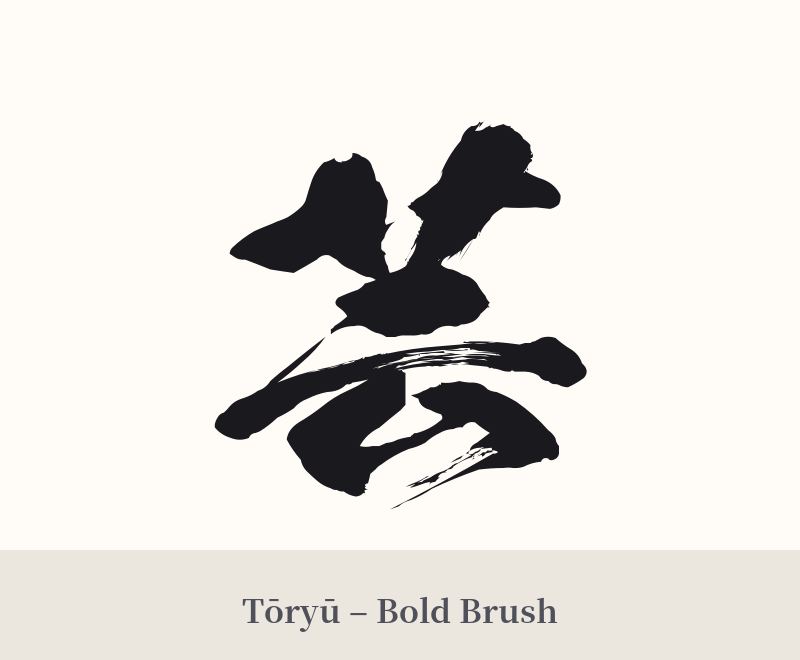
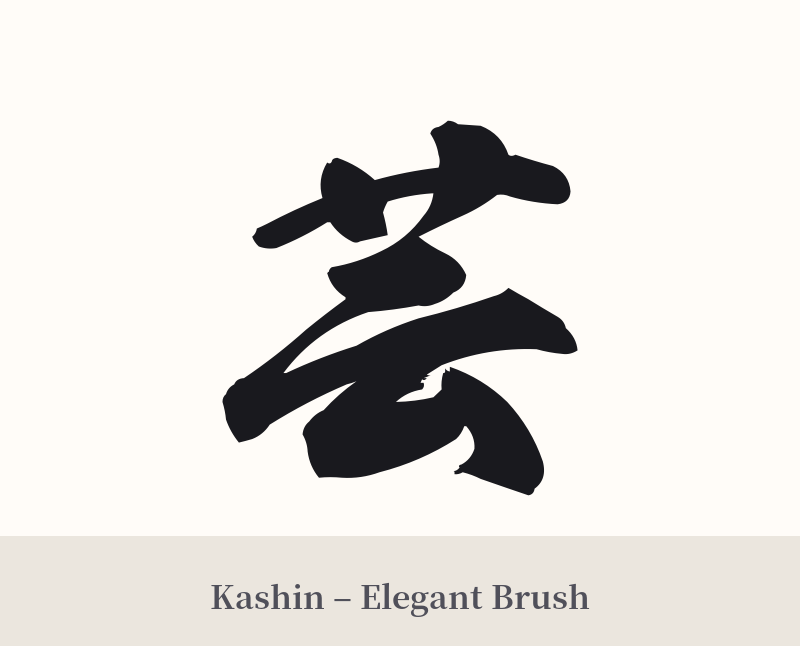
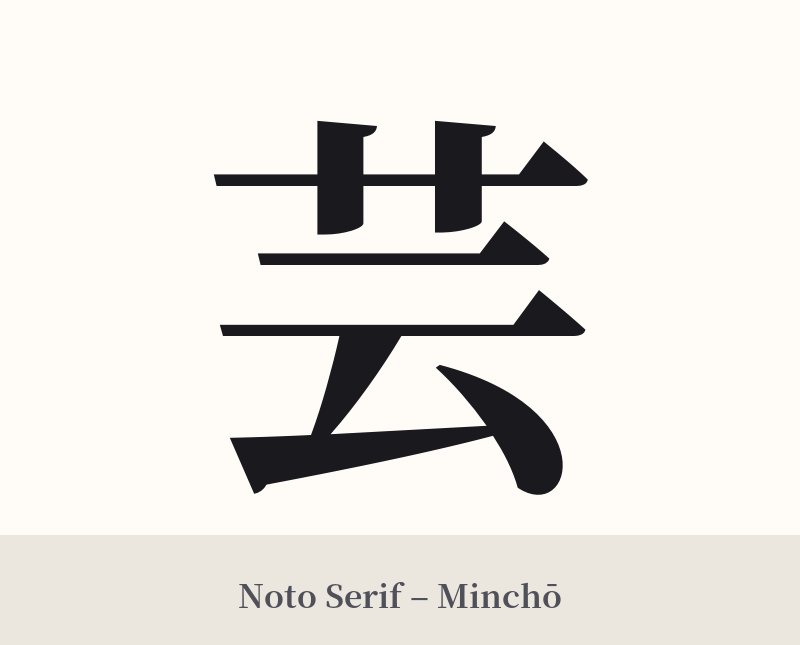
🖌️ Font Styles for 芸
The same kanji can look dramatically different depending on the calligraphy style. Choose a font that matches the mood you want for your tattoo or design.
🎨 Tattoo Suitability
📐 Tattoo Design Guide
The simplicity of 芸 offers unique design opportunities. Its clean lines work well in various styles and placements.
– Placement: Due to its compact nature, 芸 is excellent for smaller, more personal spots like the inner wrist, behind the ear, on the ankle, or along the collarbone. It can also serve as a foundational element in a larger, more complex piece.
– Font Style: A bold, blocky Kaisho script will emphasize its structure and modern feel. For a more fluid and energetic look, consider a semi-cursive Gyōsho or fully cursive Sōsho style, which can give the simple character a dynamic sense of movement.
– Visual Tips: For a more intricate and historical design, consider using the traditional form, 藝. Its complexity is visually stunning and tells a deeper story. You could also pair 芸 with a small, symbolic image that reflects your specific art form—a paintbrush, a musical note, a chef's knife, or a martial arts weapon—to provide personal context.
Comments