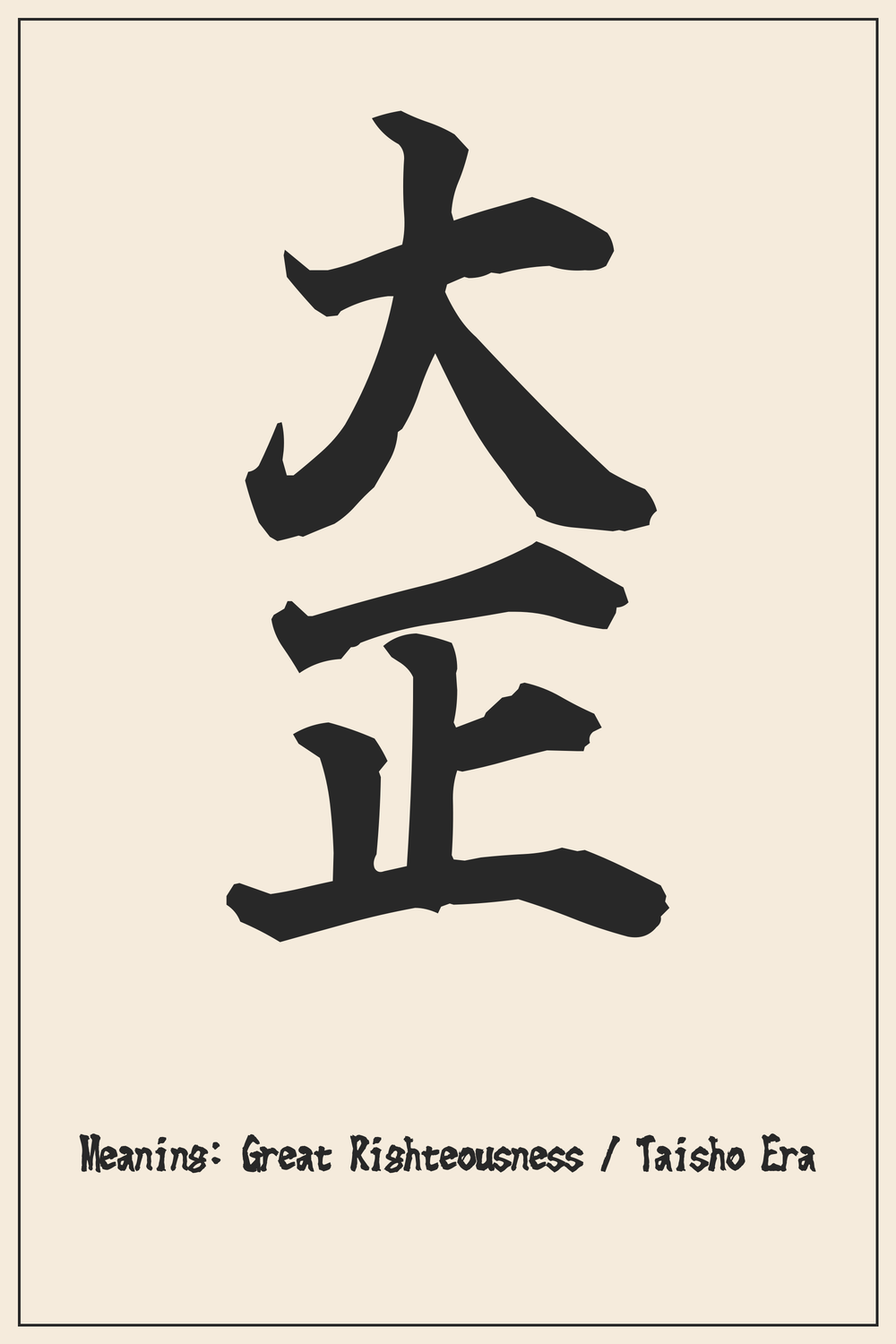
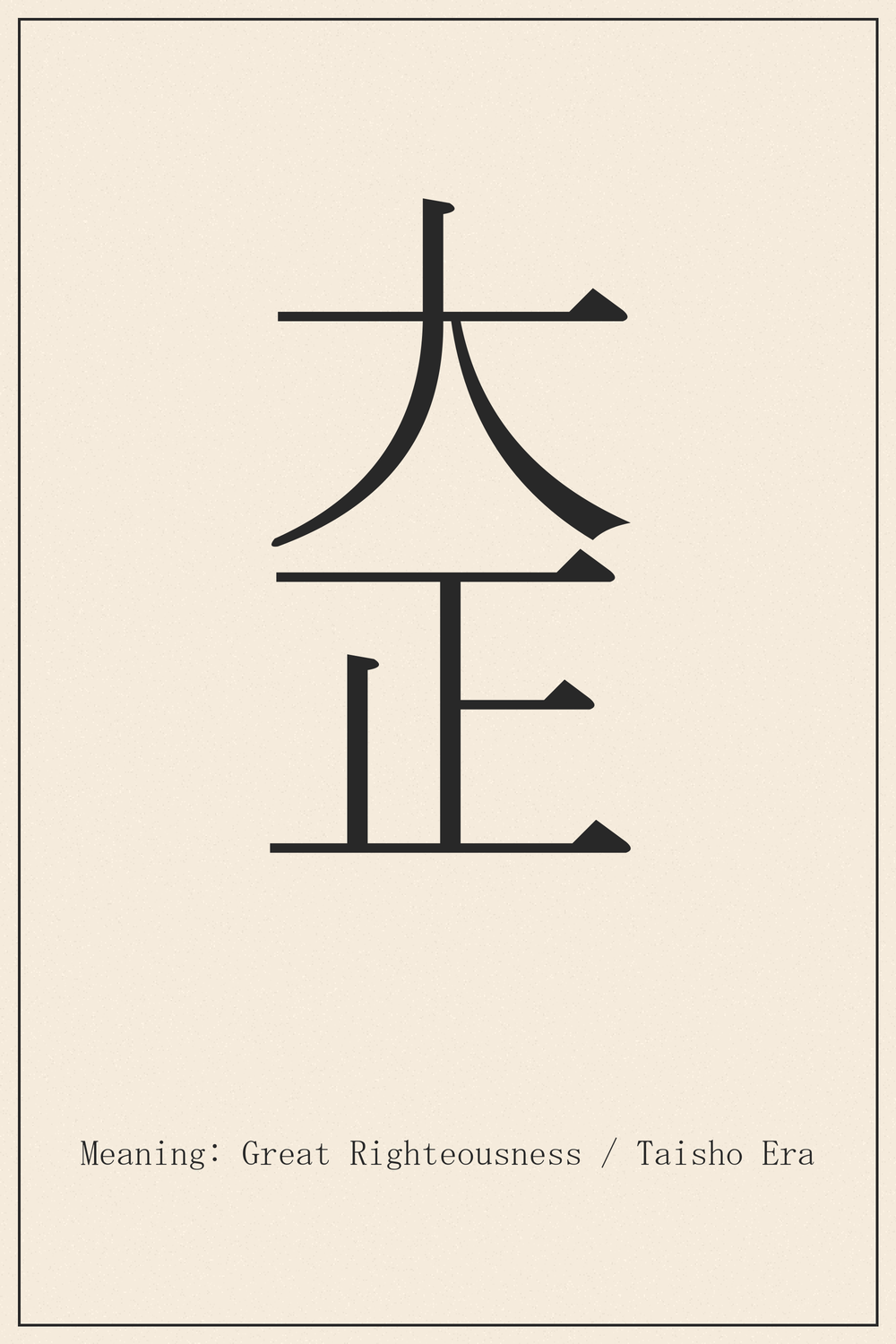
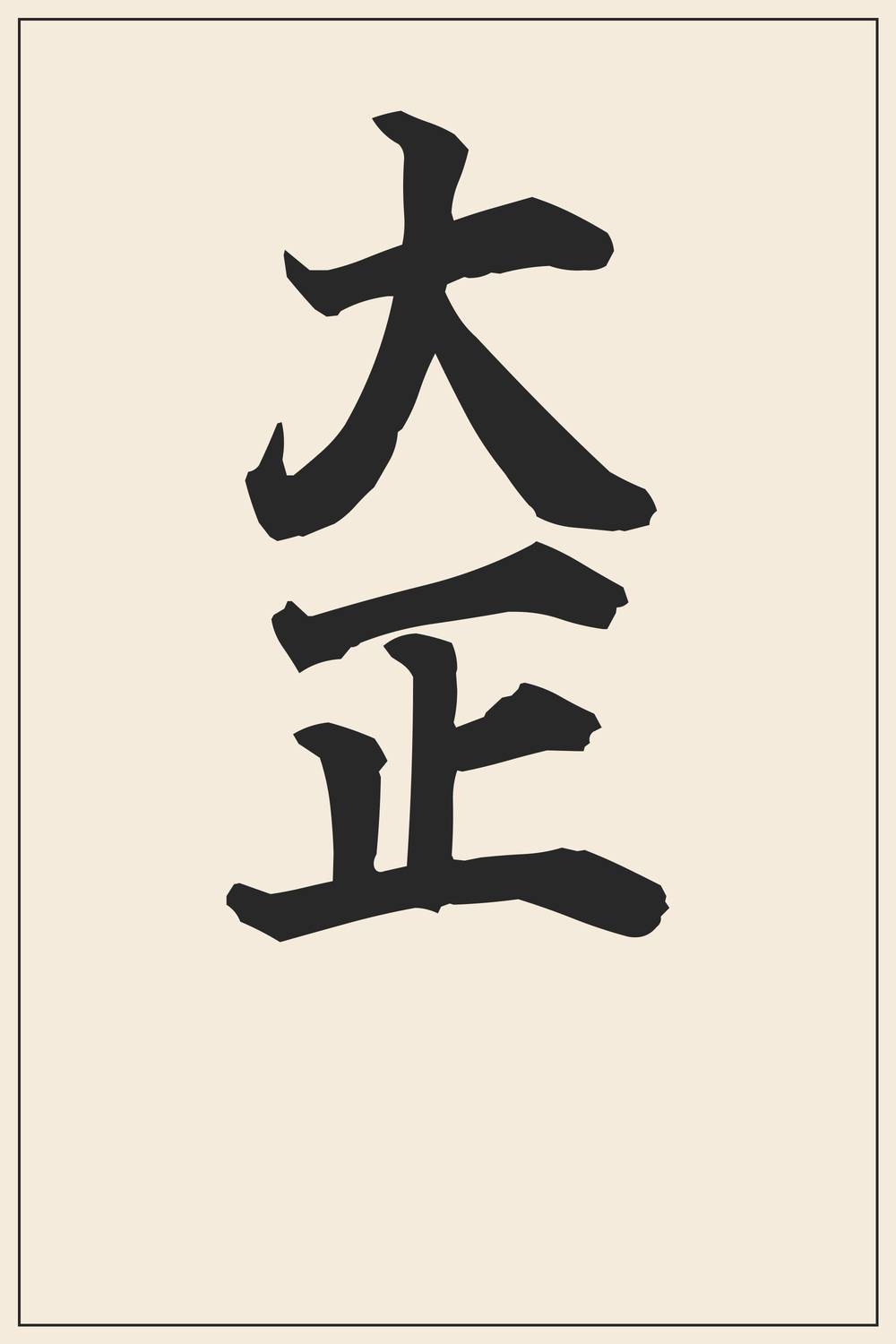
The Kanji compound ‘大正’ represents a significant period in Japanese history, the Taisho Era, literally meaning ‘Great Righteousness’ or ‘Great Justice’. It embodies ideals of societal balance and moral uprightness.
The atmosphere of a Kanji character changes dramatically depending on the font style. A character that looks elegant in a brush style might look bold and modern in a different font.
Recommendation:
Since a tattoo is permanent, we strongly recommend comparing various font styles beyond what is shown here. Use our designs as a trusted reference for the correct structure, but feel free to explore different artistic variations to find the perfect match for your vision.
The Deep Meaning Behind 大正
The term ‘大正’ (Taisho) literally translates to ‘Great Righteousness’ or ‘Great Justice’. This name was chosen for the imperial era spanning from 1912 to 1926, reflecting the aspirations for a just and upright society during that period. It encapsulates a specific ideal of governance and societal values.
Culturally, the Taisho Era is often remembered for its unique blend of traditional Japanese aesthetics and burgeoning Western influences, particularly in art, fashion, and intellectual thought. It was a period marked by political liberalism and cultural experimentation, sometimes referred to as ‘Taisho Democracy,’ aiming for harmony and ethical progress within the nation.
Kanji Breakdown
The compound ‘大正’ is formed from two distinct Kanji, each contributing to its overall profound meaning:
Meaning: Great, large, enormous. This character is a pictograph of a person standing with arms outstretched, symbolizing greatness and expanse.
Meaning: Correct, just, righteous, true. Etymologically, it depicts a foot stopping at a line, signifying correctness or the right path.
Conclusion
The Kanji ‘大正’ not only marks a distinct period in Japanese history but also embodies the timeless virtues of ‘Great Righteousness’ and ‘Justice’. It represents an era that sought balance and moral integrity, making it a symbol of profound societal values.
Choosing ‘大正’ as a tattoo is a testament to an appreciation for historical depth and a personal commitment to high ethical standards. Its elegant form and powerful meaning make it a distinguished choice for those who value justice, correctness, and a connection to Japan’s rich past.
Comments