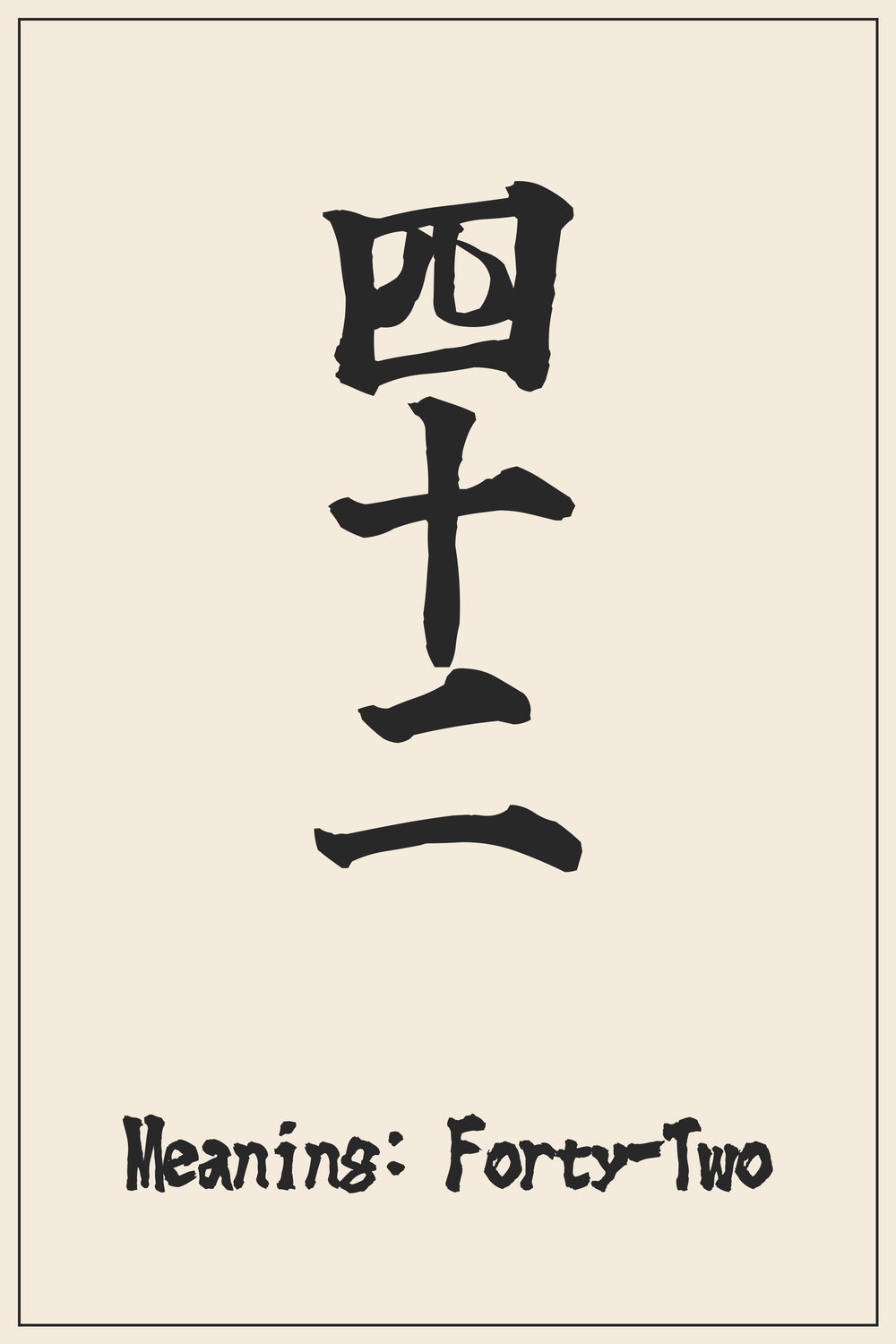
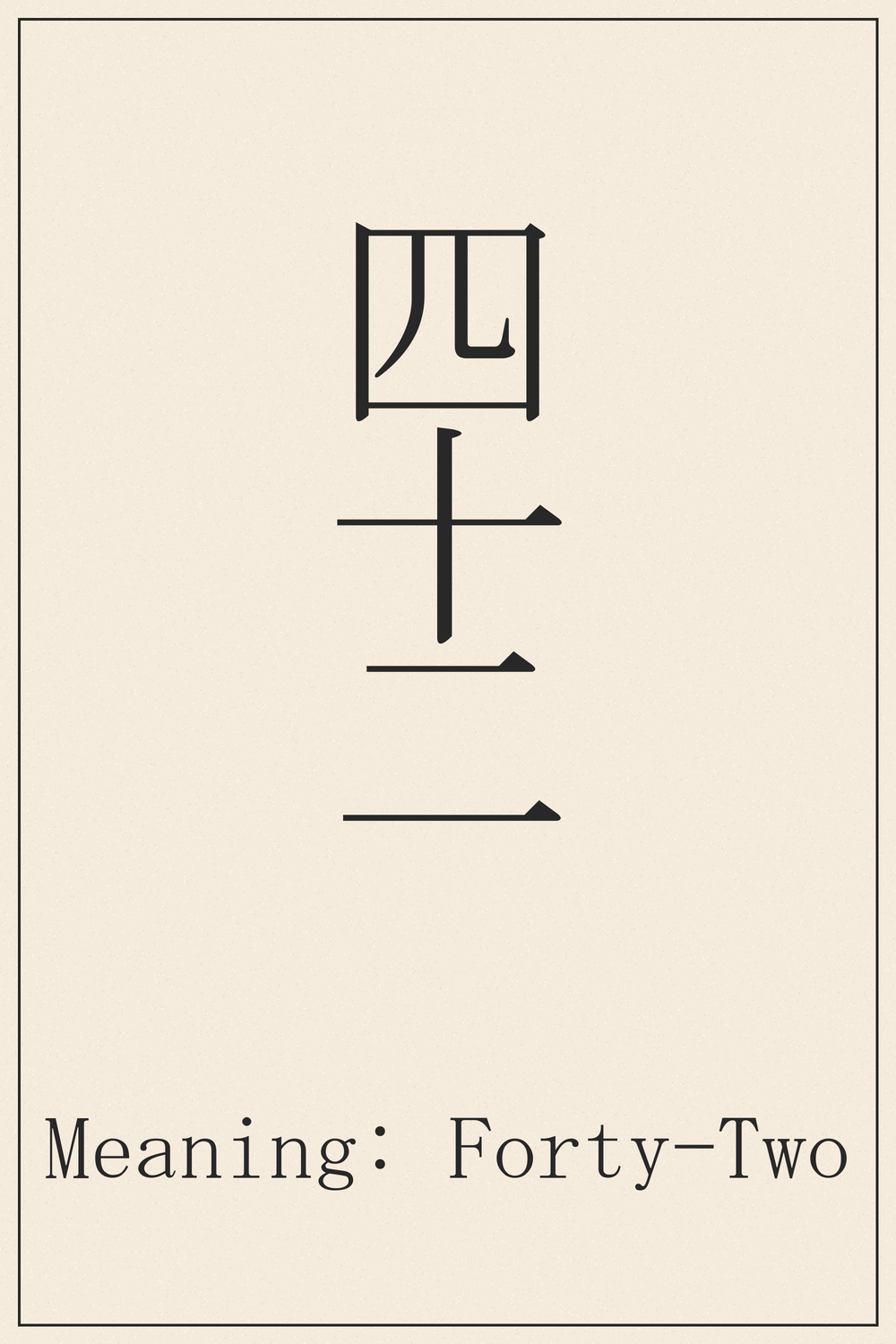
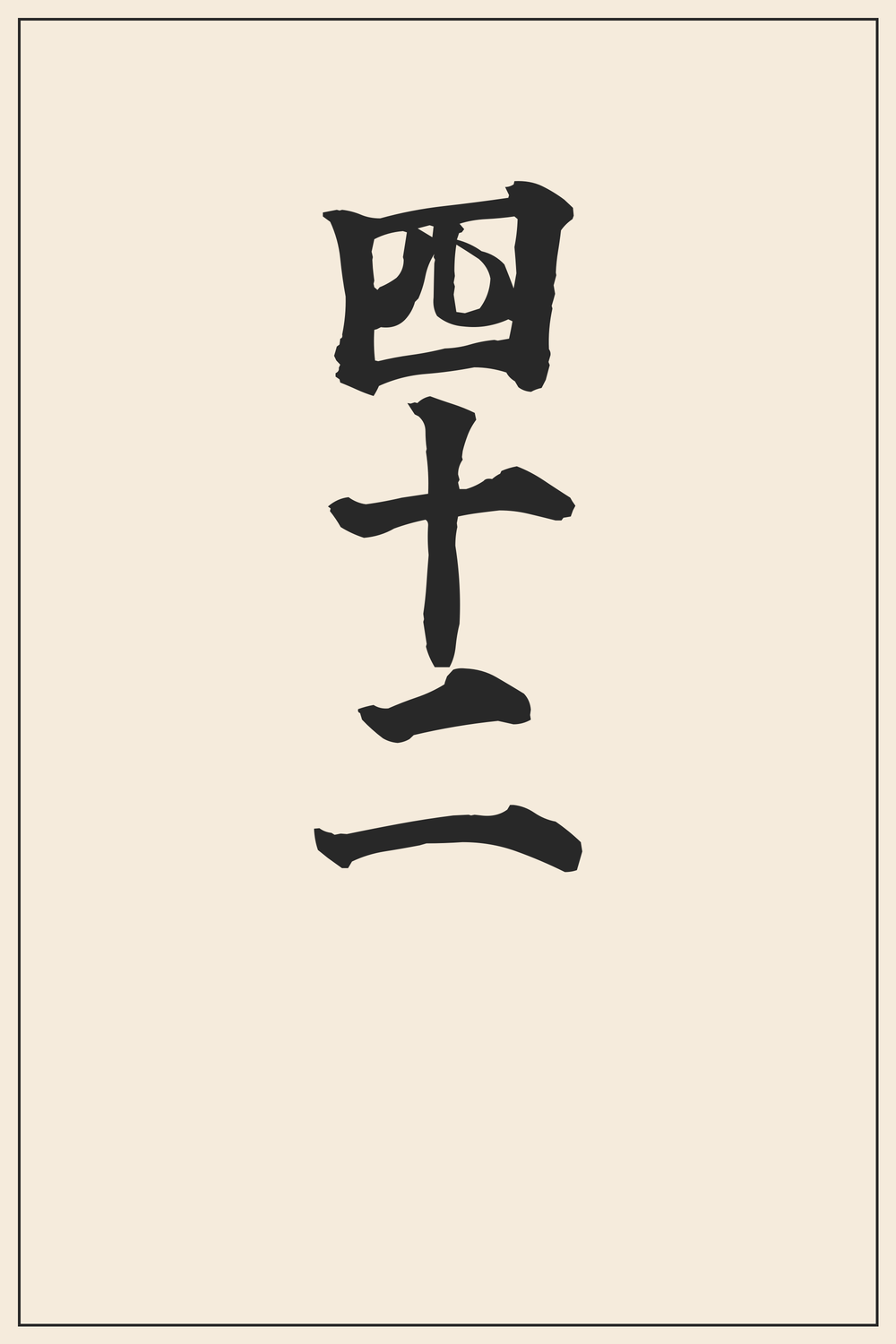
The Kanji for ‘Forty-Two’, 四十二, while numerically straightforward, carries a profound cultural nuance in Japan. Its pronunciation echoes a significant concept that influences its perception in daily life and traditional beliefs.
The atmosphere of a Kanji character changes dramatically depending on the font style. A character that looks elegant in a brush style might look bold and modern in a different font.
Recommendation:
Since a tattoo is permanent, we strongly recommend comparing various font styles beyond what is shown here. Use our designs as a trusted reference for the correct structure, but feel free to explore different artistic variations to find the perfect match for your vision.
The Deep Meaning Behind 四十二
The Kanji for ‘forty-two’, 四十二 (yonjuuni), is a direct combination of the characters for four, ten, and two. In isolation, each character holds its numerical value, forming a standard composite numeral. Its origin is purely arithmetical, representing a quantity.
Culturally, however, the number forty-two is often considered unlucky in Japan. This is primarily because one common pronunciation for ‘four’ is ‘shi’ (四) and ‘two’ is ‘ni’ (二), which can combine to form ‘shi-ni’, a homophone for ‘death’ (死に). This linguistic connection leads to a pervasive superstition, making the number a symbol of misfortune in certain contexts, particularly avoided in hospitals or as room numbers.
Kanji Breakdown
The compound number ‘四十二’ is formed by combining three fundamental numerical Kanji:
Meaning: Four. The character depicts four lines, representing the quantity. It has two common readings, ‘yon’ and ‘shi’, with ‘shi’ being the problematic one in this context due to its homophony with ‘death’.
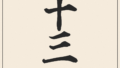
Meaning: Ten. This character represents the number ten, likely derived from a single vertical stroke indicating ‘one’ with a horizontal stroke crossing it, symbolizing completion or totality.
Meaning: Two. Representing the quantity two, this character is a pictogram of two parallel horizontal lines.
Conclusion
The Kanji 四十二 elegantly represents the numerical value forty-two. However, its cultural weight in Japan extends beyond simple mathematics, carrying the somber connotation of ‘death’ due to its phonetic similarity.
For those considering a tattoo, understanding this specific cultural nuance is paramount. While visually simple, the underlying superstition associated with ‘shi-ni’ makes ‘四十二’ a selection that often evokes caution rather than celebration in a Japanese context.
Comments