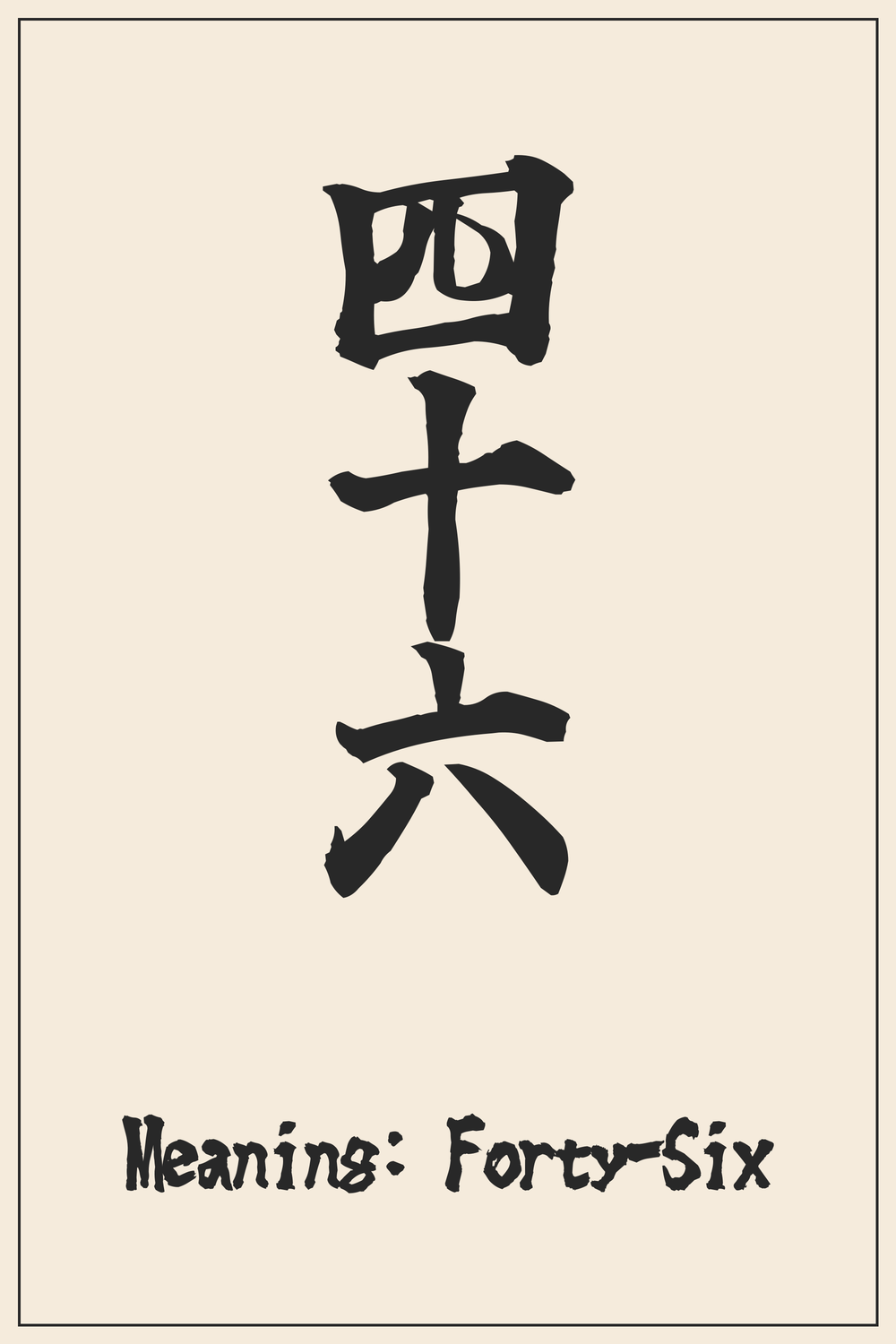
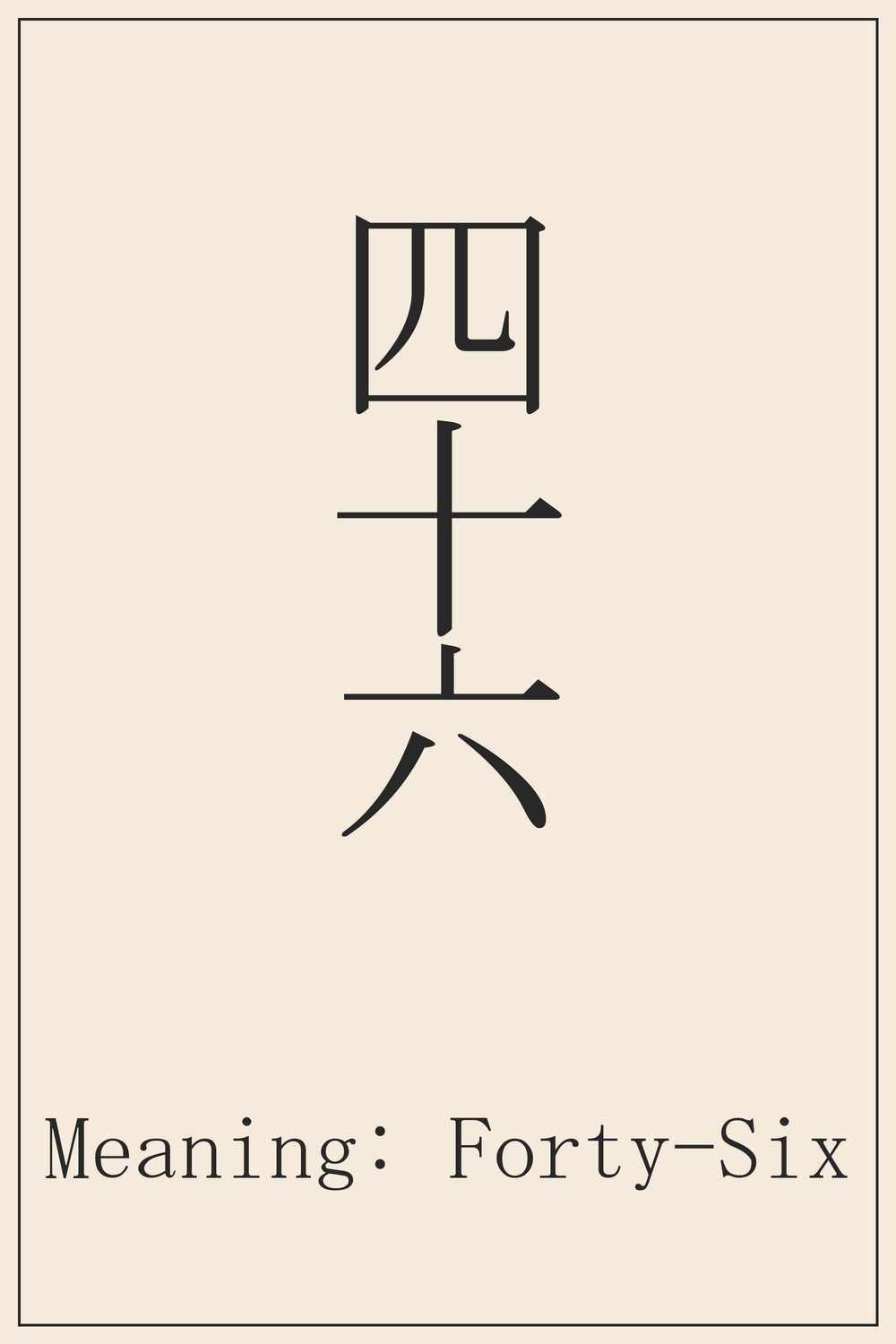
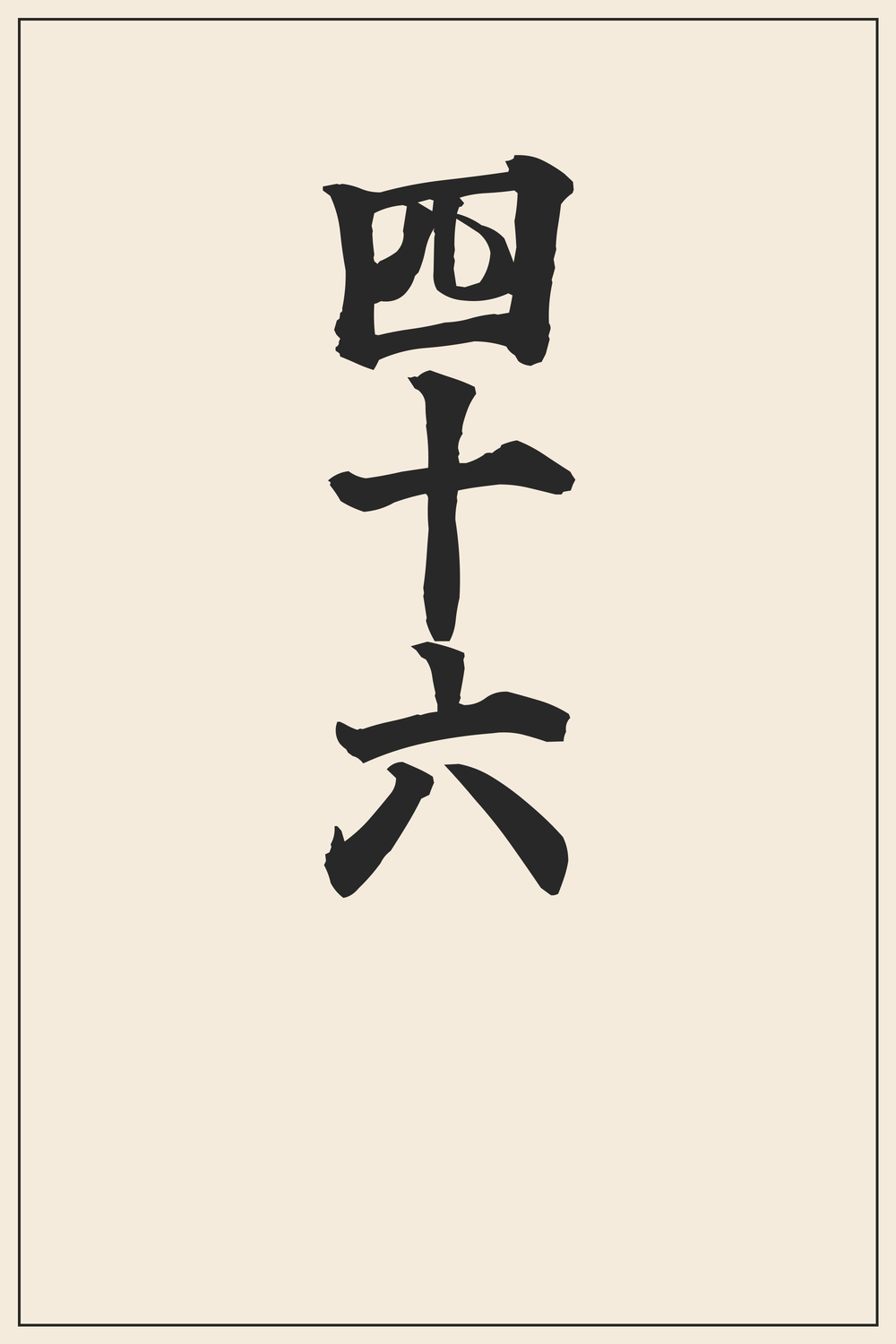
Explore the understated elegance of the number “四十六” in Japanese. This combination of characters, while numerically precise, carries the subtle weight of accumulated time or distinct counts within personal narratives.
The atmosphere of a Kanji character changes dramatically depending on the font style. A character that looks elegant in a brush style might look bold and modern in a different font.
Recommendation:
Since a tattoo is permanent, we strongly recommend comparing various font styles beyond what is shown here. Use our designs as a trusted reference for the correct structure, but feel free to explore different artistic variations to find the perfect match for your vision.
The Deep Meaning Behind 四十六
The Kanji compound “四十六” directly translates to the number forty-six. Its etymological roots are found in the individual characters: “四” (four), “十” (ten), and “六” (six). Each character carries its own ancient pictorial or conceptual origin, coming together to form a precise numerical value.
In Japanese culture, numbers often carry specific connotations, with some, like four (shi) and nine (ku), being associated with misfortune due to their homophones. However, “四十六” typically serves as a neutral, factual quantity. Its significance usually arises from the context it represents, such as an age, a specific count, or a date, rather than possessing an inherent symbolic depth.
Kanji Breakdown
To fully appreciate “四十六”, we can break it down into its constituent Kanji characters:
Meaning: Four. This character is believed to originate from a pictograph representing four lines or objects. Its reading “shi” is a homophone for death, making it occasionally considered unlucky, though “yon” is often used to avoid this connotation.
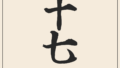
Meaning: Ten. This character’s form, a single vertical stroke, is thought to represent a counting rod or the concept of completeness for a unit of ten. It forms the base for compound numbers beyond single digits.
Meaning: Six. The etymology of “六” is debated, with some theories suggesting it originated from a pictograph of a shelter or house. It is a straightforward representation of the numerical value six.
Conclusion
The Kanji “四十六” directly signifies the number forty-six, offering a precise and unambiguous numerical representation. It embodies the clarity of count and sequence, making it a powerful choice for marking specific stages or quantities in one’s life.
For a tattoo, “四十六” can serve as a personal and meaningful symbol for an age, a significant date, or a number of personal achievements. Its directness and clean aesthetic allow for a versatile and elegant design, holding significance for the wearer without requiring complex interpretation.
Comments