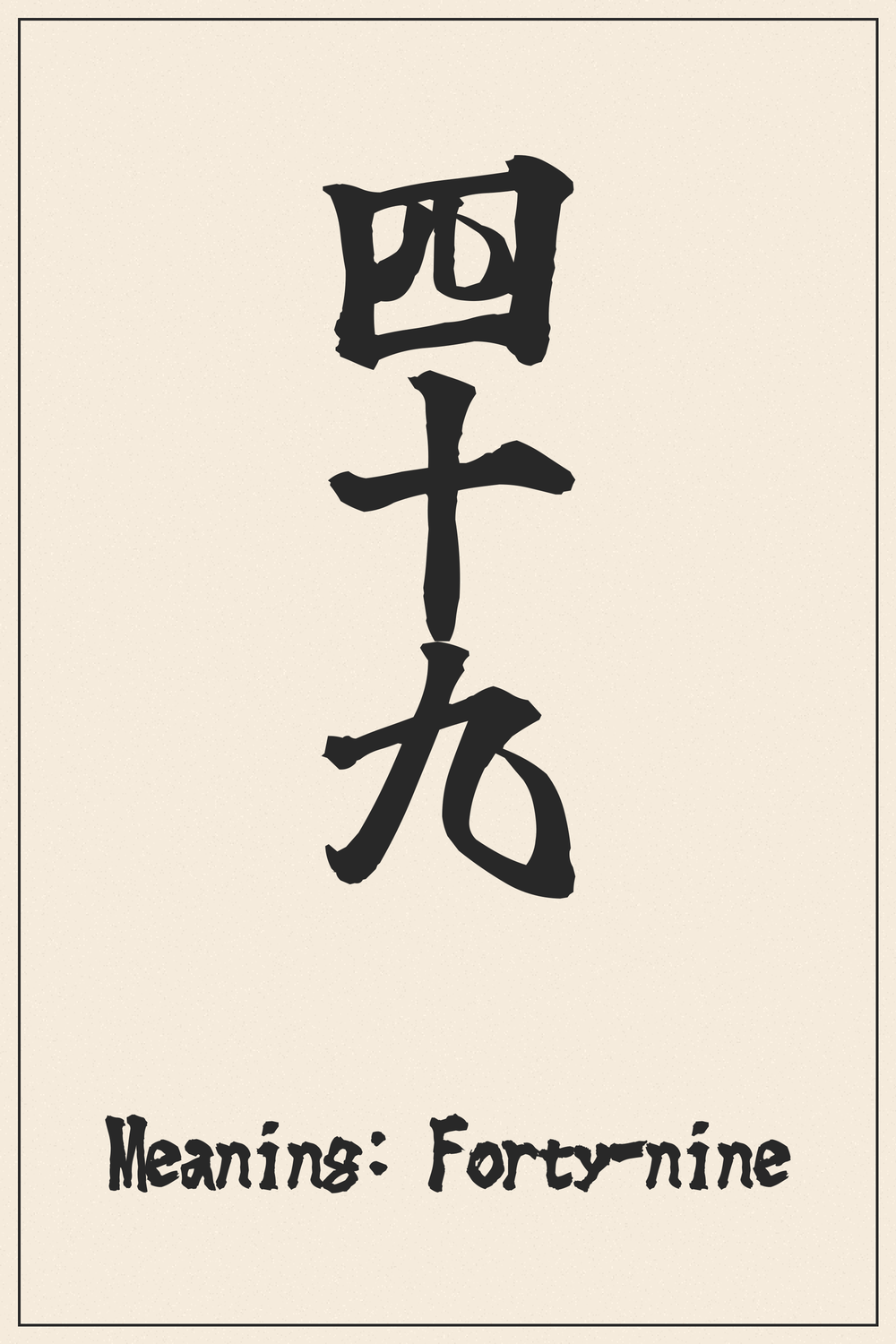
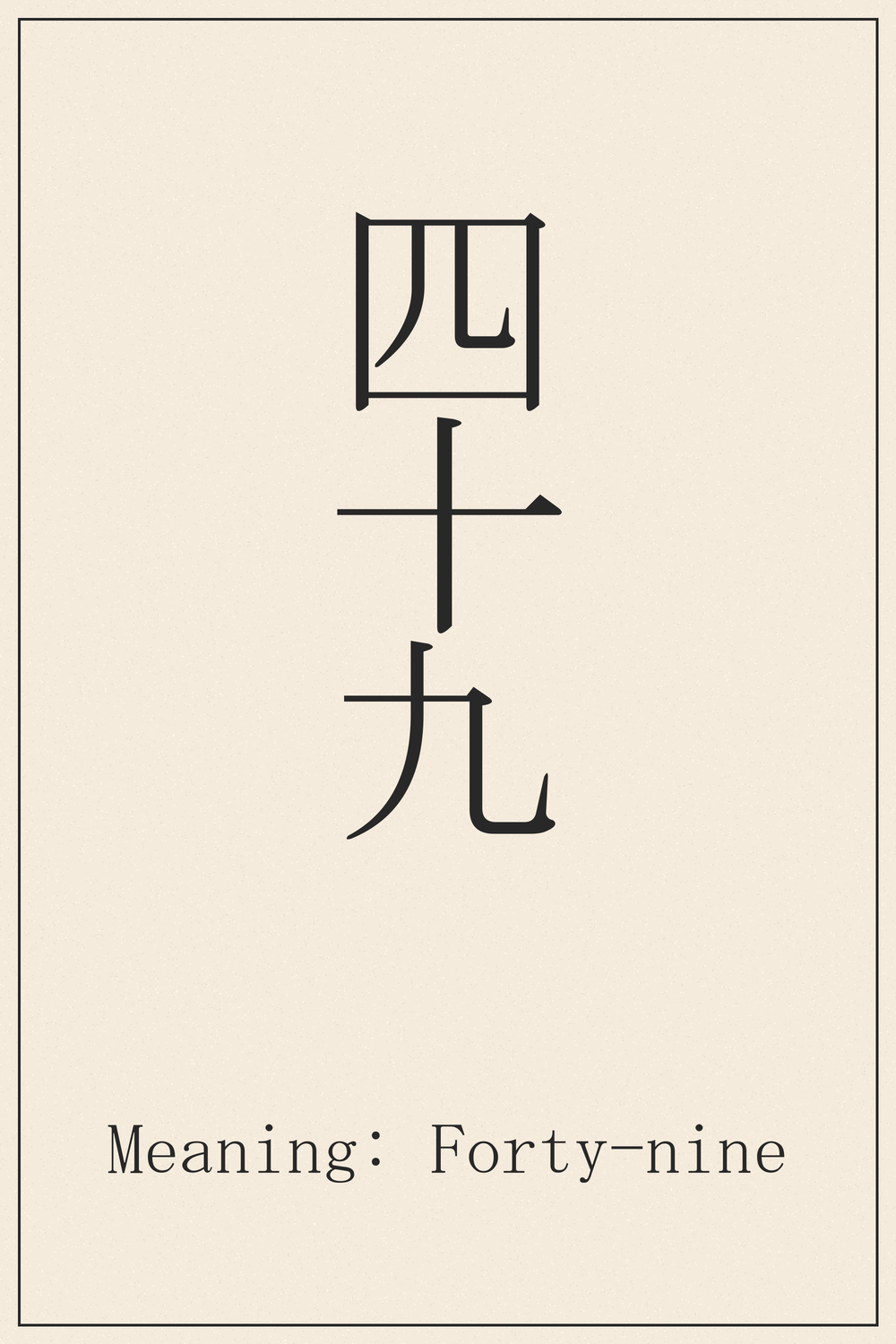
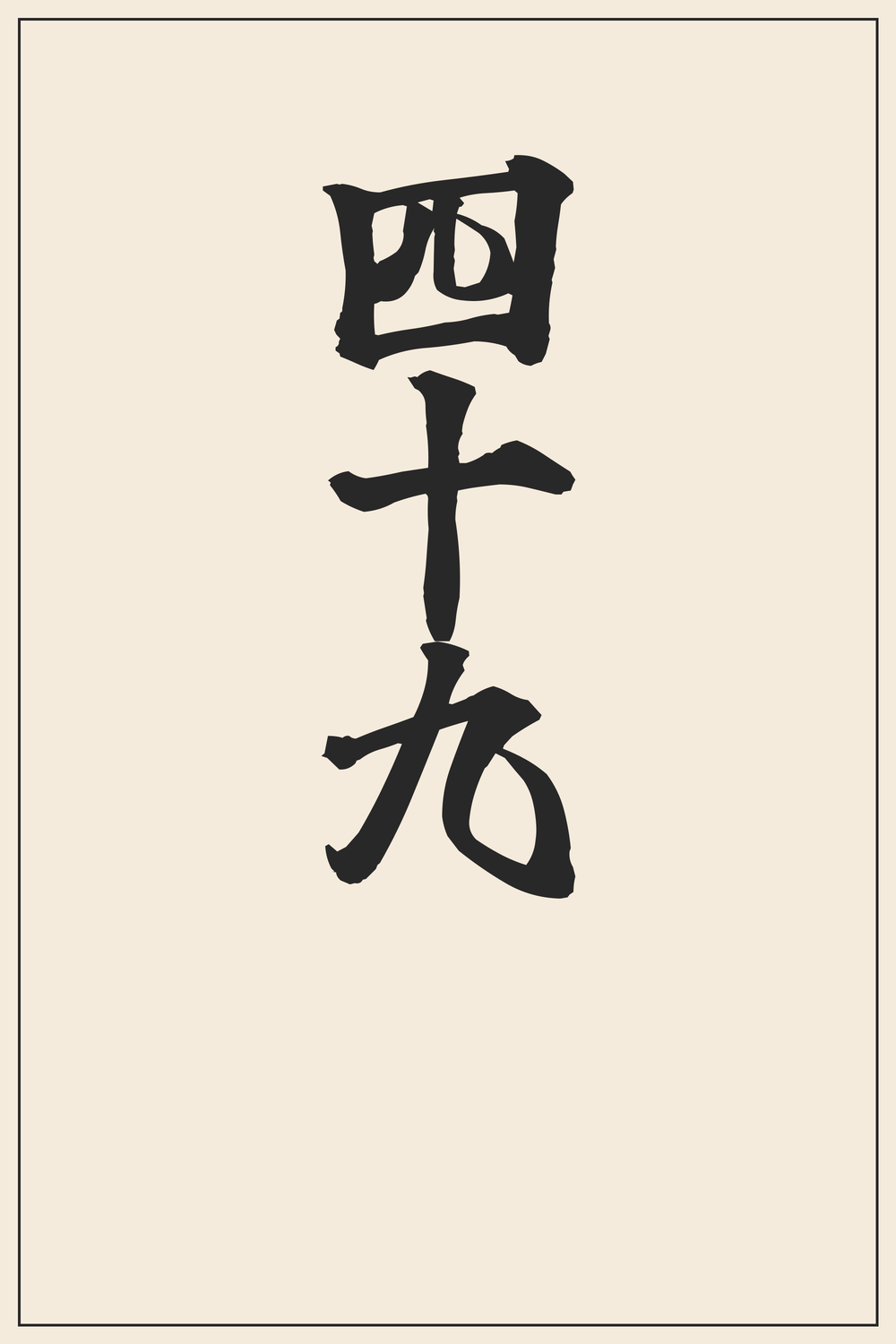
The Kanji combination 四十九 represents the number forty-nine, a seemingly simple numerical value that carries a profoundly negative cultural nuance in Japan. Far from being a mere count, its reading evokes concepts of death and suffering, making it one of the most inauspicious numbers.
The atmosphere of a Kanji character changes dramatically depending on the font style. A character that looks elegant in a brush style might look bold and modern in a different font.
Recommendation:
Since a tattoo is permanent, we strongly recommend comparing various font styles beyond what is shown here. Use our designs as a trusted reference for the correct structure, but feel free to explore different artistic variations to find the perfect match for your vision.
The Deep Meaning Behind 四十九
The Kanji 四十九 is a straightforward compound representing the numerical value of forty-nine. It combines 四 (four), 十 (ten), and 九 (nine) to construct the number. While each character holds an independent meaning, their combination here is purely for numerical representation.
In Japanese culture, the number forty-nine is fraught with negative connotations. Its reading, ‘shi-ku’ (し‐く), is a homophone for ‘死苦’ (death and suffering). This association makes it one of the most avoided numbers, similar to the Western aversion to ‘thirteen’. Consequently, items or events associated with ’49’ are often considered bad omens, and it is rarely used in positive contexts.
Kanji Breakdown
To understand the components of this numerical Kanji, we look at each individual character:
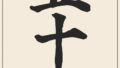
Meaning: Four. This Kanji itself is considered unlucky due to its ‘shi’ reading, which is a homophone for ‘death’ (死). It depicts an enclosure with four lines, symbolizing the number.
Meaning: Ten. Representing the base number ten, this Kanji is a simple cross, symbolizing completeness or entirety within the decimal system. It is a neutral numerical component.
Meaning: Nine. Similar to ‘four’, the ‘ku’ reading of this Kanji is considered unlucky as it is a homophone for ‘suffering’ or ‘agony’ (苦). It visually originated from an ancient form of a bent arm, though its current form simply represents the number.
Conclusion
The Kanji combination 四十九, meaning forty-nine, carries a significant cultural weight due to its inauspicious phonetic association with ‘death and suffering’. Its presence is often seen as a harbinger of misfortune rather than a symbol of strength or beauty.
For those considering a Kanji tattoo, it is highly advisable to avoid 四十九. While numbers can hold personal significance, the widespread negative interpretation of ‘shi-ku’ could lead to misunderstandings or be viewed as an unfortunate choice, negating any positive intention one might have had.
Comments