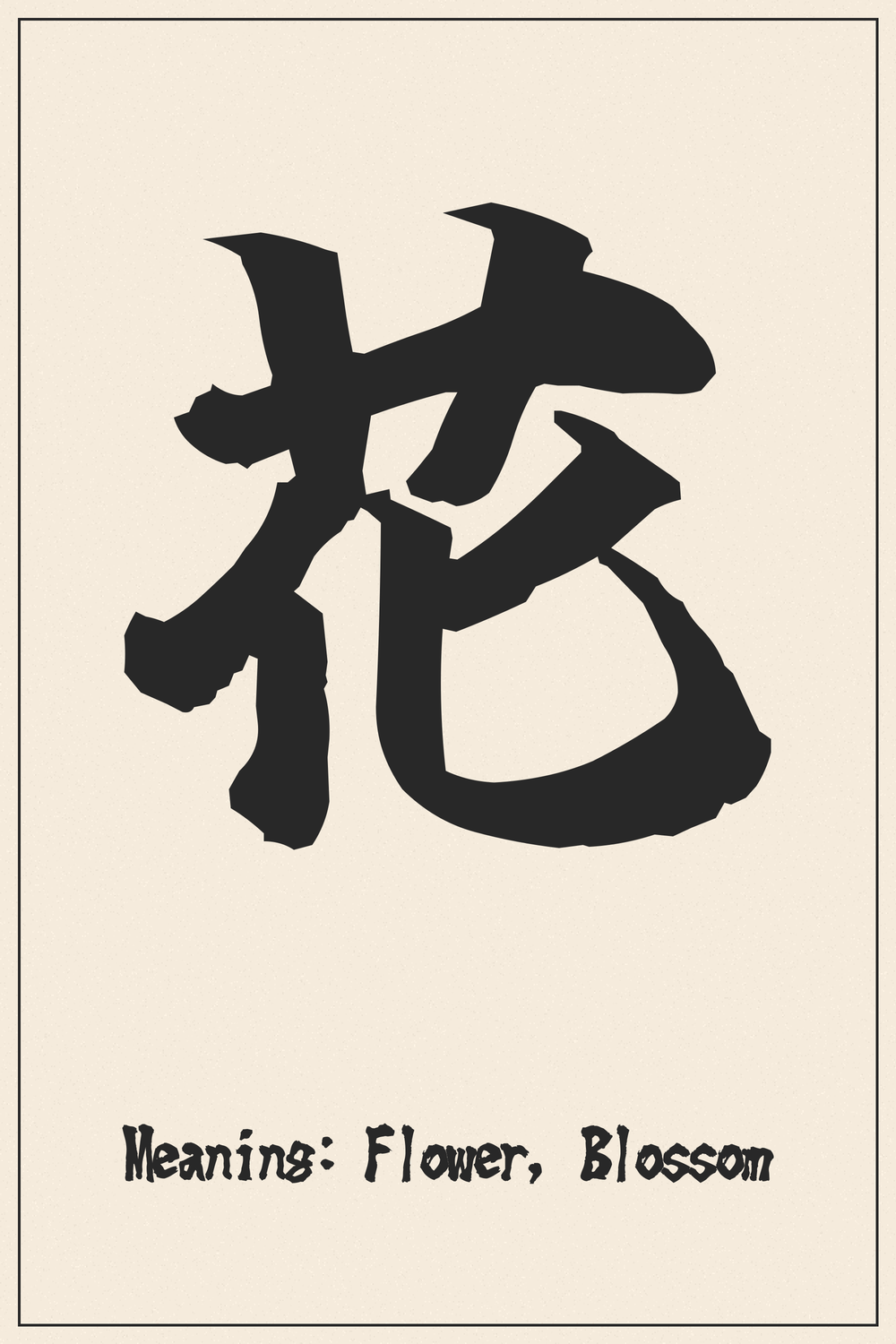
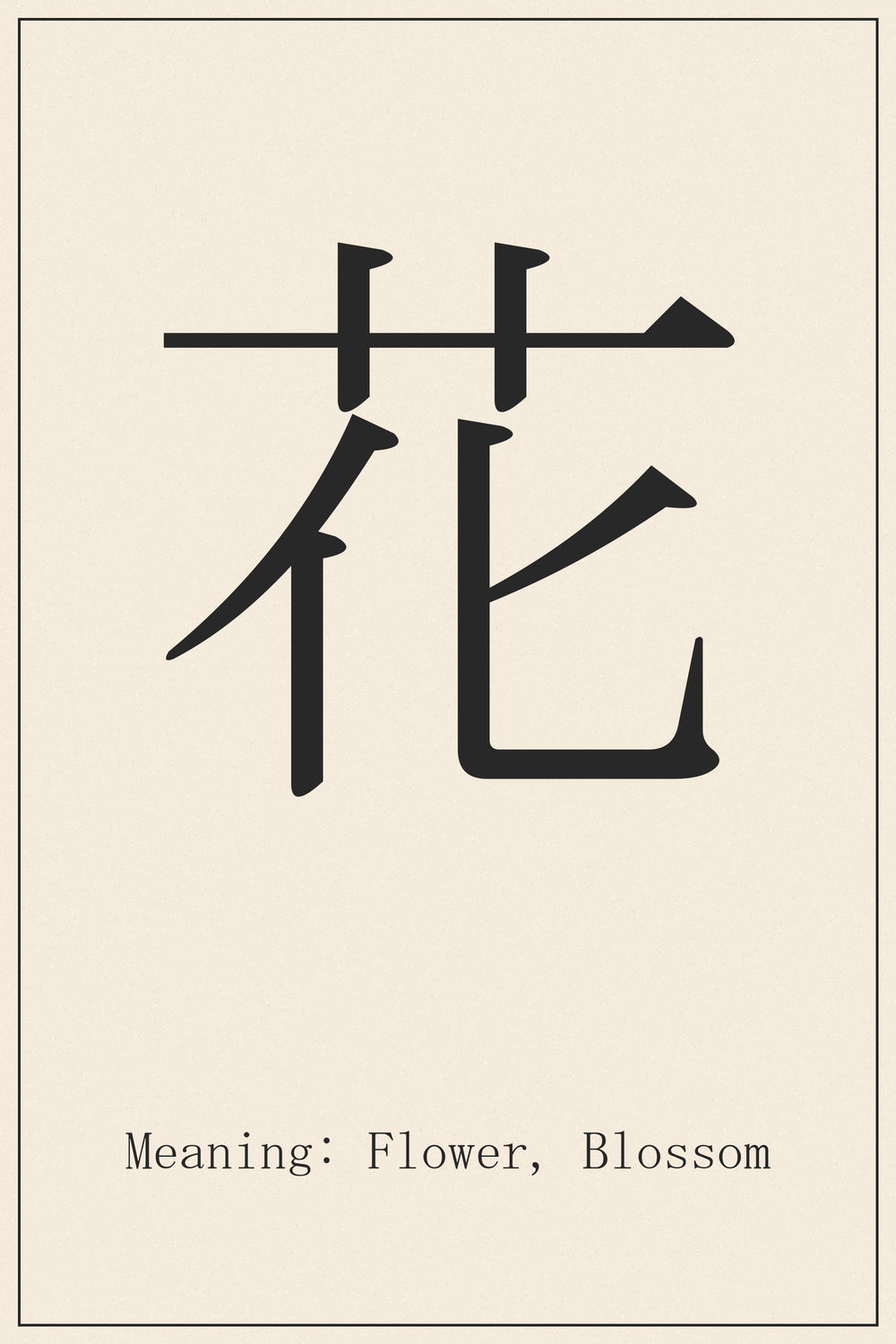
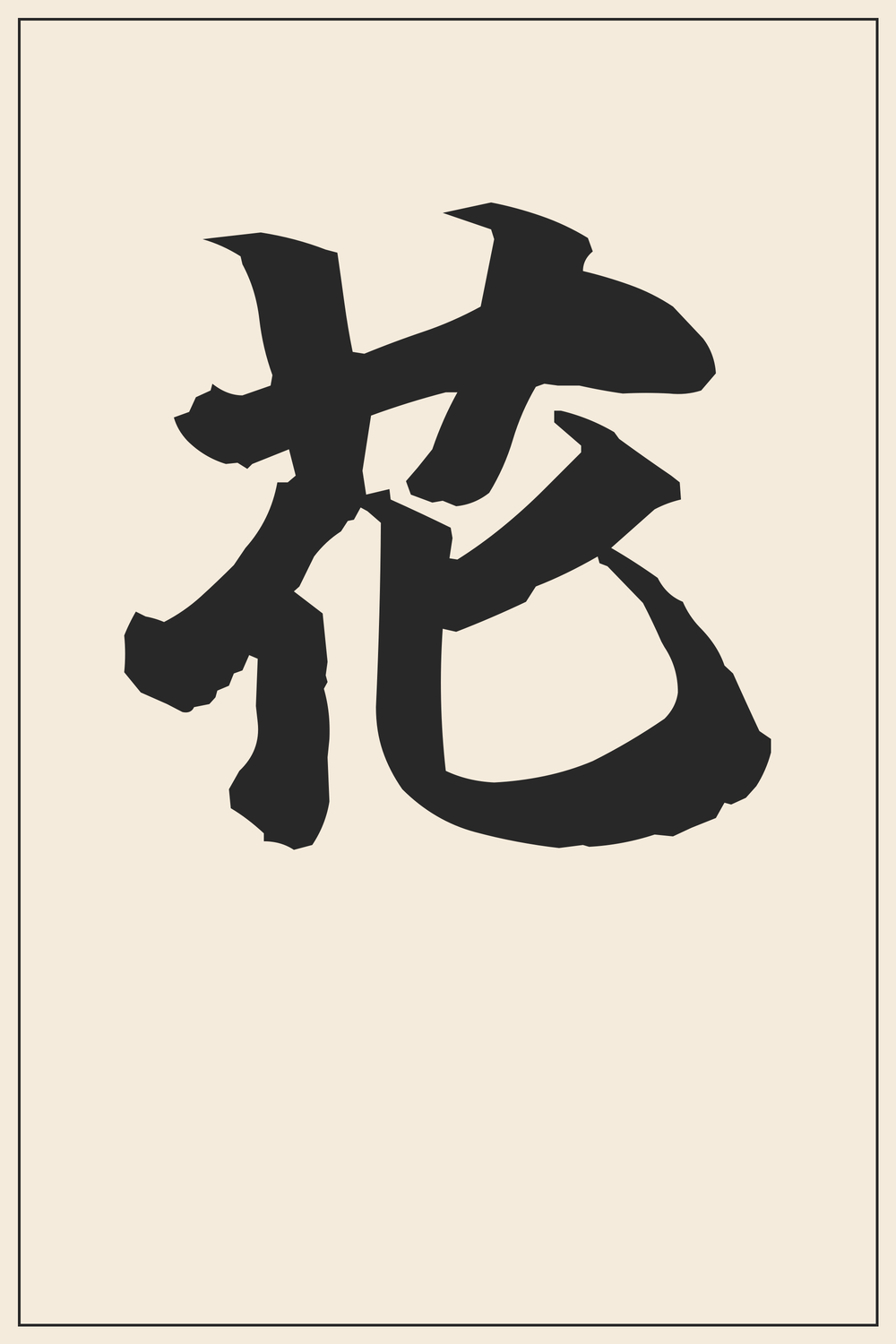
The kanji 花 (Hana) blossoms with meaning, representing not just a flower but the very essence of beauty, transient existence, and the vibrant cycles of nature. It’s a powerful symbol cherished across cultures for its delicate yet profound implications.
The atmosphere of a Kanji character changes dramatically depending on the font style. A character that looks elegant in a brush style might look bold and modern in a different font.
Recommendation:
Since a tattoo is permanent, we strongly recommend comparing various font styles beyond what is shown here. Use our designs as a trusted reference for the correct structure, but feel free to explore different artistic variations to find the perfect match for your vision.
The Deep Meaning Behind 花
The kanji 花 (Hana) beautifully illustrates its meaning through its composition. It combines the radical 艹 (kusa-kamuri), signifying “grass” or “plant,” with the component 化 (ka), meaning “to change” or “to transform.” This combination visually represents a plant undergoing a transformation, specifically into its blooming state, capturing the essence of a flower coming into its full beauty.
In Japanese culture, 花 (Hana) holds immense significance, transcending its literal meaning. It is deeply associated with concepts like mono no aware (the pathos of things), reflecting an appreciation for ephemeral beauty and the bittersweet understanding of impermanence. Flowers, particularly cherry blossoms (桜), symbolize the fleeting nature of life, celebrated for their brief, magnificent bloom before gracefully falling. This reverence for natural cycles makes 花 a profound emblem of life’s beauty and its inherent impermanence.
Kanji Breakdown
To fully appreciate 花 (Hana), understanding its constituent parts illuminates its deep meaning.
Meaning: Grass/Plant. This radical is a common indicator that the kanji relates to plants, herbs, or vegetation. In 花, it grounds the character in the botanical world, signifying its origin from a plant.
Meaning: Change/Transform. This component suggests a process of alteration or development. When combined with the plant radical, it denotes the transformation from a mere plant into a blooming flower, symbolizing growth, beauty, and the cycle of nature.
Conclusion
Choosing the kanji 花 (Hana) for a tattoo is a beautiful tribute to the enduring power of nature’s artistry and the profound philosophy of impermanence. It is a timeless symbol that speaks to the heart, reminding us to cherish the vibrant moments of life and appreciate the elegance of change.
Embrace 花 as a personal emblem of beauty, growth, and the delicate dance of existence, a constant reminder of nature’s endless cycle and the exquisite brevity of every bloom.
Comments