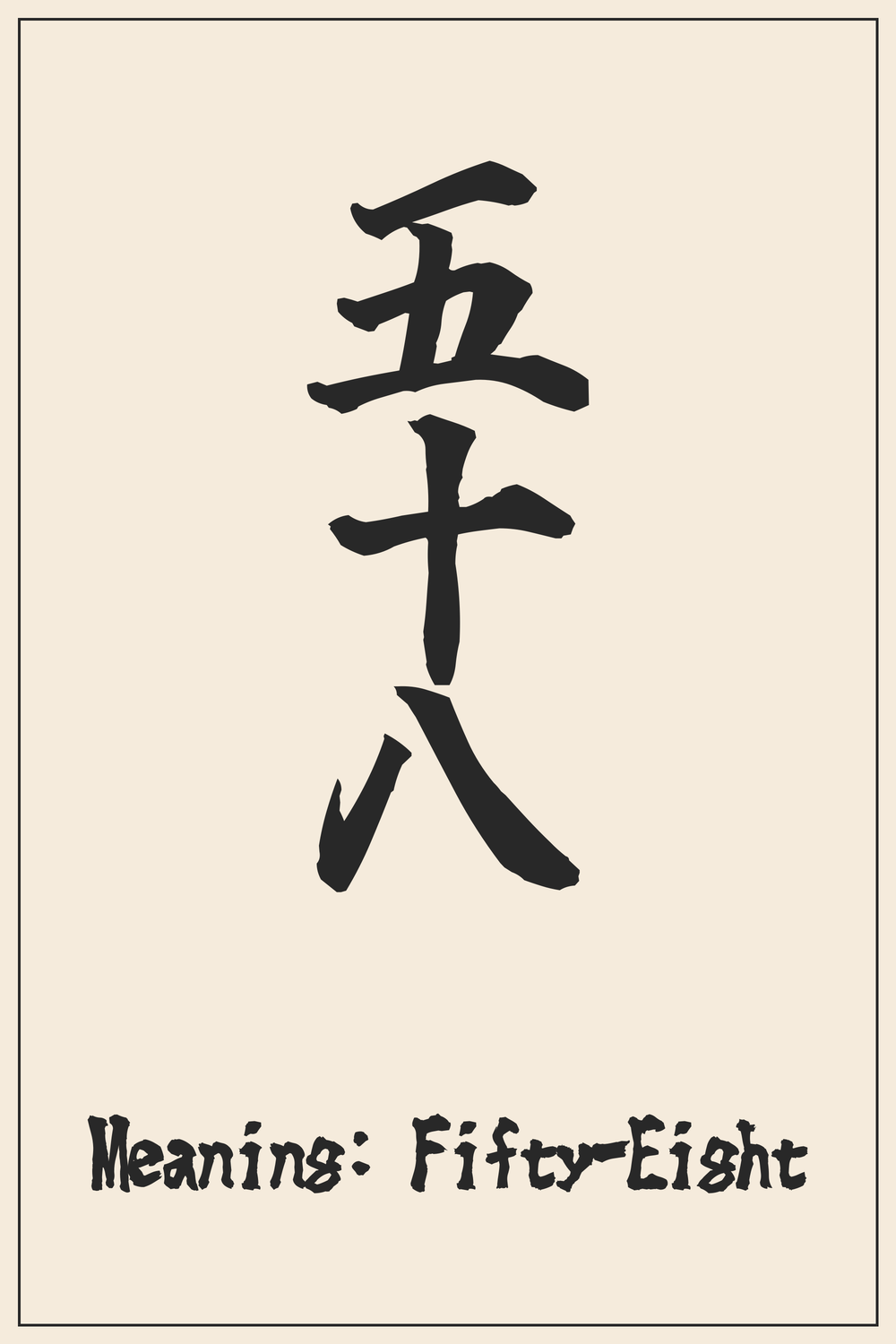
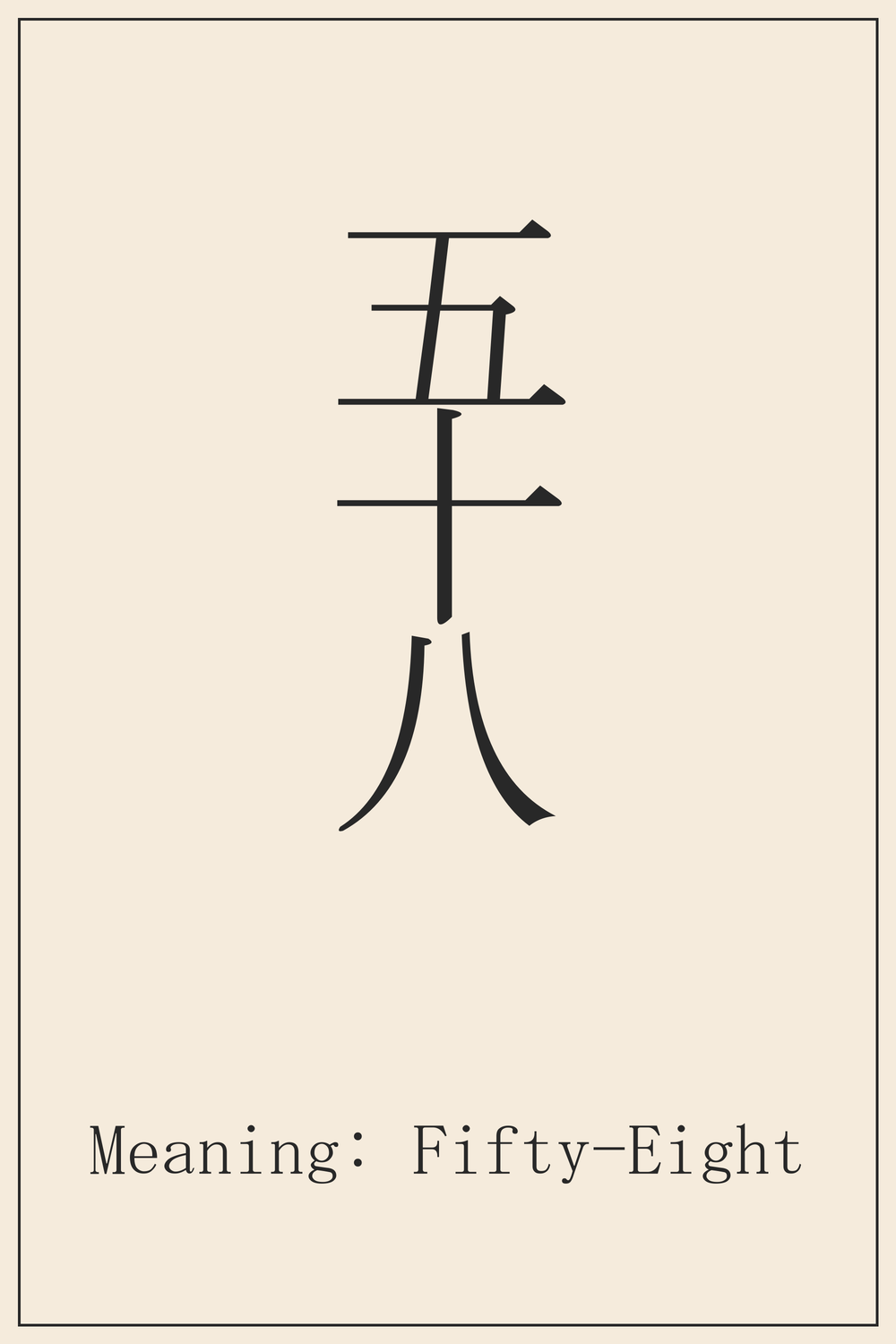
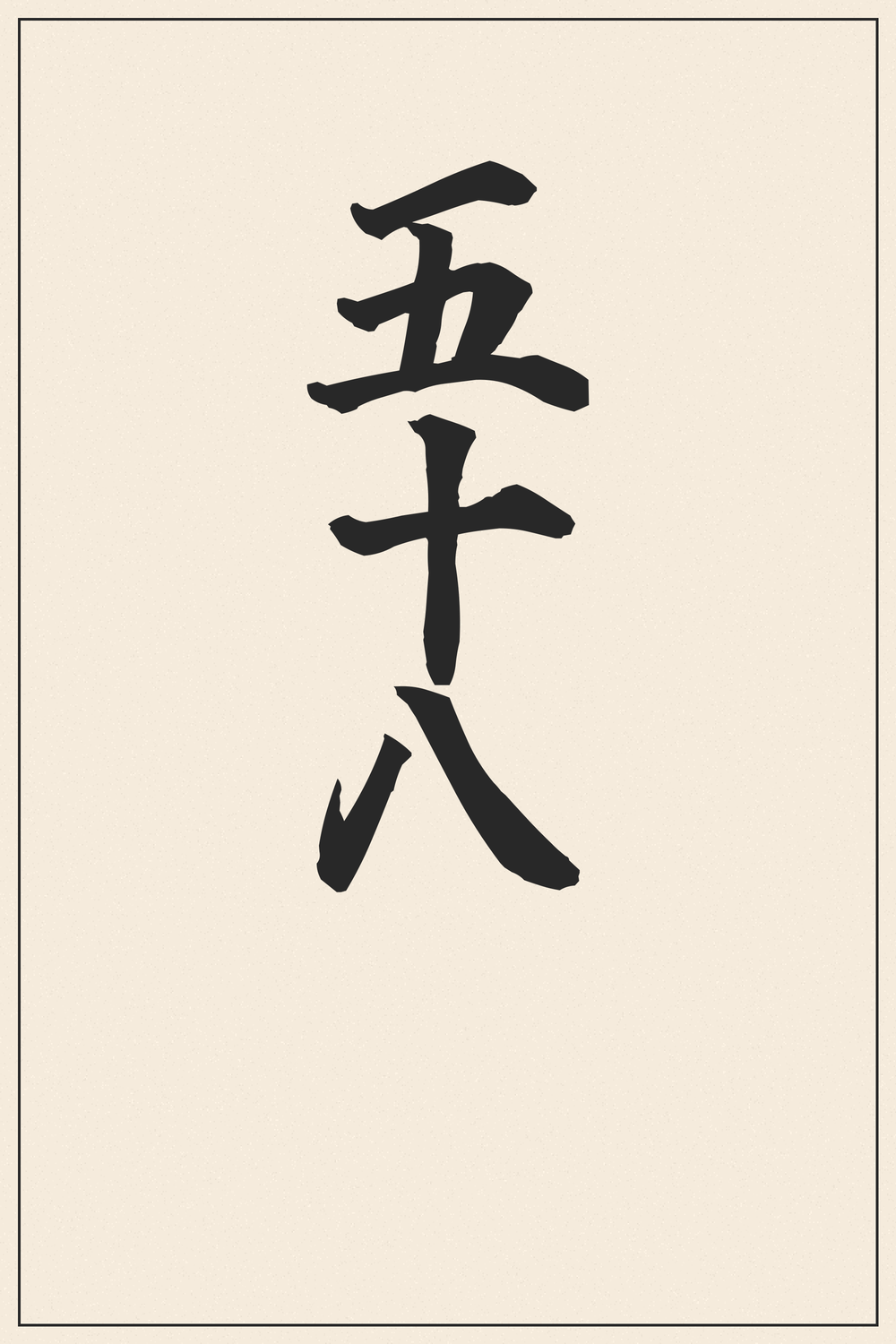
The Kanji compound “Gojuuhachi” (五十八) represents the number fifty-eight, a simple yet potent numerical value. In Japanese culture, numbers can carry specific associations, often tied to personal milestones or sequences.
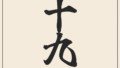
The atmosphere of a Kanji character changes dramatically depending on the font style. A character that looks elegant in a brush style might look bold and modern in a different font.
Recommendation:
Since a tattoo is permanent, we strongly recommend comparing various font styles beyond what is shown here. Use our designs as a trusted reference for the correct structure, but feel free to explore different artistic variations to find the perfect match for your vision.
The Deep Meaning Behind 五十八
The Kanji for numbers are among the most fundamental characters in Japanese, directly derived from ancient Chinese pictograms or simple ideograms representing quantities. 五 (go), 十 (juu), and 八 (hachi) represent five, ten, and eight respectively, combined to form the compound number fifty-eight.
While “fifty-eight” itself doesn’t hold profound philosophical meaning in Japanese culture like some auspicious numbers, it can signify profound personal milestones such as an age, an anniversary, or a specific count important to an individual’s life journey. The number’s significance is often deeply personal, marking a particular event or period in one’s life narrative.
Kanji Breakdown
Let’s explore the individual components that form the number fifty-eight.
Meaning: Five
This character is an ancient ideogram representing the concept of ‘five’. Its simple, balanced strokes suggest completeness or a central point, often linked to the five elements or senses in various philosophical traditions.
Meaning: Ten
A simple cross shape, 十 historically represented a bundle of ten sticks or a complete count. It signifies completeness or a full cycle, serving as a base for counting in many number systems.
Meaning: Eight
The character 八 is thought to depict a division or separation, though it primarily functions as the number ‘eight’. In some Asian cultures, eight is considered a lucky number associated with prosperity and good fortune due to its phonetic similarity to words meaning ‘wealth’.
Conclusion
The Kanji 五十八, representing fifty-eight, offers a straightforward yet personally significant numerical expression. It serves as a concise symbol for a specific point in time, a memorable age, or a cherished count.
Choosing “Gojuuhachi” for a tattoo can be a powerful way to commemorate a unique milestone or personal memory. Its clear, balanced characters ensure an elegant and readable design, making it a meaningful and aesthetically pleasing choice for those celebrating a particular juncture in their life’s journey.
Comments