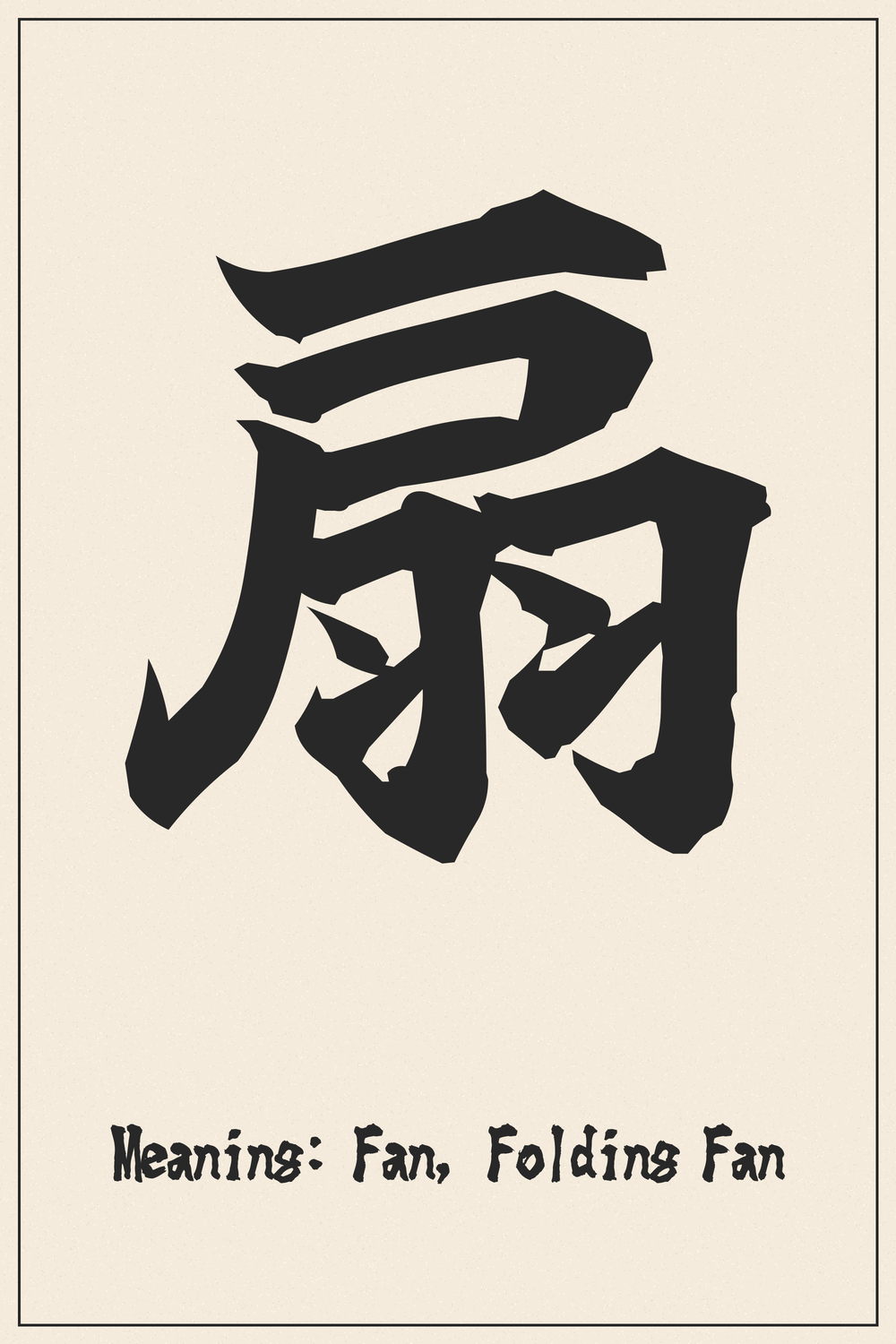
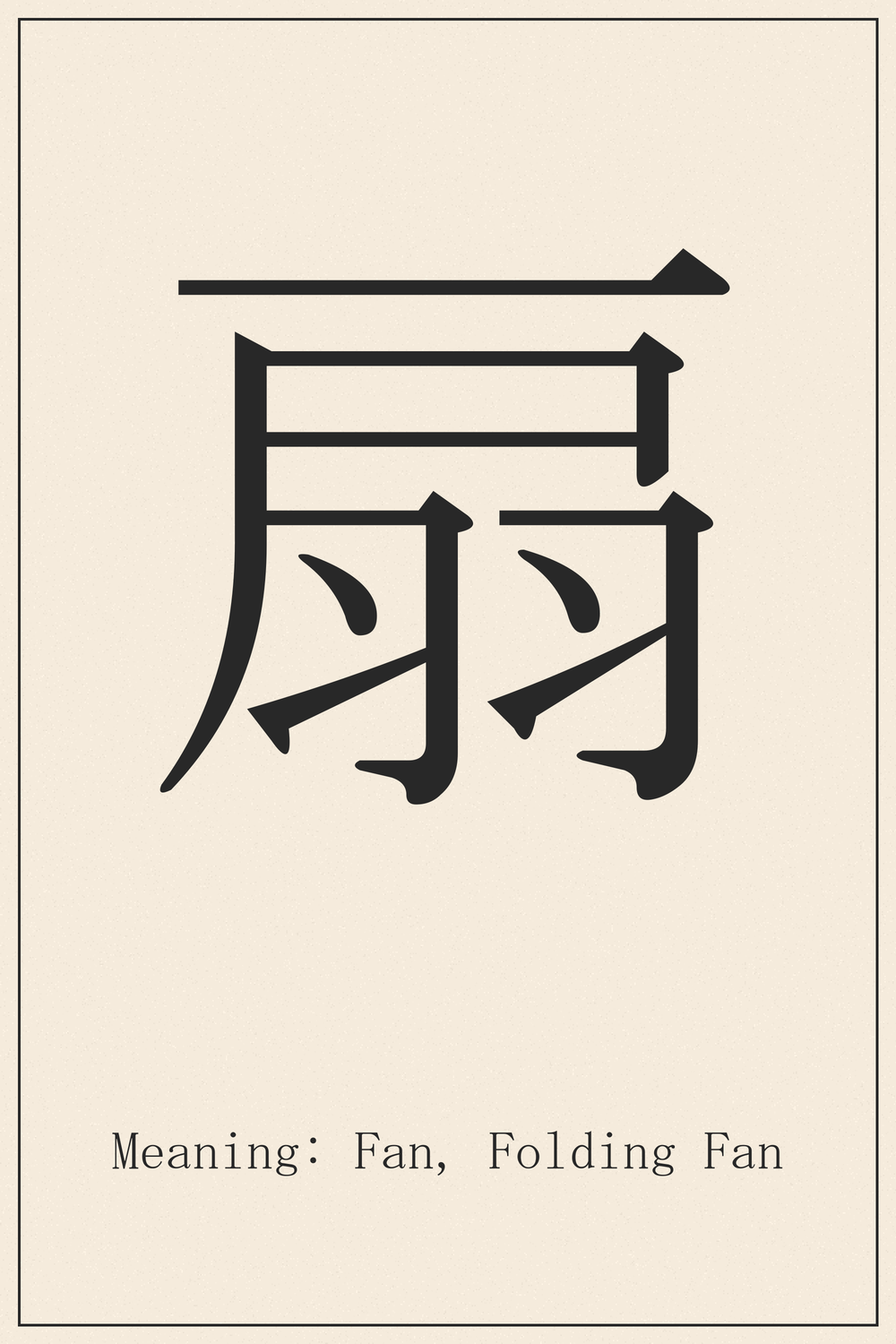
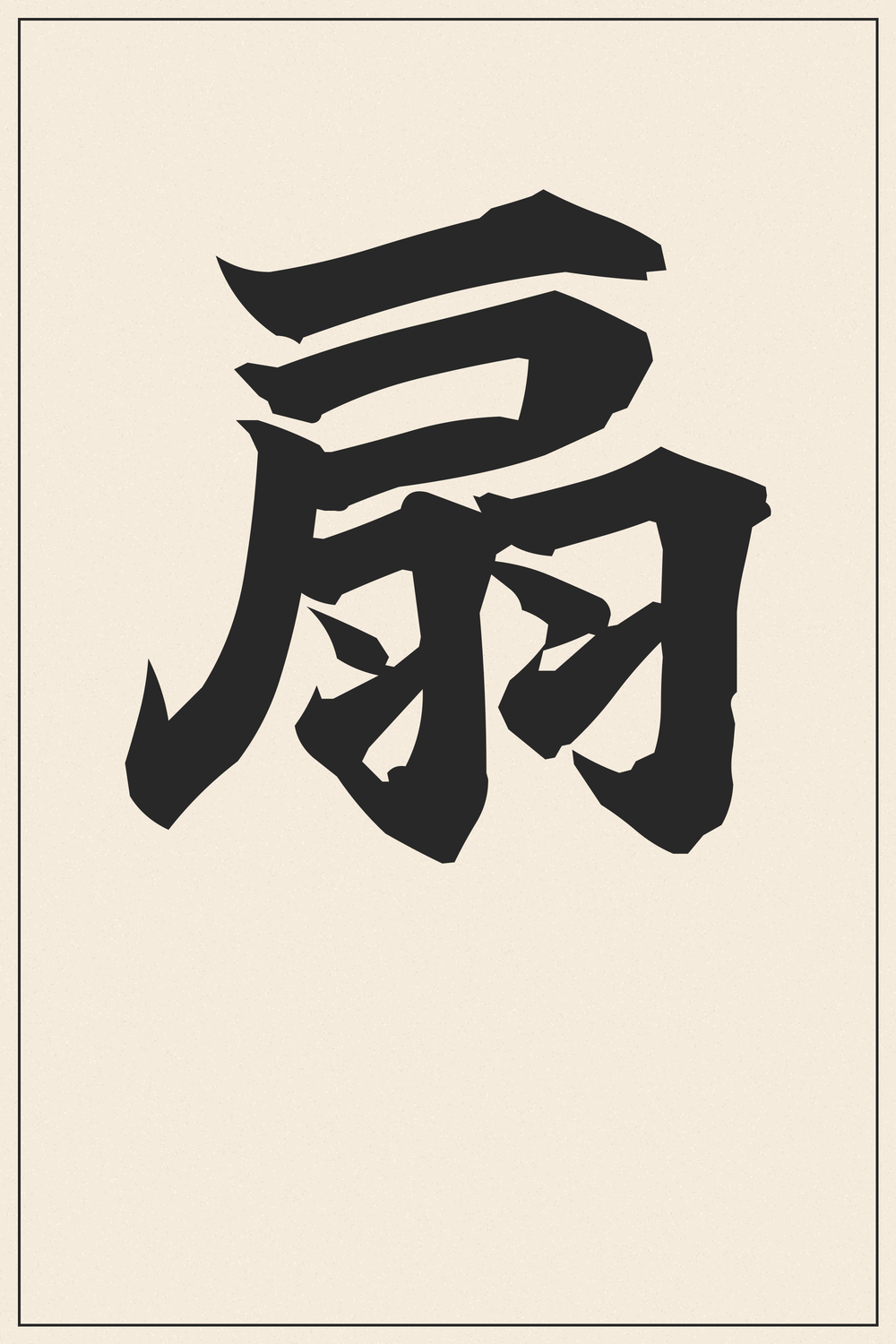
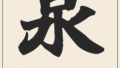
The Kanji 扇 embodies the elegance and grace of traditional Japanese culture. It represents not just an object but a timeless symbol of refinement and artistic expression.
The atmosphere of a Kanji character changes dramatically depending on the font style. A character that looks elegant in a brush style might look bold and modern in a different font.
Recommendation:
Since a tattoo is permanent, we strongly recommend comparing various font styles beyond what is shown here. Use our designs as a trusted reference for the correct structure, but feel free to explore different artistic variations to find the perfect match for your vision.
The Deep Meaning Behind 扇
The character 扇 (ōgi) originates from pictographs associated with elements that create movement or air. Its form suggests a hand moving something to generate wind, later evolving to specifically represent the hand-held fan, emphasizing its function.
In Japan, the fan (sensu or uchiwa) is more than a simple cooling device; it’s a significant cultural artifact. Used in traditional dances, tea ceremonies, and as part of formal attire, fans symbolize refinement, social status, and artistic expression, often adorned with intricate designs.
Kanji Breakdown
The Kanji 扇 is composed of two primary components, each contributing to its overall meaning and visual representation.
Meaning: Door, House. This component often represents a single leaf door or a shelter, suggesting a pivot or a fixed point from which something moves.
Meaning: Feather, Wing. This component evokes the idea of movement, lightness, and the ability to generate air currents, much like a bird’s wing.
Conclusion
The Kanji 扇 elegantly captures the essence of the Japanese fan, a symbol steeped in tradition, art, and a gentle connection to nature’s breeze. It speaks of graceful movement, cultural heritage, and the beauty of functional design.
Choosing 扇 for a tattoo signifies an appreciation for cultural depth and timeless elegance. Its clear lines and rich history make it a meaningful and aesthetically pleasing choice, embodying a quiet sophistication that resonates with traditional Japanese artistry.
Comments