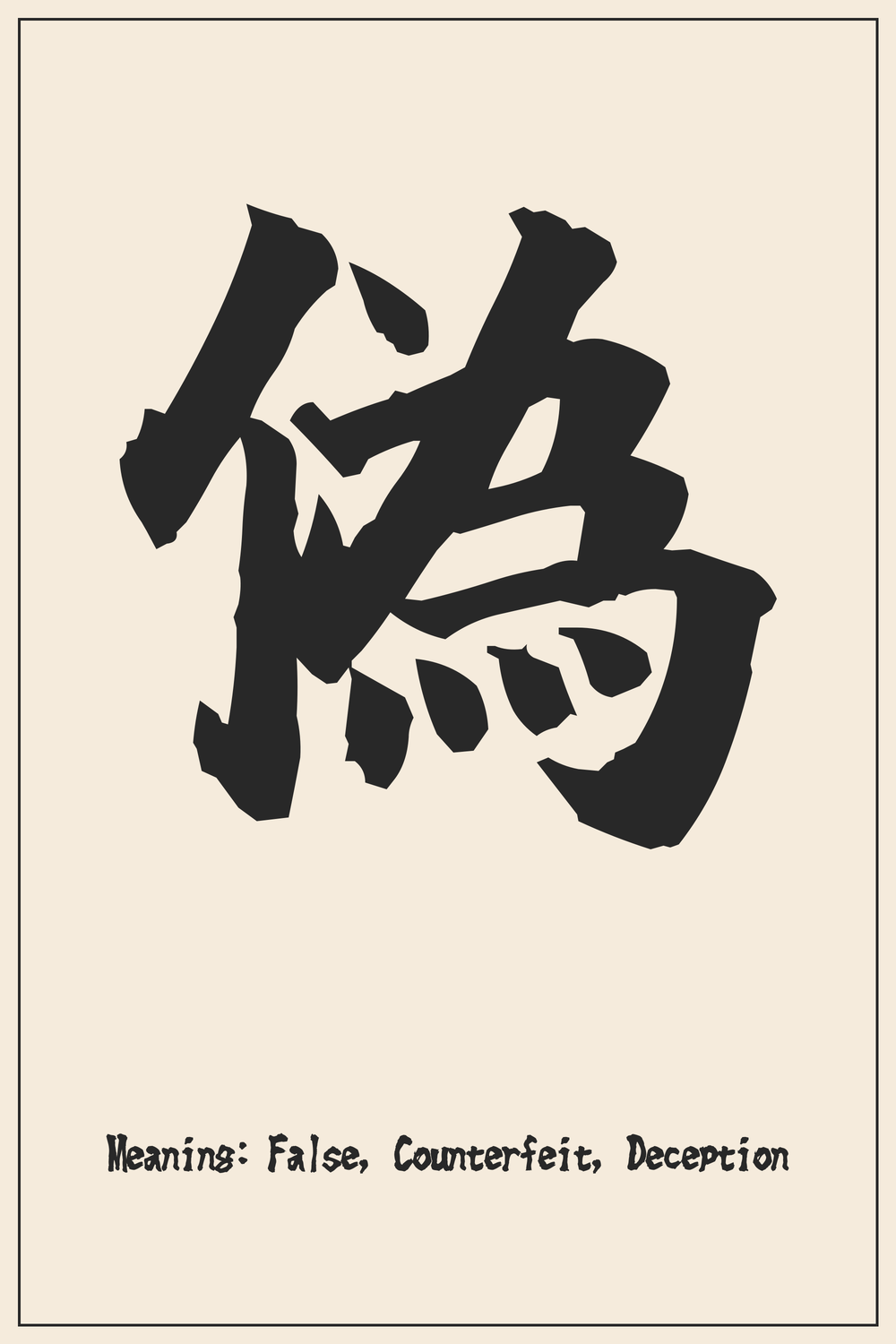
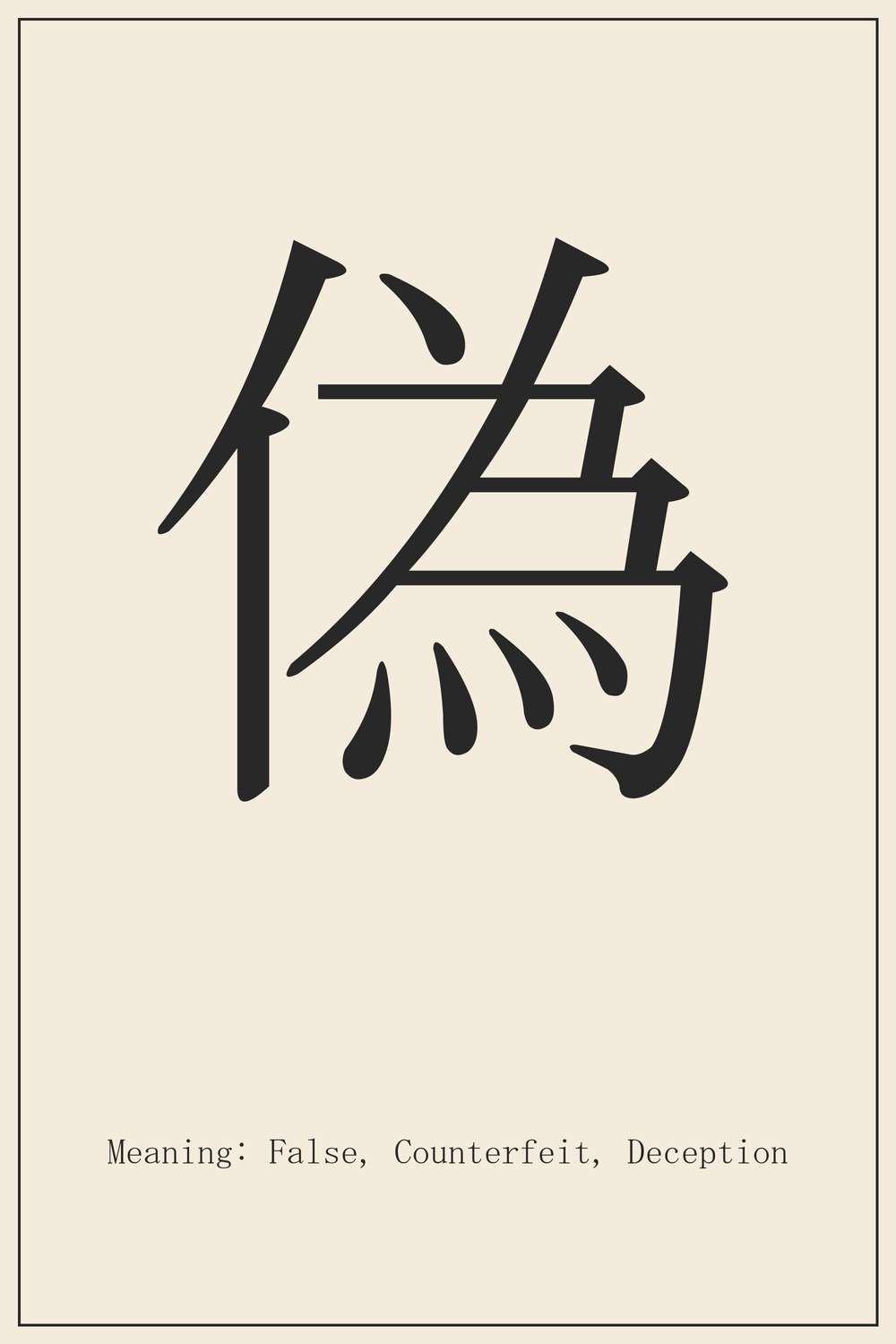
The concept of ‘falsehood’ challenges perception and trust, often carrying significant weight in moral and social contexts. The Kanji 偽 encapsulates the nuanced aspects of illusion and deception, revealing deeper truths about human nature’s imperfections.
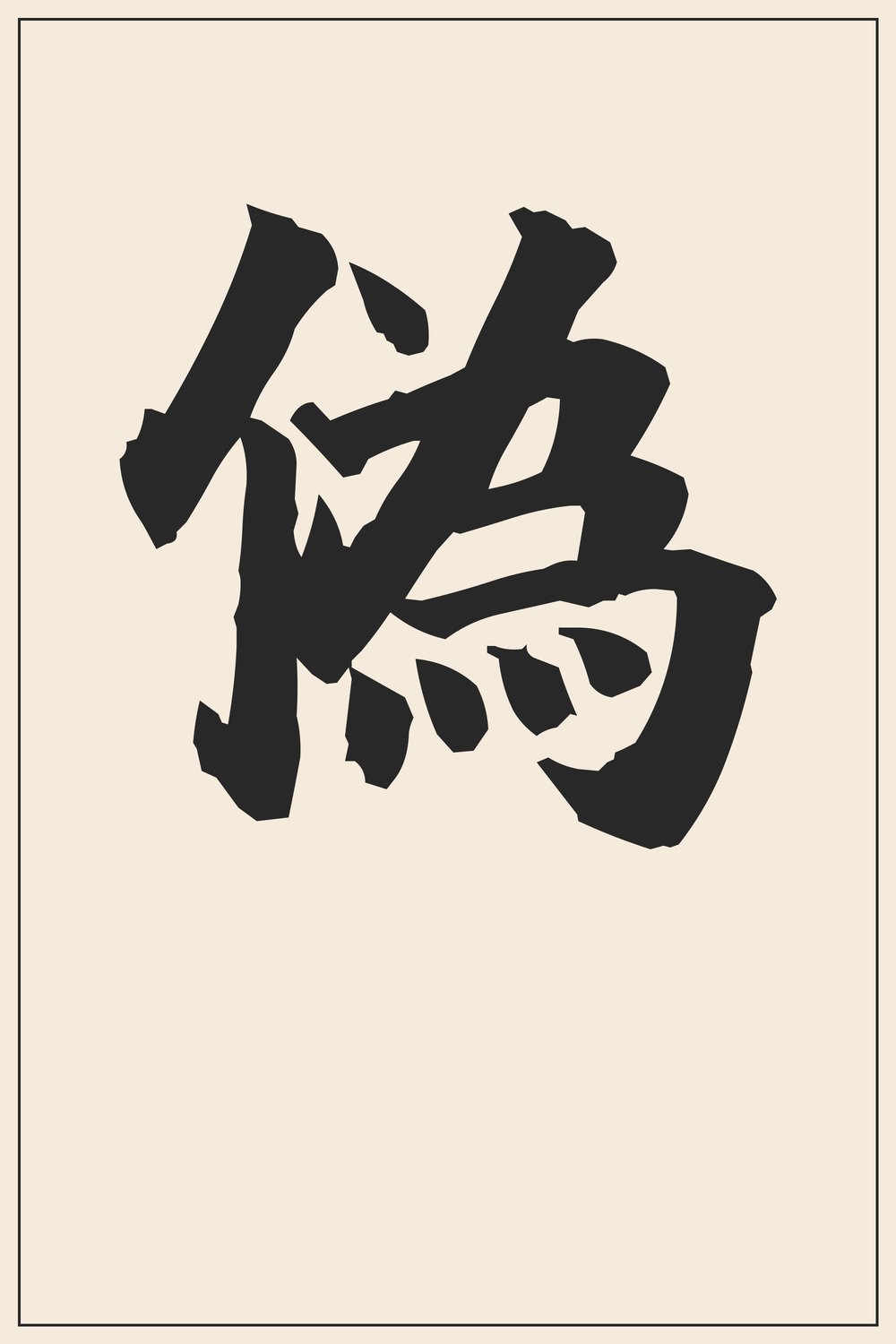
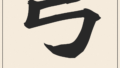
The atmosphere of a Kanji character changes dramatically depending on the font style. A character that looks elegant in a brush style might look bold and modern in a different font.
Recommendation:
Since a tattoo is permanent, we strongly recommend comparing various font styles beyond what is shown here. Use our designs as a trusted reference for the correct structure, but feel free to explore different artistic variations to find the perfect match for your vision.
The Deep Meaning Behind 偽
The Kanji 偽 (GI, itsuwaru) inherently signifies concepts of falsehood, counterfeit, and deception. Its etymological roots convey the act of ‘making’ or ‘doing’ something that is not genuine, often implying an intentional misrepresentation or artificiality. This character encapsulates the subtle yet profound distinction between authenticity and imitation.
In Japanese culture, while honesty (誠実 – seijitsu) is highly valued, the recognition of falsehood is also crucial for discerning truth. 偽 appears in terms like 偽善 (gizen – hypocrisy) and 偽造 (gizō – forgery), highlighting its association with moral and ethical infringements. It serves as a reminder of the importance of discernment and integrity in human interactions.
Kanji Breakdown
The character 偽 is composed of two significant parts, each contributing to its overall meaning of falsehood and deception.
Person Radical (ninben): This is the radical for ‘person’ (人), appearing in its left-side variant form. It often indicates that the meaning of the character relates to human actions or characteristics.
To Do, To Make (i, suru): This component conveys the idea of ‘doing,’ ‘making,’ or ‘acting.’ When combined with the ‘person’ radical, it suggests a person’s action of manufacturing something that is not genuine or truthful.
Conclusion
The Kanji 偽, meaning ‘false’ or ‘deception,’ is a character that speaks to the intricate layers of truth and illusion in the human experience. It serves as a powerful symbol of unauthenticity, imitation, and the act of misrepresentation, reminding us of the constant need for truth and honesty.
Given its inherently negative connotation, a tattoo of 偽 would carry a strong message of untruth or artificiality. For those considering permanent body art, it is crucial to reflect on whether such a meaning aligns with their personal values, as it typically represents something to be avoided rather than embraced.
Comments