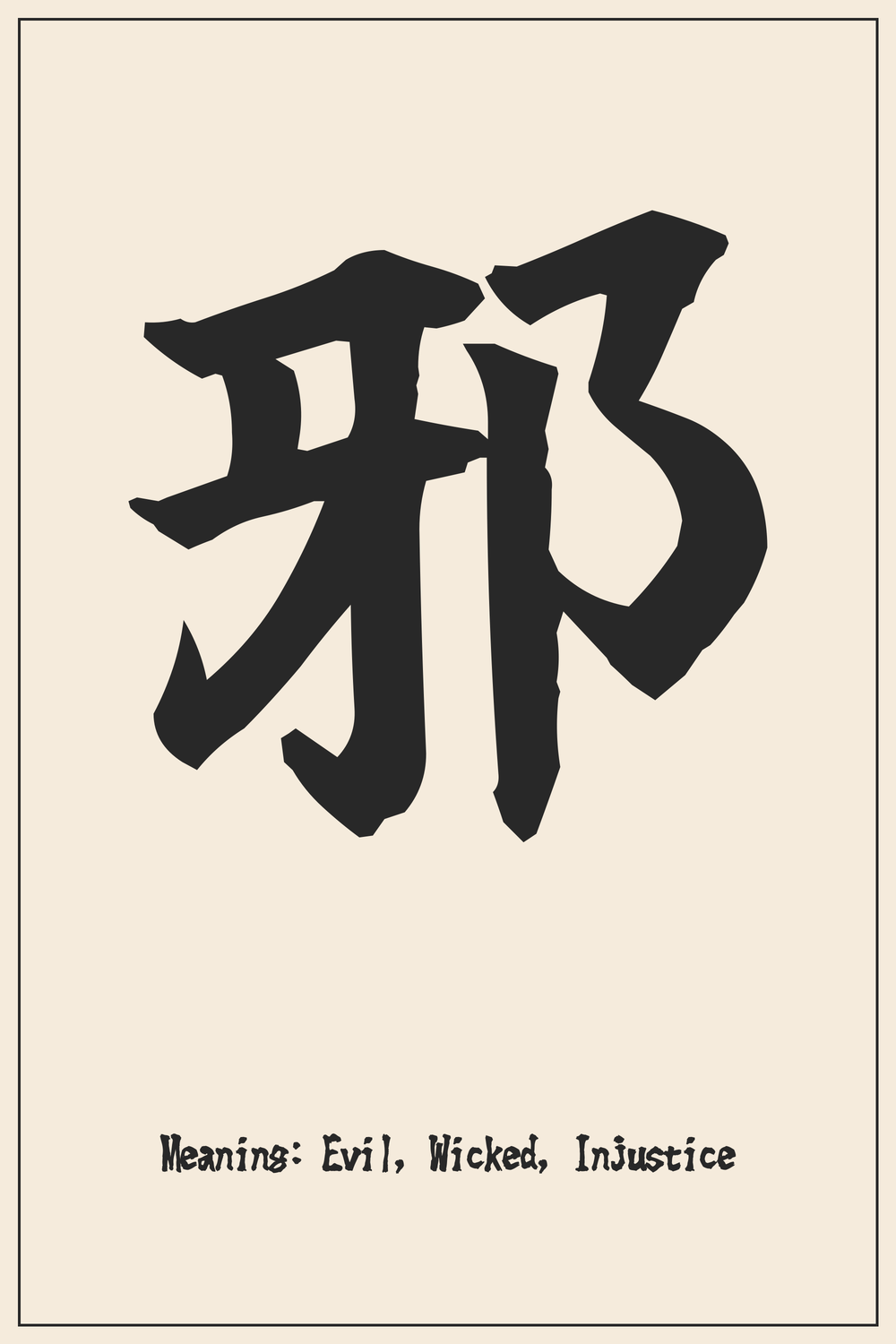
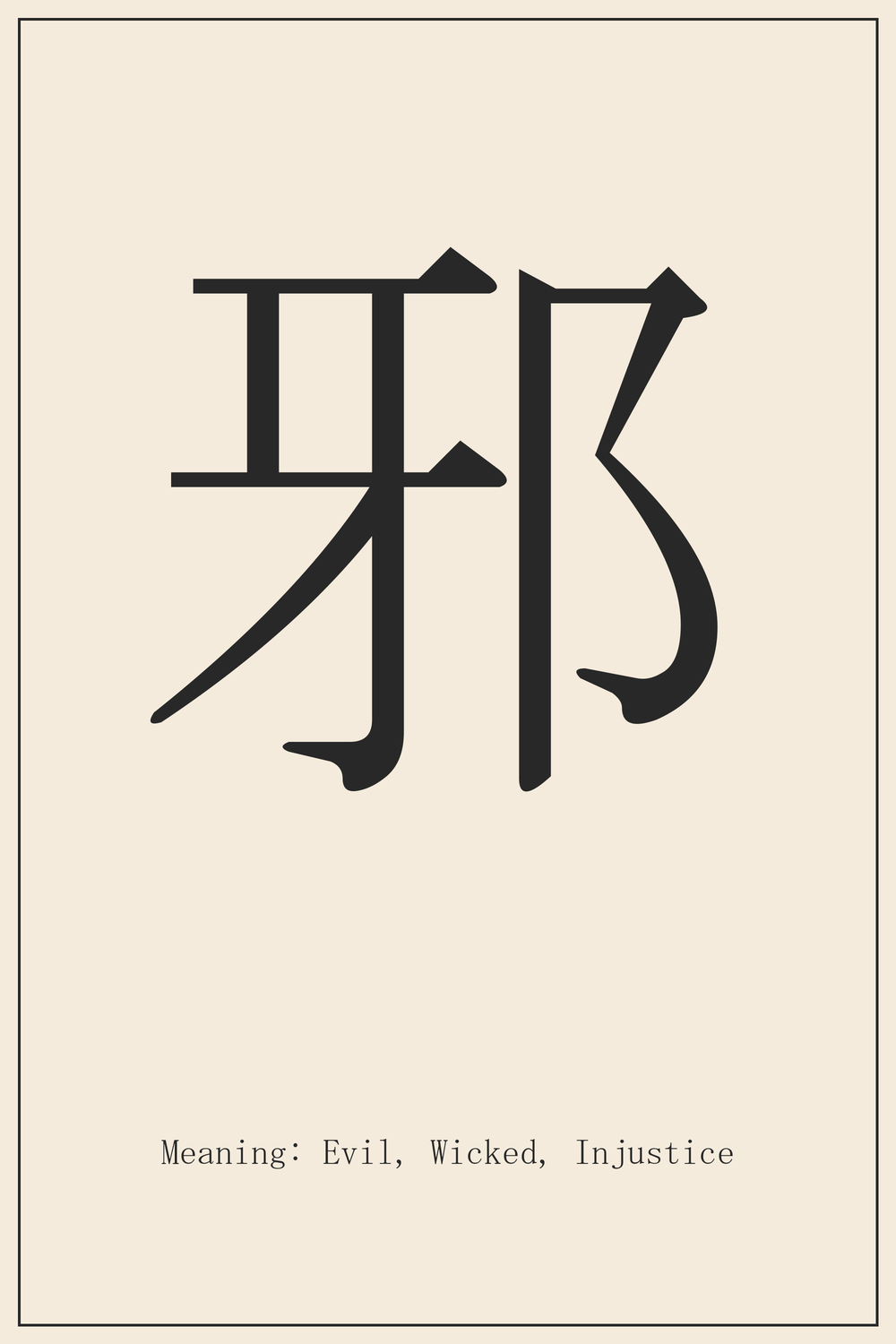
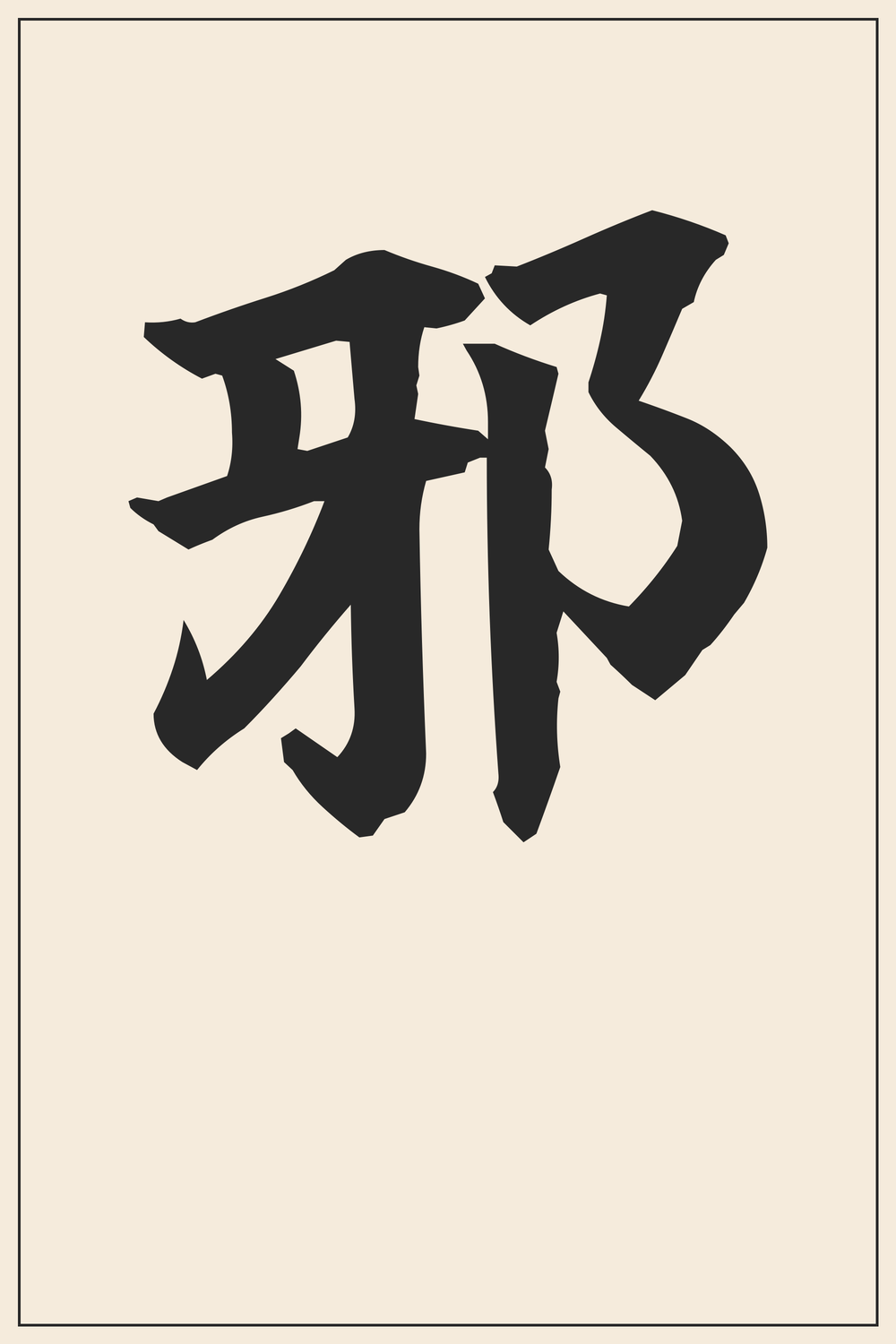
The Kanji 邪 embodies the profound concept of ‘evil’ and ‘wickedness’ in Japanese culture. It serves as a powerful reminder of the darker aspects of human nature and spiritual depravity.
The atmosphere of a Kanji character changes dramatically depending on the font style. A character that looks elegant in a brush style might look bold and modern in a different font.
Recommendation:
Since a tattoo is permanent, we strongly recommend comparing various font styles beyond what is shown here. Use our designs as a trusted reference for the correct structure, but feel free to explore different artistic variations to find the perfect match for your vision.
The Deep Meaning Behind 邪
The character 邪’s ancient origins suggest a meaning rooted in distortion and impropriety. It is believed to have originally depicted a tooth (牙) signifying something jagged or askew, combined with a component that contributed to the idea of deviation. This etymology perfectly captures the essence of something that is not straight or morally upright, leading directly to its meaning of crookedness, impropriety, and ultimately, evil.
In Japanese culture, 邪 (ja) is a fundamental concept used to describe malevolent forces and negative influences. It appears in terms like 邪気 (jaki – evil spirit or sinister atmosphere), 邪神 (jashin – evil god or deity), and 邪念 (janen – evil thoughts or wicked intentions). It is a concept deeply ingrained in religious texts, folklore, and modern narratives across various media, serving as a powerful descriptor for an opposing force to good, purity, and righteousness.
Kanji Breakdown
The kanji 邪 is composed of two primary elements that collectively convey its profound meaning.
Meaning: Tooth, Fang. Often signifying something sharp, jagged, or crooked, it hints at deviation from a straight or pure path, forming the core semantic component of ‘evil’.
Meaning: Left-side Radical (variant of 邑 or 阜). While often phonetic, this component is associated with villages (邑) or mounds (阜), and in this context, it can subtly contribute to the idea of things being askew or not in their proper place within a community or structure.
Conclusion
The Kanji 邪, a potent character representing evil, wickedness, and corruption, carries a profound philosophical weight in Japanese thought. It serves as a constant reminder of the inherent struggle between good and malevolence in the human spirit and the world.
For those who seek a powerful symbol reflecting deep moral concepts or an acknowledgment of the darker side of existence, 邪 offers a striking and thought-provoking choice for a tattoo, imbued with centuries of cultural significance.
Comments