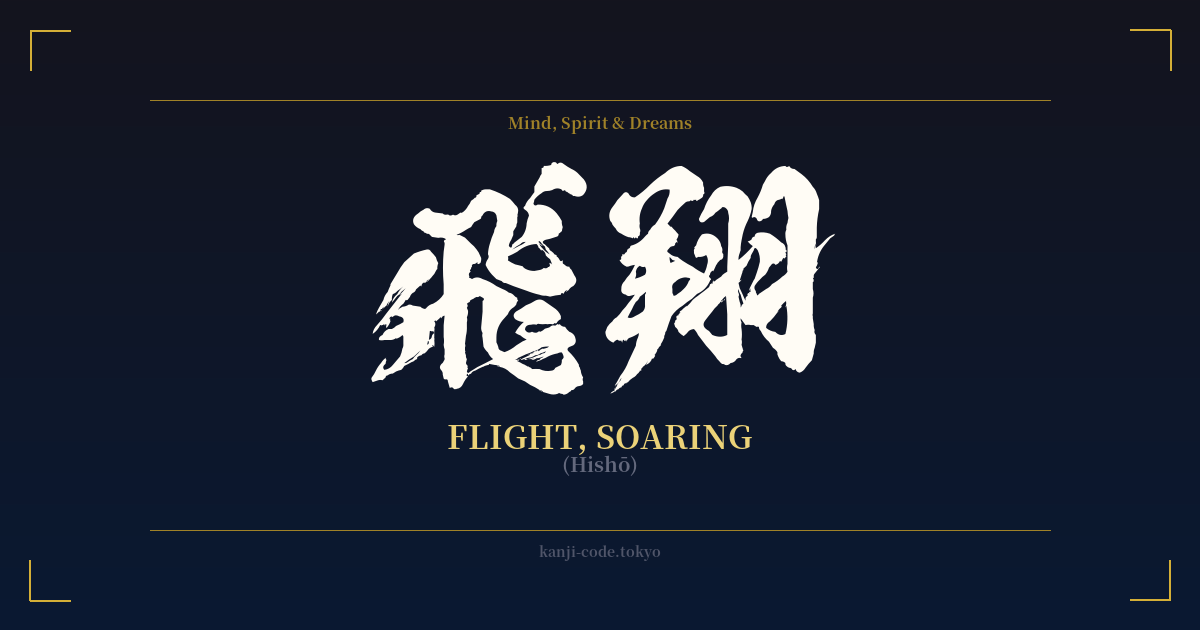
✍️ 飛翔 (Hishō) — Contexto cultural
飛翔 (Hishō) es una palabra japonesa que captura la esencia del vuelo en su forma más majestuosa y poética. Si bien su traducción literal es "vuelo" o "elevarse", su verdadero significado va mucho más allá del acto físico. Hishō evoca la sensación de liberarse de las limitaciones terrenales, alcanzar grandes alturas y desarrollar todo el potencial. No se trata del simple vuelo funcional de un avión comercial, sino del poderoso y elegante vuelo de un águila que aprovecha las corrientes térmicas o del mítico ascenso de un dragón hacia los cielos.
En la cultura japonesa, esta palabra se usa a menudo metafóricamente para describir el rápido ascenso profesional, el florecimiento del talento o un importante avance en la vida. Una empresa podría usar 'Hishō' en su eslogan para simbolizar ambición y crecimiento. Un artista que alcanza la fama repentinamente podría decirse que está dando un «hishō». Esto confiere a la palabra un fuerte sentido de ambición, éxito y la culminación triunfal del trabajo duro.
El poder de Hishō reside en la combinación de sus dos kanji. Si bien ambos caracteres se relacionan con el vuelo, su unión crea un matiz literario más profundo que el que se obtendría con un solo carácter. Es una palabra que se encuentra en la poesía, la literatura y los discursos formales, utilizada para inspirar y transmitir una sensación de grandeza. Esta elevación tonal la convierte en una opción popular para quienes desean expresar una meta personal ambiciosa o un sentimiento de liberación espiritual.
Este concepto está profundamente ligado a las imágenes de criaturas poderosas del folclore de Asia Oriental. Dragones, fénix (不死鳥, fushichō) y grandes aves rapaces son símbolos de fuerza, libertad y buena fortuna, y su vuelo es la máxima expresión de Hishō. Encarnar a Hishō es canalizar el espíritu de estas criaturas: libres, poderosas y con la mirada puesta en el cielo.
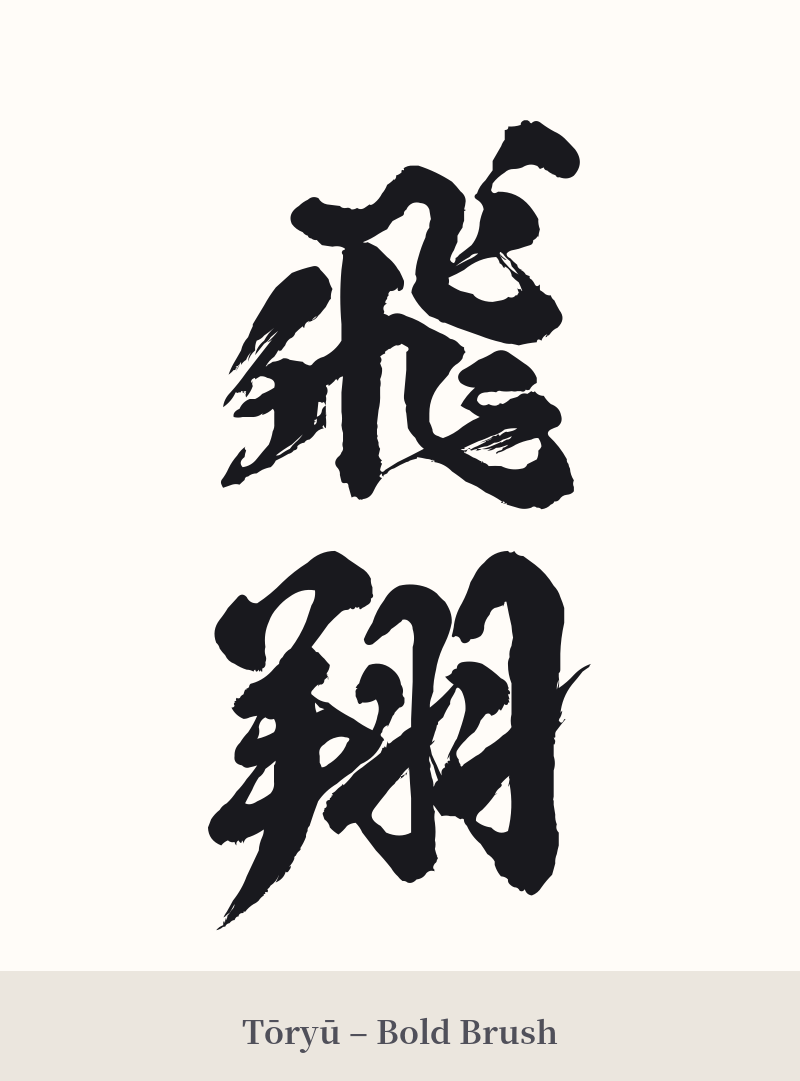
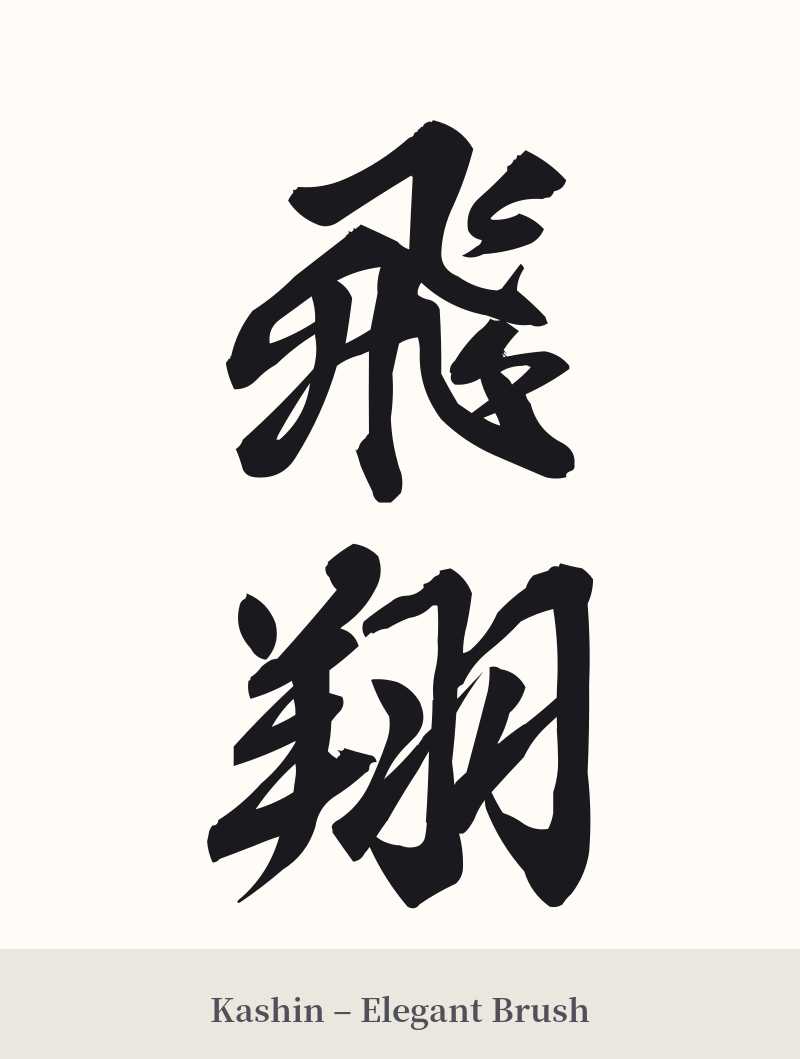
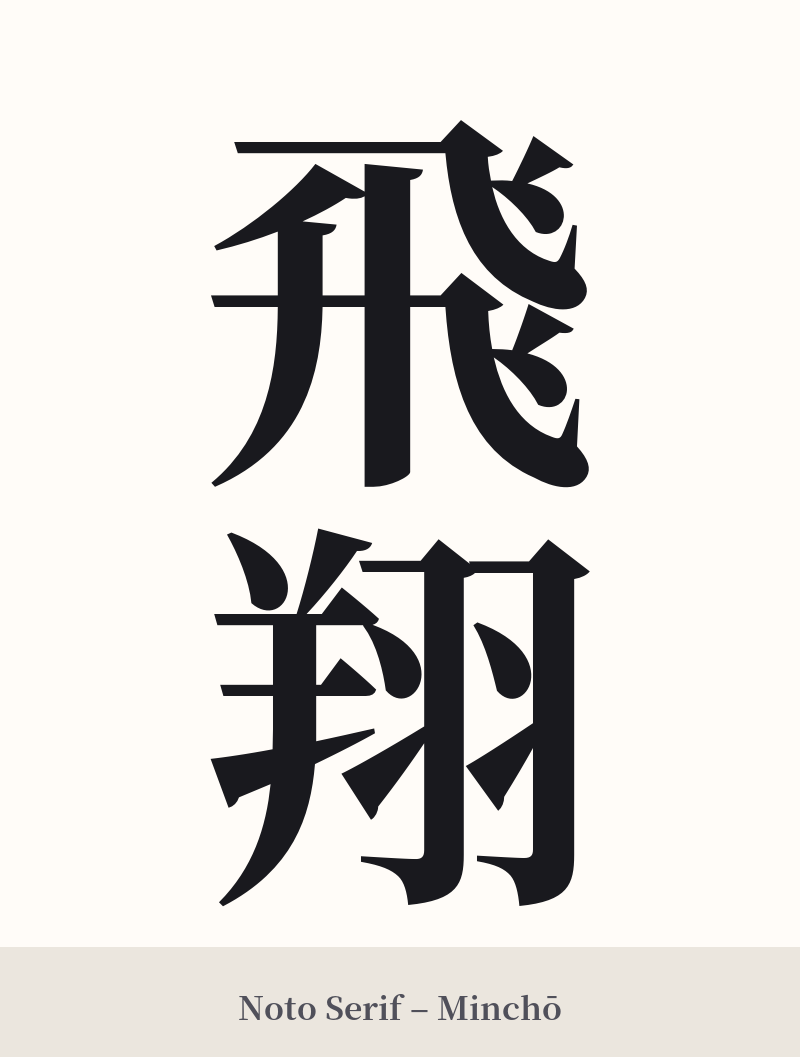
🖌️ Estilos de fuente para 飛翔
Los mismos caracteres kanji pueden verse muy diferentes según el estilo de caligrafía. Elige una fuente que se ajuste al ambiente que deseas para tu tatuaje o diseño.
🎨 Idoneidad para tatuajes
📐 Guía de diseño de tatuajes
La palabra 飛翔 (Hishō) se presta maravillosamente a los diseños de tatuajes que enfatizan el movimiento y la aspiración.
– Ubicación: Se recomienda la alineación vertical para potenciar la sensación de movimiento ascendente. Algunos puntos populares son la columna vertebral, el antebrazo o la pantorrilla. Para un diseño horizontal, el pecho o la parte superior de la espalda ofrecen un amplio espacio que permite a los personajes desplegar sus alas.'
– Estilo de fuente: Un estilo caligráfico dinámico y semicursivo (gyōsho) es una excelente opción, ya que sus trazos fluidos pueden imitar la sensación de viento y movimiento. Para una declaración más audaz e impactante, una fuente de pinceladas fuertes y angulares (kaisho) puede transmitir fuerza y estabilidad.
Consejos visuales: Considere integrar los kanji con imágenes sutiles. Unas pocas plumas sueltas que parecen caer de los caracteres, o alas minimalistas trazadas con pinceladas que se extienden desde los lados, pueden realzar el tema sin sobrecargar el diseño. La clave es apoyar los kanji, no eclipsarlos.
Comentarios