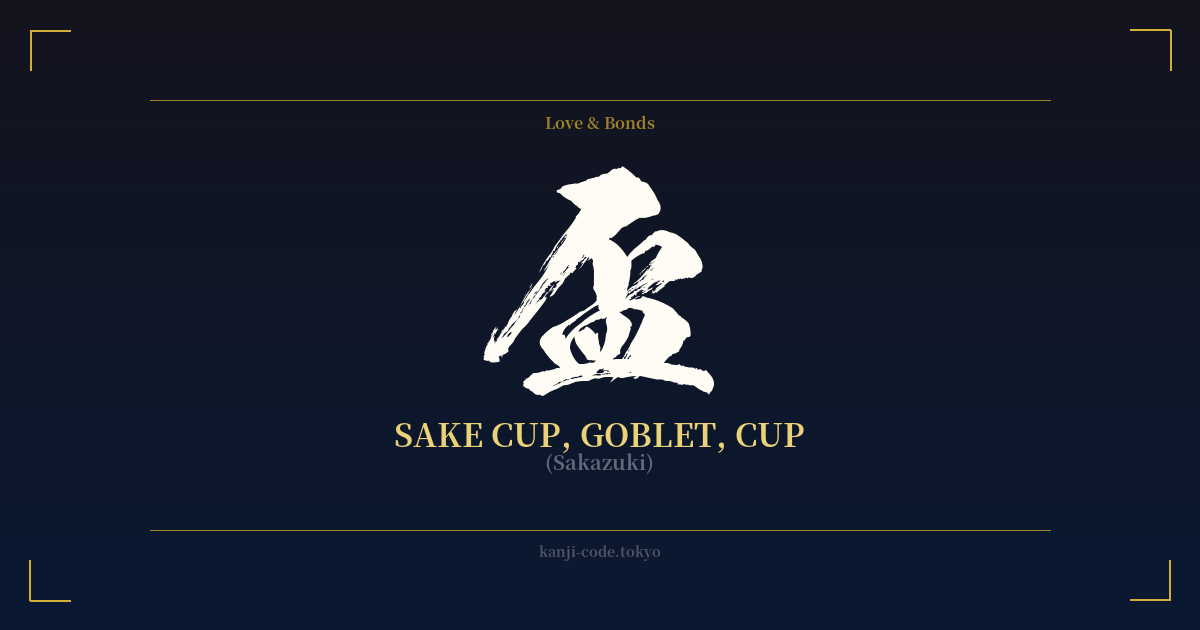
✍️ 盃 (Sakazuki) — Contexto cultural
A primera vista, 盃 (sakazuki) simplemente significa 'taza de sake'. Se refiere a un tipo particular de taza pequeña, a menudo poco profunda y ornamentada, que se usa para beber vino de arroz japonés. El carácter en sí es un pictograma, cuyo radical inferior, 皿, que significa 'plato' o 'recipiente', forma la base de la taza representada encima. Pero limitarse a esa definición sería pasar por alto su profundo significado cultural.
En Japón, el 盃 no es solo un recipiente para la vajilla; es un símbolo de compromiso, un emblema de lazos inquebrantables. Su verdadero poder se revela en el concepto de 'sakazuki-goto' (盃事), el ritual del intercambio de copas de sake. Este acto transforma una simple bebida en un juramento solemne, forjando una poderosa conexión entre los participantes.
El ejemplo más famoso, y quizás el más idealizado, de esto es el vínculo de hermandad. Los guerreros de la clase samurái intercambiaban sakazuki para formar alianzas o jurar lealtad, prometiendo luchar y morir el uno por el otro. Esto creaba un vínculo que se decía era incluso más fuerte que los lazos de sangre.
Esta tradición continúa, aunque de forma más notoria, dentro de la yakuza. En la ceremonia 'oyabun-kobun' (de rol paterno-filial), el nuevo recluta comparte sake de la misma copa que el jefe, simbolizando su ingreso en la familia y su lealtad inquebrantable. Esta representación es tan común en películas y manga que, para muchos japoneses, el símbolo 盃 evoca inmediatamente imágenes de la caballerosidad y el código del hampa.
Sin embargo, el sakazuki no es exclusivo de guerreros y gánsteres. Su uso más sagrado y hermoso se encuentra en la ceremonia nupcial sintoísta, el sansan-kudo (三三九度), que significa "tres-tres-nueve veces". Los novios toman tres sorbos cada uno de tres sakazuki de diferentes tamaños, para un total de nueve sorbos. Este ritual sella sus votos matrimoniales, uniendo no solo a la pareja, sino también a sus familias.
Por lo tanto, el kanji 盃 representa un espectro de conexión humana. Es la copa de la que se bebe la lealtad, donde se forja la hermandad y donde se hacen votos para toda la vida. Lleva el peso de la historia, desde los campos de batalla del Japón feudal hasta el espacio sagrado de un santuario y los rincones oscuros de la tradición cinematográfica. Comprender 盃 es comprender que, en la cultura japonesa, las promesas más profundas no solo se pronuncian, sino que se comparten y se sellan en un intercambio ritual.
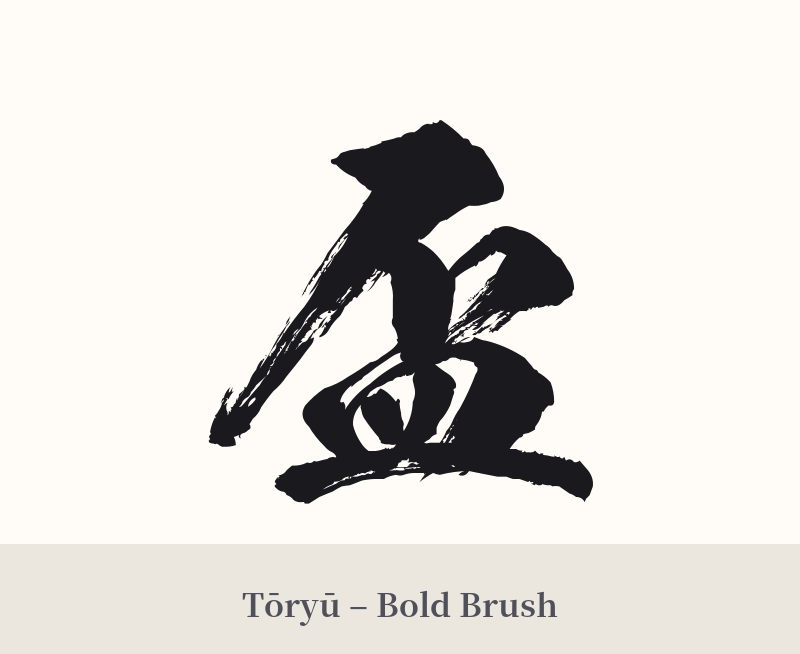
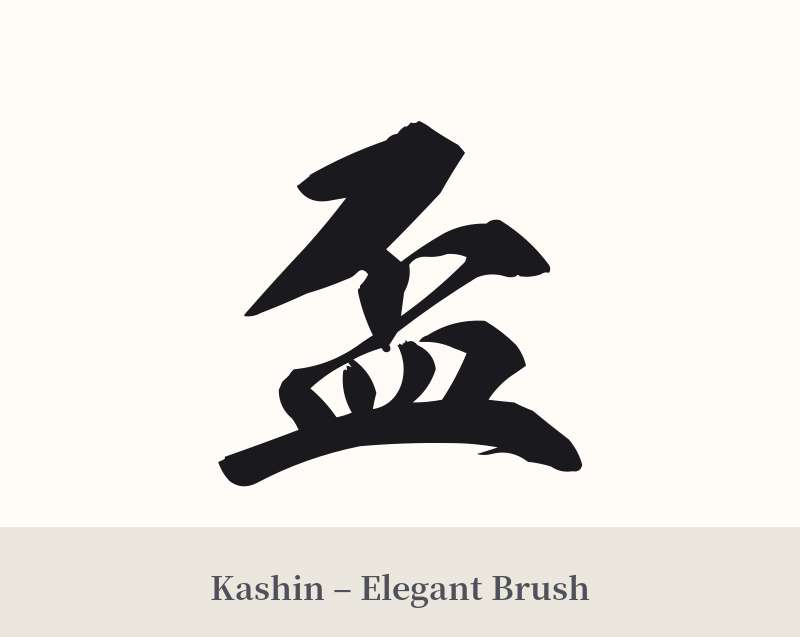
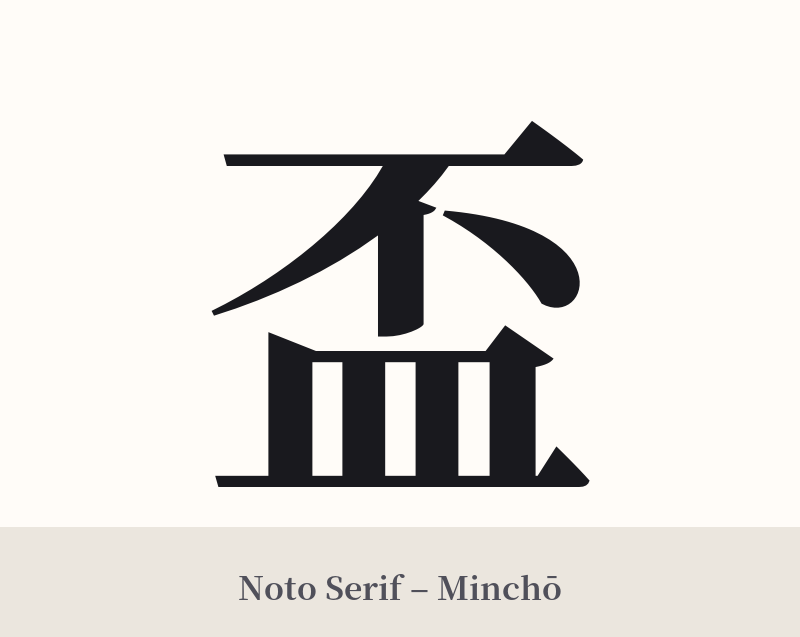
🖌️ Estilos de fuente para 盃
Los mismos caracteres kanji pueden verse muy diferentes según el estilo de caligrafía. Elige una fuente que se ajuste al ambiente que deseas para tu tatuaje o diseño.
🎨 Idoneidad para tatuajes
📐 Guía de diseño de tatuajes
Un tatuaje de 盃 (sakazuki) funciona mejor cuando honra su naturaleza ritual y solemne.
– Ubicación: Considera lugares que sean personales y significativos. Colocarlo sobre el corazón puede simbolizar una lealtad profunda. En la parte interna del antebrazo sirve como recordatorio personal de un vínculo, mientras que en la espalda, entre los omóplatos, puede transmitir una sensación de deber protector.
– Estilo de fuente: Se recomienda encarecidamente la caligrafía tradicional japonesa. Una escritura Gyosho (semicursiva) fluida o una Sosho (cursiva) dramática pueden capturar la importancia histórica y emocional del carácter. Para un aspecto más limpio y moderno, una fuente Mincho nítida también puede ser efectiva, enfatizando la forma arquitectónica del carácter.
– Elementos visuales: Si bien 盃 es poderoso por sí solo, combina bien con otras imágenes simbólicas. Considere combinarlo con un nudo de cuerda estilizado (que representa un vínculo sellado), flores de cerezo (que simbolizan la vida efímera y hermosa de un guerrero) o una sola salpicadura de tinta roja para significar la naturaleza de "juramento de sangre" del vínculo que representa.
Comentarios