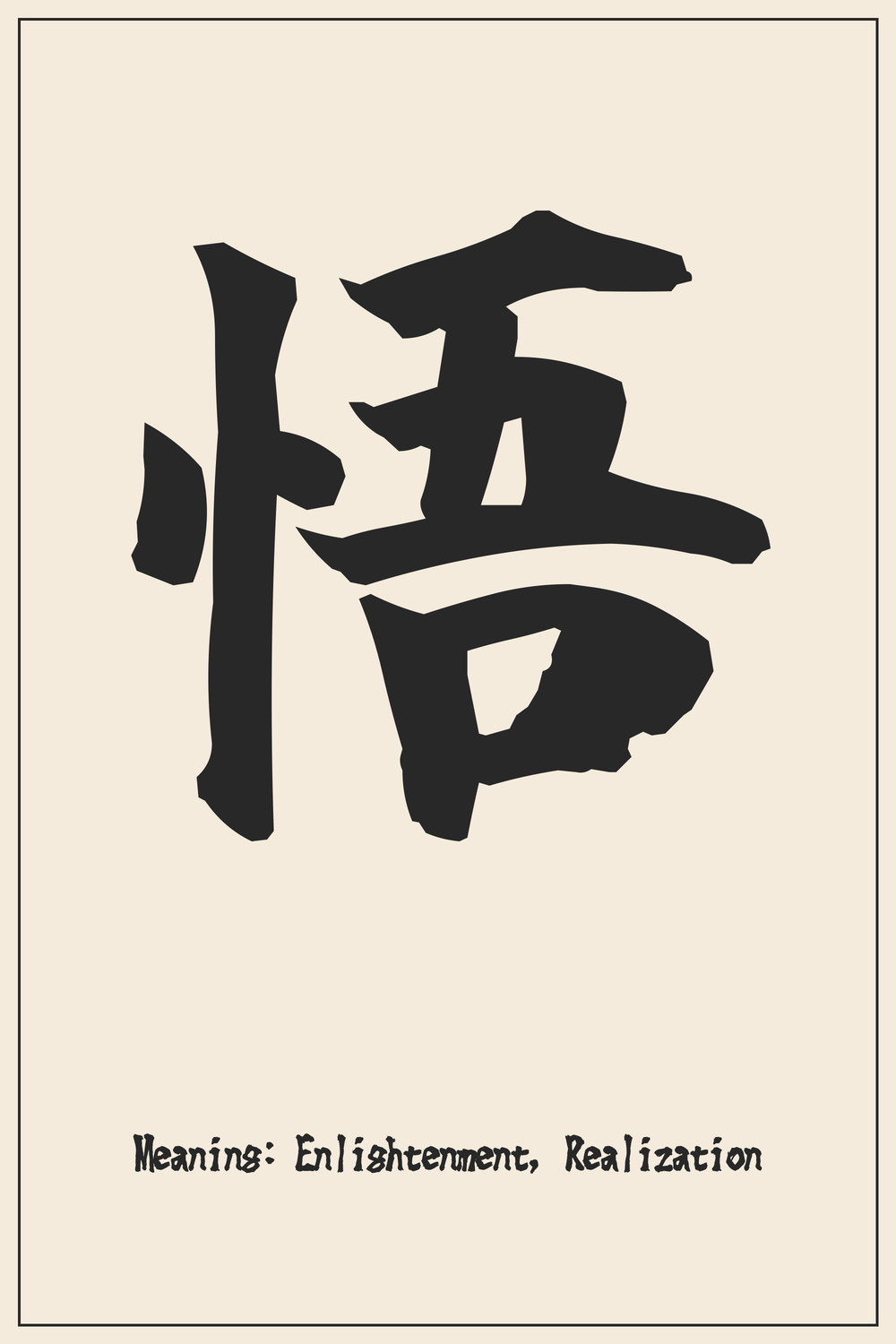
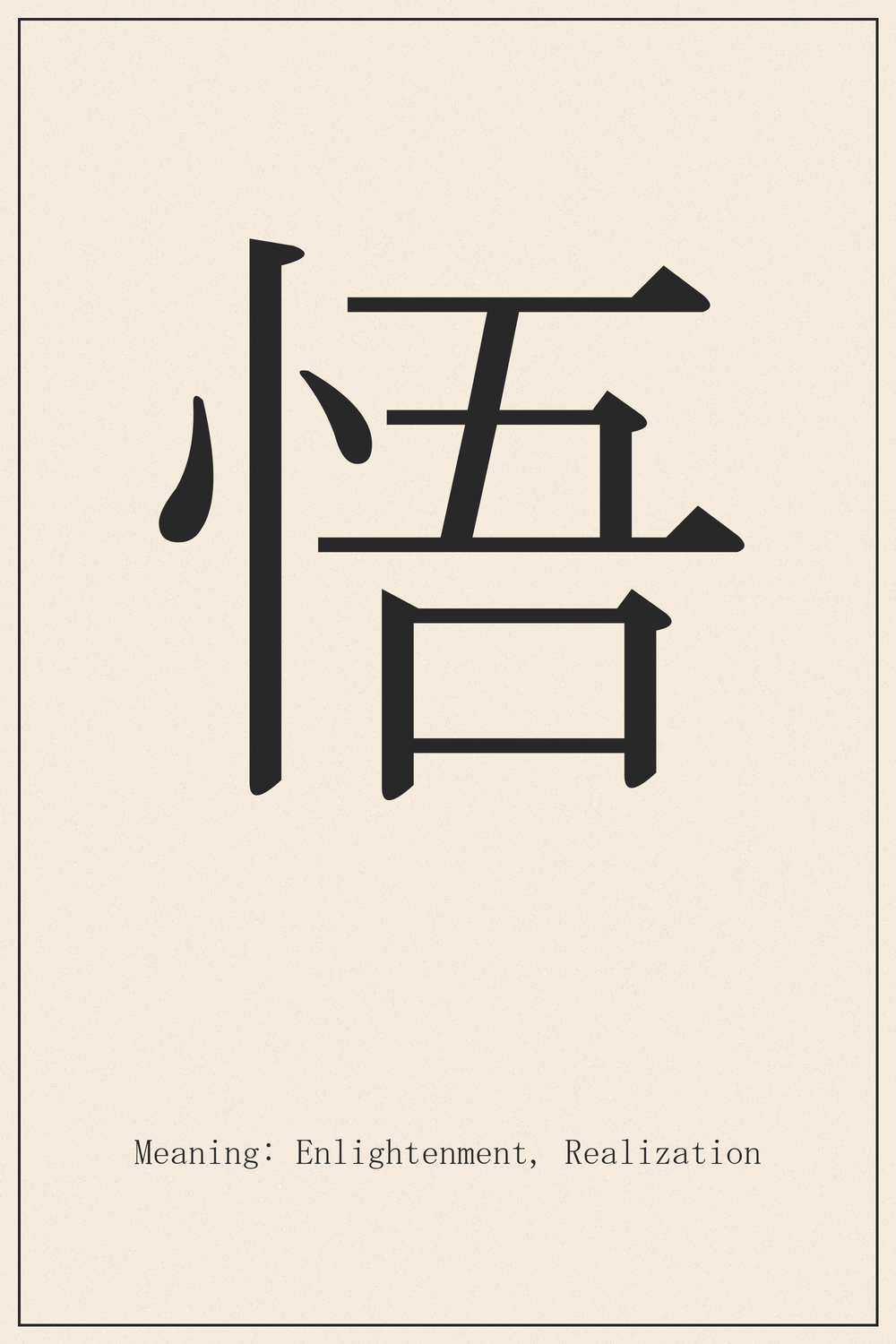
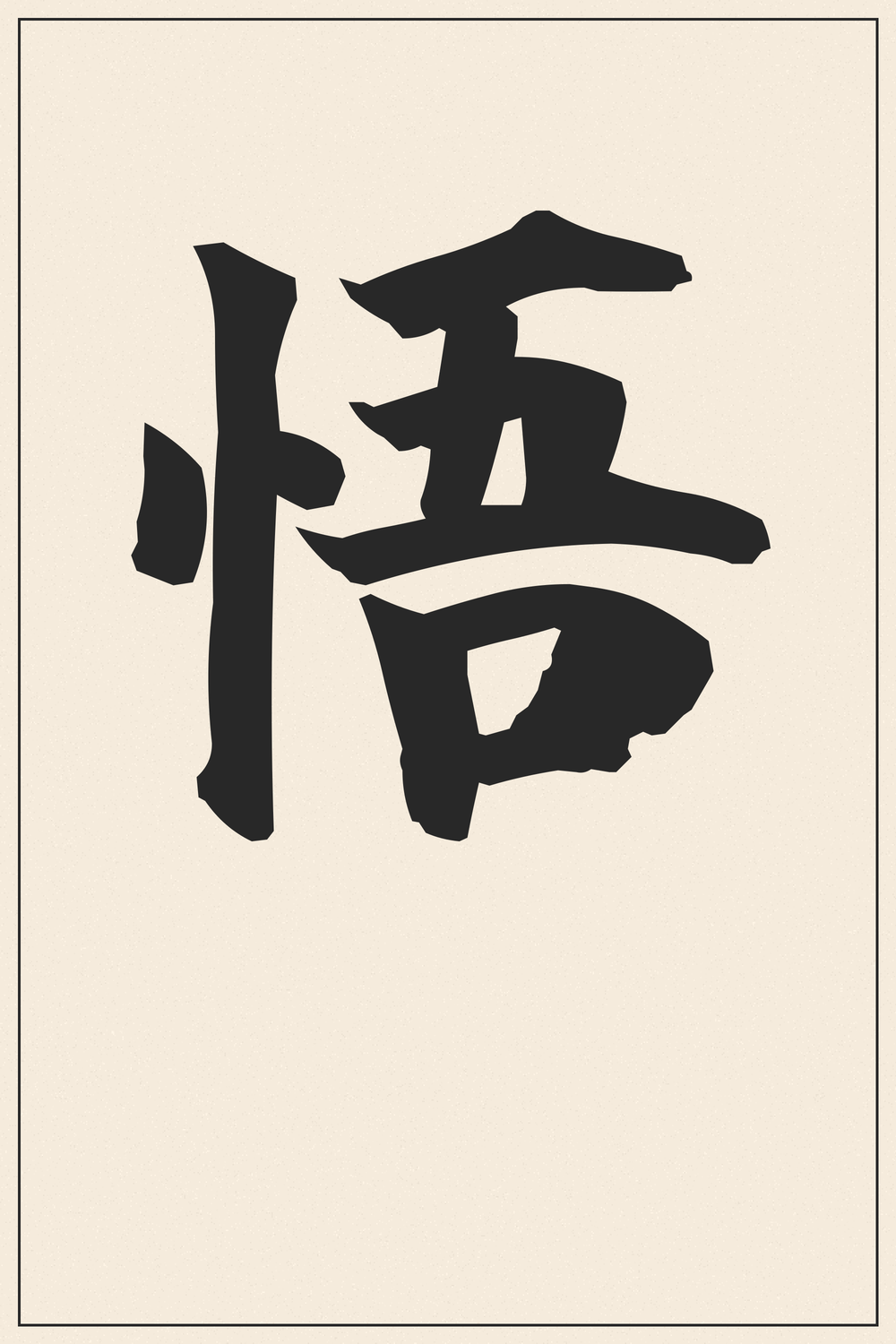
The Kanji 悟 embodies the profound concept of enlightenment and self-realization, a cornerstone of Zen philosophy. It represents a sudden awakening to truth, a deep understanding that transcends ordinary perception.
The atmosphere of a Kanji character changes dramatically depending on the font style. A character that looks elegant in a brush style might look bold and modern in a different font.
Recommendation:
Since a tattoo is permanent, we strongly recommend comparing various font styles beyond what is shown here. Use our designs as a trusted reference for the correct structure, but feel free to explore different artistic variations to find the perfect match for your vision.
The Deep Meaning Behind 悟
The Kanji 悟 is steeped in profound philosophical meaning, primarily associated with ‘Satori’ (悟り), the sudden enlightenment central to Zen Buddhism. It signifies a moment of deep spiritual awakening, a profound realization of the true nature of existence and oneself.
Culturally, 悟 transcends mere intellectual understanding, representing an intuitive grasp of reality. It’s not just knowing, but truly perceiving and embodying a fundamental truth, leading to liberation and inner peace. This concept is celebrated in various forms of traditional Japanese arts and philosophy.
Kanji Breakdown
The character 悟 offers insight into its meaning through its constituent parts, revealing a synergy of mind and self.
Meaning: This is the ‘ritsu-shinben’ radical, a variant of 心 (kokoro), meaning ‘heart’ or ‘mind’. It fundamentally relates to emotions, intellect, consciousness, and one’s inner being.
Meaning: This component means ‘I’, ‘me’, or ‘my’. It serves both as a phonetic element (pronounced ‘go’) and contributes to the meaning, suggesting a realization pertaining to one’s own self or identity.
Conclusion
The Kanji 悟 is a powerful symbol of profound introspection and spiritual clarity. It encapsulates the journey towards understanding oneself and the universe, a journey that culminates in a transformative awakening. This makes it an ideal choice for those who resonate with the pursuit of truth and inner wisdom.
Embracing 悟 as a tattoo signifies a personal commitment to self-discovery and an appreciation for the deepest forms of knowledge. Its elegant script and deep cultural resonance ensure it remains a meaningful and aesthetically compelling addition to any collection.
Comments