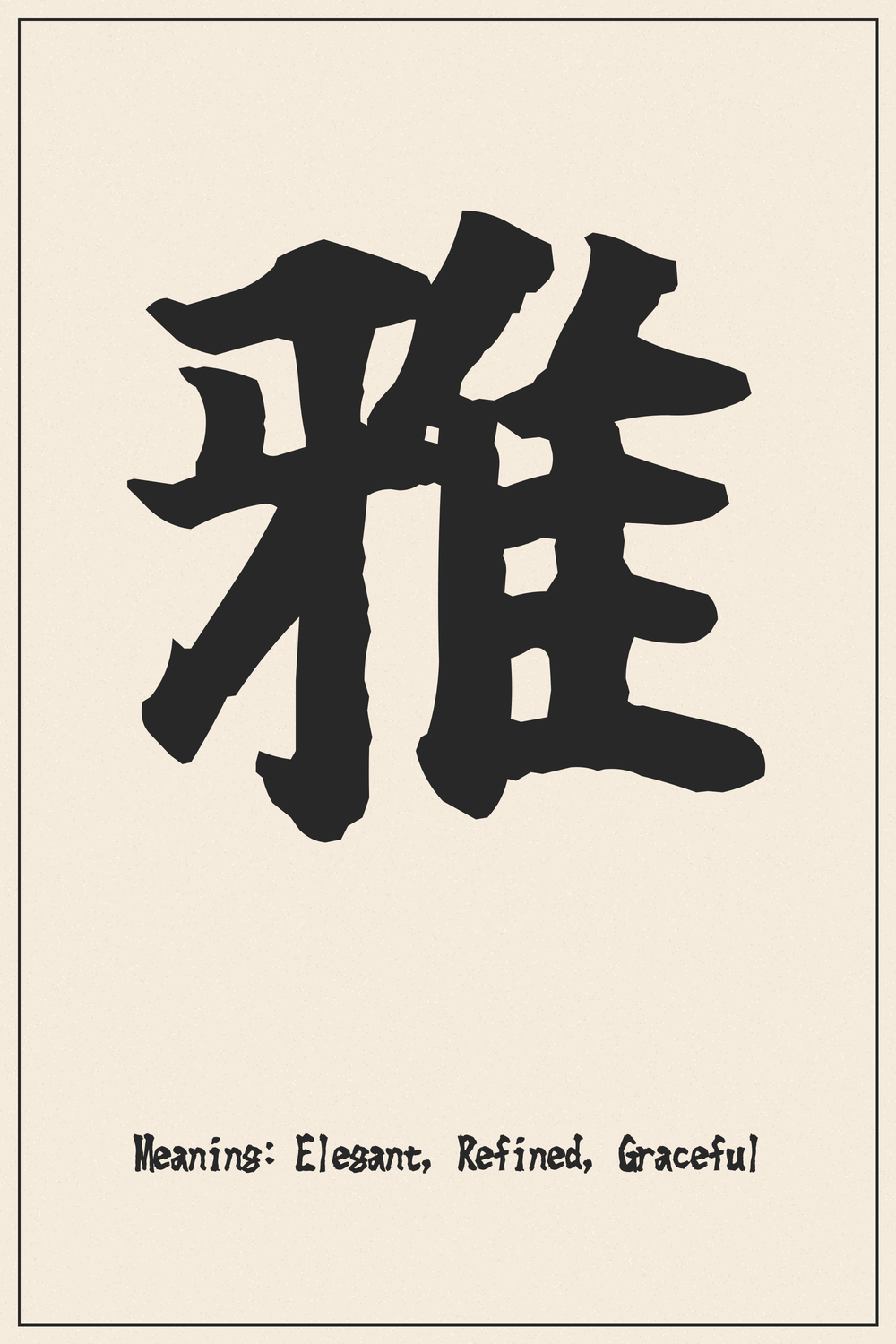
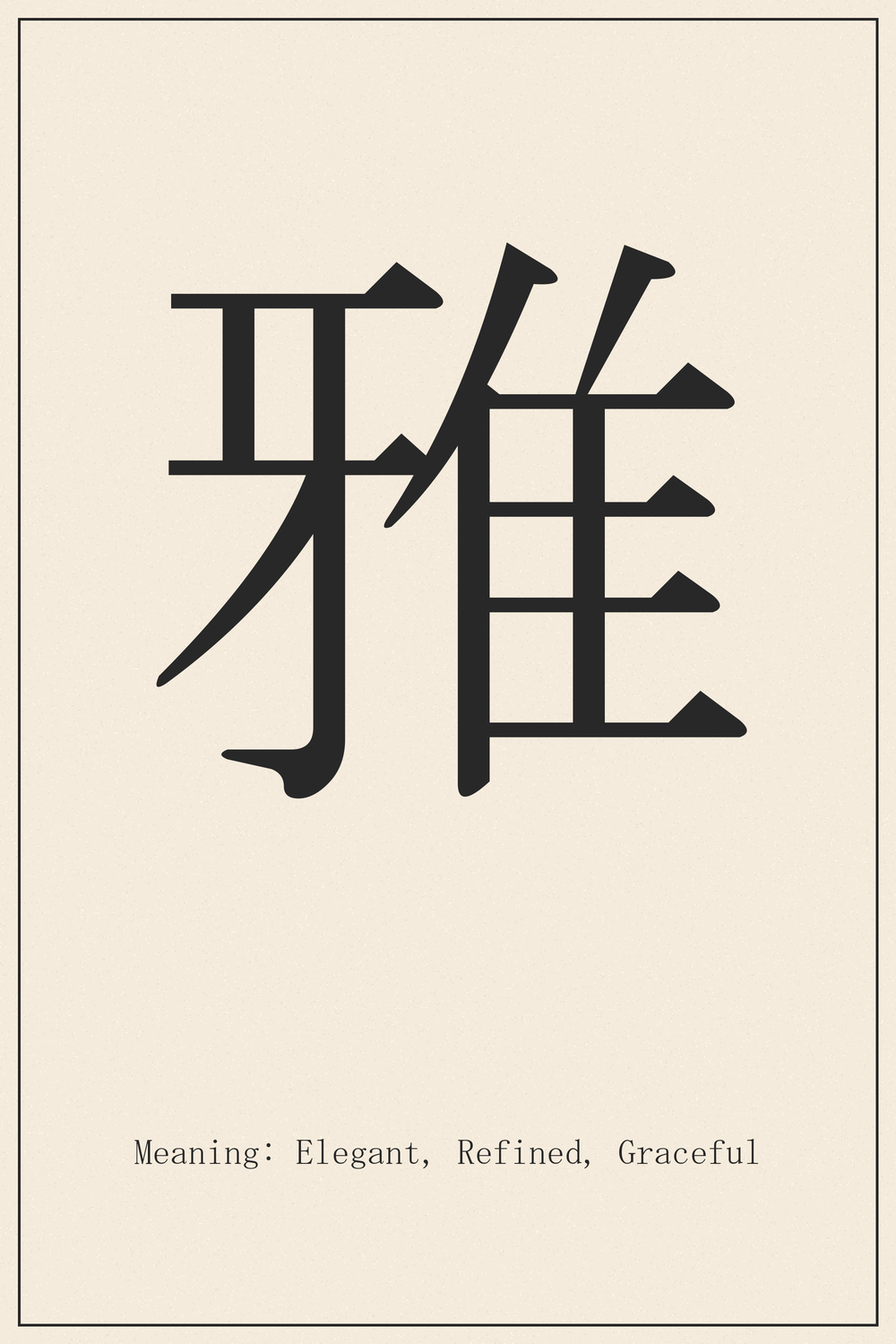
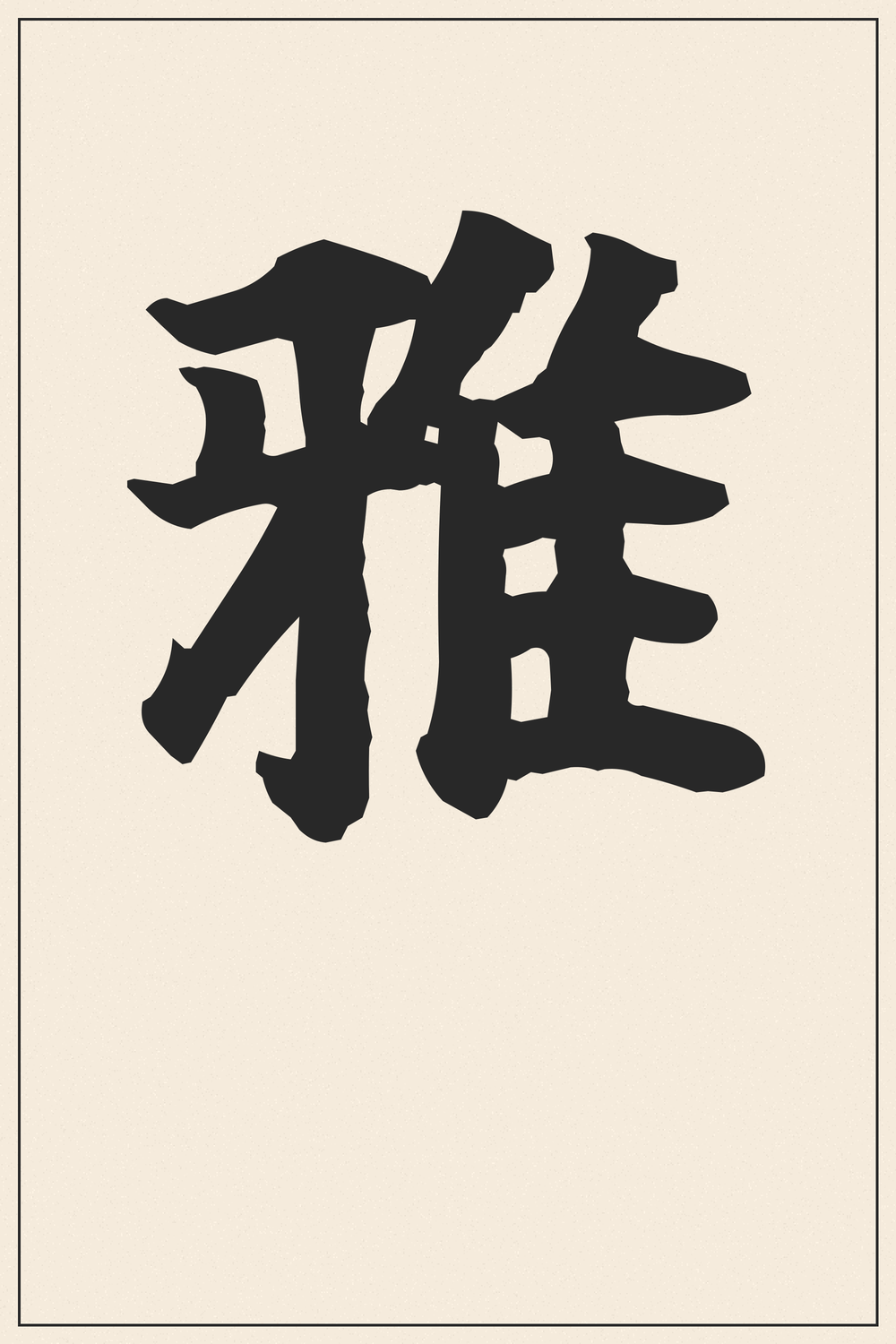
The Kanji 雅 embodies a profound sense of classical beauty and courtly refinement, capturing an aesthetic ideal that transcends mere prettiness. It represents a deep appreciation for elegance and grace in all forms.
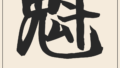
The atmosphere of a Kanji character changes dramatically depending on the font style. A character that looks elegant in a brush style might look bold and modern in a different font.
Recommendation:
Since a tattoo is permanent, we strongly recommend comparing various font styles beyond what is shown here. Use our designs as a trusted reference for the correct structure, but feel free to explore different artistic variations to find the perfect match for your vision.
The Deep Meaning Behind 雅
The character 雅 (miyabi) draws its origins from ancient ideograms that originally depicted refined sounds, particularly the elegant calls of birds. Its construction, combining elements that imply both sound and form, evolved to represent a broader concept of beauty and sophistication.
Culturally, 雅 is most famously associated with the aesthetic ideal of ‘Miyabi’ from Japan’s Heian period. This courtly aesthetic emphasized grace, exquisite taste, and a refined sensibility, contrasting sharply with cruder or more common tastes. It was the pursuit of perfection in artistry, poetry, and social conduct among the aristocracy.
Kanji Breakdown
The Kanji 雅 is a fascinating character whose meaning is elegantly captured by its constituent parts:
Meaning: This component primarily acts as a phonetic element, influencing the ‘ga’ sound in one of the Kanji’s readings. Historically, it also contributed to the overall visual complexity and refined feel.
Meaning: This radical represents a ‘short-tailed bird’. Its inclusion imbues 雅 with connotations of grace, beauty, and elegant movement, akin to the refined nature of avian creatures.
Conclusion
The Kanji 雅 is more than just a word; it is a profound philosophical concept embodying classical Japanese elegance and sophisticated beauty. It speaks to a refined spirit and an appreciation for the subtle nuances of grace.
Choosing 雅 for a tattoo is a powerful statement, reflecting a personal dedication to an aesthetic ideal and a connection to a rich cultural heritage. It serves as a beautiful reminder to cultivate elegance and refinement in all aspects of life.
Comments