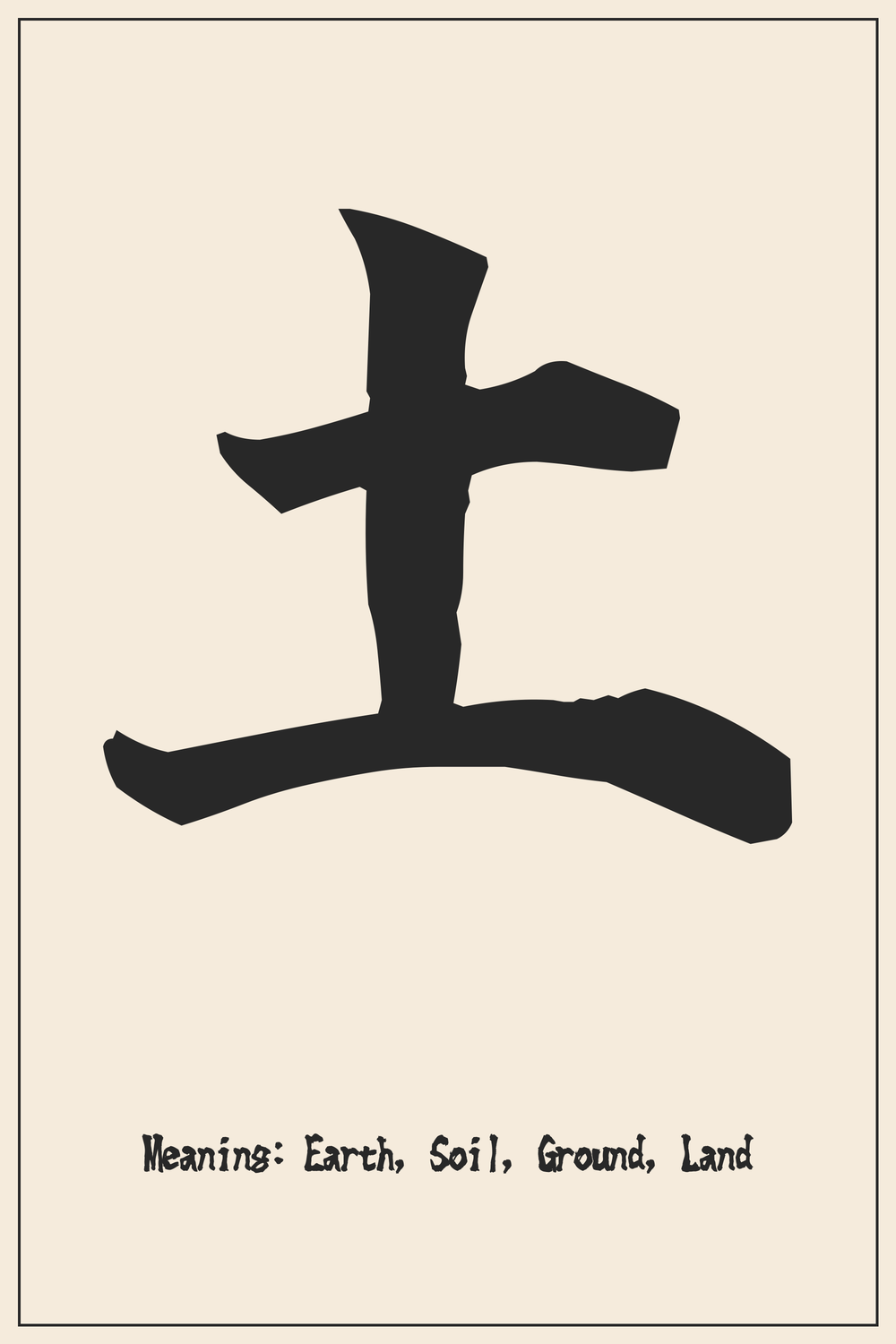
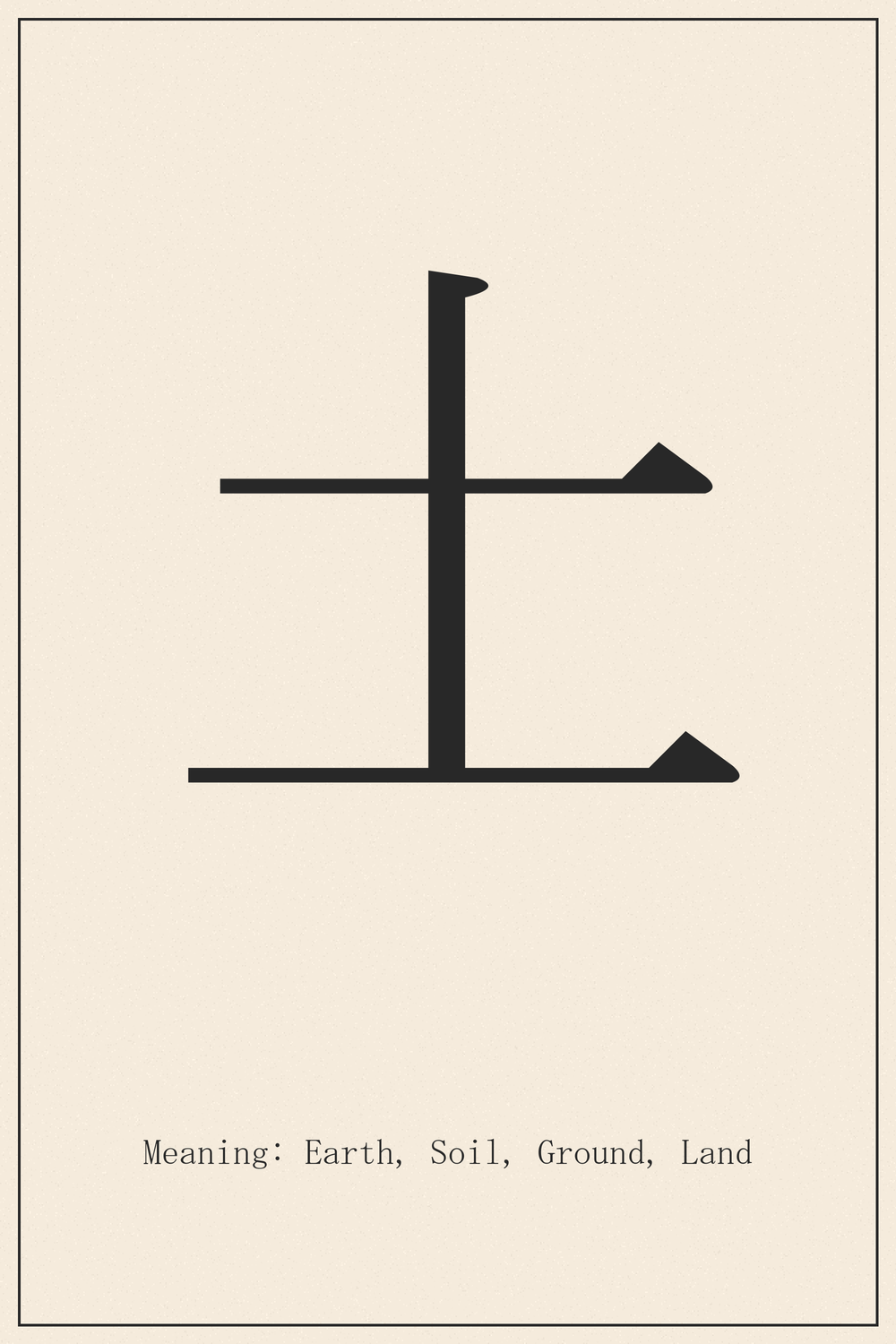
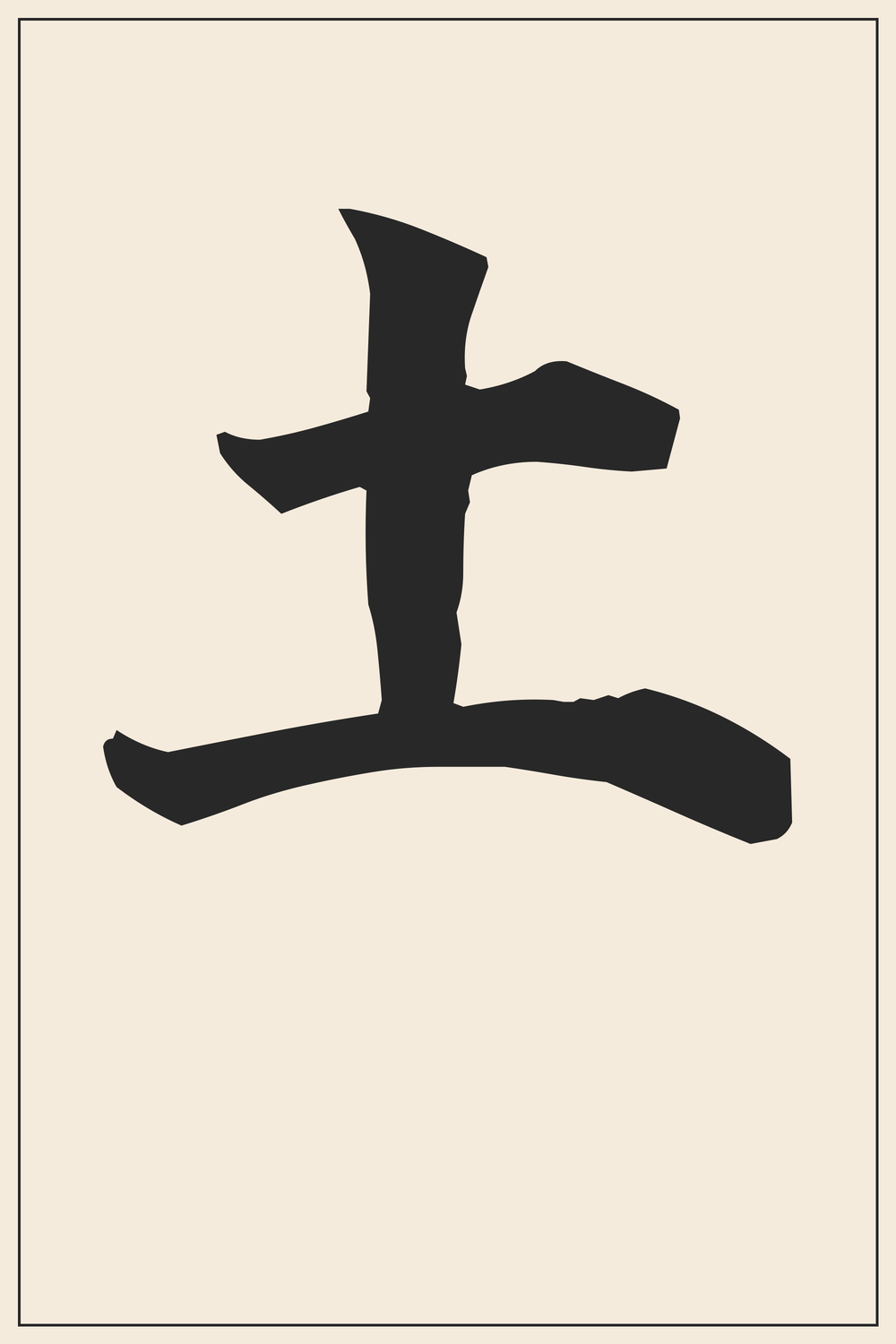
The Kanji 土 (Tsuchi) embodies the very essence of our world, representing the earth, soil, and ground beneath our feet. It symbolizes foundation, stability, and the source of all life.
The atmosphere of a Kanji character changes dramatically depending on the font style. A character that looks elegant in a brush style might look bold and modern in a different font.
Recommendation:
Since a tattoo is permanent, we strongly recommend comparing various font styles beyond what is shown here. Use our designs as a trusted reference for the correct structure, but feel free to explore different artistic variations to find the perfect match for your vision.
The Deep Meaning Behind 土
The ancient form of 土 depicts a mound of earth or a sprout emerging from the ground, emphasizing its direct connection to the physical land. It visually represents the layers of soil, with a horizontal line for the ground surface and another below for the subsoil, topped by a vertical line signifying growth or a mound.
In Japanese culture, 土 is fundamental. It appears in countless compound words related to agriculture, construction, and geography. It also subtly conveys ideas of foundation, stability, and the origin of life, reflecting a deep respect for the land that sustains us.
Kanji Breakdown
The Kanji 土 is a foundational character, simple in its structure yet profound in its meaning.
Earth/Soil: The character itself is a pictograph representing a mound of earth or a plant sprouting from the ground. The horizontal line at the bottom signifies the ground, while the upper horizontal line represents the surface, and the vertical stroke shows something rising from it.
Conclusion
The Kanji 土, while seemingly simple, carries the profound meaning of earth, soil, and foundation. It represents stability, the origin of life, and the physical ground on which all things stand.
For a tattoo, 土 can serve as a powerful reminder of one’s roots, grounding, or a connection to nature. Its minimalist design ensures clarity and timelessness, making it a subtle yet meaningful choice for those who value foundational strength and connection to the land.
Comments