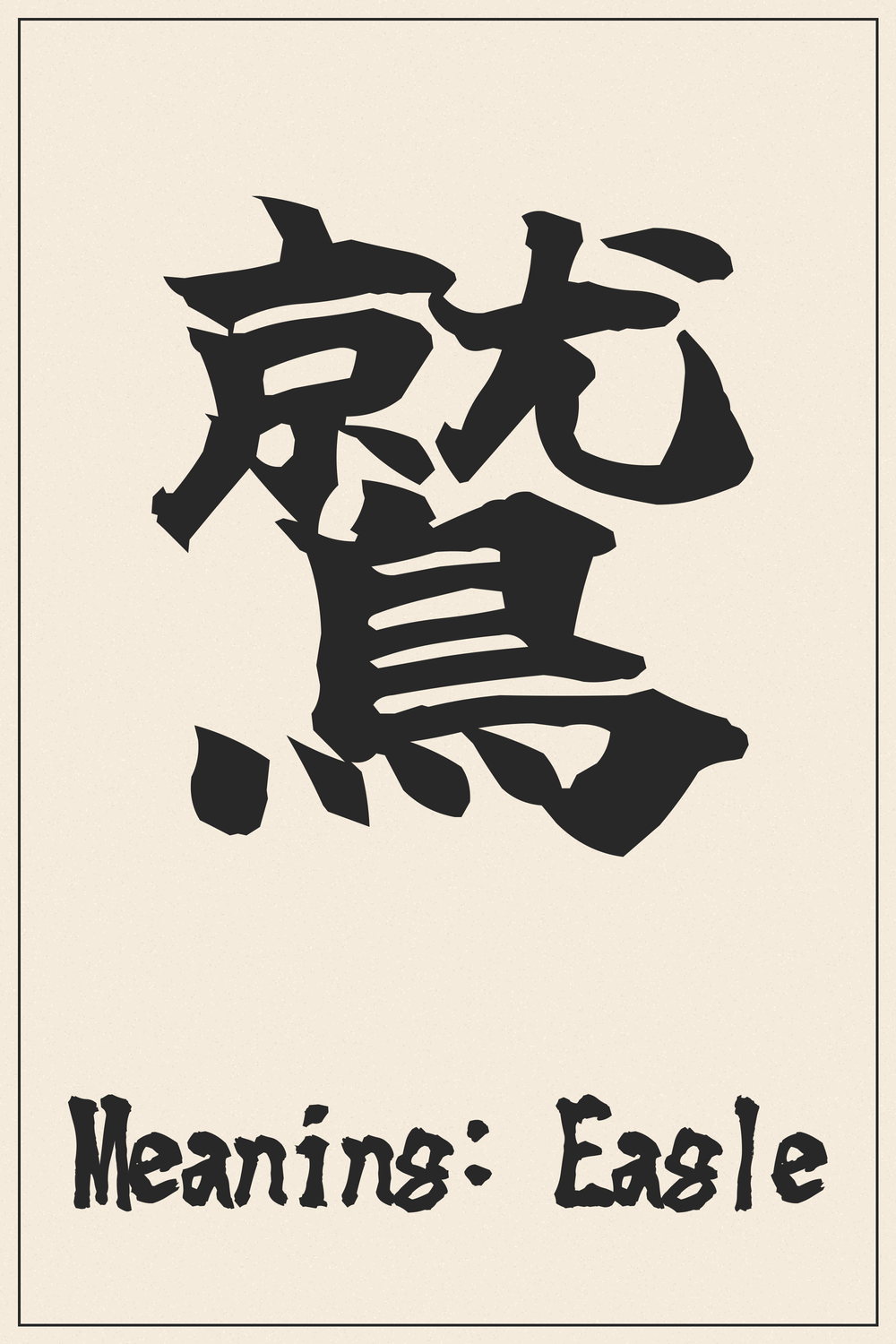
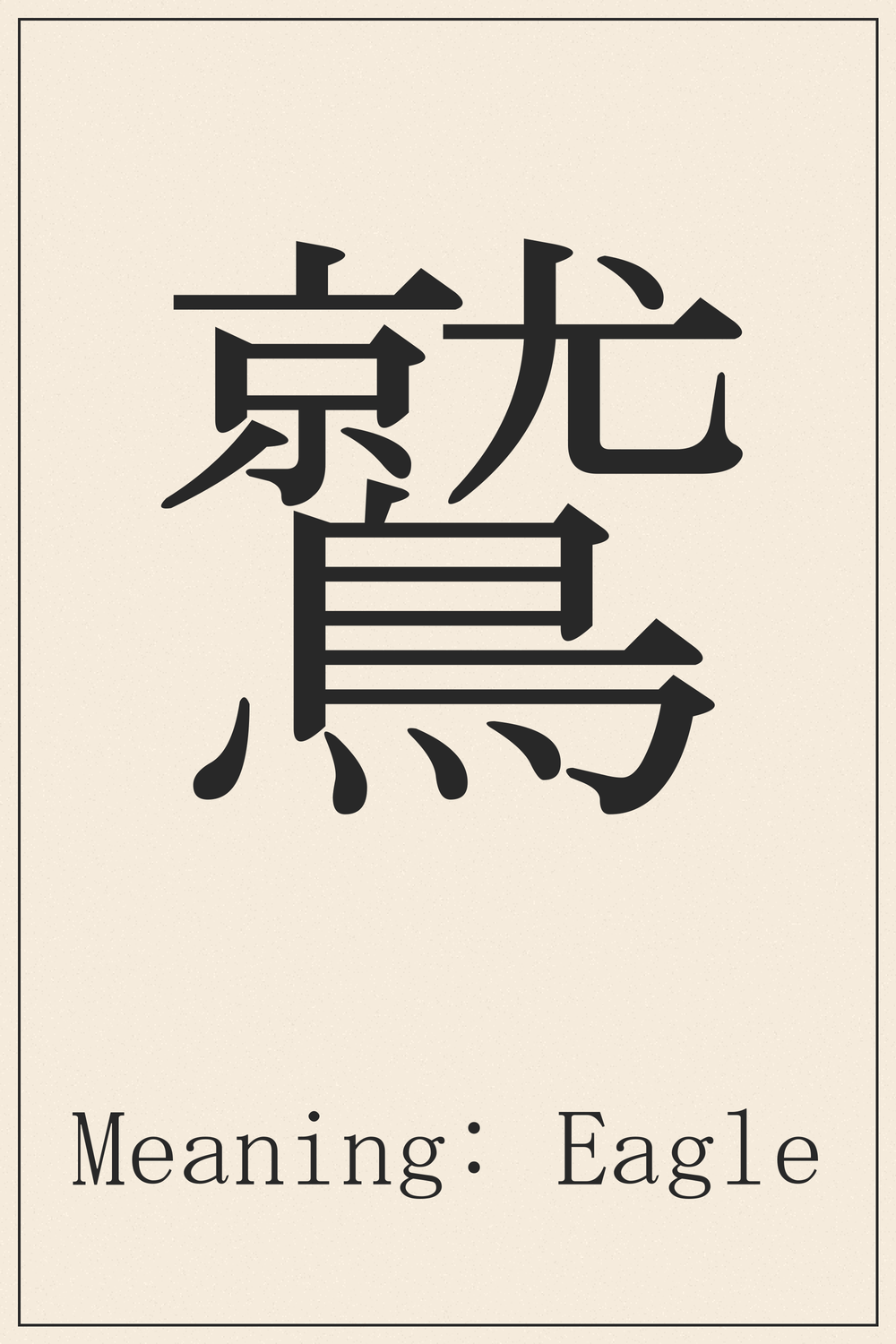
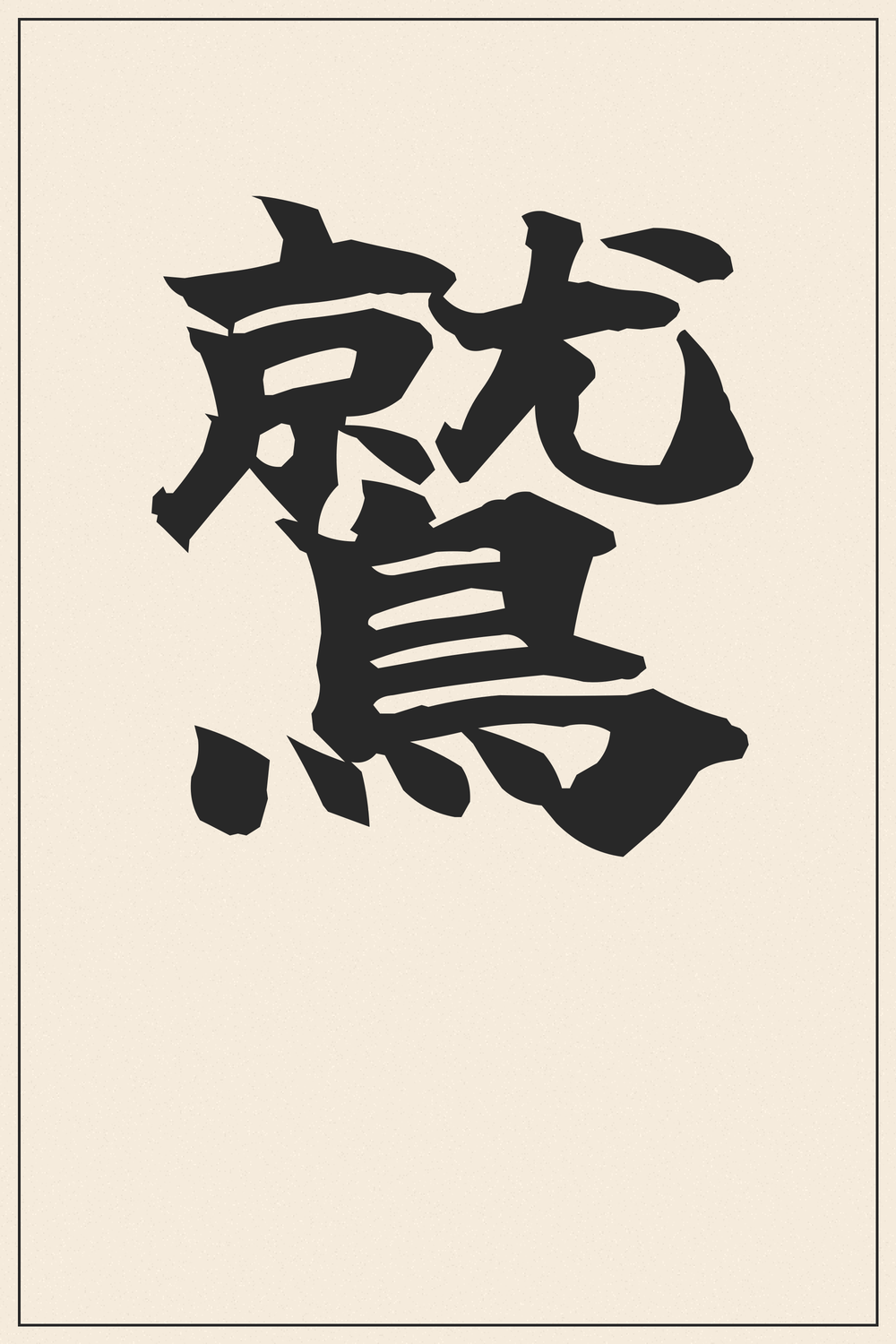
The Kanji 鷲 embodies the awe-inspiring presence of the eagle, a symbol of power and keen perception. This character represents not just a bird, but a spirit of dominance and vision.
The atmosphere of a Kanji character changes dramatically depending on the font style. A character that looks elegant in a brush style might look bold and modern in a different font.
Recommendation:
Since a tattoo is permanent, we strongly recommend comparing various font styles beyond what is shown here. Use our designs as a trusted reference for the correct structure, but feel free to explore different artistic variations to find the perfect match for your vision.
The Deep Meaning Behind 鷲
The character 鷲 (washi) is a classic example of a phono-semantic compound. It combines 隹 (furu-tori), meaning ‘short-tailed bird’ or generically ‘bird,’ with 雋 (sen), which acts as the phonetic component and also carries the meaning of ‘excellent bird’ or ‘fine bird,’ hinting at the eagle’s superior qualities.
Globally, the eagle is revered as a symbol of strength, courage, freedom, and far-reaching vision. In Japanese culture, while less frequently depicted than mythical creatures like dragons or phoenixes, the eagle still represents majesty and keen insight, often associated with powerful natural forces and a noble spirit.
Kanji Breakdown
The Kanji 鷲 is composed of two primary elements that convey its meaning and sound:
Meaning: Bird. This radical is commonly found in Kanji related to various types of birds, signifying a general avian connection.
Meaning: Excellent bird, outstanding, superior. This component not only provides the phonetic reading but also reinforces the conceptual meaning of the eagle as a magnificent and powerful creature.
Conclusion
The Kanji 鷲 powerfully encapsulates the essence of the eagle: a creature of unmatched power, precision, and majesty. It represents an elevated perspective and the strength to overcome challenges.
Choosing 鷲 for a tattoo symbolizes a personal aspiration for freedom, courage, and the ability to see beyond the ordinary, making it a profound and visually striking statement for those who embody these noble traits.
Comments