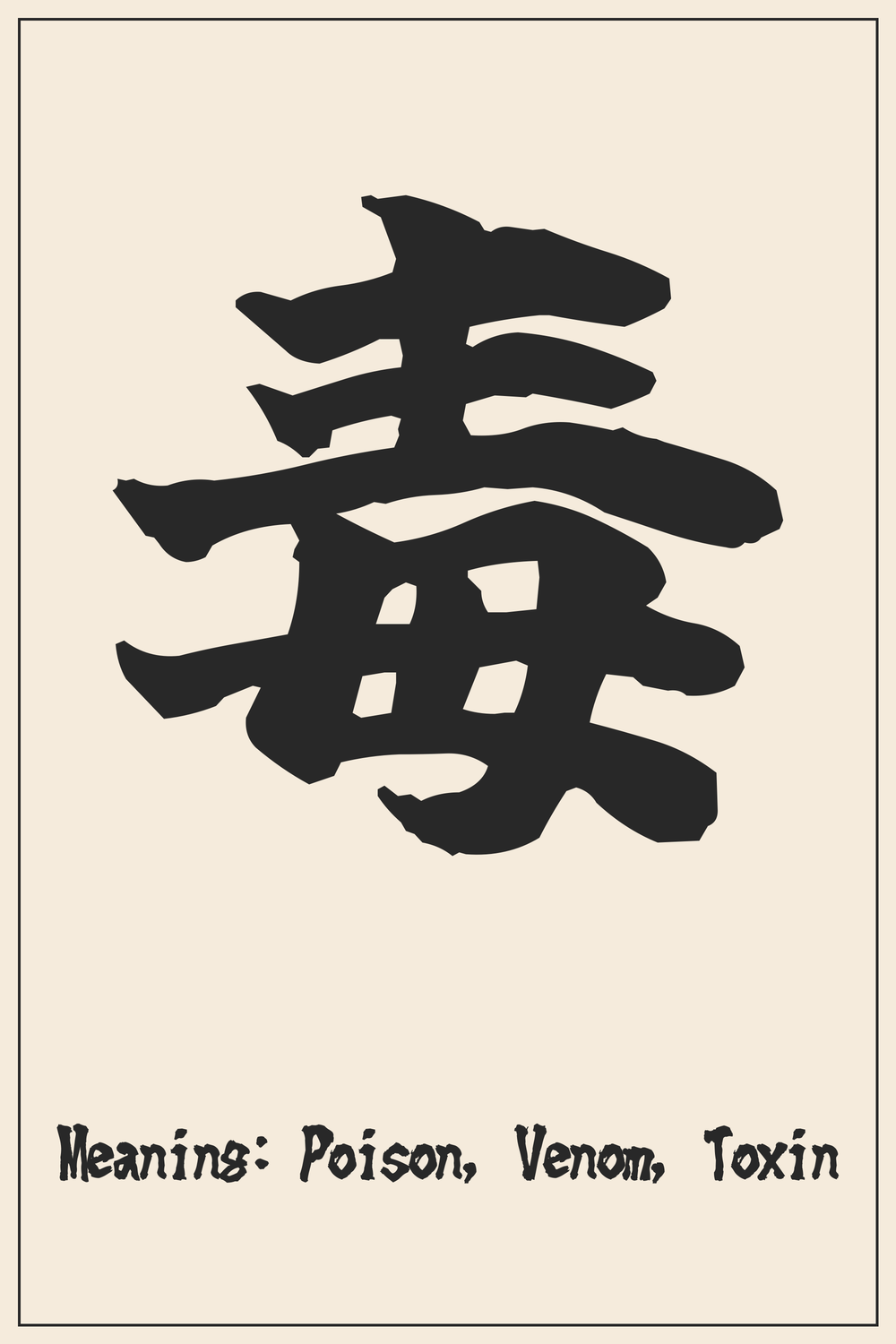
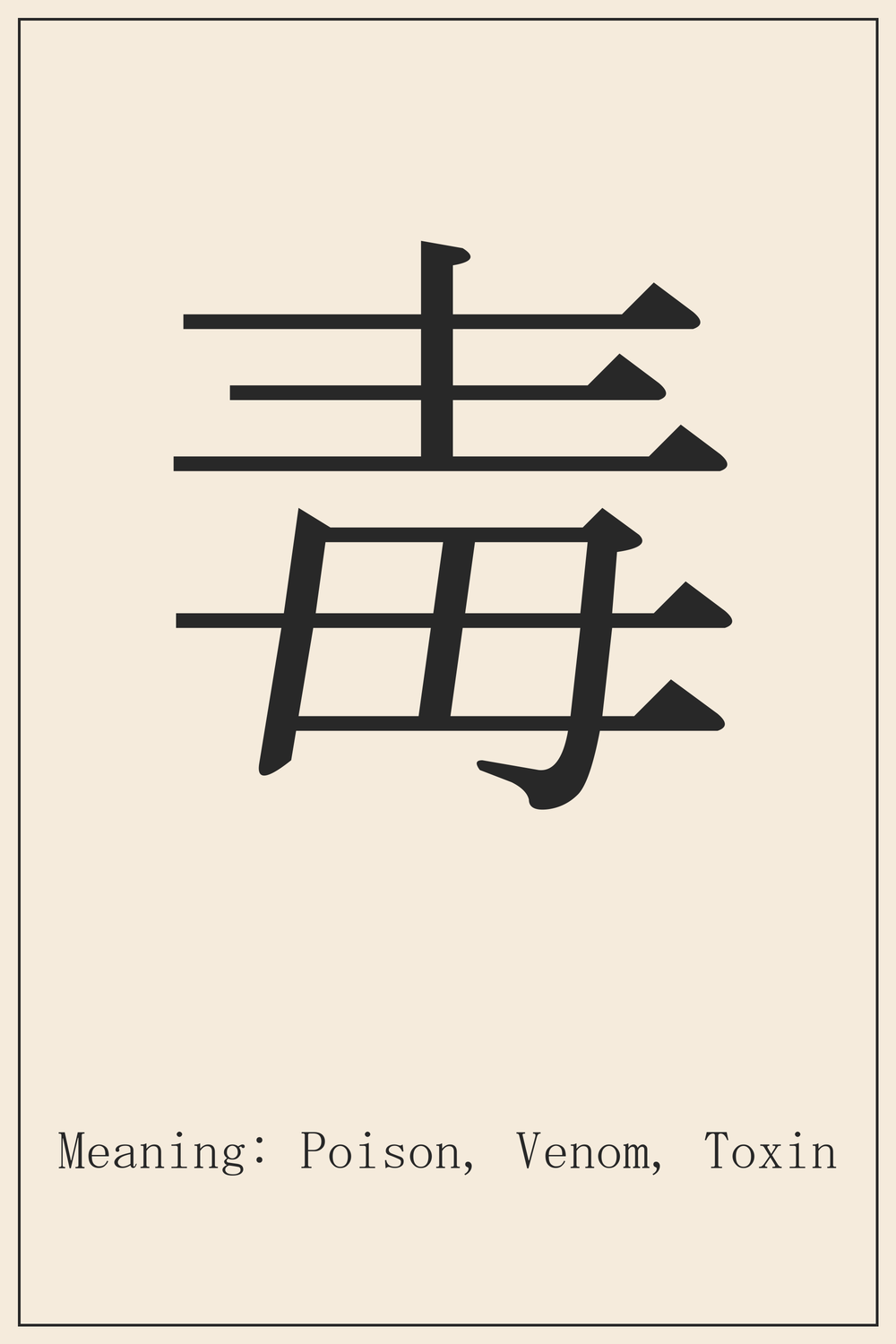
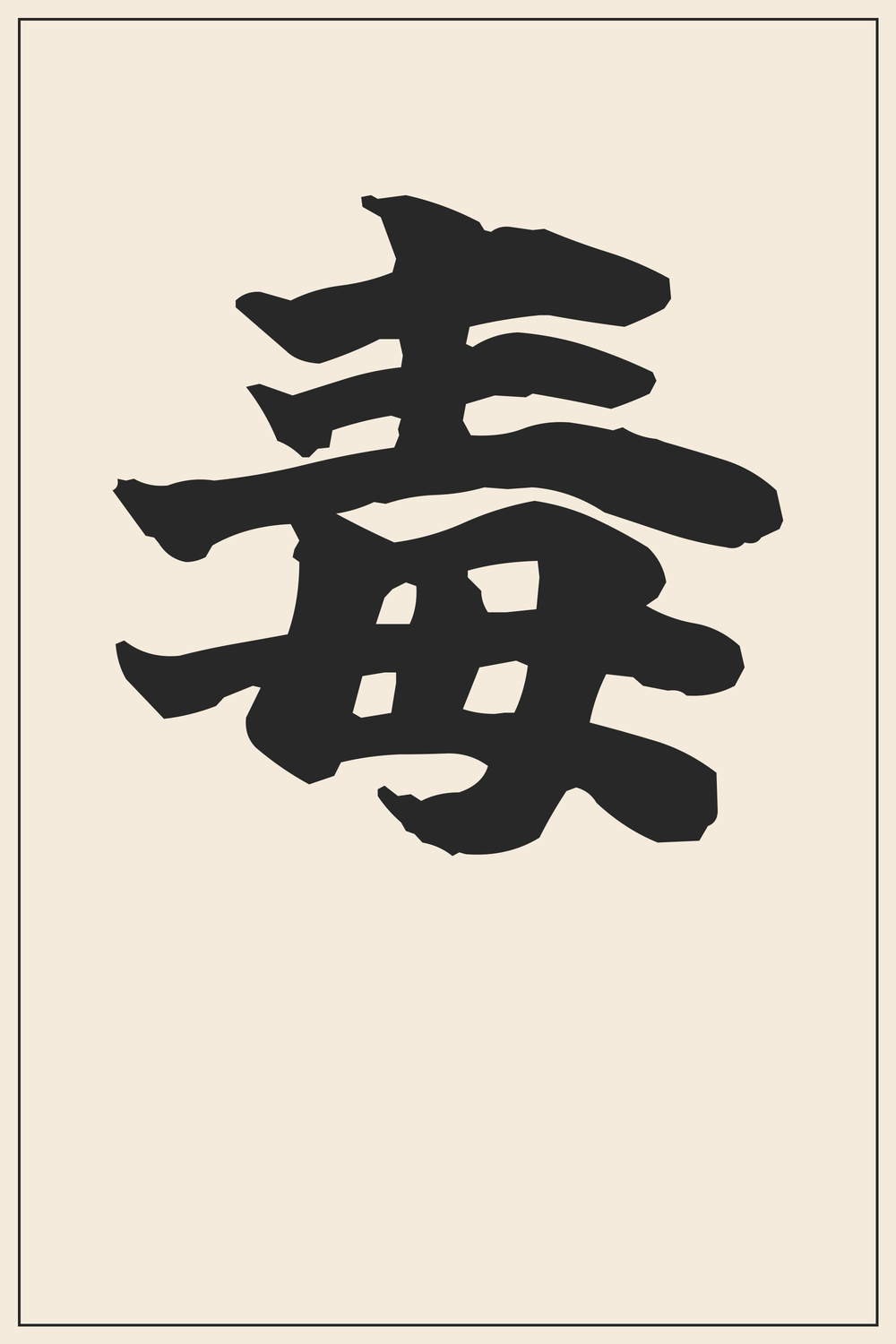
The Kanji 毒 (Doku) starkly represents concepts of poison and venom, embodying danger and harmful essence. It serves as a potent reminder of both physical and metaphorical toxicity.
The atmosphere of a Kanji character changes dramatically depending on the font style. A character that looks elegant in a brush style might look bold and modern in a different font.
Recommendation:
Since a tattoo is permanent, we strongly recommend comparing various font styles beyond what is shown here. Use our designs as a trusted reference for the correct structure, but feel free to explore different artistic variations to find the perfect match for your vision.
The Deep Meaning Behind 毒
The Kanji 毒 (Doku) represents poison, venom, or toxicity. Its etymological roots suggest a compound ideograph depicting something that causes harm. Historically, it has been used to describe substances derived from plants or animals that are detrimental to life or health.
In Japanese culture and language, 毒 is consistently associated with negative outcomes, such as physical harm, malicious intent, or destructive influence. While it can metaphorically describe a ‘poisonous tongue’ (毒舌, dokuzetsu) or ‘toxic environment,’ its core meaning remains starkly negative, emphasizing danger and affliction.
Kanji Breakdown
The character 毒 is traditionally broken down into components that hint at its meaning of harm.
Meaning: Mother; do not; prohibit. In this context, it often represents a harmful or prohibited substance, possibly a poisonous plant.
Meaning: Pig; boar. Often used in characters to denote wildness, ferocity, or something harmful, or as a phonetic component that influenced the ‘doku’ reading.
Conclusion
The Kanji 毒 unequivocally signifies poison, venom, and toxicity. Its visual components and historical usage reinforce a meaning of inherent harm and danger, making it a powerful symbol of destructive forces.
For those considering a Kanji tattoo, it is crucial to understand the profound and often unyielding connotations of each character. While 毒 may appeal to those wishing to convey danger or a rebellious spirit, its strong negative meaning should be carefully weighed against the desire for a universally positive or inspiring personal emblem.
Comments